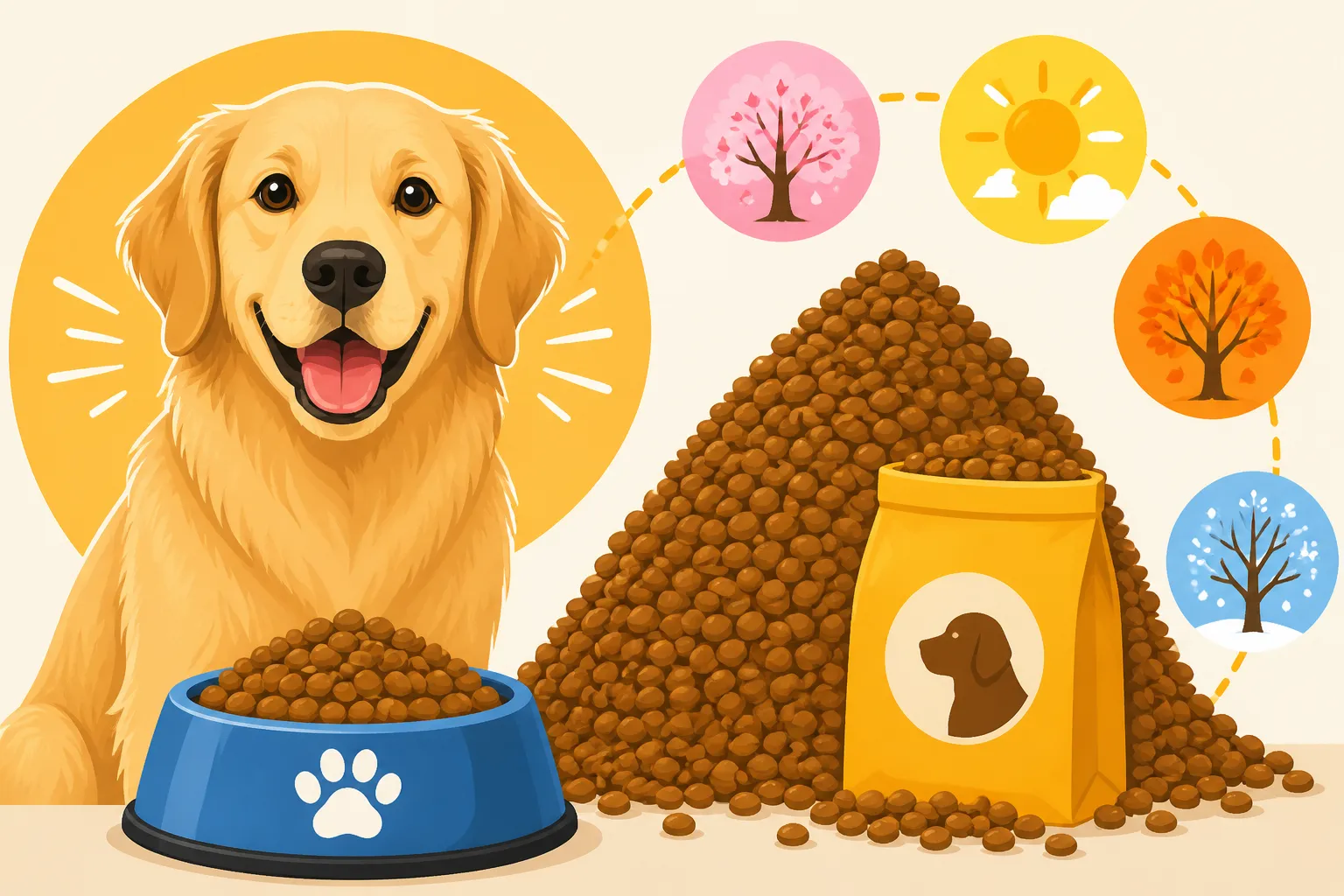
How Much Food a Golden Retriever Eats in a Year
It’s a common moment for Golden Retriever owners: you look at the seemingly endless bag of kibble, then at your beloved companion, and then at your grocery budget, and a question pops into your head – "How much does this magnificent creature really eat in a year?" It feels like a bottomless pit sometimes, especially when you're trying to keep them healthy without breaking the bank. Understanding your Golden’s annual food consumption isn't just about saving money; it’s crucial for their health, growth, and overall well-being. This guide is here to break down the complexities, helping you estimate, plan, and feed your Golden Retriever effectively throughout their life.
Understanding Your Golden Retriever's Daily Nutritional Needs
Before we can even begin to think about annual consumption, we need to dial into the day-to-day. A Golden Retriever's dietary needs are far from static; they ebb and flow with age, activity, and even individual metabolism.
Puppyhood to Adulthood: A Changing Appetite
When you bring home that adorable, fluffy Golden Retriever puppy, it's easy to assume they'll eat endlessly, and in many ways, they will! Puppies are like tiny, furry sponges, growing at an astonishing rate. This rapid development means their caloric and nutritional demands are significantly higher per pound of body weight than an adult dog. They need nutrient-dense food specifically formulated for large breed puppies to support healthy bone and muscle growth. It's incredibly important to select the right kind of food and portion sizes during this critical phase to avoid conditions that can impact their future health.
Feeding too much, or food with improper nutrient ratios, can lead to Why fast growth damages a Golden Retriever's joints, contributing to orthopedic issues later in life. We're talking about conditions like hip and elbow dysplasia, which can be exacerbated by growing too quickly. Similarly, the balance of minerals like calcium and phosphorus is paramount; you'll want to pay close attention to Calcium levels in Golden Retriever puppy food to ensure their skeletal system develops correctly without excess. As they approach their first birthday, and certainly by 18-24 months for some, they'll gradually transition from demanding puppy fare to the more moderate needs of an adult Golden. This transition should be slow and measured, both in terms of food type and quantity, to avoid digestive upset.
Factors Influencing Food Consumption
Even among adult Golden Retrievers, there’s no one-size-fits-all answer to how much food they need. Think of it like people: some of us can eat a massive meal and stay lean, while others just look at a donut and gain a pound. Genetics, of course, play a role, but so does their daily life.
Firstly, activity level is huge. A Golden Retriever from a field line, who spends hours retrieving ducks or running agility courses, will naturally burn far more calories than a show-line Golden who enjoys leisurely strolls and prefers to cuddle on the couch. For those with high-energy Goldens, you might be curious about Exercise a Field Line Golden Retriever Needs because it directly correlates with their energy expenditure and, consequently, their food requirements. A sedentary Golden will gain weight quickly on the same diet as an active one. Age is another significant factor; younger adults tend to be more energetic than their senior counterparts, whose metabolisms have often slowed down. Health conditions can also dramatically alter caloric needs. An illness might decrease appetite, while a condition like hypothyroidism could lead to weight gain despite a normal diet. Monitoring their physical condition and consulting with your vet is key to making these adjustments. After all, nobody wants to see their beloved Golden suffer from preventable health issues, and addressing Golden Retriever weight and joint damage through proper diet is a cornerstone of responsible ownership.
Calculating Annual Food Intake for a Golden Retriever
Now, let's get into the nitty-gritty of converting those daily needs into a yearly estimate. This is where the numbers start to add up, and where careful planning can really make a difference.
The Average Golden Retriever's Daily Intake
A healthy, adult Golden Retriever typically weighs between 55 to 75 pounds, with males often falling on the higher end of that range. Their daily caloric needs can vary quite a bit, but a general guideline for an active adult Golden is around 1,300 to 1,700 calories per day. This translates roughly to 2.5 to 4 cups of high-quality dry kibble, depending heavily on the caloric density of the specific food you choose. It’s absolutely essential to read the feeding guide on your chosen dog food bag, as caloric content can differ wildly between brands and formulas. Some premium foods pack more punch per cup than budget options. For a deeper dive into the specifics, check out our article on How much an adult Golden Retriever eats daily.
Let’s say you pick a quality kibble that has, for example, 350 calories per cup. A 70-pound, moderately active male Golden might need about 4.5 cups per day to maintain his ideal weight. A less active female Golden, perhaps 60 pounds, might only require 3 cups of the same food. These are generalizations, of course, but they give us a starting point. Monitoring your dog's weight and body condition is always the best indicator.
Translating Daily Needs into Yearly Quantities
Once you have a solid estimate of your Golden Retriever’s daily food intake in cups, calculating the yearly amount is a straightforward multiplication.
Let's use an example:
- Average Daily Intake: 3.5 cups (for a moderately active, average-sized Golden)
- Days in a Year: 365
- Annual Intake: 3.5 cups/day * 365 days/year = 1,277.5 cups per year
Now, how many pounds or bags does that translate to? Dog food bags vary in size, but a common large bag is 30 pounds. The number of cups per bag will depend on the density of the kibble. Let's assume our example kibble has roughly 3.75 cups per pound (a common estimate for many dry foods).
- Cups per 30lb bag: 30 lbs * 3.75 cups/lb = 112.5 cups per bag
- Number of 30lb bags per year: 1,277.5 cups / 112.5 cups/bag = 11.35 bags
So, for this hypothetical Golden, you're looking at roughly 11 to 12 large (30lb) bags of food per year.
Here's a quick table to help visualize different scenarios:
| Golden's Weight/Activity Level | Estimated Daily Intake (Cups) | Estimated Annual Intake (Cups) | Estimated Annual 30lb Bags (Assuming 112.5 cups/bag) |
|---|---|---|---|
| 55 lbs, Low Activity (Female) | 2.5 cups | 912.5 cups | 8.1 bags |
| 65 lbs, Moderate Activity | 3.5 cups | 1277.5 cups | 11.3 bags |
| 75 lbs, High Activity (Male) | 4.5 cups | 1642.5 cups | 14.6 bags |
Keep in mind that these are estimates. Your Golden’s actual intake might fluctuate seasonally, or if their activity level changes. Always use the feeding guidelines on your specific dog food as a starting point, and adjust based on your dog's individual body condition.
Navigating Food Costs and Smart Purchasing
The sheer volume of food a Golden Retriever consumes naturally leads to questions about cost. It’s a significant part of their annual care budget, and it's easy to feel overwhelmed. However, there are smart ways to manage these expenses without sacrificing your dog's health.
Budgeting for Different Food Types
The cost of food for your Golden can vary dramatically based on the type you choose.
- Dry Kibble: This is generally the most economical option. Prices range from about $1.50 to $4.00 per pound, depending on the brand quality and ingredients. A 30-pound bag could cost anywhere from $45 to $120. Over a year, if your Golden eats 12 bags, you're looking at a range of $540 to $1,440 annually just for kibble. For a deeper dive into the economics, our article on Golden Retriever food costs per month is a great resource.
- Wet Food: Often used as a topper or for picky eaters, wet food is much more expensive per calorie. A typical 13-ounce can might cost $2-$4, and a Golden would need several cans a day to meet their caloric needs. If exclusively fed, this option can easily run into thousands of dollars annually.
- Fresh Food Subscriptions: Brands like Ollie deliver pre-portioned, human-grade fresh food directly to your door. These options are often significantly more expensive than kibble, typically ranging from $60-$120+ per week for a Golden Retriever, which can easily translate to $3,000-$6,000+ per year. While many owners swear by the health benefits, it’s a substantial financial commitment.
- Raw Diets: If you go the raw food route, whether commercially prepared or homemade, the costs can be comparable to or even exceed fresh food subscriptions. Sourcing high-quality, balanced raw ingredients requires significant effort and can be costly, often in the same range as fresh food.
When making decisions, consider our piece on Budget Versus Premium Kibble for a Golden Retriever. Sometimes, investing in a higher-quality food with better ingredients can reduce other health costs down the line, especially for breeds prone to allergies or joint issues.
Strategies to Save Without Compromising Health
Smart shopping can definitely ease the burden of feeding your Golden Retriever.
One of the easiest ways to save on kibble is to utilize bulk purchasing and auto-ship programs. Many large pet supply retailers, like Chewy, offer discounts for buying larger bags or for setting up recurring deliveries. This not only saves you money per pound but also ensures you never run out, preventing those last-minute, higher-priced emergency trips to the local store. For more specific advice, check out Buying a Golden Retriever's Food in Bulk.
Another area where costs can secretly add up is treats. While Goldens are famously food-motivated and treats are excellent for training and bonding, they contain calories and contribute to your overall food budget. Being mindful of How many treats a Golden Retriever can have daily and choosing high-value, but perhaps smaller or homemade, treats can help. Sometimes, a piece of carrot or apple (safe human foods) can be just as exciting and much cheaper than store-bought options.
Lastly, while not directly related to food purchasing, having a robust pet insurance plan can protect you from unforeseen veterinary expenses that might impact your Golden's diet. For instance, if your Golden develops a chronic illness requiring a specialized, expensive prescription diet, having a plan like Healthy Paws can help cover those costs. It's a proactive step to ensure you can always provide the best care, even when their dietary needs change unexpectedly due to health issues.
The Lifelong Journey of Feeding Your Golden
Feeding a Golden Retriever isn't a static task; it's an evolving responsibility that changes as they age. What works for a bustling puppy won't be right for a laid-back senior, and understanding these shifts is crucial for their long-term health.
Adjustments for Senior Golden Retrievers
As your Golden Retriever gracefully enters their senior years, typically around 7 or 8 years old, their metabolism naturally slows down. They might not be as active as they once were, preferring gentle walks over vigorous runs. This reduction in activity means their caloric needs decrease significantly. Continuing to feed them the same quantity of food they ate in their prime can quickly lead to weight gain, which exacerbates age-related conditions like arthritis and puts extra strain on their organs.
Many senior Golden Retrievers also benefit from diets formulated with specific nutrients to support aging bodies, such as glucosamine and chondroitin for joint health, and antioxidants for cognitive function. You'll want to gradually transition them to a high-quality senior dog food that is lower in calories but still provides adequate protein for muscle maintenance. Paying close attention to their weight and energy levels and consulting with your veterinarian will guide these adjustments. Our guide on Feeding a senior Golden Retriever provides a wealth of information on this important life stage.
Monitoring Weight and Body Condition
Regardless of age, ongoing monitoring of your Golden Retriever's weight and body condition is perhaps the most important aspect of responsible feeding. It's easy to get complacent, especially with such charming, food-motivated dogs who excel at puppy-dog eyes. However, preventing obesity is one of the kindest things you can do for your Golden, as excess weight drastically increases the risk of numerous health problems, from diabetes to cancer, and, as mentioned, severe joint issues.
Regular veterinary check-ups are essential. Most vets recommend Why Goldens need vet visits twice a year once they hit their senior years, but even healthy adults benefit from annual visits where their weight and overall health are assessed. Your vet can help you understand your dog’s ideal weight and teach you how to assess their body condition score, which involves feeling their ribs, spine, and waistline. You should be able to easily feel their ribs without pressing hard, and they should have a discernible waist when viewed from above. If you're unsure, our article on Checking a Golden Retriever's Body Condition Score provides a detailed explanation. If your Golden is carrying a few extra pounds, don't despair! There are effective strategies for Putting an overweight Golden Retriever on a diet that prioritize their health and well-being, often involving a combination of portion control, increased activity, and potentially a prescription weight-loss diet recommended by your vet. This consistent vigilance ensures your Golden remains healthy, happy, and active for as many wonderful years as possible.
Disclaimer
Please remember that the information provided in this guide is for educational purposes only and should not replace professional veterinary advice. Always consult with your veterinarian for specific dietary recommendations tailored to your Golden Retriever's individual health, age, activity level, and any underlying medical conditions.