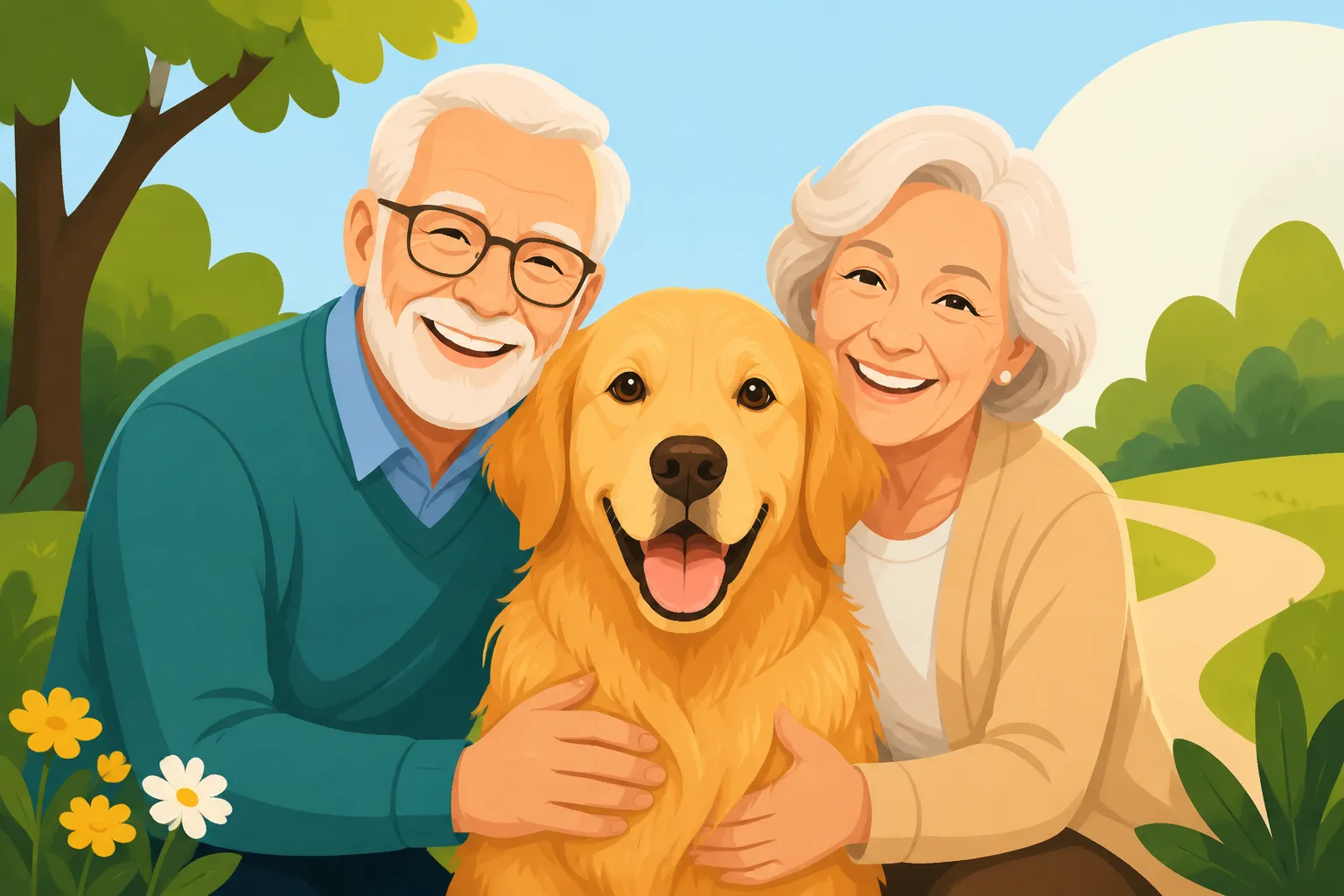
Golden Retrievers for Retirees and Older Owners
Deciding to bring a Golden Retriever into your life during your retirement years or as an older owner is a truly heartwarming thought. You envision those calm, loving eyes, the gentle nuzzles, and the comforting presence of a loyal companion. But let's be honest, there's also that little voice of worry: Can I keep up? Will I be able to manage a big, energetic dog? This guide is here to help you weigh those feelings, understand the realities, and confidently determine if a Golden Retriever is indeed the perfect furry addition to your golden years.
Why a Golden Retriever Might (or Might Not) Be Your Ideal Retirement Companion
Bringing a dog into your life at any age is a big decision, but it carries particular nuances for retirees and older adults. The golden years offer more time and a different pace, which can be wonderful for a dog, but also present unique considerations.
The Golden Temperament: A Match Made for Calm Homes?
Golden Retrievers are renowned for their gentle, friendly, and patient dispositions. They truly are people-pleasers at heart, and this characteristic often makes them incredibly adaptable to various home environments, including those of older owners. They thrive on companionship and affection, often content to simply be near their humans, whether you're reading a book, watching television, or enjoying a quiet afternoon in the garden. This desire for connection means they're usually not the type to wander off on their own for hours; instead, they prefer to be part of whatever you're doing. Many older owners find immense comfort in this unwavering presence, reducing feelings of loneliness and providing a constant, warm anchor in their daily lives. It’s their inherent good nature that often draws people to them, and this is certainly a huge plus for someone looking for a steady, affectionate friend. Golden Retriever Temperament and Personality explores these traits in more detail.
However, it's also important to remember that every dog is an individual. While the breed standard leans towards a calm and agreeable nature, a young Golden, especially a puppy or adolescent, can still exhibit bursts of energy, curiosity, and sometimes a surprising amount of clumsy enthusiasm. They don't arrive fully formed as the serene companion you envision; they need guidance, training, and a consistent routine to become that dog. If your home is already very quiet and you're not prepared for some initial puppy chaos, even a Golden's good nature can be tested. A realistic understanding of a puppy's initial demands versus the calm maturity of an adult Golden is key.
Energy Levels: Puppy Zoomies vs. Adult Strolls
Let's address the elephant in the room: Golden Retrievers are an active breed. As puppies and adolescents, they are bundles of boundless energy, often engaging in "zoomies" where they race around the house or yard with impressive speed. This period can last well into their second year, sometimes even longer for particularly high-drive individuals. For an older owner, managing a boisterous young Golden who needs multiple outlets for their energy can be physically demanding. Imagine trying to keep up with a wiggly, excited 60-pound puppy on a leash, or constantly retrieving toys they've knocked over. It's a joyful, but very real, challenge.
As they mature, their energy levels tend to mellow, transitioning from explosive bursts to a more consistent need for daily activity. An adult Golden still needs regular exercise – daily walks, playtime, and mental stimulation – to stay healthy and happy. They aren't typically content to be couch potatoes all day, every day. However, a well-exercised adult Golden will settle down beautifully indoors, becoming the calm companion you dreamed of. The key is understanding that "mellow" for a Golden Retriever still means an hour or two of dedicated activity spread throughout the day, not just a quick trip to the backyard.
Physical Demands: What to Expect from an Active Breed
Beyond just energy, Goldens come with physical demands that owners need to consider. They are a medium-to-large breed, with adult males typically weighing 65-75 pounds and females 55-65 pounds. A full-grown Golden can be a strong puller on a leash if not trained properly, and their enthusiasm can sometimes manifest as jumping up to greet you or guests. For an older adult with joint issues, balance concerns, or limited mobility, managing a strong, excited dog can pose a risk of falls or strains. Think about situations like navigating slippery floors, getting in and out of the car, or just walking on uneven terrain.
Grooming is another physical aspect. Golden Retrievers have a dense double coat that sheds considerably, especially during seasonal "coat blows." Regular brushing is essential to prevent mats and keep shedding manageable. This involves bending, reaching, and holding the dog steady. While it's a lovely bonding experience, it does require a certain level of physical capability. Similarly, bathing a large dog can be quite a workout, and nail trims require steady hands and sometimes a strong grip. These aren't insurmountable tasks, but they are realities that need to be planned for.
Overcoming Potential Challenges for Older Owners
It's natural to have concerns about meeting the needs of a Golden Retriever as you age. The good news is that many potential challenges can be successfully managed with forethought, a few clever strategies, and sometimes, a little help from others.
Managing Exercise Needs as You Age
The daily exercise requirement for a Golden Retriever is non-negotiable for their physical and mental well-being. Typically, this means at least an hour to two hours of activity daily, which can include brisk walks, fetch, or swimming. If your own mobility is a concern, or you anticipate days where you might not feel up to a long walk, you have options.
Consider hiring a professional dog walker for daily outings. Many services offer flexible schedules, whether you need someone every day or just a few times a week. This ensures your Golden gets their necessary physical activity, even when you can't provide it yourself. Another wonderful solution is to enlist the help of a younger family member, a friend, or even a responsible teenager in your neighborhood. They might be thrilled to spend time with your Golden, offering walks or playtime in exchange for a small fee or simply the joy of dog companionship. Remember, mental stimulation is just as important as physical exercise; puzzle toys, scent games, and short training sessions can be done indoors and require less physical exertion. Exercise a Golden Retriever Needs Each Day provides a deeper dive into their activity requirements.
Handling a Large, Strong Dog
A Golden Retriever's size and strength, while part of their charm, can be a hurdle for some older owners. A strong puller on a leash is not only frustrating but potentially dangerous. Investing in good training from the start is paramount. Puppy classes and basic obedience training, either in a group setting or with a private trainer, can teach your Golden proper leash manners and impulse control. You can also explore specialized equipment like front-clip harnesses or head halters, which offer more control with less physical effort, making walks much more enjoyable. Retailers like Chewy offer a wide array of training aids and harnesses suitable for Goldens.
Beyond training, making your home dog-friendly for both of you can help. Non-slip rugs on hard floors can prevent slips and falls for both you and your dog, especially as they age and may experience Golden Retriever Arthritis and Joint Decline. Consider ramps for accessing cars or furniture if your Golden is prone to jumping or if you want to protect their joints. This not only makes life easier for you but also safeguards your Golden’s long-term health. If you struggle with lifting a heavy dog, particularly for vet visits or in an emergency, having a plan or someone on call can provide immense peace of mind.
Navigating Veterinary Care and Costs in Later Life
Golden Retrievers, like all purebreds, are predisposed to certain health conditions, including various cancers, hip and elbow dysplasia, and heart issues. While reputable breeders screen for many of these, costs for unexpected illnesses or age-related care can be significant. This is a crucial consideration for anyone on a fixed income. Routine Vet Costs for a Golden Retriever and Golden Retriever Cancer Treatment Costs highlight just how quickly expenses can add up.
One strategy many owners employ is pet insurance. Plans vary, but a good policy can cover a significant portion of unexpected veterinary bills, giving you peace of mind. It's often best to get insurance when your Golden is a puppy, before any pre-existing conditions develop. Alternatively, building a dedicated savings fund specifically for veterinary emergencies can provide a financial buffer. Many older owners find that the upfront investment in high-quality food (often available for delivery from places like Chewy), preventative care, and regular vet check-ups (which become twice-yearly for senior Goldens) helps keep their dogs healthier in the long run, potentially reducing the frequency of costly emergency visits. Pet Insurance for a Golden Retriever is a great resource to learn more about your options.
Here's a quick look at some key considerations for older owners:
| Factor | Young Golden Retriever (Puppy/Adolescent) | Adult Golden Retriever (2-8 years) | Senior Golden Retriever (9+ years) | Considerations for Older Owners |
|---|---|---|---|---|
| Energy Level | Very High, bursts of intense play | Moderate to High, requires consistent activity | Low to Moderate, enjoys gentle walks and naps | Can you manage puppy energy? Will you commit to daily walks for an adult? |
| Physical Strength | Can be clumsy, prone to jumping, strong pullers | Strong, can still pull on leash if untrained | Can be stiff, less agile, may need assistance | Can you control a large dog? Are you stable on your feet? |
| Grooming Needs | Moderate, getting used to brushing | High, regular brushing to manage shedding | Moderate, may need help reaching certain spots | Can you comfortably brush a large dog regularly? |
| Training Demand | High, crucial for good manners | Moderate, reinforcement and advanced skills | Low, maintaining existing commands | Are you willing to invest time/money in training? |
| Health Risks | Growth plate injuries, some genetic conditions | Hip/elbow dysplasia, cancer risk begins | Arthritis, cancer, cognitive decline, organ issues | Are you prepared for potentially significant vet bills, especially for seniors? |
| Companionship | Very affectionate, needs constant interaction | Highly devoted, thrives on being with family | Extremely cuddly, provides immense comfort | Looking for a constant, loving presence? Golden Retrievers excel here. |
The Unmatched Joys of a Golden Retriever in Retirement
Despite the practical considerations, there's a reason Golden Retrievers are consistently one of the most beloved breeds, especially for those seeking a devoted companion. For retirees and older owners, the benefits can profoundly enhance quality of life.
Companionship, Comfort, and Emotional Support
Perhaps the greatest gift a Golden Retriever offers is their unparalleled companionship and emotional support. They are known for their ability to bond deeply with their families, offering unconditional love and a constant, comforting presence. For someone living alone, a Golden can be an antidote to loneliness, providing a warm body to cuddle, a furry head to stroke, and a pair of adoring eyes that follow you everywhere. The simple act of interacting with a dog – petting them, talking to them, even just having them lie at your feet – has been shown to reduce stress, lower blood pressure, and alleviate feelings of anxiety. They offer a sense of purpose, a daily routine, and countless moments of simple joy that can brighten even the cloudiest day. Imagine a quiet evening by the fire, your Golden's head resting gently on your lap, a silent testament to the bond you share. It's pure, unadulterated comfort.
Beyond just presence, Golden Retrievers are remarkably intuitive. They often seem to sense their owner's mood, offering a nudge or a gentle lick when you're feeling down. This emotional intelligence makes them wonderful therapeutic companions, capable of providing immense solace. The responsibility of caring for another living being can also be incredibly fulfilling, giving retirees a renewed sense of routine and importance in their daily lives. Caring for a Senior Golden Retriever illustrates how profound this bond becomes over time.
Encouraging an Active, Engaged Lifestyle
While we've discussed the challenges of their energy, a Golden Retriever can also be a fantastic motivator for maintaining an active lifestyle. Knowing your dog needs a walk or playtime can be the gentle nudge you need to get outdoors and move your own body, even on days you might prefer to stay in. Those daily strolls are not just good for your Golden; they're excellent for your own cardiovascular health, muscle strength, and mood. The fresh air and natural light can do wonders.
Beyond physical activity, a Golden encourages engagement with the world around you. Walks in the park often lead to friendly conversations with other dog owners, expanding your social circle. Training classes offer mental stimulation for both of you and are a great way to meet new people. Even simple trips to the local pet store, like Chewy's physical locations (if available) or simply browsing their website together, become shared experiences. A Golden Retriever is rarely content with stagnation, and their zest for life can be incredibly infectious, inspiring their owners to remain curious and active.
The Golden's Adaptability to a Slower Pace
One of the most appealing traits of a mature Golden Retriever is their remarkable adaptability. While they are active, they are also deeply attuned to their owners' routines and energy levels. If you've trained them well and met their basic exercise needs, they are generally content to settle down and relax when you do. This means they can transition smoothly from an energetic walk in the morning to a quiet afternoon nap beside you. They understand the difference between playtime and quiet time, and they usually respect those boundaries beautifully. This adaptability is particularly valuable for older owners whose energy levels may fluctuate from day to day.
As Goldens enter their senior years, their pace naturally slows. They become even more content with shorter, gentler walks and more time spent cuddling. This means that as you both age, your dog's needs will often align more closely with your own evolving capabilities. Rather than becoming a burden, a well-cared-for senior Golden Retriever can become an even more profound source of comfort and a gentle reminder of all the wonderful years you've shared. The profound loyalty and unwavering affection of a Golden Retriever truly know no age limits, making them a companion that grows and adapts right alongside you.
Disclaimer
This article is for general informational purposes only and does not constitute professional advice. Laws, prices and regulations vary by location and change over time. Consult a qualified professional for guidance on your specific situation.