Lord Tweedmouth and the First Golden Retrievers
Have you ever wondered about the true origins of your beloved Golden Retriever, or perhaps heard strange tales about their ancestry that just didn't quite add up? It's easy to get lost in the folklore surrounding dog breeds, especially one as popular and cherished as the Golden. This guide will take you back in time to the Scottish Highlands, cutting through the myths to reveal the genuine, meticulously documented story of how the Golden Retriever came to be, all thanks to one dedicated man.
The Genesis of a Beloved Breed: Lord Tweedmouth's Vision
It’s truly fascinating to think that a breed as globally recognized and loved as the Golden Retriever has such a clear, recorded beginning. Unlike many ancient breeds whose origins are shrouded in the mists of time and conjecture, the Golden Retriever's story is an open book, largely thanks to the diligent record-keeping of its founder. This isn't just a historical anecdote; understanding this foundation helps us appreciate the very essence of what makes a Golden Retriever, well, a Golden.
The Man Behind the Myth: Dudley Coutts Marjoribanks
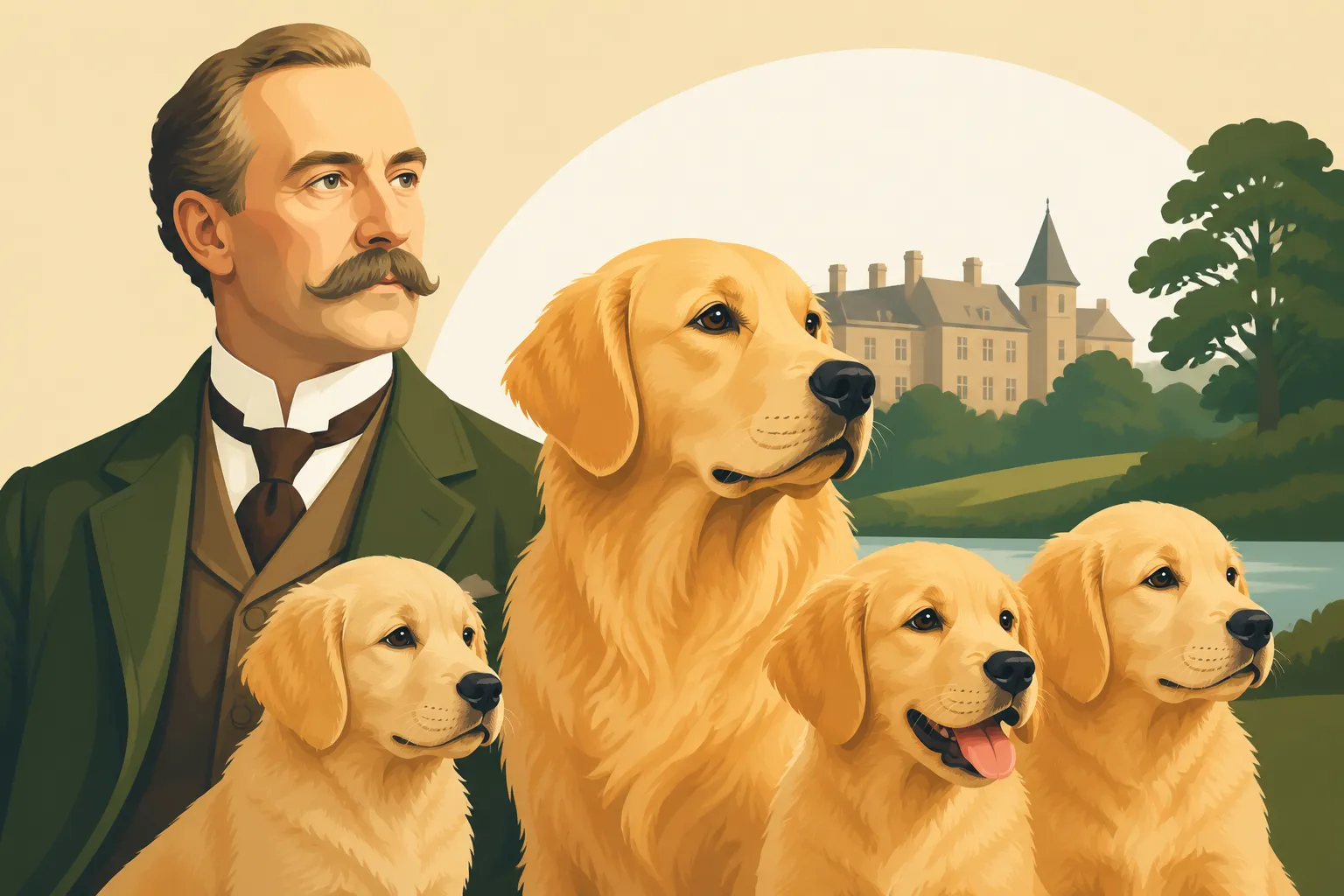
The journey begins with Dudley Coutts Marjoribanks, who would later become the first Baron Tweedmouth. Imagine a Scottish nobleman in the mid-19th century, passionate about hunting and with a particular love for retrieving waterfowl. He lived at Guisachan, his sprawling estate nestled in the Scottish Highlands near Inverness. This wasn't just any country estate; it was a sportsman's paradise, surrounded by lochs, rivers, and game-rich lands. Marjoribanks wasn't content with the existing retriever breeds of his time, feeling they lacked the specific blend of biddability, intelligence, and a gentle mouth he desired for retrieving shot game without damaging it. He had a vision for a dog that was hardy enough for the harsh Scottish climate, yet possessed a gentle disposition and an unwavering dedication to its handler. This personal quest for the ideal gundog laid the entire groundwork for the Golden Retriever as we know it today.
His approach wasn't haphazard; it was a deliberate, selective breeding program, something quite forward-thinking for the era. He wasn't just mixing dogs; he was studying temperaments, assessing physical traits, and meticulously documenting the outcomes. This dedication to specific characteristics is what allowed him to refine and eventually solidify the traits that define the breed.
Dispelling the Russian Circus Dog Myth
Before we delve deeper into the actual breeding, it’s important to address a persistent myth that used to circulate widely: the idea that Golden Retrievers descended from Russian circus dogs. This tale, often spun with romantic embellishments of a traveling troupe performing near Guisachan, claimed that Lord Tweedmouth was so impressed by their intelligence and retrieving abilities that he bought an entire group of them to start his breeding program. While it makes for a colorful story, it is entirely untrue.
This myth was thoroughly debunked in 1952 when the meticulously kept stud book of Lord Tweedmouth himself was published. The book, a treasure trove of handwritten notes, pedigrees, and breeding details, left no room for doubt about the breed's true lineage. It showed a clear, concise family tree, firmly rooted in native British gundog stock, with no exotic circus performers in sight. The persistence of such myths highlights how eager people are to find dramatic origins for their beloved companions, but in this case, the truth is far more satisfying and historically significant. Knowing the real story of Where the Golden Retriever Came From grounds us in fact, rather than fanciful fiction.
The Foundational Breeding Program at Guisachan
The real story of the Golden Retriever begins not with a circus, but with a carefully considered pairing of specific dogs, driven by Lord Tweedmouth's desire to create a superior retriever. This wasn't about aesthetics initially, but about function, temperament, and an innate ability to perform demanding tasks in challenging environments.
The Crucial Role of Nous and Belle
The true foundation of the Golden Retriever breed rests firmly on the shoulders of two dogs: a yellow Wavy-Coated Retriever named Nous, and a Tweed Water Spaniel named Belle. Nous was acquired by Lord Tweedmouth in 1868. He was an anomaly among his litter, being the only yellow puppy born to black parents. At the time, yellow retrievers weren't particularly common or sought after, but Nous had exceptional retrieving abilities and a wonderfully calm temperament. He possessed the physical attributes and, crucially, the biddability that Marjoribanks was looking for in a working dog.
Belle, the second key player, was a liver-colored Tweed Water Spaniel, a breed that is now extinct. Tweed Water Spaniels were known for their keen intelligence, eagerness to please, and exceptional water retrieving skills. They had dense, curly coats, webbed feet, and a hearty constitution, perfectly suited for the cold, wet conditions of Scottish hunting. When Lord Tweedmouth bred Nous and Belle in 1868, it was a deliberate choice to combine the best traits of both breeds, hoping to produce offspring that would inherit Nous's retrieving prowess and gentle mouth, along with Belle's aquatic abilities and biddable nature. This initial pairing created the very first litter of what would eventually become the Golden Retriever.
Beyond the First Pair: Introducing the Tweed Water Spaniel
The Tweed Water Spaniel played an absolutely critical role in shaping the Golden Retriever. While Nous provided the yellow color and some of the retriever instincts, Belle and her lineage brought invaluable attributes to the emerging breed. The Tweed Water Spaniel contributed significantly to the Golden's dense, water-repellent double coat, which is essential for working in cold water, and their strong swimming drive. They were also known for their soft mouths, a trait paramount for a gundog that retrieves delicate game without damage. This combination of traits meant that the offspring were not just visually appealing with their golden hues, but were also highly functional working dogs right from the start.
Lord Tweedmouth didn't stop at Nous and Belle. He continued to selectively breed their descendants, occasionally outcrossing with other breeds to refine traits or introduce new qualities, always with a clear purpose in mind. For instance, there were infusions of Irish Setter to enhance scenting ability and bone, and potentially a Labrador Retriever for further retrieving drive and physical robustness. Each step was calculated, aimed at perfecting the gundog that existed in his mind's eye. This meticulous selection process over decades ensured that the desirable traits were consistently passed down and strengthened in subsequent generations. You can learn more about The Tweed Water Spaniel Behind Every Golden Retriever.
Early Litters and Documentation: The Stud Book
What truly sets the Golden Retriever's origin story apart is the incredibly detailed record-keeping by Lord Tweedmouth. He maintained a private stud book from 1868 to 1890, meticulously logging every breeding, every litter, and the names of the puppies. This isn't just a dry list of dates and names; it's a living document that provides an unbroken chain of ancestry for the breed. The first litter from Nous and Belle, born in 1868, included four yellow puppies: Crocus, Cowslip, Ada, and Primrose. These pups formed the true foundation of the Golden Retriever lines.
The stud book, discovered and published in the 20th century, was revolutionary. It definitively proved the breed's origins, laying to rest all the speculative theories, including the Russian circus dog myth. It details the careful line breeding and judicious outcrossing that went into creating the ideal retriever. This level of documentation is rare for dog breeds of that era and provides invaluable insight into the vision and dedication Lord Tweedmouth had for his dogs. It wasn't just about creating pretty pets; it was about purposeful breeding for a specific role. This rigorous documentation means that modern Golden Retrievers can trace their lineage directly back to these original Guisachan dogs, a heritage few other breeds can claim with such certainty. The insights gleaned from records like these even feed into modern understandings, like those explored in What the Morris Animal Foundation Golden Study Tracks.
Shaping the Golden Retriever's Early Traits
The characteristics we cherish in Golden Retrievers today—their gentle nature, their intelligence, their drive to please—were not accidental. They were deliberately cultivated over many generations by Lord Tweedmouth and his staff at Guisachan, all with a specific job in mind.
The Goal: A Superior Waterfowl Retriever
Lord Tweedmouth's primary objective was to develop the ultimate waterfowl retriever. This wasn't a breed intended for guarding, herding, or simple companionship, though they excelled at that too. He needed a dog that could work tirelessly alongside hunters, often in difficult terrain and icy Scottish waters, without hesitation. This meant a dog that was physically robust, with a dense, waterproof coat and webbed feet for swimming. But physical traits alone weren't enough. The dog needed exceptional intelligence to understand commands, even subtle hand signals, and the biddability to respond reliably under pressure. A "soft mouth" was also non-negotiable—the ability to retrieve a fallen bird without crushing or damaging it, ensuring it remained fit for the table.
This demanding role shaped much of the Golden Retriever's inherent personality. A dog that is constantly seeking to please its handler, that is attentive and eager to learn, is a dog that excels in retrieving. Lord Tweedmouth was breeding for partners, not just tools. This dedication to specific functional traits is why Golden Retrievers today often have a strong retrieving instinct and love carrying objects around, a direct nod to their heritage, as discussed in Why Golden Retrievers Love Carrying Shoes.
Temperament and Physical Characteristics Emergence
The careful selection process at Guisachan gradually solidified the Golden Retriever's distinct temperament and physical appearance. Temperamentally, Lord Tweedmouth prioritized intelligence, trainability, and an affectionate, even-keeled disposition. He needed dogs that could integrate into the family home as well as perform in the field. Aggression or skittishness would be detrimental to their working ability and their role as companions. This focus on a stable, friendly nature is why Golden Retrievers are renowned for their wonderful temperaments today, making them excellent family pets and therapy dogs.
Physically, the "golden" color, though initially an incidental trait from Nous, became a hallmark of the breed. The wavy or flat, water-resistant double coat provided protection from the elements. Their strong, athletic build, balanced proportions, and kind expression also became consistent features. These traits were not just aesthetic; they were functional. A well-built dog could cover ground quickly, navigate obstacles, and retrieve heavy game. The broad head and powerful jaws, combined with that soft mouth, were perfect for holding birds gently. Each physical attribute was honed to create a dog perfectly suited for its purpose, making them recognizable and beloved across the world, as explored in Golden Retriever Temperament and Personality.
| Trait | Ancestral Contribution (Nous/Belle) | Desired Golden Retriever Outcome |
|---|---|---|
| Coat Color | Nous (yellow Wavy-Coat Retriever) | Distinctive golden shades |
| Coat Type | Belle (dense, curly Tweed Water Spaniel) | Dense, water-resistant double coat, wavy/flat |
| Water Aptitude | Belle (strong swimmer, webbed feet) | Exceptional swimming ability, love of water |
| Scenting Ability | Both (retrievers, spaniels) | Strong nose for locating game |
| Biddability/Trainability | Both (working gundogs) | High intelligence, eagerness to please |
| Soft Mouth | Both (retrievers, spaniels) | Gentle hold on retrieved items |
| Physical Build | Both (athletic, hardy) | Strong, balanced, athletic body |
| Temperament | Both (even-keeled, friendly) | Affectionate, stable, kind disposition |
Recognition and Evolution of the Breed
From the secluded Highlands of Scotland, the Golden Retriever began its slow but steady journey into the wider world, gaining recognition and evolving from a niche gundog to a beloved international breed.
From Yellow Flat-Coats to Golden Retrievers
In its earliest days, the emerging breed was often referred to as "Yellow Flat-Coated Retrievers" or simply "Golden Flat-Coats." This nomenclature reflected their most obvious characteristics: their distinct color and their lineage from the Flat-Coated Retriever type. For a while, they were exhibited in dog shows under this broader classification, which sometimes led to confusion or misidentification. However, as their specific characteristics became more consistent and their numbers grew, it became clear that they were distinct enough to warrant their own classification.
The journey to formal recognition wasn't instantaneous. It required advocates, dedicated breeders, and a clear, consistent breed standard. In the early 20th century, efforts intensified to establish them as a separate breed. It was around this time that the name "Golden Retriever" began to take hold, capturing the essence of their defining color and their inherent retrieving ability. This shift in naming wasn't just a semantic change; it signified their coming of age as a recognized and respected breed in their own right. This period marks a crucial step in Who Coined the Name Golden Retriever.
The Breed's Journey Beyond Guisachan
While Guisachan was the cradle of the Golden Retriever, the breed couldn't truly flourish without leaving its ancestral home. Lord Tweedmouth gifted or sold puppies to friends, family, and fellow sportsmen, gradually spreading his unique line of retrievers across Scotland and eventually into England. These early owners, impressed by the dogs' intelligence, beauty, and working prowess, became unofficial ambassadors for the breed. They continued the tradition of careful breeding, ensuring the qualities established at Guisachan were maintained and further developed.
The breed's move beyond the Scottish estates was critical for its long-term survival and popularity. As more people experienced the joy of owning and working with a Golden Retriever, demand grew. They proved to be not only exceptional gundogs but also wonderful companions, their adaptable nature and eagerness to please making them suitable for various households. This organic spread, driven by word-of-mouth and undeniable performance, set the stage for their eventual international recognition. The principles of responsible breeding, much like those you’d look for in Health Clearances a Golden Retriever Breeder Must Show, were already being laid.
Establishing the Breed Standard and Clubs
Formal recognition was the next logical step in the Golden Retriever's evolution. In the early 1900s, breeders and enthusiasts began organizing to solidify the breed's place in the canine world. The first breed club, The Golden Retriever Club, was established in England in 1913. This was a pivotal moment, as it provided a collective voice for the breed, allowing for the formalization of its characteristics into a written breed standard. A breed standard is essentially a blueprint, describing the ideal physical appearance, temperament, and movement of a Golden Retriever, ensuring consistency across the breed.
The American Kennel Club (AKC) officially recognized the Golden Retriever as a distinct breed in 1925, further cementing its status. This recognition meant that Golden Retrievers could compete in official conformation shows and trials, increasing their visibility and popularity. Breed clubs, like the Golden Retriever Club of America, played a crucial role in promoting responsible breeding, advocating for the breed's health, and educating the public. These clubs continue to be vital guardians of the breed, ensuring that the legacy of Lord Tweedmouth's vision lives on and that future generations of Golden Retrievers embody the traits he painstakingly cultivated. The AKC's criteria, for example, heavily influenced aspects like The AKC Golden Retriever Breed Standard. When looking for supplies for your Golden, whether it's specific food or a new toy, brands like Chewy often carry products tailored to these breed standards, like durable chew toys for a Golden's strong retrieving mouth.
The Enduring Legacy of Guisachan
The story of the Golden Retriever is not just a tale of the past; it's a living legacy that continues to influence the breed and its enthusiasts around the globe. The quiet Scottish estate where it all began remains a poignant reminder of this remarkable origin.
What Remains of the Historic Estate Today
The Guisachan Estate, once the bustling hub of Lord Tweedmouth’s breeding efforts, stands today as a site of pilgrimage for Golden Retriever lovers worldwide. While the grand house itself is now a ruin, having fallen into disrepair over the decades, the grounds and surrounding area retain a powerful sense of history. You can still walk the paths where Nous and Belle once roamed, explore the woodlands and lochs where the first Golden Retrievers honed their retrieving skills, and imagine the meticulous work that went into creating the breed.
Efforts have been made by various groups, including breed enthusiasts and preservation societies, to maintain and recognize the historical significance of Guisachan. International gatherings are sometimes held there, bringing together Golden Retriever owners and breeders from across the globe to celebrate their shared heritage. It serves as a tangible link to the breed's foundational moments, a quiet testament to the vision of one man and the enduring impact of his passion. Visiting Guisachan is a deeply moving experience for those who appreciate the breed's history and wish to connect with its roots, offering a unique insight into What Is Left of the Guisachan Estate Today.
The Golden Retriever's Place in History and Hearts
Lord Tweedmouth’s meticulous work in the 19th century has bestowed upon the world one of its most cherished dog breeds. The Golden Retriever's blend of intelligence, biddability, loyalty, and gentle nature has made it far more than just a gundog; it has become a quintessential family companion, a highly successful assistance dog, and a beloved participant in various canine sports. Their adaptable temperament allows them to thrive in diverse roles, from search and rescue to therapy work, showcasing the incredible versatility that was implicitly bred into them from the very beginning.
The enduring popularity of the Golden Retriever, consistently ranking among the top breeds globally, speaks volumes about the success of Lord Tweedmouth's vision. His desire for a dog that was both a capable worker and a devoted companion laid the foundation for a breed that continues to enrich the lives of millions. When you see a Golden Retriever wagging its tail, eager to please, whether it’s retrieving a thrown ball from a lake or gently nudging your hand for a pet, you are witnessing the direct result of that initial breeding program at Guisachan. It’s a testament to the fact that purposeful, thoughtful breeding can create not just a functional animal, but a truly remarkable and beloved member of countless families. Even shopping for their needs, like specific foods or dental chews available on platforms like Chewy, connects us to their inherent needs as a breed. The care and attention that went into their creation are echoed in the careful decisions owners make today for their Golden, striving for the Golden Retriever Lifespan and What Shortened It and a life filled with joy.
Disclaimer
This article is for general informational purposes only and does not constitute professional advice. Laws, prices and regulations vary by location and change over time. Consult a qualified professional for guidance on your specific situation.