The Tweed Water Spaniel Behind Every Golden Retriever
Most Golden Retriever owners know their beloved companions are excellent retrievers, but few truly grasp the fascinating and intricate tapestry of breeds that wove together to create them. It's easy to assume the "Retriever" in their name tells the whole story, but there's a specific, often overlooked ancestor, the Tweed Water Spaniel, whose unique traits are deeply ingrained in every Golden. This guide will take you on a journey back in time, unveiling the pivotal role this now-extinct breed played in shaping the Golden Retriever we cherish today.
Unearthing the Golden Retriever's Ancestry: Beyond the Retriever Name
When we look at a Golden Retriever today, with their expressive eyes, wagging tail, and undeniable enthusiasm for life, it's hard to imagine that their creation was a deliberate, almost scientific endeavor. The breed didn't just "happen." It was the result of a dedicated vision by one man, Lord Tweedmouth, who sought to create the ultimate gundog for the Scottish Highlands. His goals were ambitious, and he meticulously selected specific dogs to bring his dream to life.
Lord Tweedmouth and the Genesis of a Breed
In the mid-19th century, hunting practices were evolving. Gamekeepers and sportsmen needed dogs that could not only retrieve birds from land but also from icy cold water, often through thick brush, and do so with a gentle mouth. Traditional setters and existing retrievers had their strengths, but none possessed the complete package Lord Tweedmouth envisioned. He wanted a dog that was biddable, intelligent, hardy, and possessed an innate love for retrieving, irrespective of the terrain or weather. This was not a casual breeding project; it was a quest to perfect a working companion. You can read more about his fascinating origins in Lord Tweedmouth and the First Golden Retrievers.
The famous Guisachan Estate in the Scottish Highlands, Lord Tweedmouth's ancestral home, was the backdrop for this ambitious undertaking. It was here, amidst the rugged landscapes and abundant game, that the foundations of the Golden Retriever were laid. The estate provided the perfect testing ground for his developing line of dogs, ensuring that only the most capable and temperamentally sound animals contributed to the future of the breed. It truly was a unique breeding ground, as detailed in The Guisachan Estate Where Golden Retrievers Began.
Lord Tweedmouth kept meticulous records, a practice that was uncommon for the time. These "Guisachan Notebooks" are invaluable, chronicling his breeding choices and the traits he observed in each generation. Without these detailed logs, the true origin story of the Golden Retriever might have been lost to history, shrouded in guesswork and legend. His foresight in documenting his work allowed future generations to understand the precise lineage and the thoughtful intent behind each cross.
The Retriever Puzzle: What Makes a Golden, Golden?
Lord Tweedmouth wasn't just looking for any dog that could fetch; he was seeking a very specific set of characteristics that would define his ideal gundog. The "soft mouth" was paramount – a dog that could gently carry a retrieved bird without damaging it, a trait that requires both innate instinct and careful training. This gentle carrying ability is still a hallmark of the breed today, often seen when they "retrieve" a favorite toy or even bring you a slipper. It’s part of The Golden Retriever's Retrieving Heritage.
Beyond the retrieve itself, temperament was key. He needed a dog that was eager to please, highly trainable, and resilient to the demanding conditions of hunting. Aggression or skittishness would be detrimental to a working dog, so he focused on breeding for a calm, confident, and cooperative disposition. These early selections for temperament laid the groundwork for the Golden Retriever's renowned friendly and adaptable nature.
Swimming ability and a robust constitution were also non-negotiable. Hunting in the Scottish Highlands meant braving cold lochs and rivers, and a dog had to be able to enter and exit the water repeatedly without succumbing to the chill or becoming exhausted. A dense, water-repellent coat and a strong physique were essential for this demanding work. These practical considerations shaped the physical characteristics that would become synonymous with the breed.
The Indispensable Role of the Tweed Water Spaniel
While Lord Tweedmouth bred various types of retrievers and even some setters, it was the integration of the Tweed Water Spaniel that truly provided the secret sauce, giving the nascent Golden Retriever line its distinctive qualities. This was not just another dog thrown into the mix; it was a strategic choice that imbued the breed with traits that were foundational to its success.
Nous and Belle: The Foundation Pair
The story famously begins with Nous, a yellow retriever, whom Lord Tweedmouth acquired in Brighton in 1868. Nous was a unique golden-colored dog, standing out from the predominantly black retrievers of the time. But a single dog, no matter how striking, doesn't make a breed. The critical step was his pairing with Belle, a Tweed Water Spaniel. This union, recorded in those precious notebooks, is considered the true origin point of the Golden Retriever. Nous and Belle: The Golden Retriever's Foundation Pair tells their full story.
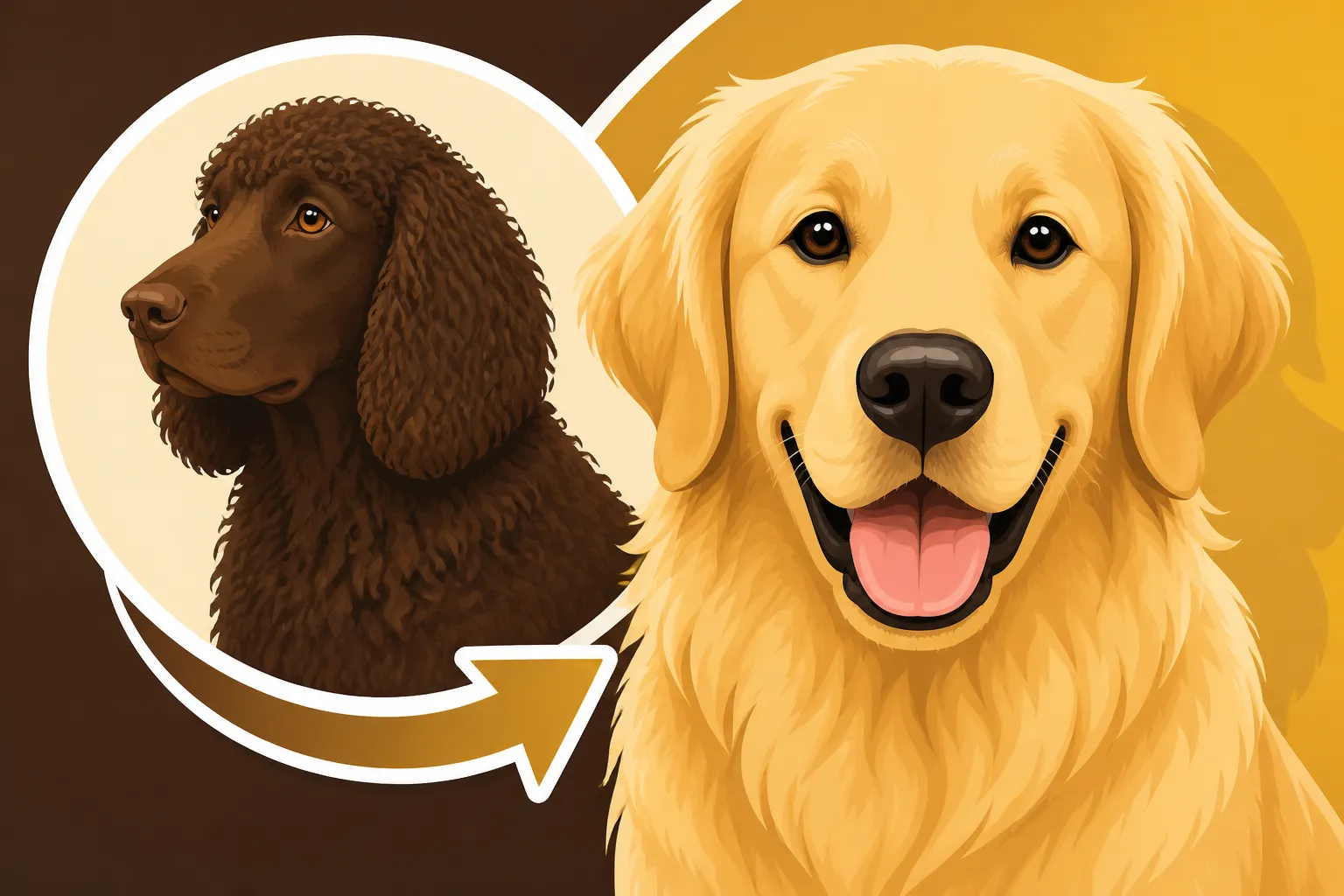
Belle, the Tweed Water Spaniel, brought a specific genetic blueprint to the table. These were medium-sized, athletic dogs, known for their curly, liver-colored coats and, most importantly, their exceptional swimming prowess and keen retrieving abilities from water. They were diligent, intelligent, and eager workers, traits that would become cornerstones of the Golden Retriever personality. Without Belle's contributions, the Golden Retriever would likely have developed into a very different dog.
The puppies from Nous and Belle’s first litter in 1868 were four yellow pups, which Lord Tweedmouth kept and began to selectively breed from. This initial cross immediately produced dogs that possessed the desired combination of retrieving instincts, intelligence, and a tractable nature. It was these offspring, carrying the unique blend of their parents' traits, that he meticulously developed over the next 20 years, bringing in occasional outcrosses to refine the line further.
Traits Inherited from the Tweed Water Spaniel
The influence of the Tweed Water Spaniel on the Golden Retriever is profound and evident in many aspects of the breed today. Perhaps most notably is the Golden's undeniable love for water. While other retrievers enjoy a swim, the sheer enthusiasm and natural aptitude for water that many Goldens possess can be directly traced back to their spaniel ancestors. They often seem to be born knowing how to swim and will seek out any puddle, pond, or ocean with glee. If your Golden is a water baby, you’re seeing a direct ancestral trait.
| Trait | Origin | Impact on Golden Retriever |
|---|---|---|
| Love for Water | Tweed Water Spaniel | Inherent joy of swimming, retrieving from water, water-resistant coat. |
| Biddability/Trainability | Tweed Water Spaniel/Nous | Eager-to-please nature, high intelligence, ease of training for complex tasks. |
| Soft Mouth | Tweed Water Spaniel/Nous | Ability to retrieve game or objects without damage, gentle bite. |
| Endurance | Tweed Water Spaniel | Stamina for prolonged activity, especially in demanding environments like hunting. |
| Coat Characteristics | Tweed Water Spaniel | Dense undercoat, water-repellent outer coat, though color and curl pattern diversified. |
| Friendly Disposition | Tweed Water Spaniel/Nous | Affectionate, tolerant, and social nature, good with families and strangers. |
The biddability and intelligence for which Golden Retrievers are famous also owe a great deal to the Tweed Water Spaniel. These spaniels were working dogs, bred to cooperate closely with hunters, making them intelligent and receptive to training. This desire to please and quick learning ability are key characteristics that make Goldens such wonderful family pets and highly successful service dogs, as explored in Golden Retriever Intelligence Rankings. This natural aptitude makes training a joy, whether you're teaching basic commands or more advanced tasks.
Even the Golden Retriever's distinctive coat, while now a varying shade of gold, was influenced by the dense, somewhat wavy, and water-repellent coat of the Tweed Water Spaniel. While the color changed, the practical structure designed for protection and insulation in cold water certainly remained. When you see your Golden shake off water like a duck, it’s a nod to this heritage, and you can understand more about its coat in What Makes a Golden Retriever's Coat Water Resistant.
Why the Tweed Water Spaniel is No More
It’s a bittersweet reality that the very breed instrumental in the creation of the Golden Retriever is now extinct. The Tweed Water Spaniel, despite its valuable traits, eventually faded as a distinct breed. This was partly due to evolving breeding practices and the emergence of new, more specialized retriever breeds, including the Golden Retriever itself. As breeders focused on perfecting new lines, the original Tweed Water Spaniel stock became absorbed into these developing breeds or simply dwindled.
The traits that made the Tweed Water Spaniel so desirable – its love for water, its retrieving drive, its biddability – were so successfully incorporated into the Golden Retriever that there was less perceived need to maintain the original spaniel breed. It’s a testament to its genetic strength and suitability for the desired purpose that its characteristics became so dominant in the new breed. So, while the Tweed Water Spaniel no longer exists as a standalone breed, its spirit, its genetic legacy, lives on robustly in every Golden Retriever.
Understanding this extinct lineage adds a layer of appreciation for the Golden Retriever. It highlights the thoughtful and deliberate process that went into its creation, rather than it being a random accident of nature. It also reminds us that breed conservation is a complex topic, where some lines are maintained and others, while foundational, eventually merge into new forms.
Beyond the Tweed: Other Influences on the Golden Retriever
While the Tweed Water Spaniel was undeniably a cornerstone, Lord Tweedmouth’s breeding program was not solely dependent on Nous and Belle. He strategically introduced other breeds to fine-tune specific traits, ensuring the Golden Retriever would embody the versatility and excellence he sought. This careful, measured approach meant that the Golden Retriever wasn't just a Tweed Water Spaniel hybrid, but a sophisticated blend.
Early Crosses and Breed Development
Lord Tweedmouth experimented with various outcrosses in the early generations. Historical records indicate that he brought in genes from Irish Setters, particularly for their scenting abilities and handsome red coloring, and possibly a Bloodhound, which would have contributed to improved scenting and tracking capabilities, as well as robust bone structure. These additions were not random; they were calculated to enhance the working performance and physical attributes of the emerging breed. You can dive deeper into the full mix of ancestry in What Breeds Went Into the First Golden Retrievers.
These early crosses helped to solidify the Golden Retriever’s characteristic golden color. Initially, the dogs were often referred to as "Yellow Retrievers" due to their distinctive hue, which set them apart from the more common black or liver-colored retrievers of the era. The color was aesthetically pleasing but also practical, making them visible in varied hunting environments. This early nomenclature is discussed further in Why Goldens Were Once Called Yellow Retrievers.
The infusion of these diverse genes created a genetic pool that was both robust and versatile. Each outcross was carefully considered, with Lord Tweedmouth seeking to improve specific aspects without diluting the core temperament and working drive he had established with Nous and Belle's lineage. This meticulous record-keeping and selective breeding are what truly set the foundation for a consistent and recognizable breed.
Solidifying the Breed Standard
As the Golden Retriever breed began to gain recognition, particularly in the late 19th and early 20th centuries, there was a growing need to establish a formal "breed standard." This standard outlined the ideal physical characteristics and temperament, providing a blueprint for breeders to follow. It ensured that as the breed proliferated, its essential qualities remained consistent. This standardization process was crucial for the breed's long-term health and identity.
The early Golden Retriever Clubs, first in England and then in North America, played a vital role in formalizing these standards. They worked to define the acceptable range of coat colors, physical dimensions, and temperamental traits, safeguarding the breed against undesirable deviations. This collective effort helped to solidify the Golden Retriever’s place as a distinct and beloved breed.
The breed standard emphasizes traits directly traceable to the working origins: a gentle, friendly, intelligent expression; a strong, muscular body built for active work; and that distinctive golden coat with its water-repellent properties. These elements weren't just about looks; they were about functionality and maintaining the integrity of Lord Tweedmouth's original vision for a versatile and beloved gundog. It’s a testament to thoughtful breeding and selection over many generations.
Appreciating the Golden's Unique Heritage Today
Every time your Golden Retriever plunges headfirst into a muddy puddle, retrieves a dropped toy with unparalleled enthusiasm, or gazes up at you with those deep, intelligent eyes, you're witnessing the living legacy of their ancestors. Understanding this heritage isn't just a historical curiosity; it helps us appreciate the unique traits of our Goldens and reinforces the importance of responsible ownership and breeding.
Recognizing Ancestral Traits in Your Modern Golden
That undeniable passion for water that so many Goldens exhibit is a direct link to their Tweed Water Spaniel heritage. Whether it's the ocean, a lake, or even just a backyard kiddie pool, a Golden often finds immense joy in being in or around water. This isn't just a random preference; it's an ingrained instinct passed down through generations of dogs bred to work tirelessly in aquatic environments. Providing opportunities for safe water play can be a wonderful way to connect with this aspect of their history, and you can find great flotation devices and water toys on sites like Chewy.
Their inherent biddability and eagerness to please, which make them such a dream to train, also come from this working background. Lord Tweedmouth specifically selected for dogs that would be responsive and cooperative in the field, making them intelligent and easy to teach. This trait makes Goldens excel in obedience, agility, and as therapy or service dogs, showcasing their remarkable adaptability and intelligence. Their pleasant nature is a core part of the Golden Retriever Temperament and Personality.
Even the way your Golden Retriever sometimes "mouths" your hand gently without biting hard, or carries a toy around with a soft grip, speaks to their "soft mouth" heritage. This gentle approach to carrying objects was essential for retrieving delicate game birds without causing damage. It’s a beautiful demonstration of their ingrained instincts, showing how deeply their past defines their present behaviors.
The Importance of Responsible Breeding and Preservation
Understanding the careful breeding that went into creating the Golden Retriever highlights the importance of supporting reputable breeders today. Responsible breeders don't just breed for looks; they prioritize health, temperament, and adherence to the breed standard, ensuring that the wonderful traits we cherish in Goldens continue for future generations. This includes carrying out all necessary Health Clearances a Golden Retriever Breeder Must Show.
When seeking a Golden Retriever, whether a puppy or an adult, looking for breeders who understand and honor the breed's history and genetic predispositions is crucial. They will be transparent about health testing and temperament, ensuring you bring home a dog that truly embodies the best qualities of the breed. Finding such a breeder is an important first step, as detailed in Finding a Reputable Golden Retriever Breeder.
By appreciating the ancestral efforts that went into creating this magnificent breed, we become better advocates for its future. We can ensure that Goldens continue to be known not just for their stunning looks, but for the remarkable intelligence, loyalty, and loving nature that have been carefully cultivated since the days of Lord Tweedmouth and his indispensable Tweed Water Spaniels. Remember, for all your Golden's needs, from training tools that leverage their intelligence to durable water toys that celebrate their heritage, Chewy offers a wide selection.
Disclaimer
This article is for general informational purposes only and does not constitute professional advice. Laws, prices and regulations vary by location and change over time. Consult a qualified professional for guidance on your specific situation.