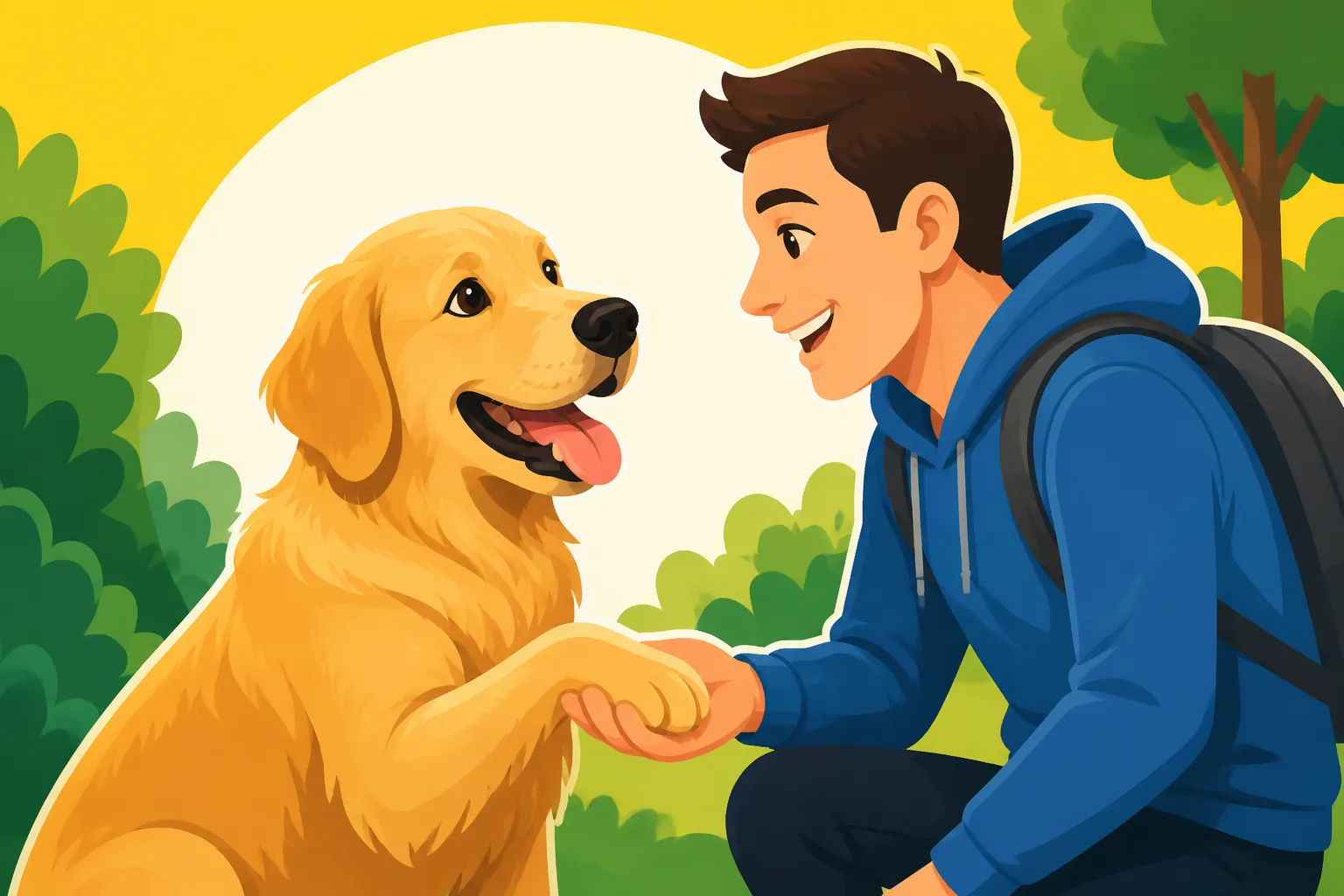
Golden Retrievers With Strangers
It’s a universally acknowledged truth that most Golden Retrievers absolutely adore people. You walk down the street with your Golden, and it often feels like you're accompanied by a furry, four-legged celebrity, ready to greet every passerby with a wagging tail and an earnest plea for attention. But what happens when that boundless enthusiasm becomes a bit much, or when your usually social Golden suddenly acts reserved around new faces? This guide will dive deep into the fascinating world of Golden Retrievers and their interactions with strangers, helping you understand their natural tendencies, navigate common challenges, and foster positive, well-mannered greetings every time.
The Golden Retriever's Natural Inclination Towards People
Golden Retrievers are renowned for their friendly, outgoing dispositions, and this isn't just a happy accident. Their inherent sociability is deeply rooted in their history and purpose, making them truly unique in the canine world.
Bred for Sociability and Trust
Think about what Golden Retrievers were originally bred for: retrieving game for hunters. This job required a dog that was not only intelligent and eager to please but also incredibly biddable and trustworthy with all people involved in the hunt, including those they might not know well. A Golden needed to be able to approach various individuals, perhaps a fellow hunter or a gamekeeper, and return game to them gently without showing any aggression or shyness. This historical context is vital to understanding why your Golden likely sees every human as a potential friend, rather than a threat.
Their role demanded a soft mouth and an even softer temperament. Imagine a dog that snatches a retrieved bird or growls at the hand offering praise – that wouldn't have made for a successful hunting companion. Instead, selective breeding favored dogs that were inherently calm, friendly, and approachable by anyone, traits that cemented their reputation as wonderful family pets today. This means that a Golden Retriever’s default setting is often one of openness and acceptance towards new people, a beautiful characteristic that makes them so beloved. If you've ever wondered why your Golden seems to instantly trust a stranger, it's often because that trust is etched into their very DNA. You can learn more about their core characteristics in Golden Retriever Temperament and Personality.
The "Golden Greeting" – Enthusiasm in Action
Ah, the "Golden Greeting." If you own one, you know exactly what I'm talking about. It's that full-body wiggle, the frantic tail-wagging, the excited little grunts, and often, an attempt to get as close to a new person as possible. Sometimes, it involves a friendly lean, other times a gentle nudge with their nose, or even an offering of a favorite toy. This isn't just politeness; it's pure, unadulterated joy at the prospect of a new interaction. They're telling you, in no uncertain terms, "You're here! You're new! You might have treats! And I love you already!"
This enthusiasm, while incredibly endearing to dog lovers, can sometimes be overwhelming for those who aren't used to such an effusive welcome. Picture an elderly neighbor or a small child being greeted by a 70-pound bundle of wiggles. While the intention is pure, the impact can be a bit much. They see a new person as an opportunity for pets, ear scratches, and perhaps even a game of fetch. It's a testament to their incredibly social nature, viewing every new encounter as a potential friendship waiting to blossom.
Understanding Different Reactions to Strangers
While the typical Golden Retriever is a social butterfly, their interactions with strangers can sometimes present a spectrum of behaviors. Understanding these nuances is key to fostering positive and safe encounters for everyone involved.
The Overly Enthusiastic Greeter: Jumping and Mouthiness
The classic scenario: a new person walks through the door, and your Golden transforms into a furry pogo stick, jumping up with all four paws, tail a blur, and maybe even offering a playful nip. This behavior, while rarely aggressive, stems from an overwhelming excitement and a desperate desire for attention. They’ve learned that jumping often gets a reaction – even if it’s a negative one like a push or a shout – and any attention is better than no attention. For a Golden, jumping means they're trying to get to face-level for greeting, or simply can't contain their joy.
Mouthiness, where they might gently take your hand in their mouth or "mouth" your arm, is another common display of their retrieving heritage and a natural part of how they explore and interact, especially as puppies. While a Golden's "soft mouth" means they usually don't apply pressure, it can be startling or uncomfortable for strangers. It's their way of saying hello and engaging, often learned during puppy play with littermates. The challenge for us as owners is to channel this energy into more appropriate greetings, ensuring that their boundless joy doesn't result in an accidental bump or a scared visitor. You might find some helpful tips for this in Stopping a Golden Retriever Puppy From Jumping on Guests.
The Shy or Fearful Golden: Causes and Signs
Not every Golden Retriever is an immediate crowd-pleaser, and it’s important to acknowledge and respect that. Some Goldens can be genuinely shy or fearful around strangers, which can be disheartening for owners expecting that classic Golden friendliness. This shyness isn't a flaw in their character but a behavior influenced by several factors. A lack of early and consistent socialization during their critical puppy development window (roughly 8-16 weeks) is a common culprit. If a puppy isn't exposed to a wide variety of people – different ages, genders, body types, hats, uniforms – they might grow up to be wary of anything unfamiliar. Genetics can also play a role, as can negative past experiences. A rescue Golden, for example, might have unknown history that makes them distrustful or anxious around new people.
Signs of shyness or fear can be subtle. They might retreat behind your legs, avoid eye contact, tuck their tail, or exhibit "whale eye" where the whites of their eyes are visible. They might yawn excessively, lick their lips, or even try to escape the interaction. It's crucial not to force interactions or scold them for being shy, as this can exacerbate their fear. Instead, understanding these signs allows you to advocate for your dog and create safe, positive experiences. Recognizing the delicate signals of a fearful pup is the first step in Fearful Behavior in a Golden Retriever.
The "Guard Dog" Misconception: Barking at the Door
It's a common misconception that if a dog barks when someone approaches the house, they're acting as a guard dog. While a Golden Retriever certainly has a strong bark, and they will alert you to someone at the door, they are generally not bred for true guarding or protection. Their barking is more often a result of excitement, a desire to investigate, or simply a warning that "someone is here!" rather than an aggressive threat. They want to greet the visitor, not fend them off.
A Golden's bark at the door is typically an alarm system – "Hey, human, there's a person out there, and I need you to let me say hello!" They might be telling you they're excited, or they're curious, or perhaps they've decided the UPS delivery driver is actually a long-lost friend they just haven't met yet. True protective aggression is very uncharacteristic of the breed. If your Golden is barking excessively or displaying any signs of actual aggression towards strangers, it's usually a sign of underlying anxiety, poor socialization, or a misunderstanding of their role, and it warrants professional guidance rather than being mistaken for a protective instinct. For more on their natural protective abilities, read Whether Golden Retrievers Make Good Watchdogs.
Strategies for Positive Interactions with Strangers
Guiding your Golden Retriever to have calm, polite, and positive interactions with strangers is a journey that starts early and continues throughout their life. It’s about setting them up for success and teaching them the social etiquette of the human world.
Early and Ongoing Socialization
The golden rule for raising a well-adjusted Golden Retriever is early and consistent socialization. The critical socialization window for puppies is generally between 8 and 16 weeks of age, but it absolutely doesn't stop there. During this crucial period, your puppy needs to be safely exposed to a wide variety of sights, sounds, textures, and, yes, people. This means introducing them to men, women, children, people wearing hats, people in uniforms, people with different gaits, and people using assistive devices. Positive, calm introductions where the puppy feels safe and rewarded are paramount. Puppy classes are an excellent way to provide controlled exposure to new people and other dogs, often under the guidance of experienced trainers.
But socialization isn't a one-and-done event. It's an ongoing process. As your Golden matures, continue to expose them to new environments and people. Regular visits to dog-friendly parks, outdoor cafes, or even just walks in bustling areas (always with appropriate supervision and boundaries) can help reinforce their comfort and confidence around strangers. The goal is for your Golden to view new people as a normal, non-threatening, and often rewarding part of their world, rather than something to be feared or over-enthusiastically tackled. This continuous exposure is detailed further in Socializing a Golden Retriever Puppy.
Managing Over-Excitement: Training and Management
If you have an enthusiastic greeter, managing their excitement is crucial for pleasant interactions. The key is to teach an incompatible behavior – something they can do instead of jumping. "Four on the Floor" is a classic command. When someone approaches, ask your Golden to sit. Reward them generously with a high-value treat only when all four paws are on the ground. Consistency is vital here. Every time they jump, calmly turn your back, cross your arms, and disengage. Only re-engage when they are calm. Teach your guests to do the same – no petting or attention for jumping.
A leash and collar (or a well-fitting harness) are your best friends in these situations. Before a guest enters, put your Golden on a leash. This gives you physical control and allows you to calmly guide them into a sit or down position. Practicing "doorbell manners" by having someone ring the doorbell, asking your Golden to settle, and then rewarding them before opening the door can work wonders. Many pet supply retailers, like Chewy, offer a wide range of durable leashes and training treats that are perfect for these daily practice sessions. You might also want to explore Golden Retriever Greeting Manners at the Door for more in-depth strategies.
Here’s a quick comparison of methods for managing an overly enthusiastic greeter:
| Method | Description | Best For | Key Benefit |
|---|---|---|---|
| "Four on the Floor" | Teach and reward sitting or lying down for greetings. Withdraw attention for jumping. | Goldens who jump for attention. | Teaches a polite, alternative behavior. |
| Leash Control | Keep your Golden on a leash when expecting guests to prevent jumping and provide guidance. | High-energy Goldens; during initial training phases. | Immediate physical management; prevents unwanted behaviors before they start. |
| Distraction & Redirection | Offer a favorite toy or puzzle feeder as a distraction when guests arrive. | Goldens who get overstimulated easily. | Redirects energy to an acceptable activity; prevents jumping. |
| Controlled Exposure | Practice controlled greetings with a few calm, dog-savvy friends first, gradually increasing difficulty. | All Goldens, especially those needing consistent practice. | Builds confidence and good habits in a low-pressure environment. |
Building Confidence in Shy Goldens
For the shy or fearful Golden, the approach must be gentle, patient, and always centered on positive reinforcement. Never force your Golden to interact with a stranger. Instead, allow them to approach on their own terms, at their own pace. Teach strangers to respect their space. A simple rule is to have the stranger ignore your Golden initially, allowing the dog to initiate contact. If your Golden chooses to approach, the stranger can offer a gentle, low-value treat by tossing it on the ground near the dog, rather than directly reaching out. This allows the Golden to associate strangers with positive things without feeling pressured.
You can create positive associations by having calm, dog-savvy friends sit quietly in your living room while you give your Golden high-value treats from a distance. Gradually, as your Golden shows signs of comfort (relaxed body language, voluntary approach), the stranger can offer a treat. Work with a professional positive-reinforcement trainer if your Golden's fear is significant or impacting their quality of life. They can provide tailored guidance and help you navigate more complex behavioral issues. Remember, building confidence is a marathon, not a sprint, and every small, positive step forward is a victory. Check out Helping a Shy Golden Retriever Gain Confidence for more detailed methods.
Tools and Techniques for Smooth Encounters
Beyond foundational training and socialization, specific tools and techniques can make a significant difference in how your Golden Retriever interacts with strangers, making encounters smoother and more enjoyable for everyone.
Leashes, Harnesses, and Controlled Greetings
A good quality leash and harness are not just for safety on walks; they are invaluable tools for managing greetings with strangers. For an excitable Golden, a front-clip harness can be particularly effective. Unlike back-clip harnesses that can encourage pulling by allowing the dog to lean into it, a front-clip harness redirects their forward momentum when they pull, gently turning them to the side. This makes it harder for them to lunge or jump at an approaching person and gives you more control over their body. Many Goldens respond well to them because they are humane and don't cause discomfort. When expecting guests, keeping your Golden on a leash can help you guide them into a calm "sit" before the stranger gets too close, allowing for a more controlled and polite introduction.
Practicing controlled greetings on a leash in various environments – from quiet neighborhood streets to slightly busier park entrances – can solidify good habits. Always reward calm behavior. If your Golden remains calm and seated as a stranger approaches, even just for a few seconds, that's a perfect moment to offer a treat and praise. Websites like Chewy offer an extensive selection of harnesses, from standard clip designs to more specialized front-clip options, ensuring you can find one that fits your Golden comfortably and effectively. Choosing the right equipment for walks is elaborated upon in Front-Clip Versus Back-Clip Harness for a Golden.
Utilizing Treats and Toys as Positive Reinforcers
Positive reinforcement, especially with high-value treats, is the cornerstone of successful training for Golden Retrievers, particularly when it comes to stranger interactions. For the overly enthusiastic greeter, treats can be used to redirect their attention away from jumping. For example, when a stranger is about to approach, have a handful of enticing treats ready. As your Golden sees the person, immediately start rewarding them for staying calm and keeping "four on the floor." You're essentially saying, "Being calm when new people arrive earns you yummy things!"
For the shy Golden, treats can build positive associations. If a stranger gently tosses a treat near your dog without forcing an interaction, it teaches your Golden that new people bring good things, reducing their anxiety. Toys can also play a role; a favorite squeaky toy or a ball can be a fantastic distraction, redirecting an excited Golden's energy into a game of fetch rather than a jumping spree. Keep a stash of small, soft, high-value treats on hand – think tiny pieces of cheese, cooked chicken, or specialized training treats available from retailers like Chewy – to make yourself (and kind strangers) the most interesting thing in the environment. Discover more about effective rewards in Best Treats for Training a Golden Retriever.
Communicating with Strangers About Your Golden
Perhaps one of the most overlooked, yet vital, strategies for positive interactions is for you to communicate effectively with strangers about your dog. People often assume all Goldens are eager for head-to-tail petting, and while many are, some might be having an off day, are in training, or are genuinely shy. Don't be afraid to advocate for your dog.
Here are some phrases you can use:
- "They're still learning their manners, so please wait until they settle before petting."
- "They can be a little shy with new people, so a slow approach is best, or maybe just a treat on the ground."
- "We're working on 'four on the floor,' so no petting if they jump!"
- "They're super friendly, but let's have them sit first."
For dogs that are particularly nervous or reactive, a yellow bandana or ribbon tied to their leash is a widely recognized signal to others that the dog needs space. It's a visual cue that tells strangers, "Please keep your distance," without you having to verbally explain every time. Being proactive in your communication manages expectations and ensures your Golden has the most positive interactions possible, reinforcing good behavior and protecting them from uncomfortable encounters.
Disclaimer
This article is for general informational purposes only and does not constitute professional advice. Laws, prices and regulations vary by location and change over time. Consult a qualified professional for guidance on your specific situation.