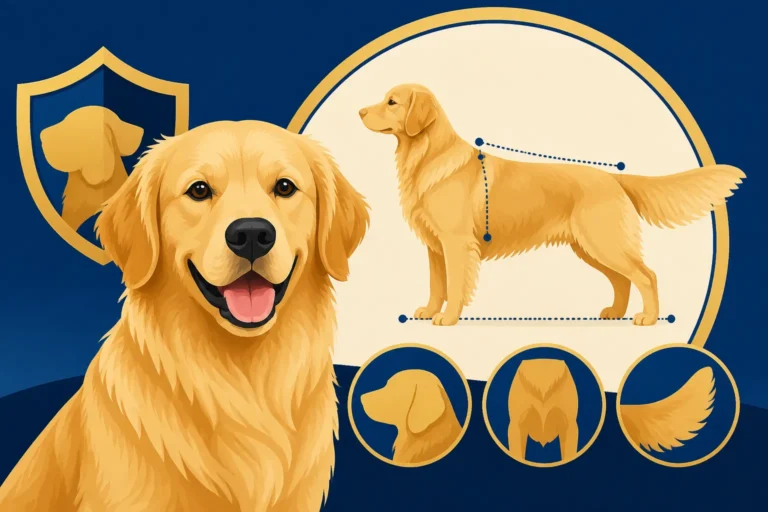
Who Coined the Name Golden Retriever
Have you ever stopped to wonder about the name "Golden Retriever" itself? It rolls off the tongue so perfectly, describing these magnificent dogs with such poetic accuracy, yet it wasn't always their official title. Many of us know the general history of the breed, but pinning down the exact moment and person responsible for coining that iconic name can be surprisingly elusive. This guide will take a deep dive into the origins of the breed's name, exploring the visionary who brought these dogs into being and how their golden moniker came to be universally recognized.
The Mystery of the Golden Name: Why It's Not a Simple Answer
It’s easy to assume that a breed as popular and well-loved as the Golden Retriever would have a straightforward origin story for its name. We see their beautiful golden coats, their retrieving instincts, and the name just seems to fit, right? But like many things steeped in history, the path from their humble beginnings to their current, globally recognized name is a little more winding than you might expect. It wasn't a corporate marketing team that sat down and decided on "Golden Retriever," nor was it a sudden decree. Instead, it was an organic evolution, primarily driven by the man who first developed the breed and the official bodies that eventually recognized it.
The initial confusion often stems from early records and anecdotal accounts. Before they were universally known as Golden Retrievers, these dogs, or their immediate ancestors, were referred to by various descriptive terms. This informal naming period makes it challenging to pinpoint a single "aha!" moment when the name was officially born. It’s more akin to a nickname gaining traction and eventually becoming the formal title. Understanding this journey requires a look back at the very genesis of the breed itself, and the individual whose passion and meticulous record-keeping paved the way for the name we cherish today.
Think about how families often have endearing nicknames for their pets long before those names become official or known to the wider world. The same principle, on a much grander scale, applied to the early Golden Retrievers. The "coining" wasn't a public event, but rather something that unfolded within the private world of a dedicated breeder and then slowly spread as the dogs gained wider attention.
Lord Tweedmouth: The Man Behind the Breed and Its Early Identifiers
The story of the Golden Retriever, and by extension its name, begins definitively with one man: Dudley Coutts Marjoribanks, the first Lord Tweedmouth. Residing at Guisachan Estate in the Scottish Highlands, Lord Tweedmouth was a passionate and discerning dog breeder with a very specific vision. He wasn't simply breeding dogs at random; he had a clear goal to create a superb gundog, one that possessed an excellent nose, a biddable temperament, and a soft mouth for retrieving game undamaged from both land and water. This focused approach to breeding laid the groundwork for the traits we associate with Goldens today.
His invaluable legacy includes detailed studbook records, meticulously kept from 1835 to 1890. These records are an absolute treasure trove for anyone interested in the breed's history, as they trace the precise lineage of his dogs. They reveal the careful crosses he made, notably between a yellow-coated Tweed Water Spaniel (a now-extinct breed) named Nous and a liver-colored female Tweed Water Spaniel named Belle. From these initial pairings, and subsequent careful outcrosses and line breedings, the Golden Retriever began to take shape. These documents are primary evidence, offering a direct window into the early development that would eventually lead to the breed's popular identity. Learning about Lord Tweedmouth and the First Golden Retrievers really paints a picture of his dedication.
Within these very records, and in the correspondence and conversations of Lord Tweedmouth and his family, we find the earliest clues to the breed's evolving name. Initially, his dogs might have simply been referred to by their individual names, or perhaps collectively as "Tweedmouth's Retrievers" or "Guisachan dogs." The descriptive element of their appearance – their beautiful, shining coats – naturally led to certain informal labels. It's within this context of familial interaction and breeding notes that the name truly started to take root. You can learn more about The Guisachan Estate Where Golden Retrievers Began.
The Crucial Diaries of Lord Tweedmouth
Lord Tweedmouth's personal diaries and breeding records are the undisputed gold standard for understanding the Golden Retriever's genesis. These aren't just dry lists of dates and names; they contain comments, observations, and details about the dogs he was breeding. It’s within these pages that we see the term "Golden Retriever" or very similar descriptive phrases appear. He wasn't just breeding; he was observing, naming, and refining. His choice of breeding partners, like Nous and Belle: The Golden Retriever's Foundation Pair, was all recorded.
While there isn't a single diary entry that famously states, "Today I shall call them 'Golden Retrievers!'" the terminology he used to describe his dogs and their offspring increasingly gravitated towards their distinctive color. The dogs were clearly noted for their "yellow" or "golden" coats, combined with their inherent retrieving abilities. This descriptive combination naturally formed the basis of their future name. It wasn't about formally "coining" a marketing term, but rather about accurately describing the unique qualities of the dogs he so carefully cultivated. This is often where the initial informal name started to coalesce.
Think of it this way: when you're deeply involved in a project, you start to use shorthand descriptions that resonate with its core characteristics. For Lord Tweedmouth, the "golden" hue of his retrievers was a defining visual trait. This gradual, natural adoption of descriptive language within his private and family circle is where the name truly began its journey. These records really are critical in dispelling myths, like The Golden Retriever Russian Myth Died.
From "Yellow Retriever" to "Golden Retriever": The Evolution of a Name
For a period, before the name "Golden Retriever" became firmly established, it was common for these dogs to be referred to as "Yellow Retrievers." This makes perfect sense when you consider their prominent coat color. The descriptor "yellow" was straightforward and accurately identified them, especially in a world where other retriever types, like Black Retrievers (forerunners of the Flat-Coat and Labrador), were also common. The color was an immediate differentiator, and so the name stuck, albeit temporarily.
This early nomenclature highlights the breed's visual distinction. At a time when different retriever types were being developed, specifying the color was a practical way to categorize them. For instance, in dog shows and early breed discussions, a dog might be entered as a "yellow-coated retriever" to differentiate it from its black or brown counterparts. This era of "Yellow Retriever" further emphasizes that the name wasn't dropped from the sky but slowly developed from practical descriptions. It's interesting to look back at Why Goldens Were Once Called Yellow Retrievers.
The transition from "Yellow Retriever" to "Golden Retriever" wasn't a sudden shift, but rather a refinement. "Golden" evokes a richer, more lustrous quality than the simpler "yellow." It captures the nuances of their coats, which can range from a light cream to a deep, burnished gold. This more poetic and precise descriptor likely gained favor over time because it better conveyed the beauty and distinctiveness of the breed's appearance. It was a natural evolution of language, mirroring the increasing refinement of the breed itself.
The Influence of Family and Early Enthusiasts
While Lord Tweedmouth was the originator, the consistent use and popularization of the "Golden Retriever" name undoubtedly involved his family and the handful of early enthusiasts who acquired dogs from his Guisachan kennels. When these dogs began to spread to other breeders and sportsmen, they carried with them the name, or at least the descriptive language, that Tweedmouth and his circle used. This informal network of early adopters played a crucial role in cementing the "golden" aspect of their identity.
Imagine attending a hunting party or a local dog show in the late 19th or early 20th century. When someone brought a "Tweedmouth's Yellow Retriever," conversation would inevitably turn to their stunning "golden" coat. It's through these interactions, where descriptions were shared and repeated, that the more evocative "Golden Retriever" likely gained traction over the more prosaic "Yellow Retriever." The very quality of their coat demanded a more fitting adjective. This organic spread among a growing circle of admirers was vital for the name to move from private use to broader recognition.
It’s a testament to the descriptive power of the name that it resonated so strongly with people who encountered these dogs. The combination of their practical purpose ("retriever") and their striking appearance ("golden") made for a compelling and memorable identifier. This is how a name, initially used informally, starts to build momentum and become the preferred designation, laying the groundwork for official recognition.
Official Recognition: When "Golden Retriever" Became Set in Stone
The formal recognition by kennel clubs was the ultimate step in cementing "Golden Retriever" as the breed's official and undisputed name. This process involves breed standards being written, distinct characteristics being defined, and a name being formally registered. In the United Kingdom, The Kennel Club first recognized the breed. Initially, they were registered under a generic classification, sometimes as "Yellow or Golden Retrievers." However, as the breed gained popularity and its distinct identity became clearer, the "Golden Retriever" moniker prevailed.
| Year (Approx.) | Event | Description | Primary Naming Used |
|---|---|---|---|
| 1860s-1880s | Lord Tweedmouth's breeding program | Development of the foundational dogs at Guisachan Estate. | "Yellow Retriever," "Tweedmouth's Dogs" |
| 1903 | The Kennel Club (UK) recognition | Dogs shown and registered as "Flat-coats (Golden)." | "Flat-coats (Golden)," "Yellow Retriever" |
| 1913 | Golden Retriever Club (UK) formed | Dedicated club formed to promote and preserve the breed. | "Golden Retriever" |
| 1920 | The Kennel Club (UK) formal change | Breed officially recognized as "Golden Retriever." | "Golden Retriever" |
| 1925 | AKC (USA) recognition | American Kennel Club officially recognizes the breed. | "Golden Retriever" |
This timeline illustrates a clear progression from informal descriptive terms to a unified, official name. The formation of breed clubs, such as the Golden Retriever Club of America, also played a pivotal role in advocating for and solidifying the specific name. They worked to ensure consistency in standards and nomenclature across the growing community of breeders and owners. If you're looking into When the AKC Recognized the Golden Retriever, you'll see this history.
The formal adoption of "Golden Retriever" wasn't just about a catchy name; it was about establishing a clear identity for the breed in the eyes of the canine world. This allowed for proper classification, the development of breed standards, and the growth of a dedicated community focused on preserving the unique traits of these wonderful dogs. It marked the point where the name truly became an inseparable part of the breed's identity, globally recognized and celebrated. This official step helped define The Golden Retriever Breed Explained for generations.
Why "Golden" Stuck
The triumph of "Golden Retriever" over "Yellow Retriever" or other early descriptions wasn't arbitrary. The word "golden" carries connotations of warmth, value, and richness that "yellow" simply doesn't. It accurately reflects the spectrum of beautiful coat colors found in the breed, from pale cream to deep, rich gold, all of which possess a certain luster. It's a name that evokes the dog's inner qualities as much as its outer appearance: their "golden" temperament, their preciousness as companions, and their valuable contributions as working dogs.
Moreover, the term "Golden Retriever" is not just descriptive of color but also of function. It clearly states the breed's primary purpose: to retrieve. This combination makes the name incredibly effective and memorable. It’s concise, accurate, and evocative, perfectly capturing the essence of these dogs. It’s no wonder that once formally adopted, the name resonated so deeply and became irrevocably linked to the breed. Understanding The Golden Retriever Temperament and Personality helps explain why the "golden" moniker is so fitting beyond just coat color.
So, while there wasn't a single person who stood up and "coined" the name in a dramatic flourish, the credit for the initial, consistent descriptive use, and the eventual foundation that led to its formal adoption, undeniably lies with Lord Tweedmouth and his pioneering efforts at Guisachan. His meticulous breeding and documentation, combined with the efforts of early breed enthusiasts and kennel clubs, gave us the perfect name for these beloved dogs. Today, organizations like The Golden Retriever Club of America continue to uphold the breed's standards and celebrate its legacy.
Disclaimer
This article is for general informational purposes only and does not constitute professional advice. Laws, prices and regulations vary by location and change over time. Consult a qualified professional for guidance on your specific situation.