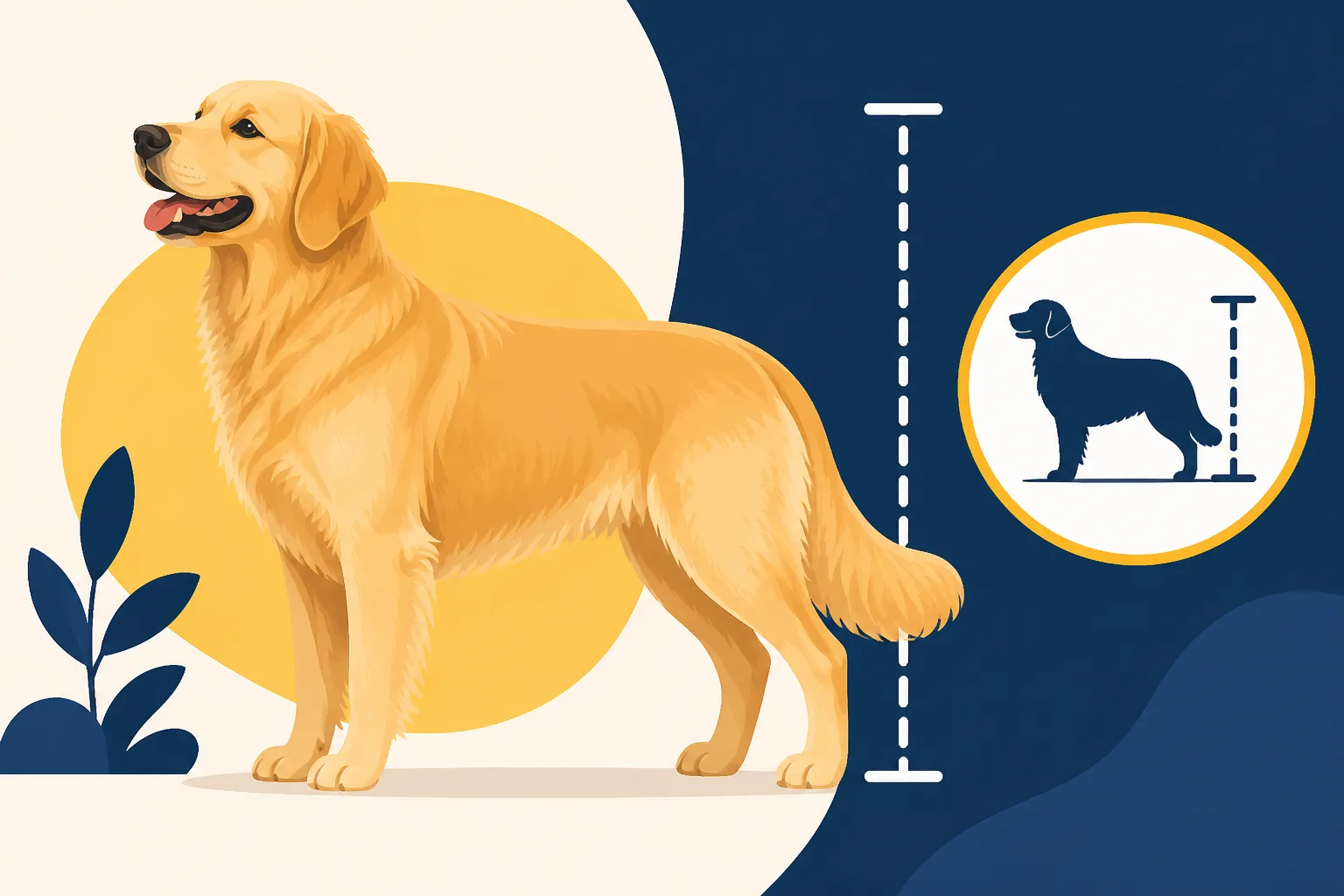
Ideal Height for a Male Golden Retriever
It's completely normal to feel a mix of excitement and a tiny bit of anxiety when you're watching your Golden Retriever puppy grow, especially when you start wondering if they're "on track" or if their size looks just right. Many of us get a little hung up on those numbers and charts, curious if our male Golden is hitting all the right growth milestones or if he's destined to be a gentle giant (or perhaps a more compact companion!). This guide is here to walk you through what's considered the ideal height for a male Golden Retriever, what influences it, and what it really means for your beloved companion.
Understanding the AKC Standard for Male Golden Retriever Height
When we talk about "ideal" height for a Golden Retriever, we're usually referring to the breed standard set forth by organizations like the American Kennel Club (AKC). This standard isn't just arbitrary; it's a carefully crafted description that defines the physical traits that allow a Golden Retriever to perform the functions it was historically bred for, while also ensuring good health and proper conformation. For male Goldens, there's a specific height range that's considered the benchmark.
What the Standard Actually States
The AKC breed standard for a male Golden Retriever specifies a height at the withers of 23 to 24 inches. The "withers" is the highest point of the shoulder blades, located at the base of the neck. It's the standard point of measurement for dogs because it's a stable skeletal point, unlike the top of the head which can vary with head position.
Now, it's important to understand this isn't a strict pass/fail test for every family dog. For a show dog, being outside this range can be a serious fault or even a disqualification in the ring. But for your pet, it simply gives you a good idea of the typical size range. A Golden Retriever who falls slightly outside this range isn't "less" of a Golden, nor does it necessarily indicate a health problem. It just means he might be a little bit on the taller or shorter side compared to the ideal. Breeders strive for this ideal because it represents the balance and proportion considered essential for the breed's function and overall well-being.
Why Conformation Matters (Even for Pets)
You might think, "My dog isn't going to dog shows, so why should I care about the standard?" And that's a fair question! While you might not be stacking your Golden for a judge, the breed standard is intrinsically linked to the health and functional ability of the dog. A dog that is too far out of proportion—either too tall and leggy, or too short and stocky—can experience issues with movement, joint stress, and overall athleticism. For example, a Golden Retriever bred to the standard should have a balanced gait, efficient movement, and the physical stamina to work in the field all day. Dogs significantly outside the standard might struggle with these inherent breed traits.
Think of it this way: a car designed for optimal performance has specific dimensions and ratios. While you can modify it, extreme changes might impact its handling and durability. Similarly, a Golden Retriever bred with proper conformation is more likely to move efficiently and gracefully, putting less strain on his joints over his lifetime. This attention to structure is part of responsible breeding and can contribute to a longer, healthier life for your dog. Understanding the standard helps you appreciate the physical artistry and functional design that goes into a well-bred Golden Retriever, whether he's a show champion or your couch potato best friend.
Factors Influencing a Male Golden Retriever's Height
While the AKC standard provides a target, the reality is that several factors play a significant role in how tall your male Golden Retriever will actually become. It's a complex interplay of genetics, environment, and early life experiences.
The Role of Genetics
Without a doubt, genetics are the primary determinant of your Golden Retriever's adult height. Just like in humans, puppies inherit traits from both parents, including their potential size. If both parents are on the taller side of the standard, there's a good chance their male offspring will also lean towards the taller end. Conversely, if the parents are smaller, their pups are likely to follow suit.
This is why responsible breeders emphasize health clearances and pedigree research. They understand the genetic lineage and how it influences not just temperament and health, but also physical characteristics like height and bone structure. A good breeder can often give you an educated estimate of your puppy's adult size based on the parents and previous litters. It’s also worth noting that there can be slight variations between different "lines" of Goldens. For example, some field lines might tend to be a bit lighter and more athletic, potentially falling on the leaner or slightly smaller side of the standard, while some show lines might be more robust and closer to the upper end of the height and weight range. You can learn more about Golden Retriever Life Expectancy by Line to understand these distinctions.
Nutrition and Diet During Growth
Proper nutrition during puppyhood and adolescence is absolutely crucial for healthy growth and reaching an appropriate adult height. Overfeeding, especially with diets too high in certain nutrients, can lead to rapid growth, which can be detrimental to a developing Golden Retriever's joints. Fast growth in large breeds is linked to an increased risk of orthopedic issues like hip and elbow dysplasia. That's why large breed puppy formulas are so important; they are specifically balanced with controlled calcium and phosphorus levels to promote slow, steady growth rather than explosive gains. You can find excellent large breed puppy food options on sites like Chewy that are formulated to support healthy development.
Conversely, underfeeding or providing a nutritionally deficient diet can stunt growth, preventing your Golden from reaching his full genetic potential. It's a delicate balance. Always consult with your veterinarian about the best diet for your growing puppy, and follow feeding guidelines carefully, adjusting for individual activity levels. The goal is steady, healthy growth, not to make your puppy bigger, faster. Understanding Large Breed Puppy Food and Why Goldens Need It is key to preventing growth-related problems.
Exercise and Activity Levels
The type and intensity of exercise your male Golden Retriever receives during his crucial growth phases can also subtly influence his skeletal development, though not typically his ultimate height in a dramatic way. However, inappropriate exercise can certainly affect his joint health, which can impact his ability to carry his adult frame comfortably.
Over-exercising a puppy with still-developing growth plates can put undue stress on their joints, potentially leading to injuries or exacerbating genetic predispositions to conditions like hip or elbow dysplasia. Long, strenuous runs or excessive jumping on hard surfaces should be avoided until your Golden's growth plates have closed, usually around 12-18 months of age, though this can vary. When a Golden Retriever's Growth Plates Close is an important topic for every Golden owner. Conversely, appropriate, moderate exercise like supervised play, short walks, and swimming (once cleared by your vet) helps build strong muscles that support the developing skeletal system. A balanced approach to exercise fosters healthy bone and muscle development, contributing to a robust, well-proportioned adult dog who can enjoy an active life.
When a Male Golden Retriever Reaches Full Height
Watching a Golden Retriever puppy grow is a whirlwind! They seem to change almost daily, and then suddenly, you realize they're not quite so "puppy" anymore. But exactly when do they hit their final adult height? It's a common question, and the answer isn't always a neat, precise date.
Growth Plate Closure and Final Height
For most male Golden Retrievers, their linear growth in height, meaning how tall they are at the withers, largely finishes when their growth plates close. Growth plates are areas of cartilage near the ends of bones in young animals that gradually harden and fuse as the animal matures. Once they've closed, the long bones can no longer lengthen.
In male Golden Retrievers, growth plates typically close between 12 to 18 months of age. Some might finish their major height growth a little earlier, others a little later. During this period, their skeletal system is maturing, and it's a critical time to ensure they're receiving proper nutrition and appropriate exercise to avoid injury to these delicate growth areas. Once the growth plates are fused, your Golden Retriever has reached his maximum height. However, while he may stop getting taller, he might continue to fill out and gain muscle mass for another year or even two, reaching his full adult weight and proportion around two to three years of age. This filling out period is when they transition from a lanky adolescent to a more solid, mature adult.
Growth Stages and Milestones
A Golden Retriever's growth journey can be broken down into a few key stages:
- Birth to 4 months: Rapid growth, but not usually focused on height. This is where they pack on puppy weight and their bones start to lengthen. They are still very much in their "roly-poly" phase.
- 4 to 8 months: Often referred to as the "lanky teenage" phase. This is when you'll notice significant height spurts. Your puppy might look a bit awkward and disproportionate during this time, with big paws and a body that hasn't quite caught up. They might seem all legs!
- 8 to 12-18 months: Height growth continues but usually slows down considerably. By 12 months, many male Goldens are very close to their adult height, though some might have a final small spurt. This is the period when growth plates are typically fusing.
- 18 months to 2-3 years: While height growth has largely ceased, your male Golden Retriever will continue to mature physically by filling out in chest width, muscle development, and overall body mass. This is where they gain that characteristic Golden Retriever substantiality. Golden Retriever Size and Adult Proportions delves deeper into these changes.
It's a marathon, not a sprint, and monitoring their progress while focusing on overall health, rather than just the tape measure, is the best approach. Good quality food, perhaps ordered from Chewy, can support them through all these critical growth phases.
What if Your Male Golden Retriever Is Taller or Shorter?
It's easy to get caught up comparing your Golden Retriever to others, or to the "ideal" numbers you read online. But what if your beloved boy doesn't perfectly fit that 23-24 inch height window? Don't fret too much; it's quite common for some variation to occur.
Normal Variation Versus Concern
Most of the time, a male Golden Retriever who is an inch or so above or below the 23-24 inch standard is simply a normal variation within the breed. Just like people, not all dogs will fit into a perfect mold, even if they come from excellent lines. A slightly taller or shorter Golden can still be a perfectly healthy, happy, and functional dog. For instance, a Golden Retriever who is 22 inches or 25 inches at the withers but is otherwise well-proportioned and healthy is likely just expressing a natural genetic range.
However, if your Golden Retriever is significantly outside this range—say, only 20 inches tall or a towering 27 inches—it might be worth a conversation with your veterinarian. Extreme deviations, especially if accompanied by other unusual physical traits or health concerns, could sometimes indicate an underlying issue, though this is rare. More often, it simply points to a mixed lineage or a genetic quirk that doesn't impact health.
When to Consult Your Vet
While minor variations are usually nothing to worry about, there are a few scenarios where it's a good idea to chat with your vet about your Golden Retriever's height and growth:
- Stunted Growth: If your male Golden Retriever seems unusually small for his age, especially if he's not gaining weight appropriately or appears generally unwell, this warrants a vet visit. It could indicate nutritional deficiencies, parasites, or other underlying health issues impacting his development.
- Excessive Height or "Legginess": While less common, extremely rapid or prolonged growth that results in a dog significantly taller than the standard could sometimes be linked to certain hormonal imbalances. If your Golden seems disproportionately tall, especially if it's sudden or unusual, your vet can assess.
- Growth Plate Issues: If you notice lameness, pain, or an unusual gait during your Golden's growth period, regardless of his height, it's crucial to see a vet immediately. Issues with growth plates can lead to long-term orthopedic problems. This is why Why Golden Retriever Puppies Limp After Play is a good read.
- Overall Health Concerns: Any time you have general concerns about your dog's growth, development, energy levels, or appetite, your vet is the best resource. They can provide an accurate assessment, rule out any problems, and offer personalized advice on nutrition and exercise.
Ultimately, while the AKC standard for height gives us a wonderful guideline, the most important thing is that your male Golden Retriever is healthy, happy, and loved, whatever his final height turns out to be. Enjoy the journey of watching him grow into the magnificent companion he's meant to be!
Disclaimer
This article is for general informational purposes only and does not constitute professional advice. Laws, prices and regulations vary by location and change over time. Consult a qualified professional for guidance on your specific situation.