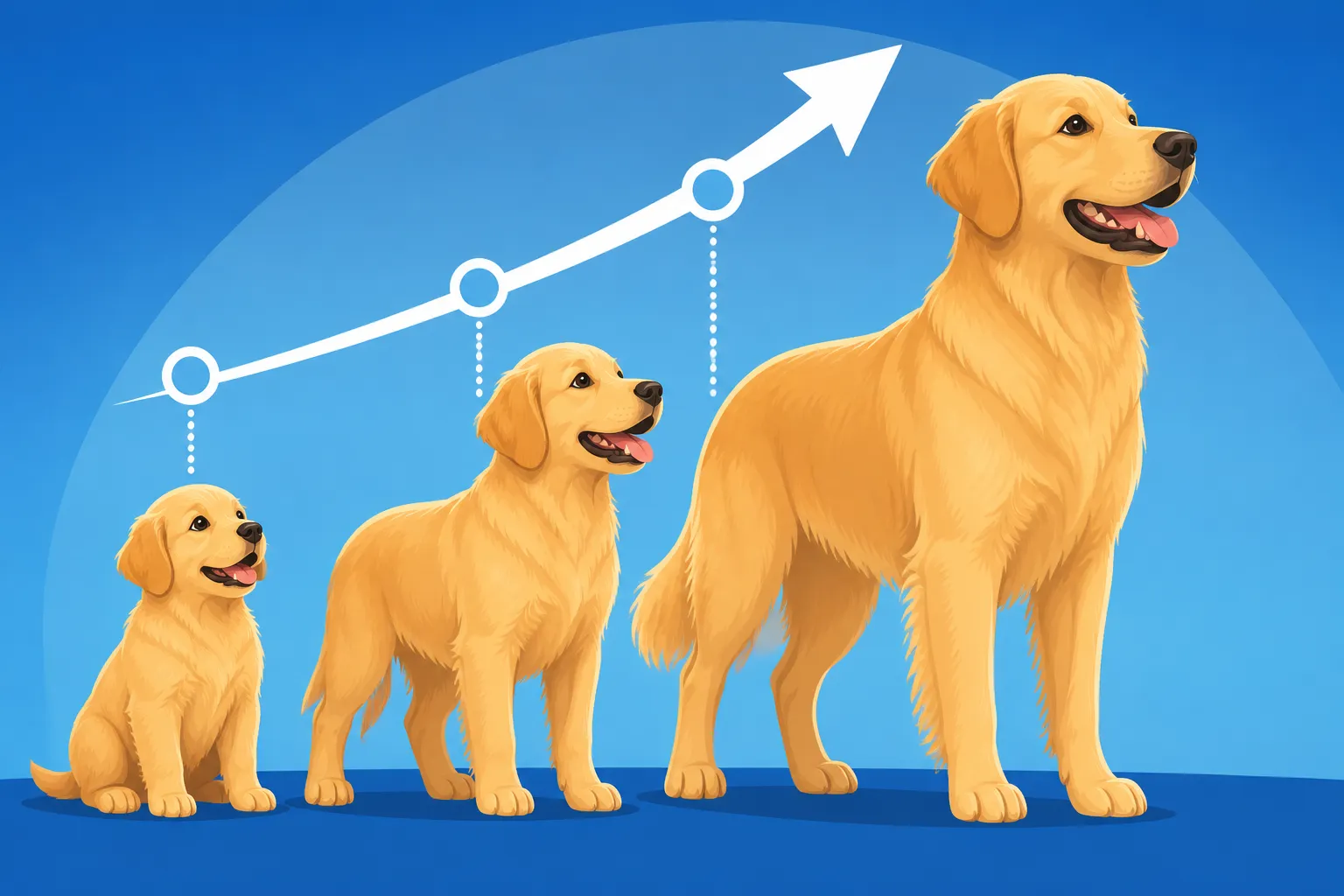
When a Golden Retriever Reaches Full Height
It's incredibly exciting to watch a Golden Retriever puppy grow from a tiny, clumsy fluffball into a majestic, athletic adult. But for many new Golden owners, there's a constant question lurking in the back of their minds: "When will they finally stop growing taller?" It feels like every week they're sprouting new inches, and you might be wondering when that growth spurt tapers off. This comprehensive guide will walk you through the typical growth timeline for Golden Retrievers, helping you understand when their vertical growth usually completes, and what factors play a role in their final stature.
Understanding Golden Retriever Growth Stages
Bringing home a Golden Retriever puppy is an absolute joy, filled with boundless energy, clumsy paws, and rapid changes. Their growth isn't just a simple linear progression; it happens in distinct stages, with different parts of their body developing at varying rates. It’s not uncommon to see a puppy go through an "awkward" phase where their legs seem too long for their body, or their head looks disproportionate. This is all part of the normal Golden Retriever growth process.
The Rapid Puppy Growth Phase
From birth up to about four to six months of age, Golden Retriever puppies experience their most explosive growth. This is the period when they gain weight and height at an astonishing rate. Think about it: a tiny eight-week-old puppy, small enough to fit in your arms, will double or even triple its size in just a few short months. During this time, proper nutrition is absolutely critical. Feeding a diet specifically formulated for large-breed puppies is essential to support their rapid bone and muscle development without causing them to grow too quickly, which can put undue stress on their developing joints. Remember, you want steady, healthy growth, not a race to maximum size. Large Breed Puppy Food and Why Goldens Need It offers more insights into this specialized nutrition.
You'll notice them getting taller almost daily, their legs seeming to stretch overnight. Their coordination might be a bit off during this phase, leading to adorable tumbles and misjudged jumps. This rapid growth also means they need controlled exercise to protect their delicate growth plates. Over-exercising a puppy can cause irreversible damage.
The Steady Adolescent Growth Phase
After the initial rapid burst, typically from around six months to about 12 months, a Golden Retriever's growth begins to slow down but is still very much in progress. During this adolescent phase, their vertical growth (height) often starts to plateau while they continue to "fill out" in terms of muscle mass and chest depth. They might not be getting noticeably taller every week, but their body is still maturing, strengthening, and adding substance. This is the equivalent of a human teenager, where they've hit most of their height but are still developing into their adult frame.
During this period, their energy levels are usually through the roof, and they're testing boundaries, but their skeletal system is still vulnerable. Continued vigilance with nutrition and exercise is paramount. You might start comparing them to other adult Goldens at the park, noticing that while your adolescent pup might be similar in height, they still lack the full breadth and depth of a mature dog.
The "Filling Out" Phase and Full Maturity
Once a Golden Retriever reaches about 12 to 18 months of age, most of their height growth is complete. However, they are far from fully mature. This is where the "filling out" phase truly takes center stage. While they might not gain much more vertical height, they will continue to broaden in the chest, develop deeper muscle tone, and achieve their full adult weight. It’s like a human reaching their adult height at 16, but continuing to build muscle and refine their physique into their early twenties.
This "filling out" process can continue until they are two, sometimes even three years old, particularly in males. Their heads will become more proportionate, their coats will thicken, and their overall appearance will transition from gangly teenager to magnificent adult. This is also when their growth plates, crucial for bone development, typically finish closing, making them less susceptible to certain types of growth-related injuries. You can read more about When a Golden Retriever's Growth Plates Close to understand the implications for their activity.
When Do They Stop Growing Taller?
The exact moment a Golden Retriever stops getting taller can vary slightly from dog to dog, but there’s a general window most fall into. It’s usually earlier than many people expect for such a large breed, with the "bulk" of their vertical growth wrapping up surprisingly quickly.
Peak Height by One Year
For most Golden Retrievers, the majority of their height growth is completed by their first birthday. Many will reach their near-final adult height between 9 and 12 months. At this point, they've likely achieved about 90-95% of their ultimate stature. While they might still gain another half-inch or so, it won't be a dramatic increase. It’s a good benchmark to consider that by the time you’re celebrating their first year with a dog-friendly cake, they’re almost done stretching upwards.
It's common for owners to see their Golden at 10 or 11 months old and think, "Wow, they're already so big!" and indeed, they are very close to their adult height. This is why careful monitoring of their weight and bone health is so important throughout their first year, as their skeletal frame is still setting up its lifelong foundation.
Minimal Growth Beyond 12-14 Months
While some minor increases in height can occur up to 14 or 18 months, these are usually negligible. A Golden Retriever is considered to have reached their full skeletal maturity in terms of height by around 18 months. Beyond this age, any changes you observe will primarily be related to their physique filling out with muscle and fat, rather than actual bone lengthening. For example, a male Golden might still broaden in the chest and neck, giving the impression of growing larger, even if his height at the shoulder hasn't changed.
It's worth noting that individual genetics play a huge role. Just like humans, some Goldens are early bloomers and hit their full height sooner, while others might be a bit slower to mature. The average height ranges for the breed are well-established, and most will fall within these guidelines regardless of their exact growth timeline. For a deeper dive, check out Ideal Height for a Male Golden Retriever and Ideal Height for a Female Golden Retriever.
Factors Influencing a Golden Retriever's Final Height
While genetics lay down the blueprint for a Golden Retriever's potential height, several environmental factors can influence whether they reach that full potential, or even exceed or fall short of it. Understanding these can help you better manage your dog’s development.
Genetics and Lineage
This is, without a doubt, the most significant factor. A Golden Retriever's adult height is primarily determined by the size of its parents and its ancestral lines. If both parents are on the taller side of the breed standard, their offspring are likely to be taller. Similarly, if they come from a lineage known for more compact Goldens, they'll likely fall into that range. This is why a reputable breeder will be able to give you a good estimate of your puppy's potential adult size by showing you the parents and their health clearances. Knowing the general size of a puppy's grandparents can also offer clues.
There are slight differences between different types of Goldens too. For instance, How British and American Goldens Differ can sometimes include variations in average height, with some lines appearing more substantial than others. Ultimately, the genetic lottery plays a huge part in how tall your individual Golden will be.
Nutrition and Diet Quality
A well-balanced, high-quality diet during puppyhood and adolescence is absolutely crucial for healthy growth. Poor nutrition, especially a lack of essential nutrients, can stunt a Golden Retriever's growth or lead to improper bone development. Conversely, overfeeding a large-breed puppy, especially with diets too high in calcium, can lead to excessively rapid growth, which can put immense strain on their developing joints and predispose them to orthopedic issues like hip and elbow dysplasia. This isn't about making them taller, but ensuring they reach their genetic potential safely.
Choosing the right food for your growing Golden means finding a formula designed for large breeds, which typically has a carefully balanced calcium-to-phosphorus ratio and appropriate calorie density to support steady, controlled growth. Avoid "all life stages" foods for puppies, as they often don't meet the specific needs of a rapidly growing large-breed dog. Why Fast Growth Damages a Golden Retriever's Joints explains this in detail. Brands like Chewy often carry a wide selection of large breed puppy formulas that adhere to these critical nutritional guidelines.
Health and Overall Well-being
Any significant illness or chronic health issue during a Golden Retriever's growth period can impact their final height. Conditions that affect bone development, nutrient absorption, or overall vitality can potentially lead to a smaller-than-average stature. For example, severe parasitic infections, chronic gastrointestinal problems, or even serious injuries during critical growth phases could have an effect.
Ensuring your Golden Retriever receives regular veterinary care, stays up-to-date on vaccinations, and is free from parasites is vital for optimal development. A healthy puppy is more likely to reach its full genetic potential in terms of size and overall robustness. Conversely, a Golden who struggles with repeated illnesses during their formative months might not develop as robustly as their healthier littermates.
How to Monitor Your Golden Retriever's Growth
While you shouldn't obsess over every millimeter, keeping a general eye on your Golden Retriever's growth can be beneficial. It helps you ensure they are developing at a healthy pace and can alert you to any potential issues early on.
Regular Weigh-Ins and Growth Charts
One of the easiest ways to track growth is through regular weigh-ins. Most vet offices have scales, and some even have puppy growth charts specifically for Golden Retrievers or other large breeds. You can also find generic large-breed growth charts online that provide average weight ranges for different ages. While weight isn't directly height, it's a good indicator of overall development. A healthy puppy should be gaining weight steadily. Remember, don't just focus on the numbers but also on their body condition. You want a lean, athletic build, not a chubby one. Golden Retriever Body Condition Scoring is an excellent resource for this.
Many owners find it helpful to take monthly photos from the same angle to truly visualize their puppy's growth. It's often hard to notice day-to-day, but side-by-side comparisons over a few months can be quite startling.
Observing Body Condition and Proportions
Beyond the scale, learning to assess your Golden Retriever's body condition is key. You should be able to easily feel their ribs when you run your hands along their side, but not see them prominently. Their waist should be evident when viewed from above, and there should be a tuck-up at their abdomen when viewed from the side. A puppy that looks too bony or too plump might indicate an issue with their feeding or overall health.
As for height, you can use a simple measuring tape against a wall to track their shoulder height. While this isn't medically necessary, it can be fun for owners to see the progression. Just make sure your pup is standing squarely and calmly. At first, their legs might seem long and gangly, but as they mature, their body will fill out, creating a more balanced and powerful appearance.
Consulting Your Veterinarian
Your veterinarian is your best partner in monitoring your Golden Retriever's growth. During their regular check-ups, especially puppy visits and first-year exams, your vet will assess their weight, height, and overall body condition. They can provide personalized advice on nutrition and exercise and check for any signs of developmental orthopedic diseases. They'll also be able to tell you if your Golden is growing at an appropriate rate for their breed and individual genetics. Don't hesitate to ask questions about your Golden's growth timeline or any concerns you might have. Your vet can confirm if your pup is on track to reach the Golden Retriever Weight Ranges in the Standard and help you adjust feeding or exercise as needed.
| Age (Approximate) | Primary Growth Focus | Height Progress (General) | Key Considerations |
|---|---|---|---|
| 8 weeks – 6 months | Rapid bone and muscle growth | Significant increase in height | Large breed puppy food, controlled exercise, vet checks |
| 6 months – 12 months | Steady growth, filling out | Approaching adult height | Continued large breed diet, moderate exercise, training |
| 12 months – 18 months | Minor height changes, muscle development, filling out | Reaches near-final adult height | Transition to adult food, watch body condition |
| 18 months – 24+ months | Full maturity, muscling, refinement | No significant height increase | Maintenance diet, full exercise, joint health |
This table provides a general overview, but every Golden is unique! Keep an eye on your individual dog and consult your vet with any specific concerns. You'll find many suitable products for every stage of your Golden's life at retailers like Chewy.
Disclaimer
This article is for general informational purposes only and does not constitute professional advice. Laws, prices and regulations vary by location and change over time. Consult a qualified professional for guidance on your specific situation.