Golden Retriever Body Condition Scoring
It can be incredibly disheartening, and frankly, a little confusing, to look at your beloved Golden Retriever and wonder if they're at their healthiest weight. With all that gorgeous fur, it's easy to miss the subtle shifts in their physique, leaving you questioning if you're doing right by them. This guide is here to unravel the mystery of your Golden Retriever's ideal shape, helping you understand how to assess their body condition like a pro and ensure they live a long, vibrant life.
Why Body Condition Scoring Matters for Your Golden Retriever
As Golden Retriever parents, we all want what's best for our furry companions. Often, that means showering them with love, delicious treats, and plenty of cuddles. But sometimes, our love can inadvertently lead to health issues if we're not carefully monitoring their physical condition. Body Condition Scoring (BCS) isn't just a fancy vet term; it's a crucial tool that empowers us to objectively assess our Golden's weight, going beyond just the number on the scale. Given that Golden Retrievers are prone to certain health conditions, maintaining an optimal weight is perhaps one of the most impactful things you can do for their long-term well-being.
The Silent Health Risks of Extra Weight
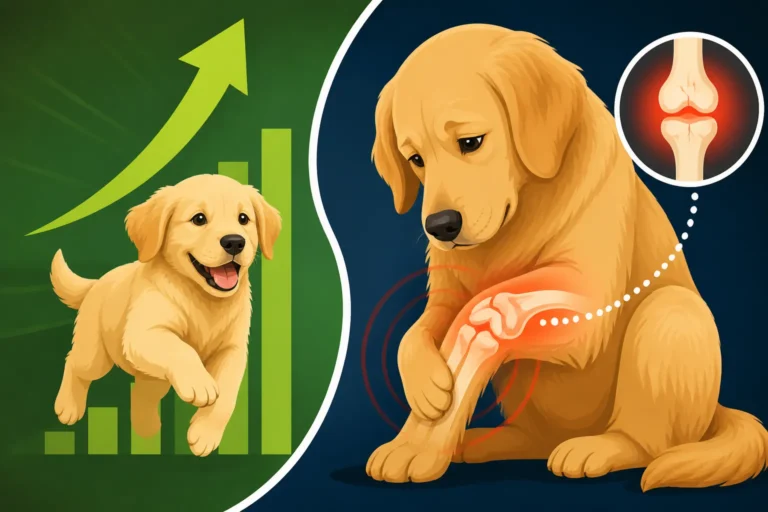
It's a tough truth, but carrying even a few extra pounds can have a profound impact on your Golden Retriever's health. You might not see it happening, but internally, that added weight puts tremendous strain on their joints, exacerbating conditions like Golden Retriever Hip and Elbow Dysplasia Explained and accelerating the onset of Golden Retriever Arthritis and Joint Decline. Imagine constantly carrying a heavy backpack; over time, your knees and back would suffer. For a Golden, every extra ounce contributes to this wear and tear, making their everyday movements more painful and difficult.
Beyond joint issues, obesity significantly increases the risk of other serious health problems. It can lead to diabetes, heart disease, high blood pressure, and even certain types of cancer. Research has strongly linked excess body fat to inflammation and metabolic changes that can shorten your Golden's life. It's a silent killer that can shave years off their lifespan and dramatically reduce their quality of life. Owners often overlook these risks, but by understanding BCS, you gain a powerful defense against these hidden threats.
The Dangers of Being Too Thin
While the conversation often centers on overweight dogs, being too thin can also pose significant health risks for your Golden Retriever. An underweight Golden might not have enough energy reserves, making them lethargic and less able to enjoy their favorite activities, like a good game of fetch or a long walk. Their immune system can become compromised, leaving them more susceptible to illnesses and making recovery from sickness or surgery much harder.
Underweight can signal an underlying health problem, too. Conditions like parasites, dental issues that make eating painful, malabsorption disorders, or even certain cancers can manifest as unexplained weight loss. If your Golden is consistently too lean despite adequate feeding, it's a red flag that warrants a visit to your veterinarian to rule out any serious medical conditions. Just as you’d worry about your Golden being too heavy, an inability to maintain healthy body mass is equally concerning and requires your attention.
Understanding the Golden Retriever Body Condition Score System
Body Condition Scoring is essentially a standardized way to evaluate your Golden Retriever's fat reserves, helping you determine if they are underweight, ideal, or overweight. Instead of relying solely on a number on a scale, which can vary widely based on individual build, sex, and age, BCS provides a visual and tactile assessment that's much more reliable. It's about feeling the bones and observing the body shape, regardless of how much fur your Golden has.
The 9-Point Scale Versus 5-Point Scale
You might encounter two common BCS scales: a 5-point scale and a 9-point scale. Both aim to achieve the same goal but offer slightly different levels of granularity. The 5-point scale is simpler, with 1 being emaciated, 3 being ideal, and 5 being obese. This scale is often easier for owners to grasp quickly.
The 9-point scale, however, is more widely used by veterinarians and offers a more nuanced assessment. On this scale, 1 is severely emaciated, 5 is ideal, and 9 is morbidly obese. The extra points allow for finer distinctions, which can be particularly helpful for tracking subtle changes over time, or for breeds like Golden Retrievers where their thick coat can hide moderate weight fluctuations. For instance, a Golden that's a 6 out of 9 might not look obviously overweight, but it's enough of a concern to warrant a diet adjustment before it progresses to a 7 or 8. While the 9-point scale offers more precision, the general principles of observation and palpation apply to both.
How to Physically Assess Your Golden
Assessing your Golden Retriever's body condition involves both looking and feeling. It's a hands-on approach that you can easily do at home. First, step back and observe your Golden from above and from the side. You're looking for specific contours and proportions. Then, you'll get hands-on, feeling for their ribs, spine, and hip bones. This tactile examination is especially important for Goldens, whose lush double coats can be masters of disguise.
Don't be afraid to get right in there! Run your hands along their sides, over their spine, and around their hips. What you feel is often more telling than what you see. The goal isn't to press hard or cause discomfort, but rather to gently palpate the key areas to understand the amount of fat covering their bones. Doing this regularly, perhaps once a month, will help you become very familiar with your Golden's ideal physique and quickly notice any changes. It's a simple, non-invasive process that gives you invaluable insight into their health.
What an Ideal Body Condition Looks Like for a Golden Retriever
Achieving and maintaining an ideal body condition for your Golden Retriever is one of the most proactive steps you can take for their health. When a Golden is at their optimal weight, they move with ease, have boundless energy, and are generally at a lower risk for many common health issues. It's about finding that sweet spot where they're lean and athletic, without being bony or carrying unnecessary bulk.
Visual Cues of a Healthy Weight Golden
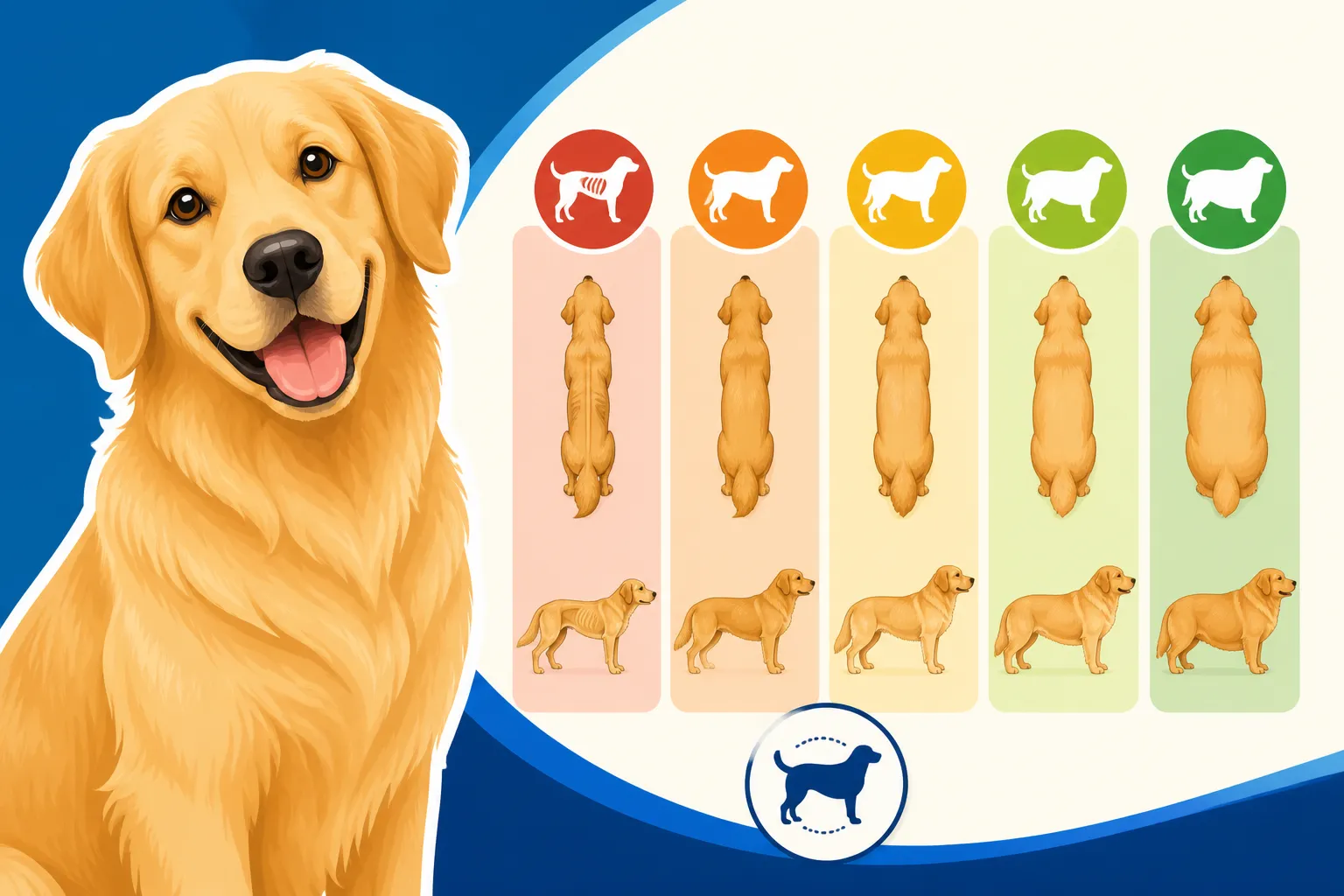
When you look at your Golden Retriever, especially after they've had a good run or a bath (when their fur is less fluffy), there are several visual cues that indicate an ideal weight (a 5 on the 9-point scale, or a 3 on the 5-point scale). From above, you should see a noticeable "waist" or hourglass shape where their abdomen tucks in behind their rib cage. It shouldn't be a dramatic cinch, but a gentle inward curve. If they look like a straight, solid block from ribs to hips, they're likely carrying too much weight.
From the side, you should observe an abdominal tuck. This means their belly should gently slope upwards from their chest to their hind legs, not hang low or appear distended. Their musculature should be visible, especially in their hindquarters, giving them a powerful, athletic appearance. They shouldn't have any obvious fat rolls over their neck or at the base of their tail. A healthy, energetic Golden moves fluidly, and their body shape reflects that readiness for activity.
Palpation – Feeling for Ribs and Waist
Visual cues are great, but the true test of a Golden Retriever's body condition comes from touch. Run your flat palms over their rib cage, starting from just behind their front legs. You should be able to easily feel their ribs, almost like feeling the knuckles of your hand under a thin blanket. You shouldn't see them prominently, but you should definitely be able to count them without pressing hard. If you can't feel the ribs at all, there's too much fat covering them, indicating an overweight condition. If the ribs are highly visible and feel sharp with no fat padding, they might be underweight.
Next, feel along their spine and hip bones. You should be able to feel the tops of their vertebrae and the points of their hip bones with gentle pressure, but they shouldn't protrude sharply. Finally, confirm that abdominal tuck by feeling for that gentle curve where the waist narrows. This hands-on assessment is vital, especially considering how easily a Golden's thick coat can obscure visual signs of weight gain or loss. By regularly checking these areas, you'll be attuned to even the slightest changes in their body composition.
Recognizing an Overweight Golden Retriever
It’s easy for weight to creep up on a Golden Retriever. One extra treat here, a slightly larger portion there, and suddenly, your active companion is carrying more weight than is healthy. Recognizing the signs early is key to reversing the trend before it impacts their health significantly. Many owners struggle with this, often because Goldens are so adept at begging for food, and their loving nature makes it hard to say no.
Early Warning Signs and How They Develop
The first signs of your Golden Retriever becoming overweight might be subtle. You might notice them being a little slower to get up, perhaps less enthusiastic about their daily walk, or showing less stamina during playtime. They might start panting more easily after moderate exercise. Visually, that distinct waistline might begin to disappear, making their body look more like a straight cylinder from ribcage to tail. Their abdominal tuck might also lessen, becoming flatter rather than gently rising.
As the weight progresses, these signs become more pronounced. You'll struggle to feel their ribs without applying significant pressure, and you might start to see pads of fat accumulating over their hips, at the base of their tail, or around their neck. Their face might even start to look rounder. This accumulation of fat doesn't happen overnight; it's a gradual process, often influenced by an imbalance between calorie intake and energy expenditure. Factors like Why a Neutered Golden Retriever Gains Weight can also play a role, making careful monitoring even more important. It’s crucial to catch these early signs and adjust their routine rather than waiting for obvious obesity.
The Challenge of the Golden Retriever's Thick Coat
One of the biggest challenges in accurately assessing a Golden Retriever's body condition is their magnificent, dense double coat. This beautiful fur is fantastic for keeping them warm and repelling water, but it's also a master of illusion when it comes to weight. What looks like a perfectly proportioned dog could, underneath all that fluff, be carrying an unhealthy amount of fat. This is where the tactile assessment becomes absolutely indispensable.
You can't just rely on your eyes; you must use your hands. Even if your Golden looks trim, run your fingers over their ribs, spine, and hips. If you have to press hard to feel those bones, your Golden is likely carrying too much insulation beyond just their fur. This is a common pitfall for Golden owners, leading to many Goldens unknowingly becoming overweight. Regular grooming sessions can be a great time to do a quick body condition check, as you're already handling their coat and body. Don't let that beautiful fur hide what your hands can tell you about their health.
| Body Condition Score (9-Point Scale) | Visual Assessment | Palpation Assessment | Recommendations |
|---|---|---|---|
| 1: Emaciated | Ribs, vertebrae, pelvic bones easily visible from distance. | No discernible body fat. Obvious loss of muscle mass. | Urgent veterinary care. Address underlying health issues, gradual re-feeding. |
| 2: Very Thin | Ribs, vertebrae, pelvic bones easily visible. | Minimal body fat. Some muscle loss. | Vet consultation. Increase calorie intake, monitor for underlying health problems. |
| 3: Thin | Ribs easily visible. Lumbar vertebrae and pelvic bones apparent. | Minimal fat over bony prominences. Minimal abdominal fat. | Vet consultation to ensure no medical reason. Gradually increase food, monitor weight. |
| 4: Underweight | Ribs easily palpable with minimal fat covering. Obvious waist. | Clearly palpable ribs. Abdominal tuck apparent. | Slightly increase food intake if not growing or pregnant. Monitor weight regularly. |
| 5: Ideal | Ribs palpable without excess fat. Waist noted behind ribs. | Ribs easily felt. Abdominal tuck present. Appropriate fat cover. | Maintain current diet and exercise. Regular checks to ensure stability. |
| 6: Overweight | Ribs palpable with slight difficulty. Waist still present but less distinct. | Slight excess fat over ribs, spine, and tail base. Abdominal tuck diminishes. | Decrease calorie intake, increase exercise. Consider lower-calorie treats. Regular monitoring. |
| 7: Heavy | Ribs difficult to feel. No distinct waist. | Moderate fat deposits over ribs, spine, and tail base. Loss of abdominal tuck. | Implement a strict weight loss program. Consult vet for diet plan. Increase daily activity. Getting an Overweight Golden Retriever Back Down is essential here. |
| 8: Obese | Ribs not palpable without heavy pressure. Abdomen visibly distended. | Heavy fat deposits over chest, spine, tail base, and limbs. Pronounced abdominal distension. | Veterinary supervised weight loss program. Rule out metabolic issues. Significant lifestyle changes needed. |
| 9: Morbidly Obese | Massive fat deposits. No waist or abdominal tuck. Distended abdomen. | Extensive fat deposits over entire body. Impaired movement. | Immediate veterinary intervention. Risk of severe health complications. |
Identifying an Underweight Golden Retriever
While less common than overweight Goldens, some Golden Retrievers can struggle to keep weight on, especially if they are particularly active, undergoing stress, or have an underlying medical condition. It's just as important to recognize when your Golden is too thin, as this too can indicate health issues or inadequate nutrition.
Signs Your Golden Isn't Getting Enough Calories
An underweight Golden Retriever (a 1-3 on the 9-point scale) will show clear signs that they aren't receiving enough calories to meet their energy demands. Visually, their ribs, spine, and hip bones might be easily visible from a distance, with little to no fat covering. Their muscles, especially in their hindquarters, might appear wasted or less defined. From the side, their abdominal tuck will be very pronounced, almost severely tucked up.
When you run your hands over their body, their ribs will feel very prominent, sharp, and easily felt with minimal pressure, almost as if there's no padding at all. The same goes for their spine and hip bones; they'll feel angular and bony. Your Golden might also seem less energetic, more lethargic, or even shiver more in cooler temperatures due to a lack of insulating fat. If you notice any of these signs, it's crucial to investigate the cause. Sometimes, highly energetic Goldens, particularly those from Field Line Golden Retriever Traits, simply burn more calories than they're consuming, even with what seems like a normal food intake.
When to Consult Your Vet for Low Weight
If you suspect your Golden Retriever is underweight, the first and most important step is to consult your veterinarian. While it might seem obvious to just increase their food, sudden and unexplained weight loss can be a symptom of a more serious underlying health issue that needs professional diagnosis and treatment. Conditions such as intestinal parasites, thyroid imbalances (Hypothyroidism in Golden Retrievers), kidney disease, or even certain types of cancer can cause a dog to lose weight despite eating normally.
Your vet can perform a thorough examination, including blood tests and possibly fecal analysis, to rule out any medical reasons for the weight loss. Once any health issues are addressed, they can help you formulate a feeding plan that gradually increases their calorie intake in a healthy way. This might involve switching to a higher-calorie food, adding specific supplements, or simply adjusting portion sizes. Never try to rapidly put weight on an underweight dog without veterinary guidance, as this can sometimes lead to digestive upset or other complications. Your vet is your best partner in ensuring your Golden gains weight safely and effectively.
Practical Tips for Maintaining Your Golden's Ideal BCS
Once you understand what an ideal body condition looks like for your Golden Retriever, the next step is implementing practical strategies to maintain it. This isn't just about occasional checks; it's about a consistent, thoughtful approach to their diet and exercise. It requires discipline and attention, but the payoff is a healthier, happier Golden who stays by your side for as long as possible.
Diet Adjustments and Portion Control
The foundation of maintaining a healthy body condition lies squarely in diet. It’s not just what you feed, but how much. Many Golden Retriever owners inadvertently overfeed their dogs, often by not accurately measuring food or by giving too many treats. Start by using a precise measuring cup for every meal. Don't eyeball it! Even an extra quarter cup of kibble per day can add up significantly over a month. Consult the feeding guidelines on your dog food bag, but remember these are just starting points. Your individual Golden's metabolism and activity level will dictate their true needs.
If your Golden is leaning towards the overweight side (a 6 or 7 on the 9-point scale), gradually reduce their portion size by about 10-15%. Introduce healthy, low-calorie treats like small pieces of carrots, green beans, or apples instead of calorie-dense biscuits. If you're using fresh food services like Ollie, ensure their portion calculator is aligned with your Golden's ideal weight and activity level. For those who buy kibble from retailers like Chewy or Amazon, pay close attention to the calorie count per cup listed on the nutrition label and factor that into your daily allowance. Consistency is key, so make sure everyone in the household is on the same page regarding feeding amounts and treat allowances. Remember, a full bowl doesn't always equal a healthy dog; a carefully measured portion does.
Exercise Strategies for Weight Management
Diet is half the battle, but exercise is the other crucial component for maintaining your Golden Retriever's ideal body condition. Golden Retrievers are active dogs, and they thrive on regular physical activity. This isn't just about burning calories; it's about building and maintaining muscle mass, improving joint health, and providing mental stimulation. Aim for at least 60-90 minutes of moderate to vigorous exercise daily, broken into several sessions. Daily Walk Length for a Golden Retriever is a good starting point, but consider adding other activities.
This can include brisk walks, jogging (once they are fully grown and cleared by a vet), swimming, or vigorous games of fetch in the park. For puppies, remember to keep exercise sessions shorter and less impactful to protect their growing joints; Exercise Limits for a Golden Retriever Puppy outlines important considerations. Even indoor games, puzzle toys, and training sessions count as mental and physical exercise, especially on days with bad weather. If your Golden is slightly overweight, gradually increase the duration and intensity of their exercise. A Golden Retriever with a healthy BCS has good muscle tone and an appropriate level of body fat, and consistent exercise is how you help them achieve and maintain that strong, lean physique. Remember, exercise should be enjoyable for both of you, strengthening your bond while keeping them in peak physical condition.
Disclaimer
This article is for general informational purposes only and does not constitute professional advice. Laws, prices and regulations vary by location and change over time. Consult a qualified professional for guidance on your specific situation.