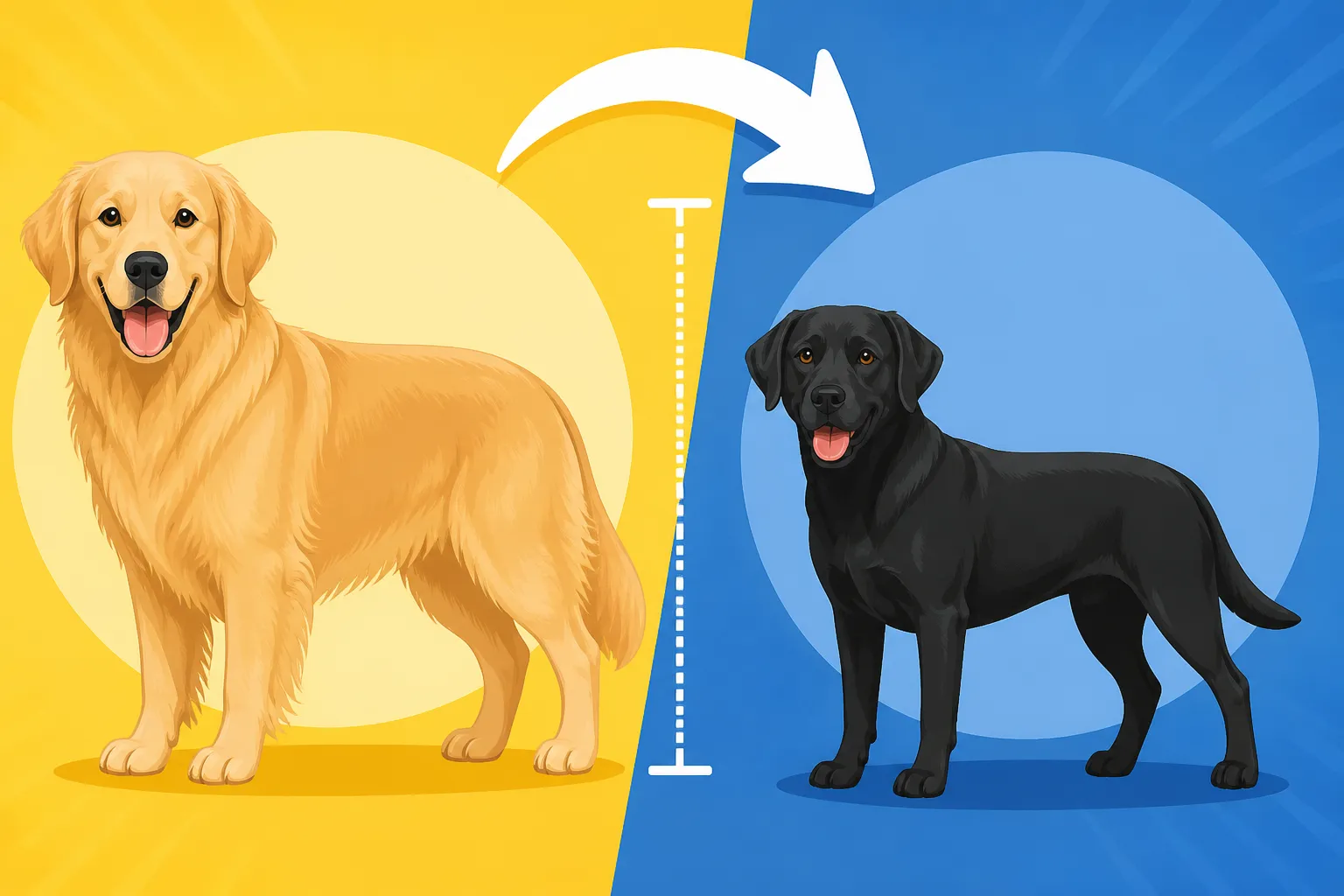
How Big Golden Retrievers Get Compared to Labs
It's a really common question, one I hear all the time from families trying to decide between these two wonderful breeds: "Just how big do Golden Retrievers get compared to Labs?" You see them out and about, and they both look like substantial dogs, but there are subtle differences in their build, their official breed standards, and even how their coats make them appear in person. This guide is here to break down those size comparisons, looking at official standards, real-world averages, and the factors that make each dog unique, so you can make an informed decision about which breed might be the best fit for your home.
Understanding Golden Retriever Size
Golden Retrievers are undeniably magnificent dogs, known for their sturdy build and flowing coats. When you consider their size, it's not just about weight on a scale; it's about their overall structure, height, and the impression they give. They are bred to be powerful yet graceful, capable of retrieving game for hours.
Standard Weight Ranges for Goldens
According to the breed standard, Golden Retrievers fall into fairly specific weight categories that reflect their balanced build. For male Golden Retrievers, you can generally expect them to weigh between 65 and 75 pounds. Females, typically a bit lighter and more refined in their bone structure, usually weigh in at 55 to 65 pounds. These are healthy, adult weights for a Golden who is kept in good condition.
It’s important to remember that these are averages, and individual genetics play a huge role. You might encounter a male Golden who naturally carries a bit more muscle and tips the scales closer to 80 pounds, or a female who is a lean 50 pounds. What’s critical is that the weight is appropriate for their frame, not due to being overweight. Excess weight, even a few pounds, can really put a strain on their joints over time, potentially leading to issues like hip or elbow dysplasia, which are already concerns for the breed. Keeping an eye on Golden Retriever Weight and Joint Damage is essential for their long-term health. When looking for appropriate kibble to maintain a healthy weight, many owners browse sites like Chewy for large breed options that cater to their nutritional needs without excessive calories.
Standard Height for Golden Retrievers
Height is measured at the highest point of the shoulder blades, known as the withers. For male Golden Retrievers, the ideal height ranges from 23 to 24 inches. Female Goldens are slightly shorter, typically standing between 21.5 and 22.5 inches. This height, combined with their muscular but not overly heavy bone structure, gives them that classic, athletic Golden Retriever silhouette.
The breed standard emphasizes a balanced and proportional dog. A Golden shouldn't appear leggy and thin, nor should they look short and stocky for their height. Their height and length should fit together to create an efficient, powerful, and agile dog. These measurements are crucial for breeders striving to produce dogs that conform to The AKC Golden Retriever Breed Standard, ensuring the preservation of the breed's characteristics.
When Goldens Reach Full Size
Golden Retrievers are considered large breed dogs, and as such, they take a bit longer to reach their full mature size than smaller breeds. While a Golden Retriever puppy will do most of their growing in height during their first year, typically reaching close to their adult height by 10-12 months, they will continue to fill out and gain muscle mass for quite a bit longer.
You'll notice that while their height might not change much after their first birthday, their chest will deepen, their head will broaden, and their overall musculature will develop significantly. Most Goldens will reach their full weight and physical maturity between 18 and 24 months of age, with some individuals, especially larger males, sometimes taking closer to 30 months to completely fill out. It's a gradual process, and patience is key during their adolescence to ensure proper joint development. Over-exercising a still-growing Golden can be detrimental to their developing joints.
Understanding Labrador Retriever Size
Labrador Retrievers are another incredibly popular breed, and for good reason – their friendly demeanor and tireless work ethic make them fantastic companions. Like Goldens, they are also sturdy, athletic dogs, but with some distinct differences in their build and overall appearance, even when their weights might seem similar on paper.
Standard Weight Ranges for Labs
Labrador Retrievers also have a clear weight standard. Male Labs typically weigh between 65 and 80 pounds, while females range from 55 to 70 pounds. You might notice these ranges are quite similar to, or slightly overlap with, Golden Retrievers. However, the distribution of that weight can differ significantly.
Within the Labrador breed, you'll often hear about "American" or "field" Labs versus "English" or "show" Labs. American Labs tend to be leaner, more athletic, and sometimes a bit lighter, built for agility and endurance in working roles. English Labs, on the other hand, are often stockier, with broader heads and chests, and can lean towards the higher end of the weight spectrum. It's an important distinction that can influence individual size expectations. Regardless of type, managing their weight is crucial for longevity, and you can find many options for dog food, often with subscription services on sites like Chewy, to help maintain their ideal body condition.
Standard Height for Labrador Retrievers
When it comes to height, male Labrador Retrievers typically stand between 22.5 and 24.5 inches at the withers. Females are usually 21.5 to 23.5 inches tall. Again, these measurements are very close to those of Golden Retrievers, with a bit more variability perhaps due to the distinct American vs. English lines.
The Labrador breed standard calls for a strong, well-balanced dog, with a strong, level back and powerful hindquarters. They should be compact and not overly long, built for strength and stamina. While their height might be similar to a Golden's, their shorter, denser coat often makes their musculature and bone structure more immediately apparent, giving them a slightly different visual impression.
When Labs Reach Full Size
Like Goldens, Labradors are large breed dogs and have a similar growth timeline. They will reach most of their adult height by about 10-12 months, but continue to mature physically and fill out in terms of muscle and chest depth until they are around 18-24 months old. Some of the larger, more heavily boned English Labs might take a bit longer to fully mature, potentially up to 30 months, much like their Golden counterparts.
During this adolescent period, proper nutrition, especially Large Breed Puppy Food and Why Goldens Need It (the principles apply to Labs too!), and controlled exercise are vital. Avoiding excessive jumping or strenuous, repetitive impact activities can help protect their developing joints. Once they hit that two-year mark, you generally have a pretty good idea of their final adult size and build.
Direct Comparison: Golden Retriever vs. Labrador Size
When you line up a Golden Retriever and a Labrador Retriever side-by-side, it's easy to see why people often ask about their size differences. While their official breed standards often show very similar measurements, the overall impression they give can be quite distinct.
Weight and Bulk Differences
On average, both male and female Golden Retrievers and Labrador Retrievers have very similar weight ranges. A healthy adult male Golden and a healthy adult male Lab will often fall into the 65-80 pound bracket, with females in the 55-70 pound range. However, this is where the perception can differ.
Golden Retrievers often appear larger or more substantial, even if they weigh the same as a Labrador. This is largely due to their glorious double coat, which is longer and has more feathering on the legs, tail, and chest. This gives them a softer, sometimes broader appearance. Labs, with their short, dense coats, tend to look more compact and muscular, every curve and muscle visible. So, while the scale might read similar numbers, the Golden can feel like a bigger dog to hug and interact with simply because of all that fluffy fur! When considering What a Golden Retriever Costs Every Year After, food, toys, and grooming supplies for either breed, sizes for harnesses and beds might be similar, but brush types and grooming frequency will definitely vary.
Height and Length Differences
Again, looking at the official standards, the height ranges for both breeds at the withers are remarkably similar. Male Goldens are 23-24 inches, while male Labs are 22.5-24.5 inches. For females, Goldens are 21.5-22.5 inches, and Labs are 21.5-23.5 inches. You can see there's a significant overlap.
However, sometimes you'll find that Goldens might have a slightly longer body proportion compared to the more square, compact build often favored in Labradors, particularly the English type. Field line Golden Retrievers, for example, tend to be a bit leaner and more athletic, often with slightly less bone substance than their show-line counterparts. Similarly, Field Line Golden Retriever Traits for Goldens mean they might appear less bulky than a traditional show-line Labrador, even if their height is similar.
Factors Influencing Individual Size
While breed standards provide general guidelines, individual dogs can vary significantly. Several factors play a role:
- Genetics: This is the biggest factor. A dog's parents will give you the best indication of how big they might get. Reputable breeders will be able to show you the size of their breeding stock and previous litters.
- Diet and Nutrition: Especially during puppyhood, proper nutrition is paramount. Overfeeding a large breed puppy can lead to excessively rapid growth, which can put undue stress on their developing joints and exacerbate conditions like hip and elbow dysplasia later in life. Feeding a high-quality large-breed puppy food designed for their slower growth rate is crucial. You'll find many suitable options for this on platforms like Chewy, which makes it easy to compare ingredients and formulations.
- Activity Level: While not directly affecting adult size, appropriate exercise helps build healthy muscle mass and maintain an ideal weight, contributing to a dog's overall robust physique. Too little exercise can lead to obesity, making any dog appear larger, but not in a healthy way. How Extra Weight Shortens a Golden Retriever's Life applies equally to Labs.
- Spay/Neuter Timing: Some studies suggest that the timing of spaying or neutering can impact bone growth, potentially leading to slightly taller dogs if done before growth plates have closed. This is a topic to discuss with your veterinarian.
Beyond the Tape Measure: Perceived vs. Actual Size
It’s one thing to look at numbers, but it’s another to see these dogs in real life. The subtle differences in their coats and overall structure can dramatically change how big they feel when they're standing next to you. This is why the question of How Big Golden Retrievers Get Compared to Labs is so persistent!
The Illusion of the Golden's Coat
The Golden Retriever's luxurious double coat is a major differentiator in how they're perceived. Their medium-length outer coat and dense, water-repellent undercoat, combined with prominent feathering on their legs, tail, chest, and belly, create an optical illusion. This fluffy insulation adds several inches of apparent width and bulk.
Imagine two dogs, both weighing 70 pounds and standing 23 inches tall. The Golden, with its flowing mane and feathery tail, will often look considerably larger than the sleek-coated Labrador. The Lab's coat lies flat, hugging their muscular frame, showcasing their contours directly. So, if you're standing next to a Golden, you might feel like you're beside a much bigger dog, even if their actual bone structure and weight are comparable to a nearby Lab.
Differences in Body Proportions
While both breeds are robust and built for retrieving, there are subtle differences in their body proportions that contribute to their unique appearances. Golden Retrievers often have a slightly longer muzzle and a more refined head shape, even though both breeds have strong, broad skulls. Their overall body shape tends to be rectangular, with good length and depth.
Labradors, particularly the English or "show" type, often present with a very broad skull, powerful jaws, and a visibly compact, powerful body. American Show Line Golden Retriever Traits often include a slightly more moderate build than some of the heavier English Goldens, but they still maintain that classic Golden athleticism. The Lab's powerful neck and chest often appear more overtly muscled due to the short coat, giving them a "powerhouse" look.
In essence, a Golden Retriever has a more elegant, flowing silhouette, accentuated by its coat, while a Labrador often has a more rugged, athletic, and compact appearance, highlighting its muscularity.
| Feature | Male Golden Retriever | Female Golden Retriever | Male Labrador Retriever | Female Labrador Retriever |
|---|---|---|---|---|
| Weight Range | 65 – 75 lbs | 55 – 65 lbs | 65 – 80 lbs | 55 – 70 lbs |
| Height (at withers) | 23 – 24 inches | 21.5 – 22.5 inches | 22.5 – 24.5 inches | 21.5 – 23.5 inches |
| Coat Type | Medium-length, double coat, feathered | Medium-length, double coat, feathered | Short, dense, water-repellent | Short, dense, water-repellent |
| Overall Impression | Often appears larger/fluffier | Often appears larger/fluffier | Appears compact, muscular | Appears compact, muscular |
| Bone Structure | Sturdy, well-boned | Sturdy, well-boned | Strong, heavy bone | Strong, heavy bone |
Managing a Golden Retriever's Size and Health
Regardless of whether you choose a Golden Retriever or a Labrador, responsible ownership means understanding how to manage their size for optimal health. A dog that is too heavy, even if only by a few pounds, faces a significantly increased risk of various health issues.
Keeping Your Golden at an Ideal Weight
One of the biggest favors you can do for your Golden Retriever is to keep them at their ideal weight. It's truly startling how much difference even 5-10 extra pounds can make to a dog's joint health, especially in breeds prone to hip and elbow issues. You should be able to easily feel their ribs when you run your hands along their side, without seeing them overtly. They should also have a noticeable waist when viewed from above, and an abdominal tuck when viewed from the side.
Regularly assessing your dog's body condition score is far more important than obsessing over the exact number on the scale. Your veterinarian can show you how to do this correctly. This might mean being vigilant about portion control, especially with a breed known for its love of food. Many Golden owners find that puzzle feeders or slow-feeder bowls, readily available from retailers like Chewy, can help slow down mealtime and prevent overeating.
The Role of Diet and Exercise
A balanced diet tailored to your Golden's life stage and activity level is foundational. How Much Food a Golden Retriever Eats in a Year can be substantial, so choosing high-quality food is a significant investment in their health. For puppies, a large-breed formula helps ensure a slower, more controlled growth rate to protect their developing joints. As adults, maintaining their weight with appropriate caloric intake is vital.
Consistent, appropriate exercise also plays a critical role. Goldens are active dogs and need daily opportunities to burn off energy and build muscle. This isn't just about weight management; it's about mental stimulation and overall well-being. Regular walks, games of fetch, swimming, and opportunities to run in a safe, enclosed area are all excellent ways to keep your Golden fit and happy. Remember to tailor the intensity and duration of exercise to their age and any existing health conditions, such as Golden Retriever Arthritis and Joint Decline.
Regular Vet Check-ups for Monitoring Growth and Health
Routine veterinary check-ups are non-negotiable for monitoring your Golden Retriever's growth, weight, and overall health. Your vet can provide personalized guidance on diet and exercise, catch any potential issues early, and help you ensure your Golden remains in peak condition throughout their life.
During these visits, your vet will perform a thorough physical examination, including a weight check and body condition assessment. They can discuss any concerns you might have about your dog’s energy levels, appetite, or mobility. Early detection of conditions common in Goldens, like Cancer in Golden Retrievers and Why the Breed Is Hit Hardest or joint issues, can make a significant difference in prognosis and treatment options. These regular appointments are key to helping your beloved Golden Retriever live the longest, healthiest life possible.
Disclaimer
This article is for general informational purposes only and does not constitute professional advice. Laws, prices and regulations vary by location and change over time. Consult a qualified professional for guidance on your specific situation.