How Extra Weight Shortens a Golden Retriever’s Life
It’s an unfortunate reality that many of our beloved Golden Retrievers, despite our best intentions, end up carrying a few too many pounds. We love to spoil them with treats, and their pleading eyes are hard to resist. However, those extra pounds aren't just a cosmetic issue; they're a silent, insidious threat that significantly shortens their joyful lives and diminishes their quality of health. This guide will walk you through exactly why carrying extra weight is so detrimental to your Golden Retriever, the serious health complications it leads to, and practical, empathetic steps you can take to help them achieve and maintain a healthy weight.
The Silent Threat of Extra Pounds on Golden Retrievers
It's so easy for those extra pounds to creep up on our beloved Golden Retrievers, isn't it? One extra treat here, a slightly bigger scoop of kibble there, and suddenly, you're looking at a dog who's carrying more weight than is healthy. This isn't about shaming anyone; it's about understanding a common problem that many Golden owners face, often without realizing the profound impact it has. Our Goldens are notorious for their love of food, making it a constant battle to keep their waistlines in check. But understanding why this happens and what to look for is the first crucial step in protecting them.
Why Goldens Are Prone to Weight Gain
Golden Retrievers are practically born with an empty stomach and a strong desire to please, a combination that often works against them when it comes to maintaining a healthy weight. Their eager-to-please nature means they'll perform any trick for a tasty reward, and let's be honest, who among us can truly resist those soulful eyes begging for just one more biscuit? This natural predisposition to gobble down whatever is offered, coupled with a deep-seated love for all things edible, makes them highly susceptible to overfeeding.
Beyond their endearing food motivation, physiological factors also play a significant role. As Goldens age, their metabolism naturally slows down, requiring fewer calories to maintain their weight. If their food intake isn't adjusted accordingly, weight gain is almost inevitable. Furthermore, spaying or neutering can also impact a Golden's metabolism, often leading to a need for slightly reduced caloric intake. Many owners, still remembering their puppy's ravenous appetite, continue to feed adult portions that are simply too generous for a less active or altered dog, setting them up for a battle with the bulge. It’s a frustrating cycle, and recognizing these inherent traits in our Goldens is key to prevention.
Understanding What "Overweight" Really Means for Your Golden
When we talk about an "overweight" Golden Retriever, we're not just talking about a number on the scale, although that's certainly a factor. What's truly important is their body condition. A dog can be within a breed's average weight range but still be considered overweight if they lack muscle mass and carry too much fat, or be considered healthy even if they are slightly above the average if they are particularly muscular. This is where the concept of Body Condition Scoring (BCS) becomes incredibly useful. It's a hands-on, visual assessment that helps you gauge your dog's fat reserves and muscle mass.
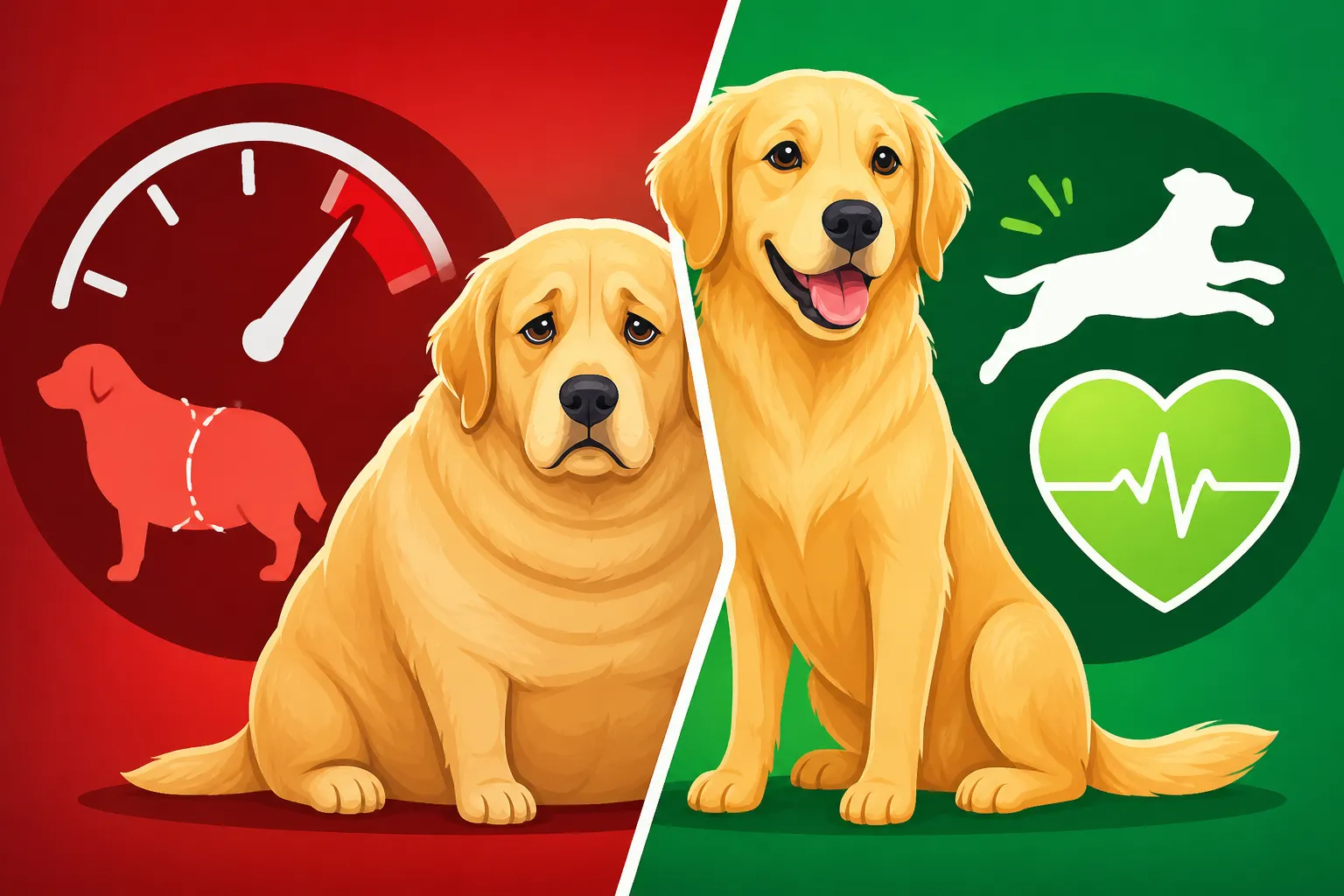
A healthy Golden Retriever should have a noticeable waist when viewed from above, and their abdomen should tuck up when viewed from the side. You should be able to easily feel their ribs, backbone, and hip bones without seeing them protrude sharply. There should be a slight layer of fat covering these bones, but no thick padding. If you have to press firmly to feel their ribs, or if they lack a defined waistline, they are likely carrying too much weight. This isn't just about aesthetics; that excess padding is fat, and it's putting a strain on every system in their body. You can learn more about assessing your dog's ideal physique by looking into articles about Golden Retriever Body Condition Scoring.
Here’s a simplified breakdown of the Body Condition Score (BCS) system commonly used by veterinarians:
| BCS Score | Description | How It Looks/Feels |
|---|---|---|
| 1 (Emaciated) | Ribs, spine, pelvic bones easily visible from a distance. No discernible body fat. Severe abdominal tuck. | Very bony, almost skeletal. |
| 2 (Thin) | Ribs, spine, pelvic bones easily palpable and visible. Minimal fat. Obvious abdominal tuck. | Clearly defined bones, very little padding. |
| 3 (Ideal) | Ribs palpable without excess fat covering. Waist easily noted from above. Abdominal tuck evident. | Balanced, well-proportioned. Bones felt easily with slight padding. |
| 4 (Overweight) | Ribs palpable with difficulty; moderate fat covering. Waist discernible but not prominent. Abdominal tuck still present, but less pronounced. | Rounder appearance, waist less obvious. |
| 5 (Obese) | Ribs not palpable under heavy fat covering. No waist or abdominal tuck. Abdomen may be distended. | Bulging, shapeless. Ribs impossible to feel. |
Note: This table is a simplified guide. Always consult your veterinarian for an accurate BCS assessment and personalized advice.
How Excess Weight Devastates a Golden Retriever's Body
The impact of carrying extra weight on a Golden Retriever is far-reaching and deeply concerning. It's not merely about them being a bit heavier; it's about the profound stress it places on their entire physiological system, leading to a cascade of health problems that directly contribute to a shortened and often painful life. Every extra pound acts like a constant, low-grade assault on their joints, organs, and overall vitality, making them more susceptible to diseases that could otherwise be managed or avoided. We want our Goldens to live long, happy, and active lives, and preventing these health issues is paramount.
Joint and Mobility Breakdown
Perhaps one of the most immediate and visible consequences of excess weight in Golden Retrievers is the devastating impact on their joints. Goldens are, unfortunately, already predisposed to debilitating orthopedic conditions like hip and elbow dysplasia. When an already vulnerable joint is forced to bear an additional five, ten, or even twenty pounds, the stress is exponentially increased. Think about carrying a heavy backpack all day, every day – that's what your Golden's joints are experiencing. This constant pressure accelerates the wear and tear on cartilage, leading to inflammation, pain, and the early onset or rapid progression of arthritis.
This isn't just discomfort; it's a significant reduction in their quality of life. An overweight Golden may struggle to jump into the car, climb stairs, or even get up from a lying position. The joy of a long walk or a vigorous game of fetch becomes a painful ordeal, if not an impossibility. Over time, the chronic pain can lead to muscle atrophy because they're simply not moving as much, further compounding the problem and making future weight loss even harder. Conditions like Golden Retriever Hip and Elbow Dysplasia Explained are bad enough on their own, but when compounded by obesity, they can quickly turn a lively dog into one suffering from severe immobility. You might start noticing subtle changes in their gait or reluctance to engage in activities they once loved, which are often early Signs a Golden Retriever Is in Pain. It's a heartbreaking cycle that tragically shortens their active years. We've also delved deeper into the specific ways that Golden Retriever Weight and Joint Damage occur, highlighting how crucial a healthy weight is for their skeletal system. Managing Golden Retriever Arthritis and Joint Decline often becomes a lifelong commitment for owners of overweight dogs.
Increased Risk of Chronic Diseases
Beyond the orthopedic issues, carrying excess weight significantly ramps up a Golden Retriever's risk for a host of serious chronic diseases, many of which can drastically cut short their lifespan. One of the most common is diabetes, where the body's cells become resistant to insulin due to the constant presence of excess fat. This leads to high blood sugar levels, requiring lifelong management with insulin injections and strict dietary control. It's a demanding and costly condition for both dog and owner.
Heart conditions also become more prevalent and severe in overweight Goldens. The heart has to work harder to pump blood to a larger body mass, leading to strain and potentially exacerbating existing predispositions like Subaortic Stenosis in Golden Retrievers or contributing to other forms of heart disease. Respiratory issues, such as struggling to breathe, especially during exercise or in warm weather, are also common as fat deposits restrict lung capacity and add pressure to the diaphragm. The systemic inflammation associated with obesity can also compromise the immune system, making them more susceptible to infections and even certain types of cancer. While pet insurance providers like Healthy Paws can help alleviate the financial burden of treating these chronic conditions, preventing them through proper weight management is always the best course of action for your Golden's well-being. These health complications inevitably lead to more frequent and costly veterinary visits, underscoring Why Goldens Need Vet Visits Twice a Year as they age or if they're carrying extra weight.
Shortened Lifespan and Quality of Life
The culmination of all these health issues, from debilitating joint pain to chronic diseases, is a significantly shortened lifespan and a diminished quality of life for our Golden Retrievers. Research consistently shows that overweight dogs, across many breeds, live an average of one to two years less than their healthy-weight counterparts. For a breed with an average lifespan that already feels too short, losing precious years is truly devastating. We want to maximize every moment with them, and weight management is a direct way to contribute to that goal.
Imagine your Golden, once a vibrant, energetic companion, now struggling to keep up on walks, breathing heavily after minimal exertion, or visibly stiff and uncomfortable. Their ability to engage in joyful activities like chasing a ball, romping with other dogs, or even comfortably cuddling on the couch is severely hampered. This isn't just a physical toll; it's an emotional one for them, and for us as their caregivers. The vibrancy that defines a Golden Retriever is dulled by the constant burden of excess weight. They miss out on the full, active life they were meant to live. While we explore aspects like Golden Retriever Lifespan and What Shortened It and How Long Golden Retrievers Actually Live in other discussions, the stark reality is that body weight is one of the most controllable factors directly influencing these outcomes. Keeping them at a healthy weight means more happy, active years together, full of the joyful Golden Retriever spirit we all cherish.
Taking Action: Practical Steps for Weight Management
Feeling overwhelmed? Don't be. The good news is that weight management is largely within our control, and even small, consistent changes can make a massive difference in your Golden Retriever's health and happiness. It's a journey, not a sprint, and your veterinarian is your most valuable partner every step of the way. With a little dedication and a lot of love, you can help your Golden shed those extra pounds and regain their zest for life. This isn't about deprivation; it's about providing the right balance for their long-term well-being.
Dietary Adjustments and Portion Control
The foundation of any successful weight loss plan for a Golden Retriever starts in the food bowl. It's not just about what they eat, but how much. The feeding guidelines on commercial dog food bags are often just a starting point and can be overly generous, especially for less active or altered dogs. The first crucial step is to accurately calculate your Golden's ideal caloric needs. This is best done with your veterinarian's guidance, as they can factor in age, activity level, current weight, and target weight. Once you have a target calorie count, you can measure their food precisely.
Investing in a kitchen scale to weigh kibble is far more accurate than using a scoop, as density varies between foods. Divide their daily allowance into two smaller meals to help manage hunger and metabolism. Critically, eliminate or severely limit high-calorie treats and table scraps. Those seemingly innocent bites can quickly add up to hundreds of extra calories per day. Instead, opt for low-calorie, healthy alternatives like plain green beans, carrot sticks, or small pieces of apple (without seeds). We have a comprehensive guide on Low Calorie Treats for an Overweight Golden that can give you plenty of ideas. Remember, consistency is key, and every family member needs to be on board to avoid accidental overfeeding.
Tailored Exercise Regimens
While diet forms the cornerstone, exercise is the crucial companion in weight management. However, for an overweight Golden Retriever, you can't just jump into intense activity. Their joints are already under strain, so a slow, gradual, and tailored approach is essential to prevent injury. Start with gentle, consistent walks. If your Golden is very overweight, even 10-15 minutes, two to three times a day, might be enough initially. Gradually increase the duration and pace as their stamina improves.
Swimming is an excellent low-impact exercise for Goldens, as the water supports their joints while providing a great cardiovascular workout. If you have access to a safe pool or calm body of water, it can be a fantastic way to burn calories without excessive strain. Avoid high-impact activities like aggressive fetching or long runs on hard surfaces until your Golden has lost some weight and their joints are stronger. Incorporate mental stimulation through puzzle toys and short training sessions, which can also burn calories and keep them engaged. Remember, the goal is consistent, moderate activity that promotes calorie burning without causing pain. Our guide on Exercise a Golden Retriever Needs Each Day provides a great starting point, and for those with existing joint issues, you'll find specialized advice in Exercising a Golden Retriever With Bad Hips.
Regular Vet Check-ups and Monitoring
Your veterinarian is your most important ally in your Golden's weight loss journey. Regular check-ups are absolutely non-negotiable. They can accurately assess your Golden's Body Condition Score, help you calculate appropriate caloric intake, and rule out any underlying medical conditions (like hypothyroidism, which Goldens can be prone to) that might be contributing to weight gain. Your vet can also recommend a specific "weight-loss" dog food formulation, which typically has lower calorie density but maintains nutrient levels to keep your Golden feeling full without overeating.
During these visits, your vet will monitor your Golden's progress, celebrate successes, and help you troubleshoot challenges. They can adjust the diet and exercise plan as needed, ensuring a safe and sustainable rate of weight loss, usually aiming for 1-2% of their body weight per week. These routine check-ups are also vital for catching any emerging health issues exacerbated by weight early on. While we all hope our Goldens remain perfectly healthy, knowing you have a reliable pet insurance provider like Healthy Paws can offer peace of mind should any weight-related complications arise, ensuring you can afford the best care without financial stress. Proactive monitoring and professional guidance are priceless in ensuring your Golden enjoys a longer, healthier life. You might find our article on Annual Routine Vet Spend for a Golden Retriever helpful in understanding the financial commitment of ongoing care, and how pet insurance can factor into this.
Disclaimer
The information provided in this article is for general informational purposes only and is not a substitute for professional veterinary advice. Always consult with a qualified veterinarian for any health concerns or before making any changes to your Golden Retriever's diet, exercise, or medical care.