How Long a Golden Retriever Puppy Can Focus
Bringing a Golden Retriever puppy home is a whirlwind of boundless energy, adorable clumsiness, and endless snuggles. You’re ready to teach them the world, but then you realize that their focus often lasts about as long as a sneeze. It’s incredibly frustrating when your sweet, smart little fluffball seems to forget everything you just taught them two minutes ago, or gets completely sidetracked by a dust bunny. This guide is here to help you understand why your Golden puppy's attention span is so short and, more importantly, how to work with it to make training effective and fun for both of you.
The Tiny Attention Span of a Golden Retriever Puppy
It’s easy to feel like your Golden puppy is just being stubborn or isn't as smart as you hoped when they can't seem to hold their focus for more than a minute or two. But here’s the truth: their brains are still developing, and their world is a brand new, incredibly exciting place! Every scent, every sound, every fluttering leaf is a potential adventure, and their natural curiosity often trumps their ability to concentrate on "sit" or "stay."
What to Expect at Different Ages
Just like human toddlers, a Golden Retriever puppy's attention span grows with them. What's normal for an eight-week-old is wildly different from a six-month-old. Understanding these developmental stages can really help manage your expectations and prevent unnecessary frustration.
At around 8 to 12 weeks old, your Golden puppy is essentially a fuzzy, adorable sponge, but one that can only soak up small drops at a time. Their focus might last anywhere from 15 seconds to a couple of minutes on a good day, in a very quiet environment. They're still learning basic motor skills, figuring out how their body works, and processing an enormous amount of new sensory input. Think of trying to learn advanced calculus while simultaneously being tickled and having someone throw glitter in your face—it's just too much! This is the age where you want to keep training sessions incredibly short, perhaps just two or three repetitions of a simple command before a play break.
As they mature into 3 to 4 months old, you might see that attention span stretch a bit, maybe up to 3 to 5 minutes. They're gaining more control over their bodies and their environment, and they're becoming more accustomed to routines. They're also likely entering a prime socialization window, eager to explore and interact. This means distractions are everywhere. You might start seeing them connect the dots between a command and a reward more consistently, but they can still be easily derailed by a new smell or a squirrel outside the window. This is also a good time to introduce them to new sounds and sights to build their confidence, as described in Socialization Checklist for a Golden Retriever Puppy.
By 4 to 6 months old, your Golden is in full-blown adolescence. Their attention span might push to 5 to 10 minutes for highly engaging tasks. They’re bigger, stronger, and full of that classic Golden enthusiasm, but they're also testing boundaries and experiencing what some call the "teenage regression." They might suddenly seem to forget commands they knew perfectly, not because they're stupid, but because their hormones are raging, and they're exploring their independence. Consistency is key here, and remembering that they're still just big puppies inside that larger body. They need continued patience and positive reinforcement.
Why Their Brains Are Like Sponges, But for Short Bursts
A Golden Retriever puppy's brain is truly amazing, but it's built for rapid, diverse learning in short bursts, not sustained concentration. There are a few key reasons for this:
First, brain development is ongoing. Their neurological pathways are still forming, and the parts of the brain responsible for impulse control, sustained attention, and complex problem-solving are simply not fully mature yet. They are literal babies in dog suits, learning everything from scratch. This means their ability to filter out irrelevant information and focus on a single task is limited. They react to pretty much everything that catches their eye, ear, or nose.
Second, sensory overload is real. Imagine being exposed to hundreds of new smells, sights, and sounds every single day. For a young puppy, every new experience is a massive influx of data that needs to be processed. A strong gust of wind carrying the scent of a neighbor's barbecue, a bird chirping outside, or even the subtle creak of a floorboard can instantly capture their full attention, pulling them away from whatever you were trying to teach. Their world is a giant, exciting amusement park, and they want to experience every ride simultaneously.
Finally, puppy energy and curiosity are insatiable. Golden Retrievers are naturally curious, intelligent, and energetic dogs. They thrive on exploration and interaction. This inherent drive means sitting still or focusing on a repetitive task for too long goes against their very nature as young, developing beings. They want to play, sniff, chew, and cuddle. Expecting them to be mini-adults capable of advanced obedience before their time is setting both of you up for failure. Instead, harness that energy! Short, fun bursts of activity, followed by a quick training session, often yield the best results.
Factors That Steal a Golden Puppy's Focus
Understanding the inherent limitations of a puppy's attention is just one piece of the puzzle. The environment and even their own internal state play huge roles in whether they can focus on you, even for those brief moments.
Environmental Distractions
The world around us is packed with things that can instantly pull a puppy's attention away from a training cue or a game. Minimizing these distractions, especially when you're first teaching a new skill, is paramount to success.
Consider a typical living room. To you, it's familiar. To a Golden puppy, it's a treasure trove of exciting things. The TV might be on, a family member might be walking by, or there might be an intriguing reflection dancing on the wall. Outside, the sounds of traffic, distant barking, or children playing are all far more interesting than a small treat in your hand. Even the smell of dinner cooking can be a major distraction. A good rule of thumb is to start training in the quietest, most boring room in your house. A laundry room, a quiet corner of a bedroom, or even a large, empty closet can be an ideal initial training spot. This way, your puppy only has you and the task at hand to focus on.
Once your puppy reliably performs a command in a low-distraction environment, you can gradually introduce more stimuli. This is called "proofing" behavior. For example, once "sit" is solid in the quiet laundry room, try it in the living room with the TV off. Then try it with the TV on low. Then try it in the yard. This slow, incremental exposure helps your puppy learn to focus on you even when the world gets busy. It’s a marathon, not a sprint, and consistency builds reliability.
Internal Motivators and Energy Levels
Beyond external distractions, your Golden puppy's internal state significantly impacts their ability to focus. Just like us, if they're hungry, tired, or need to go potty, their priority shifts away from learning.
Hunger and Potty Needs: These are fundamental. A hungry puppy will be more interested in finding food than in learning a new trick, unless that trick leads to food! Likewise, a puppy needing to relieve themselves will be squirmy and distracted, often sniffing the ground or pacing. Always make sure your puppy has had a chance to go potty and isn't starving before a training session. A puppy that has eaten too much or too quickly might also feel uncomfortable, which affects focus. You might want to refer to How Much to Feed a Golden Retriever Puppy for proper feeding amounts.
Tiredness and Overtiredness: Puppies need a lot of sleep! An exhausted puppy might seem hyper or "misbehaving," but they're often just overtired. They might nip more, ignore commands, or get into mischief. Trying to train a sleepy puppy is like trying to teach a human child after they've missed their nap. It's usually fruitless and frustrating. Watch for signs of tiredness like excessive yawning, clumsiness, or sudden bursts of zoomies (which can be a sign of being overstimulated and needing a nap). Knowing their sleep schedule, as discussed in Golden Retriever Puppy Sleep and Night Crying, can help you time training sessions when they are fresh but not overly energetic.
Boredom and Pent-Up Energy: On the flip side, a puppy with too much pent-up energy will struggle to focus because they need to move. Golden Retrievers are active dogs, and a lack of appropriate physical and mental exercise can lead to restless, unfocused behavior. Instead of forcing them to sit still, incorporate short bursts of play before training, or use training as a way to burn off some mental energy. Games of fetch or a quick run around the yard can help them settle enough to concentrate. For ideas, check out Mental Enrichment for a Bored Golden Retriever.
| Puppy Age | Average Focus Span | Ideal Training Session Length | Best Activities |
|---|---|---|---|
| 8-12 Weeks Old | 15 seconds – 2 mins | 1-2 minutes, 3-5 times/day | Short repetitions of "sit," "down," name recognition |
| 3-4 Months Old | 3-5 minutes | 3-5 minutes, 2-3 times/day | "Stay," "come," leash introduction, basic manners |
| 4-6 Months Old | 5-10 minutes | 5-8 minutes, 2 times/day | Proofing commands with mild distractions, recall |
Maximizing Engagement During Training and Play
Given their short attention spans, it's crucial to optimize every moment you have with your Golden puppy. This means making training irresistible and understanding how to structure your interactions for success.
Keep It Short, Sweet, and Positive
This is arguably the most important rule for training a young Golden Retriever puppy. Their brains are not designed for long, drawn-out lessons. Instead, focus on frequent, very brief sessions throughout the day.
Imagine trying to teach a toddler to read for 30 minutes straight. It wouldn't work! The same applies to your puppy. Aim for training sessions that are one to three minutes long for very young puppies, increasing to perhaps five to eight minutes as they get a bit older. You can do several of these short sessions scattered throughout the day. For example, two minutes of "sit" practice before breakfast, a minute of "down" before lunch, and some recall practice in the yard before dinner. This keeps them from getting bored or overwhelmed. As a guide, remember that Golden Retriever Training Sessions That Are Too Long can actually be detrimental to their progress.
Every single interaction should be overwhelmingly positive. Use high-value treats that your puppy absolutely loves. These aren't just any old kibble; think tiny pieces of cooked chicken, cheese, or specialized training treats. The higher the value of the reward, the more motivated your puppy will be to focus on you. Enthusiastic praise, happy tones, and gentle petting also go a long way. The goal is for your puppy to associate training with wonderful, exciting things! Best Treats for Training a Golden Retriever can give you some excellent ideas for motivating rewards. Online puppy school programs, like those offered by BAXTER & Bella, are excellent resources because they typically break down lessons into manageable, short segments designed specifically for a puppy’s attention span, helping you build a consistent and positive training routine right from the start.
Creating a Distraction-Reduced Training Zone
As mentioned earlier, where you train your puppy matters immensely. When you're introducing a new command or concept, you want to eliminate as many competing stimuli as possible.
Start in a quiet, familiar room in your home. This could be a kitchen when no one else is around, or a quiet bedroom. The fewer sights, sounds, and smells vying for your puppy's attention, the better. Once they consistently perform the command in this "boring" environment, then you can slowly introduce distractions. Try moving to a room with a little more activity, then a fenced yard, and eventually a park. The key is gradual progression. Never jump from a perfectly quiet room to a bustling dog park expecting your puppy to perform perfectly. That's a recipe for disappointment.
Using a designated training mat or small rug can also help. Teach your puppy that when they are on the mat, it's time to focus. This creates a mental cue for them. You can find simple, durable training mats easily on platforms like Amazon. Having a consistent "training spot" helps them understand the expectation, much like a classroom signals to children that it's time to learn.
Engaging Their Natural Golden Instincts
Golden Retrievers were bred to retrieve, and they absolutely love to carry things in their mouths and use their noses. Incorporating these natural instincts into your training and play can keep them highly engaged, even with their short attention span.
Retrieving Games: This is a no-brainer for a Golden! Instead of just throwing a toy, use fetch as a way to practice "come" or "drop it." When they bring the toy back, ask for a "sit" before you throw it again. This integrates obedience into their favorite activity. Short retrieving sessions are perfect for active play and mental stimulation.
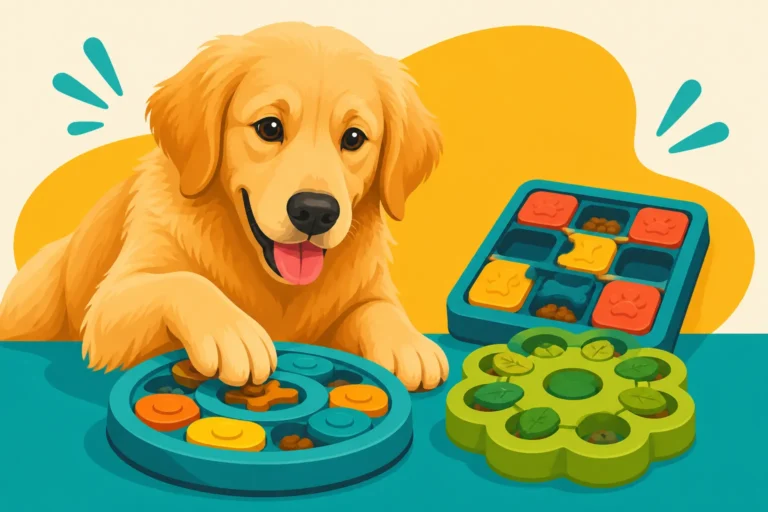
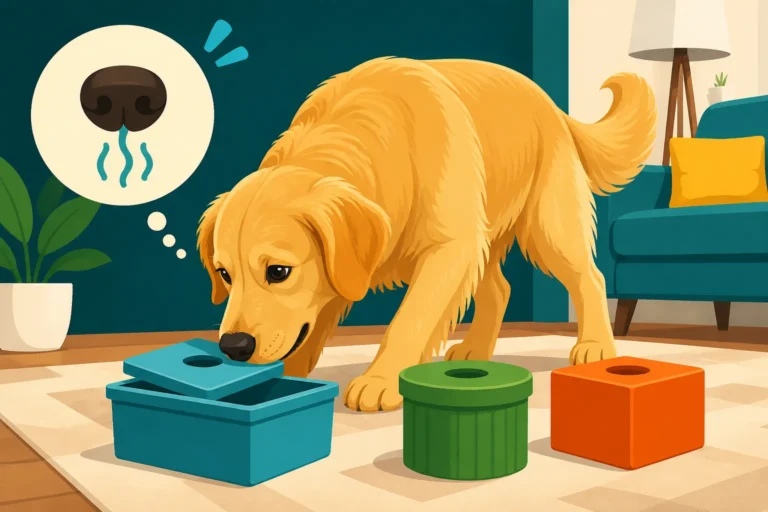
Scent Work and Puzzle Toys: Goldens have incredible noses. Engage them with simple scent games. Hide a high-value treat under one of three cups and let them "find" it. Or scatter their kibble in the grass and let them forage. This taps into their natural instincts and is mentally tiring, which can help them settle afterward. Puzzle feeders are fantastic for this; instead of gobbling their meal in seconds, they have to work for it, extending their engagement and mental exercise. There are many great options for Puzzle Feeders That Occupy a Golden Retriever that you can explore. These require focus and problem-solving, which, while different from traditional obedience, still build mental stamina.
Remember, the goal isn't to force a long attention span, but to make the most of the attention they do give you. Keep it fun, keep it positive, and always end on a good note.
Recognizing the Signs of a Disengaged Puppy
It’s just as important to recognize when your Golden puppy is losing focus as it is to know how to capture it. Pushing a puppy beyond their limits of concentration can lead to frustration, disengagement, and even a negative association with training. Learning to read your puppy's body language is key.
Over-Stimulation and Frustration Cues
Puppies, especially Goldens, might not always directly tell you they're done with a training session, but their body language will. Watch for these subtle (and not-so-subtle) signs that your puppy is becoming over-stimulated, frustrated, or simply disengaged:
- Excessive sniffing or grooming: If your puppy suddenly becomes obsessed with sniffing the floor, their paw, or excessively licking their lips, it's often a displacement behavior. They're trying to cope with stress or boredom, or they're signaling that they're uncomfortable with the situation.
- Turning away or avoiding eye contact: If your puppy physically turns their head or body away from you, or refuses to make eye contact, they're likely trying to disengage from the interaction. They're basically saying, "I'm done."
- Yawning: While sometimes a sign of tiredness, yawning during a training session can also be a stress signal. It's their way of trying to calm themselves down.
- Soft whale eye: This is when you can see the whites of their eyes, often indicating discomfort or stress.
- Increased mouthing or nipping: A puppy who is normally not overly mouthy might start to gently (or not so gently) nip at your hands or clothes when they're overstimulated. They might be trying to release pent-up energy or signal their frustration. This is different from the typical Why Golden Retriever Puppies Are So Mouthy you'll see during teething, but still important to address.
- Breaking focus repeatedly: If you find yourself asking for a "sit" five times and your puppy is just staring into space or wandering off, their focus is gone.
Ignoring these cues can lead to a puppy who starts to resent training or who simply "tunes out" when you try to work with them. You want training to be a positive experience, not a battle of wills.
When to Call It Quits (for now)
The moment you notice any of the above signs, it's time to end the session. It's far better to end a training session a little too early while your puppy is still enthusiastic, rather than pushing them until they are completely checked out or frustrated.
End on a positive note: Even if the last few attempts weren't perfect, try to get one successful, easy command (like "sit") and reward it heavily before declaring the session over. This ensures your puppy walks away feeling successful and happy, associating training with good feelings.
Take a break: Sometimes all they need is a five-minute break to run around, get a drink of water, or go potty. You can always try another short session later in the day when they're refreshed. Don't be afraid to take a full break for a few hours or even until the next day if your puppy is truly struggling. Rest and relaxation are crucial for consolidating new learning.
Don't push too hard: It's tempting to think, "Just one more time, they almost got it!" But pushing an over-tired or distracted puppy usually backfires. You'll both end up frustrated, and your puppy might start to avoid you when you bring out the treats. Remember that consistent, short, positive interactions build a strong foundation over time. There's no rush. Your Golden Retriever puppy has their entire life to learn, and the early stages are about building a love for learning, not perfect obedience.
Empathy and patience are your best tools when working with a Golden Retriever puppy's attention span. They truly want to please you, but their young brains and boundless energy sometimes make it a challenge. By understanding their limitations, managing their environment, and keeping things positive and fun, you'll set your Golden up for a lifetime of successful learning.
Disclaimer
This article is for general informational purposes only and does not constitute professional advice. Laws, prices and regulations vary by location and change over time. Consult a qualified professional for guidance on your specific situation.