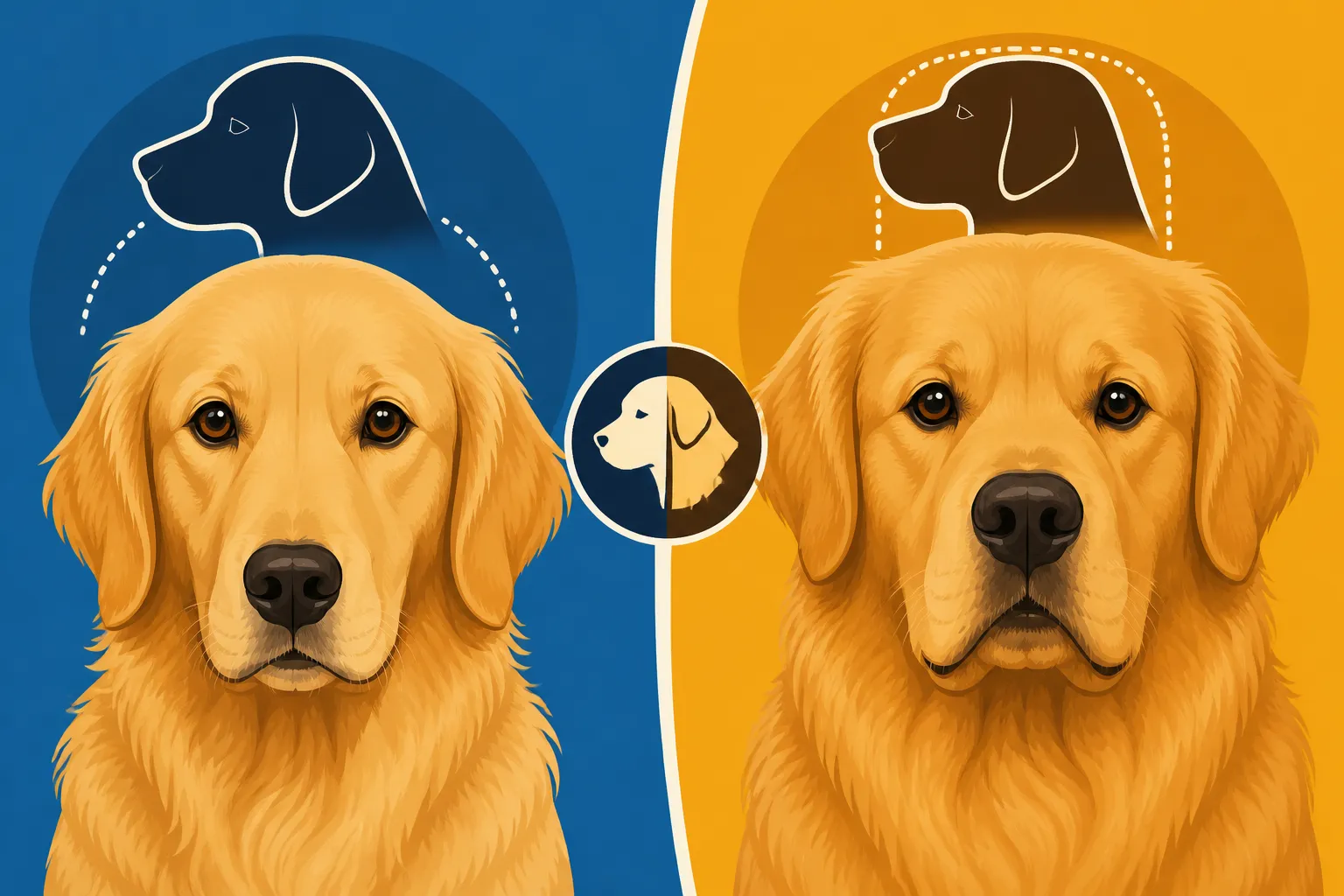
Why English Goldens Have Blockier Heads
It's a question many prospective Golden Retriever owners, and even seasoned enthusiasts, ponder when they see pictures of the different "types" of Goldens. You're looking at an English Golden, often called an English Cream, and you immediately notice that distinct, broad, sometimes almost square-looking head. It's a striking difference from the heads you often see on their American counterparts, and it's a perfectly valid curiosity that goes right to the heart of breed distinctions and standards. This guide will walk you through exactly why those English Goldens tend to sport such famously blockier heads.
Understanding the Golden Retriever Breed Standard
When we talk about differences in appearance between Golden Retrievers, especially something as prominent as head shape, it almost always boils down to the breed standards set by different kennel clubs around the world. While all Golden Retrievers originate from the same Scottish lineage, various countries developed their own specific ideals for the breed over time, and these ideals are codified in their respective breed standards. These written descriptions guide breeders and judges, influencing what traits are considered desirable.
The American Kennel Club Standard's Influence
In the United States, the American Kennel Club (AKC) sets the standard for Golden Retrievers. The AKC standard describes the head as "broad in skull, slightly arched laterally and longitudinally without protrusion of the occipital bone." It calls for a "forehead to stop, well defined but not abrupt." The muzzle is described as "straight and tapering slightly from stop to tip." While it calls for a broad skull, it doesn't quite emphasize the massive or "blocky" aspect that you might associate with some English lines. American Goldens, particularly those bred for the show ring, often exhibit a head that appears more refined, with a slightly longer and less deep muzzle compared to their British cousins. They are still beautiful dogs, of course, with that unmistakable Golden charm, but their head proportions often lean towards elegance rather than sheer mass. To dive deeper into what makes the American Golden unique, you might enjoy reading The AKC Golden Retriever Breed Standard.
For many years, American breeders have focused on a balanced, graceful appearance, where the head is in proportion with the rest of the body without being overly heavy. This doesn't mean their heads aren't broad; they absolutely are, as specified by the standard. However, the overall impression tends to be one of athleticism and a certain "flow" from the skull into the muzzle, often seen in what are known as American Show Line Golden Retriever Traits. This focus has led to a distinctive look that is widely recognizable as the "American Golden," characterized by a range of coat colors from light golden to rich, dark gold, and a generally more streamlined build.
The Kennel Club UK Standard's Emphasis on Head Type
Now, let's turn our attention across the pond to the United Kingdom, where The Kennel Club (KC) oversees the breed standard. This is where we start to see the key differentiators that contribute to the "blockier" head. The KC standard describes the head as "well proportioned, broad in skull without coarseness; well set on neck." It goes on to specify a "broad and deep muzzle, tapering gradually from stop to nose." The words "broad" and "deep" are absolutely crucial here.
The emphasis in the UK standard is on a powerful, substantial head that conveys strength and intelligence, befitting a working retriever. When breeders in the UK select for these traits, they are looking for a wider skull, a more pronounced stop, and a deeper, more squared-off muzzle. This isn't just a slight variation; it’s a distinct preference that, over generations, has led to the visual difference you observe. This pursuit of a specific head type is a major reason for the aesthetic distinctions between the two lines, a topic explored further in How British and American Goldens Differ. The result is often a Golden with a truly impressive, almost regal head, often accompanied by a lighter, creamier coat and a more robust, sometimes heavier-boned body structure.
Delving into the "Blocky" Head Appearance
So, what exactly makes a head look "blocky"? It's not just one single feature, but a combination of cranial structure, muzzle dimensions, and even the way the eyes are set. Each element contributes to that distinctive substantial appearance that is so admired in English Golden Retrievers.
Skull Structure and Cranial Breadth
The foundation of that blocky look lies in the skull itself. English Goldens, adhering to their breed standard, typically have a broader skull, particularly between the ears. Imagine looking down on the dog's head from above; an English Golden's skull would likely appear wider and flatter on top compared to some American lines, which might show a slightly more domed or narrower appearance. This increased breadth is often paired with a more defined "stop" – the transition area between the forehead and the muzzle. A distinct stop makes the forehead appear more pronounced, adding to the perception of a blocky, well-defined head.
This cranial breadth isn't just about looks; it speaks to the underlying bone structure. When you feel the top of an English Golden's head, you're likely to find a solid, wide platform. This is a highly desired trait in their breed rings and is actively selected for by breeders aiming for the classic "English look." It gives the dog an intelligent and powerful expression, and it's a characteristic that stands out immediately, making them instantly recognizable.
Muzzle Depth and Jawline
Beyond the skull, the muzzle plays an equally significant role in creating the blocky aesthetic. The KC standard calls for a "deep muzzle," meaning the distance from the top of the muzzle to the bottom (where the upper and lower jaws meet) is substantial. This depth, combined with a good width, gives the muzzle a powerful, almost square appearance when viewed from the side or front. In contrast, a shallower or more tapered muzzle might make the overall head look more delicate.
A strong, well-developed jawline also contributes to this impression. You'll notice that the jaws on an English Golden are typically quite muscular and pronounced, giving a firm finish to the muzzle. This contributes to the overall "squareness" of the head, rather than a narrow or snipey look. When a Golden Retriever has a deep, broad muzzle, it balances the width of their skull perfectly, creating a harmonious and substantial head. For a deeper dive into these features, checking out Golden Retriever Head, Muzzle and Expression can be very insightful. Owners often find themselves marveling at this distinct feature, and it's a testament to dedicated breeding for specific physical traits.
Eye Placement and Expression
While less obvious than skull and muzzle, the eyes and their placement also contribute to the overall impression of a blocky head. English Golden Retrievers typically have dark, kind, and intelligent eyes, set well apart and generally deep in their sockets, often with dark rims that enhance their gentle expression. When eyes are set wider apart on a broad skull, it can further emphasize the width of the head. This placement, combined with dark pigmentation around the eyes and a keen, friendly gaze, completes the picture of a classic English Golden's head.
The overall expression created by these features is one of characteristic softness and confidence. It's not just about the bones and flesh; it's about how these elements combine to form the quintessential Golden Retriever look that breeders strive for. A well-constructed head, according to the UK standard, will always project that gentle, intelligent, and eager-to-please nature. This is why when you look at an English Golden, their head often feels commanding yet incredibly endearing.
Beyond Aesthetics: Function and Temperament
It's natural to wonder if these physical differences, particularly something as noticeable as head shape, correlate with differences in function or temperament. While appearances are certainly striking, it's important to remember what truly defines a Golden Retriever.
Breeding for Type Versus Function
Historically, Golden Retrievers were bred as gun dogs, specifically to retrieve fowl unharmed, hence their "soft mouth" trait. Both American and British lines retain this foundational purpose. However, over decades, breeding has sometimes branched into different specializations: some lines are bred primarily for show (conformation), others for field work (hunting and competitive obedience), and many for loving companionship. The blockier head of the English Golden is primarily a "type" preference within the conformation show ring in the UK.
While a broad skull might theoretically offer more room for a larger brain, there's no scientific evidence to suggest that the blockier head of an English Golden directly correlates to superior intelligence or working ability compared to an American Golden. Both types are highly intelligent, trainable, and possess that strong retrieving instinct. What you often find is that field-bred Goldens, regardless of their country of origin, tend to have a slightly more athletic build and often a less massive head, as their breeding prioritizes agility and endurance over the aesthetic of a broad skull. Conversely, show lines, like What English Cream Golden Retrievers Actually Are, often emphasize the physical attributes defined by their respective standards. It's a subtle distinction, but an important one for understanding the nuances of the breed.
Temperament: More Than Just a Head Shape
The renowned Golden Retriever temperament—that friendly, eager-to-please, tolerant, and intelligent disposition—is a hallmark of the breed, transcending geographical lines and head shapes. Whether a Golden has a blocky English head or a more refined American one, their core personality should remain true to the breed's reputation. You shouldn't expect an English Golden to be inherently calmer or more intelligent just because of its head. While anecdotal observations sometimes suggest subtle differences in energy levels or maturity rates between British and American lines (with some finding English lines to mature a bit slower mentally), these are often generalizations and individual variations are vast.
What truly matters for temperament, regardless of physical type, is responsible breeding. A reputable breeder, whether in the UK or the US, prioritizes health, stable temperament, and adherence to the breed standard in all its aspects. They will conduct proper health clearances and ensure their puppies are well-socialized from a young age. When you are looking to bring a Golden into your home, focusing on a breeder's commitment to these core values, rather than just the visual aesthetic of the head, is paramount. You can find more comprehensive information about what to expect from their personality in Golden Retriever Temperament and Personality, which covers the breed's general characteristics irrespective of minor physical variations.
| Feature | American Golden Retriever (General Tendency) | English Golden Retriever (General Tendency) |
|---|---|---|
| Skull Breadth | Broad, but often appearing less massive | Very broad, giving a 'blocky' impression |
| Muzzle Depth | Tends to be shallower and tapers more | Deep, substantial, often appearing squarer |
| Stop Definition | Well-defined but often less pronounced | More pronounced and distinct |
| Overall Head Shape | More refined, proportionate to body | Robust, powerful, often described as 'blocky' |
| Coat Color | Ranges from light gold to rich, dark gold | Often lighter, creamier shades |
| Build | Often more athletic and graceful | More robust, heavier bone structure |
When choosing a Golden Retriever, it's about finding the right dog for your family and lifestyle, and while the visual appeal of a blocky head is undeniable for many, it's always secondary to health, temperament, and responsible breeding practices. Be sure to consider all factors when you are Choosing Between an English and American Golden, and always focus on Finding a Reputable Golden Retriever Breeder who prioritizes the well-being of their dogs. You might also want to look for quality dog supplies, like premium food or enrichment toys, from retailers like Chewy, no matter the specific head shape of your beloved Golden.
Ultimately, the reason English Goldens tend to have blockier heads is a direct result of the specific points emphasized in The Kennel Club's breed standard in the UK. Generations of breeders have selected for these traits, cultivating the distinctive look we now associate with the "English type." It's a testament to dedicated breeding and the pursuit of a particular aesthetic ideal within the breed. Your local pet supply store, or even a convenient online retailer like Chewy, will have all the brushes you'll need to keep that beautiful, dense coat around your Golden's magnificent head looking its best.
Disclaimer
This article is for general informational purposes only and does not constitute professional advice. Laws, prices and regulations vary by location and change over time. Consult a qualified professional for guidance on your specific situation.