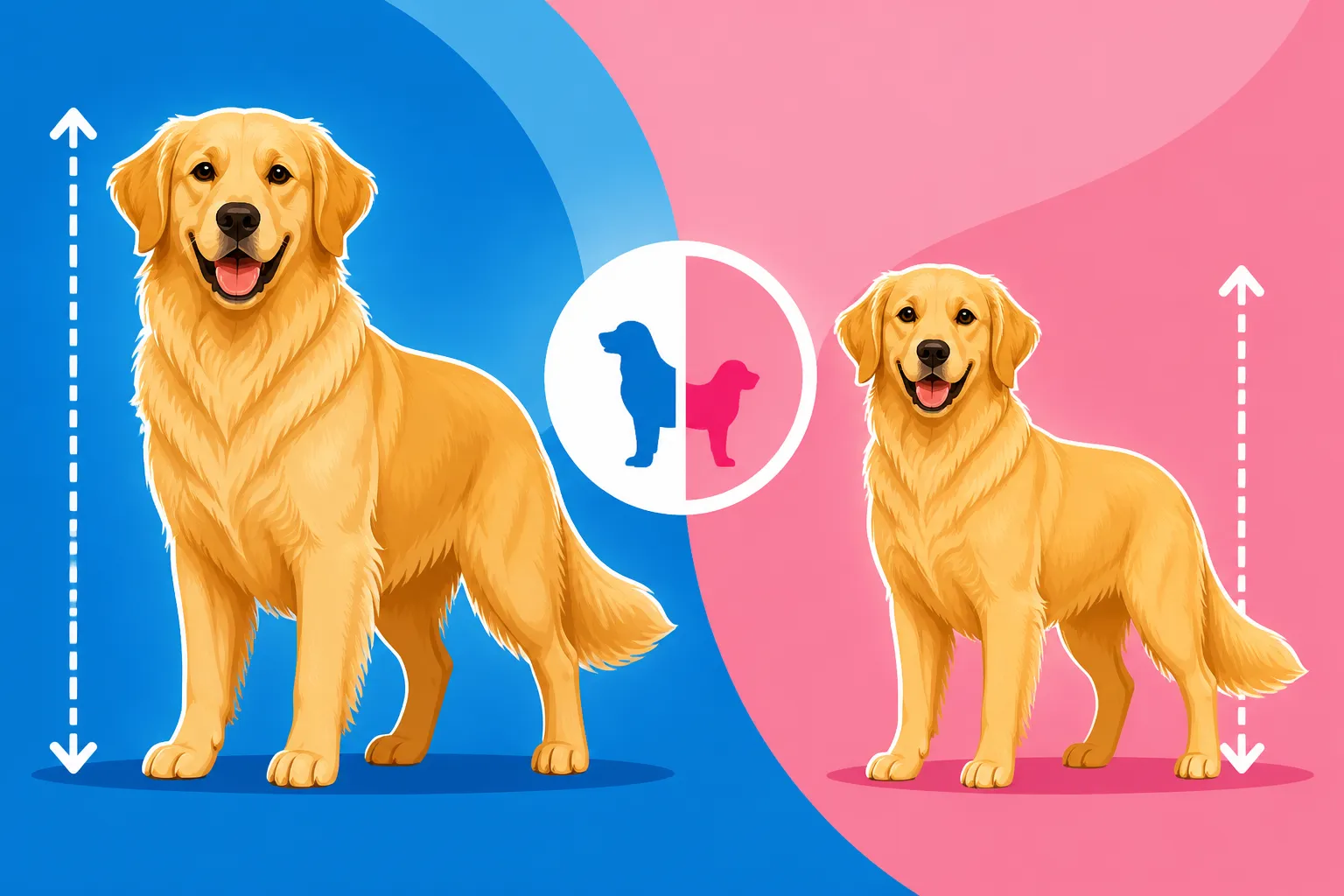
Size Difference Between Male and Female Goldens
It’s a common scenario: you’re falling head over heels for an adorable Golden Retriever puppy, but as you imagine them growing up, a crucial question pops into your mind – how big will they actually get? Understanding the Size Difference Between Male and Female Goldens is more than just curiosity; it's about preparing your home, your car, and even your budget for the full-grown companion you'll soon have. This guide will walk you through what to expect regarding the size differences, their growth patterns, and the practical considerations for welcoming a male or female Golden into your life.
Understanding the Golden Retriever Breed Standard for Size
When you're looking at Golden Retriever puppies, it's easy to assume they all grow to be roughly the same size. However, just like with people, there are distinct differences between males and females, and the breed standard provides clear guidelines for what is considered typical. These standards aren't just for show dogs; they offer a helpful benchmark for prospective owners to understand the mature physical characteristics of a healthy Golden. It's important to remember these are averages, and individual dogs can, of course, be a little outside these ranges.
Male Golden Retriever Size Expectations
Male Golden Retrievers generally carry more height and bone structure than their female counterparts, giving them a more robust and substantial presence. According to breed standards, an adult male Golden Retriever typically stands between 23 to 24 inches tall at the shoulder. This isn't just a slight difference; that extra inch or two can make a noticeable impact when you're standing next to a seventy-pound dog. Their weight usually falls into the range of 65 to 75 pounds. This greater mass contributes to their powerful build and is something to consider if you're picturing them curled up on your lap – they might just overflow it! Many owners appreciate the impressive stature of a male Golden, seeing it as a hallmark of the breed's strength and beauty. You might be interested in specifically learning about the Ideal Height for a Male Golden Retriever.
Female Golden Retriever Size Expectations
Female Golden Retrievers, while still substantial dogs, are usually a bit daintier and more refined in their build compared to males. They typically stand between 21.5 to 22.5 inches tall at the shoulder. This difference of about an inch or two in height, while seemingly small on paper, makes them noticeably shorter when standing side-by-side with a male. Their weight range is usually between 55 to 65 pounds, making them roughly 10 pounds lighter on average than males. This can translate to a slightly more manageable size for some individuals, especially those who might find handling a very large, powerful dog challenging. Don't let the "smaller" description fool you, though; a female Golden is still a medium-to-large breed with plenty of joyful energy and a loving heart. For more detail, refer to Ideal Height for a Female Golden Retriever.
Why the Standard Matters (and when it doesn't)
The breed standard for Golden Retriever Size and Adult Proportions offers an excellent guideline, particularly if you're working with a reputable breeder who strives to meet these benchmarks. It helps ensure that your puppy has inherited sound genetics for size and structure, which can impact their health and mobility down the line. A dog significantly outside these ranges might suggest an issue with breeding or health, or perhaps simply that the dog is a mix, even if unintended. However, for a beloved family pet, being an inch taller or a few pounds heavier than the standard isn't typically a cause for concern, as long as they are healthy and well-proportioned. It's more about understanding the general expectations rather than adhering to rigid rules for a companion animal. What truly matters is their overall health, temperament, and the joy they bring into your home, not a perfect measurement.
Growth Patterns and When They Reach Full Size
Watching a Golden Retriever puppy grow is truly a wonder. One minute they're a tiny bundle of fluff, and the next, they're a lanky adolescent tripping over their own paws. Understanding their growth curve, and how it can differ slightly between males and females, can help you manage their exercise, nutrition, and expectations throughout their first couple of years. It’s not just about getting bigger; it's about developing strong bones and muscles, and ensuring they grow at a healthy pace.
Puppyhood Growth Spurts
Golden Retriever puppies grow incredibly fast, especially during their first six to eight months. You'll literally see changes almost daily! Both male and female puppies will experience rapid growth spurts during this period, putting on significant height and weight. However, even in puppyhood, males often outpace females slightly in terms of overall size. It's during these early, formative months that proper nutrition is absolutely critical. Feeding a high-quality large-breed puppy food is essential to support their fast-growing bones and joints, preventing issues later on. Overfeeding or encouraging too much strenuous exercise during these crucial developmental stages can put undue stress on their still-forming growth plates. The rapid growth can sometimes lead to temporary limping or awkward gaits, which are worth discussing with your vet.
Reaching Mature Height and Weight
Generally, When a Golden Retriever Reaches Full Height they will be around 12 to 18 months old. This means that by their first birthday, most Goldens have reached their adult height, or are very close to it. However, while their height may be established, their weight and overall "fill" continue to develop for quite a bit longer. It's common for a Golden Retriever, particularly males, to continue to broaden in the chest, fill out their musculature, and add those last few pounds until they are closer to two or even three years old. So, if your Golden is a year old and still looks a bit lanky, don't worry, they are likely still maturing and will fill out more over the next year. This slow, steady filling out helps them achieve that classic Golden Retriever presence and contributes to their overall health and strength. To understand more about this process, you might want to read When a Golden Retriever Finishes Filling Out.
Factors Influencing a Golden's Final Size
While genetics from their parents play the largest role in determining a Golden Retriever's ultimate size, several other factors can also have an influence. Nutrition, as mentioned, is paramount; a diet lacking essential nutrients during growth can hinder a dog from reaching its full potential. Conversely, overfeeding, especially with diets too high in calcium for large breeds, can lead to excessively rapid growth, potentially contributing to skeletal issues like hip and elbow dysplasia down the line. Exercise levels also play a part. While proper exercise is vital for muscle development, excessive or high-impact activities during puppyhood can stress developing joints. Early spaying or neutering has also been linked in some studies to increased height and changed bone structure, as it can delay the closure of growth plates. Always consult your vet about the optimal time for spaying and neutering your Golden Retriever based on their individual development and your lifestyle.
| Characteristic | Male Golden Retriever (Adult) | Female Golden Retriever (Adult) |
|---|---|---|
| Height at Shoulder | 23-24 inches | 21.5-22.5 inches |
| Weight | 65-75 pounds | 55-65 pounds |
| Build | More substantial, heavier bone | Slightly daintier, more refined |
| Maturity | Reaches height by 12-18 months, fills out by 2-3 years | Reaches height by 12-18 months, fills out by 2 years |
| Overall Impression | Robust, powerful | Graceful, athletic |
Practical Implications of Size Differences for Owners
Deciding between a male or female Golden Retriever often comes down to personality, but their size differences do bring some practical considerations into play. From the gear you'll need to how much space they take up, thinking ahead can make your life much easier and ensure your Golden is comfortable and well-cared for. It's not just about how big they look, but how their physical presence impacts your daily life with them.
Equipment and Space Considerations
A larger dog, whether male or female, naturally requires larger equipment. For a male Golden, you might need a truly extra-large crate, a heavy-duty dog bed from a brand like Chewy, and a larger car barrier if they ride in the back of an SUV. Even things like food and water bowls will be bigger, and you'll likely go through larger bags of dog food more quickly. If you live in an apartment, the slight size difference might influence how much space your dog feels they have, though Goldens adapt well to various living situations as long as their exercise needs are met. Keep in mind that a larger dog jumping on you, even affectionately, has more force behind it, which can be an important consideration for households with small children or elderly residents. For more specific guidance on bedding, consider Orthopedic Bed Prices for a Golden Retriever. And for sleeping arrangements, knowing What Size Crate a Golden Retriever Needs is crucial.
Exercise Needs and Joint Health
While both male and female Goldens are active dogs, a larger male might have slightly higher caloric needs to maintain his weight and muscle mass, impacting how much food you buy from retailers like Chewy. More importantly, the heavier weight of a male Golden can put additional stress on their joints, making good care and attention to joint health even more critical. Both sexes are prone to conditions like hip and elbow dysplasia, but managing the weight and preventing excess strain is key for all Goldens. This means being mindful of Golden Retriever Weight and Joint Damage and avoiding Exercise Limits for a Golden Retriever Puppy that could harm developing joints. While both will need plenty of exercise, a particularly robust male might feel heavier on the leash, requiring consistent training for Leash Manners for a Strong Golden Retriever to ensure comfortable walks for both of you.
Overall Management and Handling
The physical strength and size of a Golden Retriever can influence how you manage them in various situations. A strong, energetic male Golden might be harder to hold back if he spots a squirrel across the park, demanding more strength and consistent training on your part. Getting a larger dog into the car, especially if they are wet and muddy after a swim, can also be more of a challenge. Conversely, a female might be slightly easier to lift if needed, or to navigate in crowded spaces. These are subtle differences, but they can add up over the years. Regardless of sex, all Goldens need thorough socialization and consistent positive reinforcement training to be well-behaved family members. Remember that a reputable trainer can help you with handling challenges for any size Golden. Even securing your yard adequately, perhaps with Fencing a Yard for a Golden Retriever, is a critical consideration for managing such active dogs.
Disclaimer
This article is for general informational purposes only and does not constitute professional advice. Laws, prices and regulations vary by location and change over time. Consult a qualified professional for guidance on your specific situation.