How Golden Retrievers Greet Strangers
If you've ever been greeted by a Golden Retriever, you probably know it's often an experience filled with wiggles, tail thumps, and an abundance of sheer joy. But while their friendly reputation precedes them, understanding the nuances of how Golden Retrievers greet strangers, and why they act the way they do, can be incredibly insightful for owners. This guide will explore their natural inclinations, common behaviors, and how you can gently guide your Golden to offer polite and appropriate greetings in any situation.
The Golden Retriever's Inherently Friendly Nature
Golden Retrievers are practically synonymous with friendliness. It's one of the qualities that endears them to so many, making them one of the most popular dog breeds in the world. This isn't just a happy accident; it's deeply ingrained in their history and temperament.
A Breed Bred for Sociability
Originally, Golden Retrievers were bred in Scotland in the mid-19th century by Lord Tweedmouth. His goal was to create a superb hunting dog, specifically a retriever, that was also calm and biddable with people. This meant selecting for dogs that not only had excellent retrieving instincts but also possessed an incredibly amiable and tractable nature. They needed to work closely with hunters, handle game gently, and be comfortable around various people and other dogs without aggression or excessive shyness. This foundational breeding philosophy created a dog predisposed to enjoy human companionship and interaction. They were never intended to be guard dogs or aloof protectors; their role was to be a cooperative partner, and that translates directly into their typically effusive greetings today. For more on their innate qualities, you might find Golden Retriever Temperament and What to Expect a helpful read.
This inherent desire to connect is why most Goldens approach new people with an open heart and a wagging tail. They see a stranger not as a threat, but as a potential friend, a source of pets, or perhaps even an opportunity for a game of fetch. Their enthusiasm isn't malicious; it's simply a reflection of their genetic blueprint designed for companionship and cooperation. It's what makes them such wonderful family pets and why they often thrive in environments where they get plenty of positive human interaction.
The "Golden Hello" – What It Looks Like
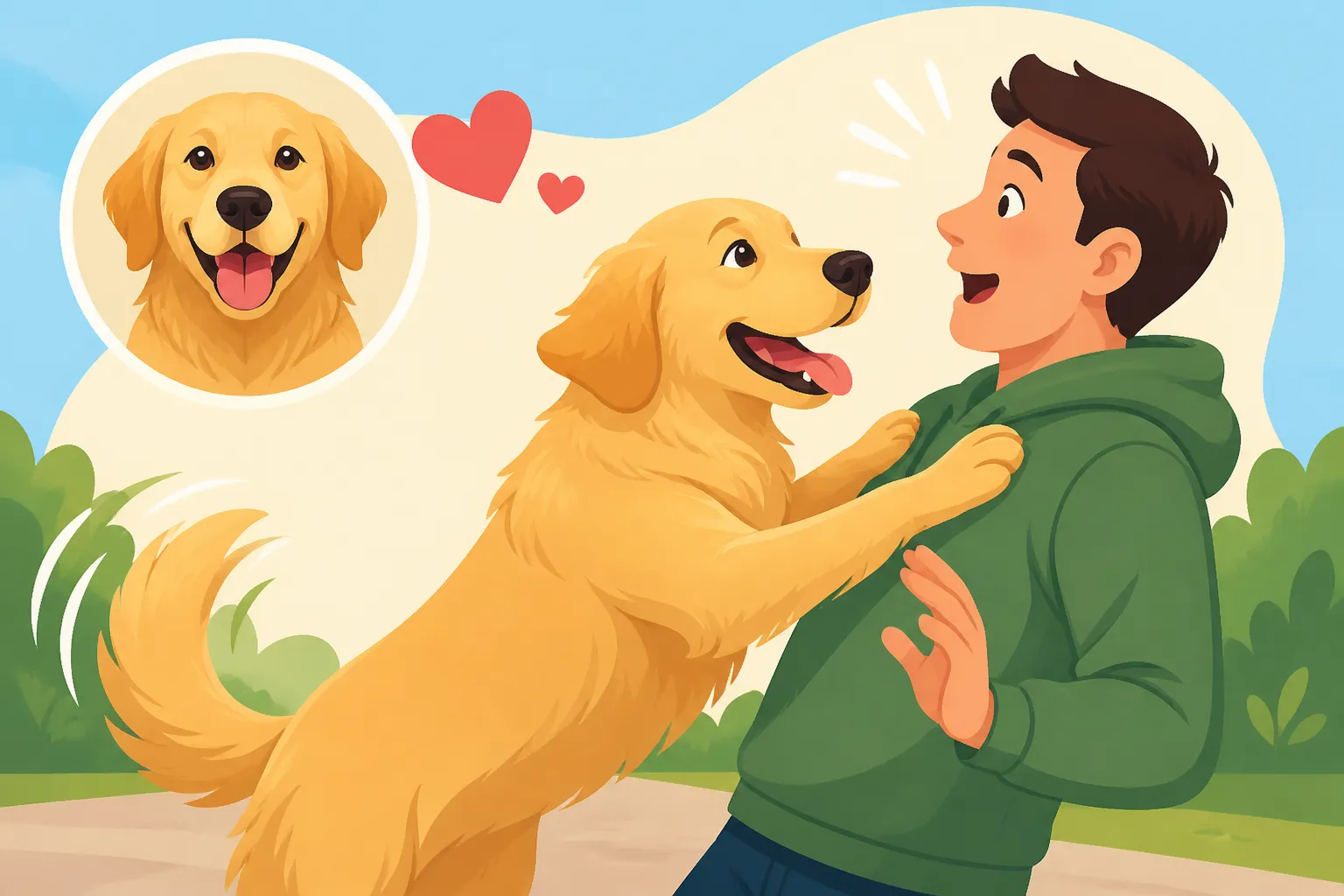
When a Golden Retriever greets a stranger, it's often a full-body event, lovingly dubbed the "Golden Hello" by many enthusiasts. This isn't a subtle nod; it's a vibrant, undeniable expression of their excitement and pleasure at meeting someone new.
Typically, you'll see a vigorously wagging tail that might sweep items off a low coffee table if you're not careful. Their entire rear end might wiggle along with the tail, leading to what some call the "full-body wag." Their mouth is usually open, often in what looks like a happy grin, and their eyes are soft, bright, and eager. They might make soft, happy noises—little whines, grunts, or even a soft "woo-woo" sound—as they approach. Many will try to get as close as possible, leaning into a person's legs, nudging a hand for pets, or even offering a gentle lick.
For puppies or very excitable adult Goldens, this greeting can involve a bit more physical contact, such as jumping up. While well-intentioned, this can be overwhelming for some people and isn't considered polite. Other Goldens might pick up a toy or a shoe (theirs or yours!) and bring it to you as an offering, a sweet callback to their retrieving instincts and a sign of their "soft mouth" trait. Even if they're not carrying something, you might find them taking your hand gently in their mouth without pressure, another sign of their soft mouth and an attempt to "hold" you, much like they would a retrieved bird.
Factors Influencing a Golden Retriever's Greeting Style
While most Goldens share that friendly disposition, how exactly they manifest their greetings can vary quite a bit. It’s not a one-size-fits-all situation. Several factors play a significant role in shaping a Golden Retriever’s individual greeting style, from their earliest experiences to their ongoing training and even their unique personality.
Early Socialization is Key
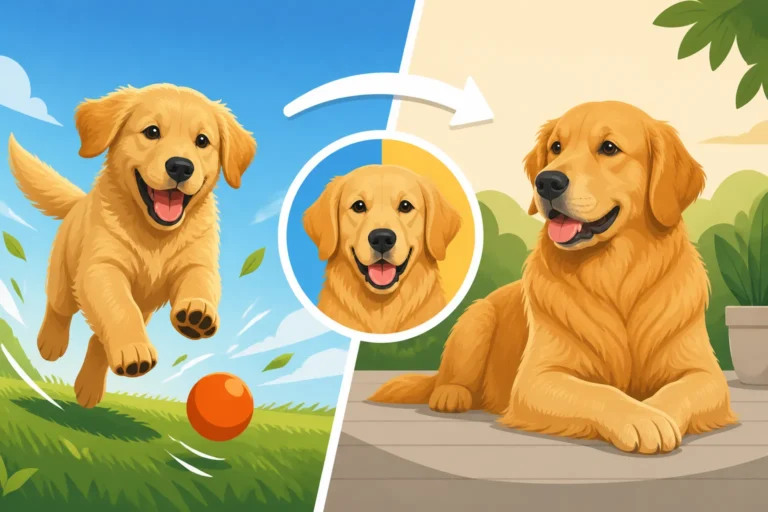
Just like with human children, a Golden Retriever puppy's early experiences are paramount in shaping their future behavior. Proper and comprehensive socialization during their critical developmental window (roughly between 3 and 16 weeks of age) is absolutely crucial. A puppy who is safely and positively exposed to a wide variety of people—men, women, children, people in hats, people with umbrellas, people on bikes—will grow up with a much higher comfort level and confidence around strangers.
Think of it this way: if a puppy only ever meets people in their immediate family, then suddenly encounters a tall man with a beard and a deep voice, they might be apprehensive. But if that puppy has had dozens of positive interactions with all sorts of people, those new encounters become just another exciting opportunity for a pet. This doesn't mean forcing interaction; it means controlled, positive exposure where the puppy feels safe. Treats, gentle praise, and short, happy meetings are the goal. Puppy classes are fantastic for this, providing a safe and structured environment to meet new people and other dogs. Neglecting this crucial period can lead to shyness, fear, or even reactivity towards strangers later on, even in a breed as inherently friendly as the Golden Retriever. Don't underestimate the power of Golden Retriever Puppy Socialization Windows.
Individual Personality and Genetics
Even within the same litter, Golden Retrievers can have distinct personalities. Some puppies are bold and outgoing from day one, rushing up to explore everything, while others are a bit more reserved, preferring to observe before engaging. These individual differences play a huge role in how they'll greet strangers as adults. A naturally more boisterous Golden might be prone to jumping with excitement, whereas a slightly shyer Golden might prefer to stand a few feet away, wagging their tail, waiting to be approached rather than initiating direct contact.
Genetics also plays a part. Responsible breeders not only breed for health and conformation but also for sound temperament. They strive to produce puppies who are confident, friendly, and stable. If a Golden comes from a line where parents or grandparents were overly shy or anxious, there's a chance those traits could be passed down, impacting how readily they greet new people. However, even with excellent genetics, good socialization and training remain essential. Sometimes, a Golden might simply be more "soft" or sensitive, meaning they'll respond more strongly to perceived threats or loud noises, which can sometimes manifest as initial reservation around unfamiliar faces.
Owner Influence and Training
The way an owner manages and reacts to their Golden's greetings profoundly influences their dog's behavior. If an owner consistently allows (or even encourages) jumping up because they find it cute in a puppy, that behavior will persist into adulthood, becoming a challenging habit. Conversely, if an owner immediately corrects jumping and rewards a "four on the floor" greeting, the dog learns quickly what is expected.
Training, especially consistent, positive reinforcement training, is the cornerstone of polite greetings. Teaching commands like "sit," "stay," and "off" (meaning no jumping) can empower your Golden to channel their excitement into appropriate actions. If your Golden tends to pull on the leash to greet every person they see, working on Leash Manners for a Strong Golden Retriever becomes vital. The way you advocate for your dog also matters. If your Golden is overwhelmed or seems hesitant, a good owner will politely ask strangers to give them space rather than forcing an interaction.
Common Golden Retriever Greeting Behaviors (and How to Manage Them)
While the heart of a Golden Retriever is almost always in the right place, their methods of saying "hello" can sometimes be a bit much. Understanding these common behaviors and having strategies to manage them is key to ensuring pleasant interactions for everyone involved.
The Enthusiastic Jumper
This is perhaps the most common (and often most frustrating) greeting behavior in young and even adult Goldens. They're so utterly thrilled to see a new person that they simply cannot contain their excitement. They launch themselves upwards, often with considerable force, trying to get closer to face-level to express their joy. While this is rarely aggressive, it can knock over small children, elderly individuals, or simply be annoying and messy, especially if your Golden just rolled in a muddy puddle.
To manage this, consistency is paramount. The moment your Golden starts to jump, turn your back and step away. Absolutely no attention (no eye contact, no speaking, no petting) should be given while they are jumping. The instant all four paws are on the floor, even for a second, turn back, praise softly, and offer a treat. The goal is to teach them that jumping makes the person (and attention) disappear, while keeping paws on the ground makes good things happen. Practice this with friends and family first, then gradually introduce it with strangers in controlled environments. You might find a durable treat pouch from Chewy helpful for keeping rewards handy during practice sessions. For more detailed steps, refer to Stopping a Golden Retriever From Jumping on Guests.
The "Leaner" and "Mouthy" Greeter
Some Goldens prefer to express their affection by leaning heavily into a person's legs, almost pushing them. This is often accompanied by intense wiggles and an insistent nudge for pets. It's a desire for physical contact and often a way of "claiming" attention.
The "mouthy" greeter is also common, especially in puppies and adolescent Goldens. They might gently take your hand or arm in their mouth, not biting down hard, but holding it. Sometimes they'll nip playfully at clothing or hands. This behavior stems from their retrieving instincts and their breed's characteristic "soft mouth." It's their way of interacting and exploring, but it can be startling or unwelcome. For puppies, focusing on Bite Inhibition Training for a Golden Retriever is critical. For older Goldens, redirecting this behavior is best. Instead of allowing them to mouth your hand, immediately offer a designated chew toy. High-quality, engaging toys from Chewy can be excellent for this purpose, providing an appropriate outlet for their oral fixation. If they continue to mouth, disengage briefly and then re-engage when they are calm and focused on the toy.
| Greeting Behavior | What It Looks Like | Why Goldens Do It | How to Manage It |
|---|---|---|---|
| Enthusiastic Jumper | Leaping up, paws on chest/shoulders, often with wiggles | Over-excitement, desire for face-level attention | Turn away, ignore jumping; reward "four on the floor" with treats/praise |
| The "Leaner" | Pushing body against legs, nudging for pets, wiggling | Seeking physical contact and affection | Reward calm leaning; teach "off" if too pushy; gently redirect |
| The "Mouthy" Greeter | Gently taking hand/arm in mouth, playful nipping | Retrieving instinct, exploration, seeking interaction | Redirect to a chew toy; teach "leave it"; disengage if inappropriate |
| The Wary/Reserved | Standing back, observing, possibly a soft bark | Mild shyness, lack of confidence, cautious nature | Do not force interaction; allow dog to approach on their terms; positive association with treats |
The Wary or Reserved Golden (It Happens!)
While Goldens are famed for their friendliness, it's a misconception that every single Golden Retriever will instantly love every single person they meet. Occasionally, you'll encounter a Golden who is more reserved or even a little wary around strangers. This isn't typical of the breed standard, but it can happen due to insufficient socialization, a traumatic past experience (especially with rescue dogs), or simply an individual personality quirk.
A wary Golden might hang back, observing new people from a distance. They might offer a soft bark or growl if someone approaches too quickly, or tuck their tail slightly. They may avoid eye contact or try to hide behind their owner's legs. If your Golden exhibits this behavior, it's crucial not to force interactions. Respect their space and politely inform strangers that your dog needs a moment. Instead, create positive associations. Have the stranger toss a high-value treat (like one you'd get from Chewy) to your dog from a distance, without trying to pet them. Let your Golden approach on their own terms. If the wariness is significant or escalates to fear-based aggression, it's important to seek professional help, which we'll discuss shortly. Early intervention can make a huge difference in building their confidence.
Teaching Polite Greetings and Setting Boundaries
It's one thing to understand why your Golden behaves a certain way, but it's another to proactively teach them polite manners. Guiding their natural enthusiasm into appropriate greetings is a rewarding process that benefits both your dog and everyone they meet.
Foundation Training for Calm Greetings
Before you can expect your Golden to greet a stranger politely, they need a solid understanding of basic obedience commands in a calm environment. Commands like "sit," "stay," and "leave it" are your best friends here.
- "Sit" and "Stay": Practice these commands frequently, first in quiet settings, then gradually introducing distractions. When a stranger approaches, ask your Golden to "sit." If they hold the sit, even for a moment, the stranger can offer a quick pet and a treat. If they break the sit, the interaction stops, and you reset. This teaches your Golden that staying calm and keeping their rear on the ground earns them the attention they crave. You can find excellent, high-value training treats at places like Chewy that will really motivate your Golden.
- "Four on the Floor": This is essentially a variation of "sit" or "stay" but specifically for jumping. When your Golden is about to jump, redirect them to a sit or simply wait until all four paws are on the floor, then immediately reward. This takes patience and consistency, but it's incredibly effective.
- "Go Say Hello": Once your Golden has mastered holding a sit, you can use a release cue like "go say hello" to signal that they can approach the person. This teaches them impulse control, allowing them to greet only when given permission.
- "Leave It": This command is invaluable if your Golden is tempted to grab something from a stranger (like a shopping bag) or mouth at their hands. Practice it with tempting items at home, then generalize it to real-world scenarios.
Start practicing with known, understanding friends and family members first, gradually increasing the difficulty by introducing new people and more distracting environments. The key is to set your Golden up for success, never putting them in a situation where they are likely to fail.
Managing Excitement in Public Settings
Public places, with all their sights, sounds, and smells, can be incredibly stimulating for a Golden Retriever. It's often where their greeting manners are put to the ultimate test.
- Leash Control: A well-fitted, comfortable leash and collar or harness are essential. If your Golden is a strong puller, a front-clip harness can provide better control, making it easier to manage their enthusiasm when a new person appears. Working on Loose Leash Walking With a Golden Retriever will make these encounters much smoother.
- Short, Controlled Interactions: Don't let your Golden have long, drawn-out greeting sessions with every person they see. A quick "sit," a pet, and then move on helps them understand that greetings are brief and that calm behavior leads to positive reinforcement.
- Advocate for Your Dog: Not everyone knows how to greet a dog politely. Some people rush in, hands outstretched, which can overwhelm even the friendliest Golden. Don't hesitate to politely ask people to wait for your dog to sit or to approach slowly. If your Golden is known to jump, you can say, "Oh, he's so friendly, but we're working on not jumping. Could you please wait for him to sit?"
- Practice "Look at Me": Teach your Golden to make eye contact with you on command. This is an invaluable tool for redirecting their attention away from an approaching stranger before they get over-excited. When they see someone, ask for "look at me," reward them, and then, if appropriate, give them permission to greet.
It’s about being proactive, not reactive. Anticipate situations where your Golden might struggle and intervene before the unwanted behavior occurs.
When to Seek Professional Help
Sometimes, despite your best efforts, certain greeting behaviors can persist or even worsen. This is when enlisting the help of a professional dog trainer or behaviorist can be incredibly beneficial.
- Persistent Jumping or Mouthing: If your adult Golden consistently jumps on people or uses their mouth inappropriately despite consistent training, a professional can provide personalized strategies and identify underlying causes.
- Fear or Aggression: If your Golden's wariness around strangers escalates to growling, lunging, or biting, it is crucial to seek professional help immediately. This indicates a deeper issue than simple over-excitement and requires expert intervention to ensure safety and improve your dog's well-being. Look for a certified professional dog trainer (CPDT-KA) or a veterinary behaviorist who uses positive reinforcement methods. Choosing a Positive Reinforcement Trainer for a Golden can guide you in this search.
- Overwhelm and Anxiety: Some Goldens, particularly those who haven't had adequate socialization or have a naturally anxious temperament, can become highly stressed by new people. Signs might include excessive panting, drooling, pacing, or trying to escape the situation. A professional can help you understand and address this anxiety through behavior modification protocols.
Remember, seeking help is a sign of a responsible owner. A professional can offer fresh perspectives, refine your training techniques, and help you and your Golden build a stronger, more harmonious relationship. They can also help devise enrichment activities, such as puzzle feeders from Chewy, that can help mentally tire an anxious or over-excited dog.
In the end, how a Golden Retriever greets strangers is a reflection of their innate friendliness, shaped by their experiences and your guidance. With patience, consistent positive training, and a deep understanding of their breed characteristics, you can help your Golden become a truly polite and cherished member of any community.
Disclaimer
This article is for general informational purposes only and does not constitute professional advice. Laws, prices and regulations vary by location and change over time. Consult a qualified professional for guidance on your specific situation.