Golden Retriever Puppy Socialization Windows
Bringing home a Golden Retriever puppy is an incredibly exciting time, full of wagging tails and adorable clumsiness. But for many new owners, the period between getting your puppy and their full vaccination series can feel like walking a tightrope: you know socialization is crucial, but you're terrified of exposing your little one to illness. This guide will walk you through the critical socialization windows for Golden Retriever puppies, offering practical, safe strategies to ensure your furry friend grows into a confident, well-adjusted adult, without unnecessary risk.
Understanding the Critical Socialization Windows for Golden Retrievers
The concept of "socialization windows" isn't just some fancy term; it's a fundamental aspect of canine development, especially for a breed as sensitive and intelligent as the Golden Retriever. These are specific periods in a puppy's life when their brain is most receptive to learning about the world around them, forming associations that will stick with them for life. Missing these windows, or mishandling them, can have lasting impacts on their temperament and behavior.
The Neonatal Period: Weeks 0-2 (Early Foundations)
This earliest stage, from birth to about two weeks, is primarily about the puppy's bond with their mother and littermates. During this time, puppies are mostly focused on eating, sleeping, and staying warm. Their senses are still developing; their eyes and ears are closed for the first week or two. While they aren't actively "socializing" with the outside world in the way we usually think of it, crucial foundational learning is happening.
The mother dog teaches her puppies about appropriate bite inhibition and canine communication. Gently handling puppies during this time by the breeder helps them get used to human touch and scent, laying the groundwork for future positive interactions. Exposure to various textures and gentle sounds in their whelping box can also contribute positively. It's a quiet but incredibly important phase that sets the stage for everything that follows. Without a good start here, a puppy might be more prone to fear or anxiety later on.
The Primary Socialization Window: Weeks 3-12 (The Golden Opportunity)
This is it – the big one. The primary socialization window, roughly from three to twelve weeks of age, is the most critical period for your Golden Retriever puppy's development. During these precious weeks, your puppy's brain is like a sponge, soaking up every experience and classifying it as either "safe" or "dangerous." Anything they encounter positively during this time is more likely to be accepted as normal and non-threatening in adulthood.
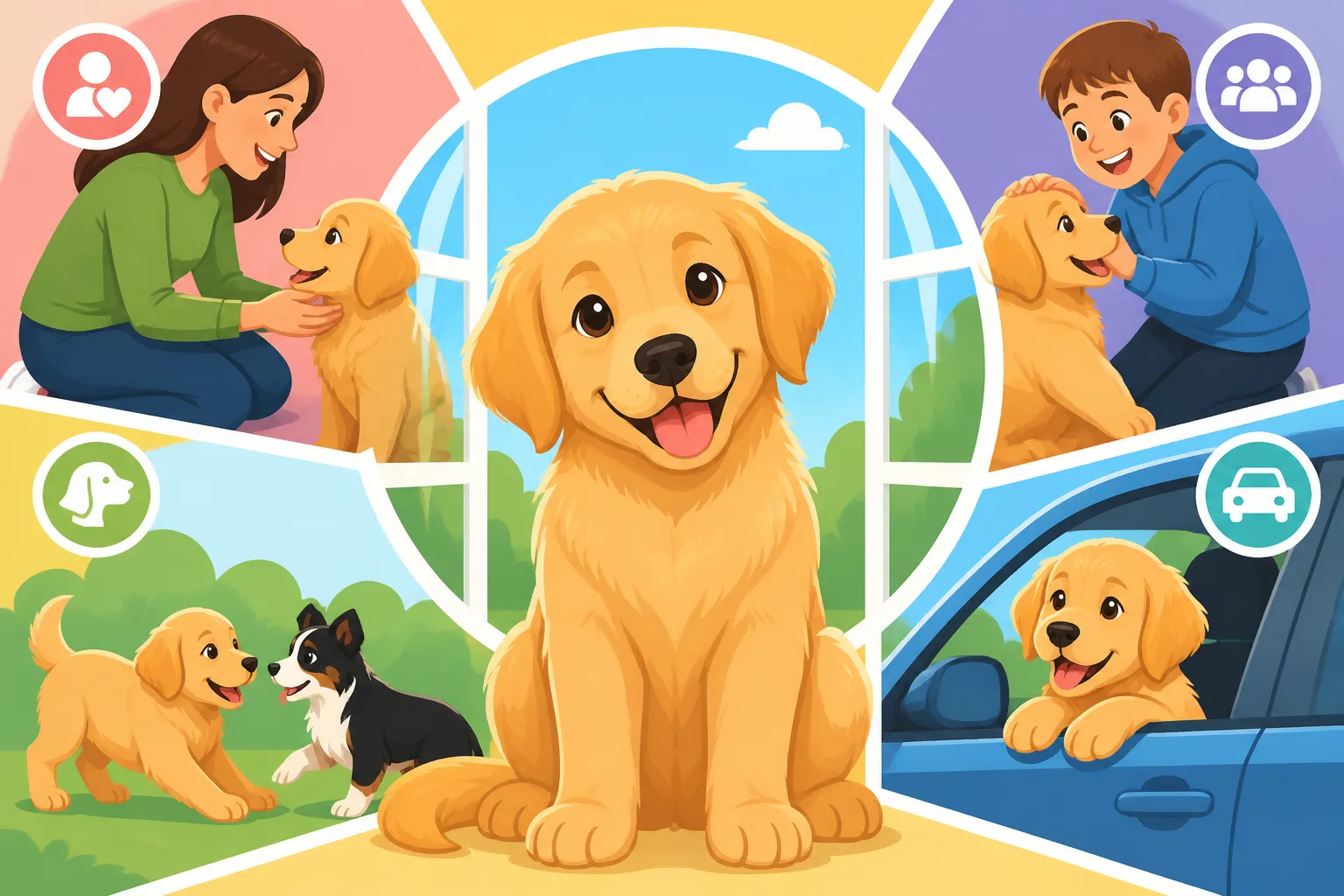
Around eight weeks, many puppies also enter what's often called a "fear period" or "fear imprint period." During this time, a single negative or traumatic experience can leave a lasting impression. This means it's vital that all exposures are positive, gentle, and carefully managed. Your goal is to introduce them to a wide variety of sights, sounds, smells, textures, people, and friendly, vaccinated dogs. This doesn't mean throwing them into chaotic situations, but rather controlled, positive exposures that build confidence. For example, gentle car rides where they associate the car with treats and praise, or meeting a calm, known adult dog in a safe, clean environment.
The Secondary Socialization Period: Weeks 12-16 (Reinforcing Good Habits)
While the primary window is the most sensitive, socialization absolutely does not stop at twelve weeks. The secondary socialization period, from approximately twelve to sixteen weeks, is crucial for reinforcing all those good habits and continuing to build your Golden's confidence. By now, your puppy is likely getting closer to, or has completed, their full vaccination series, which opens up more opportunities for safe exploration.
During this phase, you're looking to solidify their positive associations and help them generalize their learning. For instance, if they met a few calm adult dogs, now they can meet a few more, in different settings, perhaps even a well-run puppy class. It's also a time when some puppies might go through another, less intense, fear period. Consistency is key here. If your puppy shows fear, don't force them; instead, try to create positive associations from a distance and gradually decrease that distance as they gain confidence. This period is less about initial exposure and more about depth and variety of experience, ensuring that your Golden isn't just tolerating the world but actively enjoying it.
Safe Socialization Practices Before Full Vaccination
The dilemma of socializing your Golden Retriever puppy before they've completed their full vaccination schedule is a legitimate source of stress for many new owners. You hear about the importance of early socialization, but also about the dangers of parvovirus and distemper. It feels like a lose-lose situation, but it doesn't have to be.
The "Risky Business" Dilemma: Vaccines vs. Socialization
It’s true, diseases like parvovirus are serious and can be fatal, particularly for young puppies with developing immune systems. Vets rightly advise caution and completing the full series of vaccinations before exposing puppies to high-risk areas like dog parks or pet stores. However, the flip side of this caution is often overlooked: the significant behavioral risks associated with under-socialization. A puppy kept in isolation until 16 weeks or older can develop lifelong fears, anxieties, and even aggression, which can be much harder to "cure" than a treatable illness.
Many experts now advocate for a balanced approach, recognizing that the risk of behavioral problems from undersocialization often outweighs the risk of contracting a disease in controlled environments. It's about smart exposure, not reckless exposure. Think of it this way: your puppy's mental health and resilience are just as important as their physical health. A fearful Golden Retriever, prone to anxiety or reactivity, can lead to a very difficult life for both dog and owner. The goal is to maximize safe exposure while minimizing disease risk.
Controlled Environments and Low-Risk Interactions
So, how do you safely socialize a Golden Retriever puppy before all their shots are in? The key is "controlled environments." This means you are in charge of who and what your puppy encounters. One of the best ways is to invite vaccinated, healthy adult dogs (whose owners you trust) to your home or yard. This way, you control the cleanliness of the environment and the health status of the other dogs. Keep interactions short, positive, and supervised.
Car rides are another fantastic, low-risk way to expose your puppy to the outside world. Just driving around town, letting them see and hear things from the safety of your car, without direct contact with potentially contaminated surfaces or unknown dogs. You can even carry your puppy in public, like a local hardware store or a quiet park, to expose them to new sights and sounds. This allows them to observe people, sounds, and different ground textures (like concrete, grass, gravel) without actually touching the ground where disease might lurk. Our article, Socializing a Golden Retriever Before Full Vaccination, goes into more detail on how to do this effectively.
Exposure to Sights, Sounds, and Textures at Home
Socialization isn't just about meeting other dogs and people; it's about habituating your Golden Retriever puppy to everything in their environment. Many crucial socialization experiences can happen right in your home. Expose your puppy to common household noises like the vacuum cleaner, the washing machine, the doorbell, and even different types of music. Gradually introduce them to various floor surfaces, from tile to carpet to hardwood, making sure they have good footing.
Handling practice is also vital: gently touch their paws, ears, tail, and mouth, making it a positive experience with treats. This helps prevent future issues at the vet or groomer. You can actively work on getting them comfortable with their collar, leash, and even a harness. For a more structured approach to home-based training and socialization guidance, online programs like those offered by BAXTER & Bella can be incredibly helpful. They provide step-by-step instructions and support to ensure you're providing rich, positive experiences from the comfort and safety of your own home, bridging the gap until your puppy is fully protected. Our article on Exposing a Golden Retriever Puppy to Sounds offers more ideas for desensitization at home.
Age Range Primary Focus Safe Activities Exposure Examples
:specifically for socialization of puppies.
H2: Golden Retriever Puppy Socialization Windows
You’ve probably heard the term "socialization window" thrown around, and it can sound a bit intimidating. But don't worry, it's not a tiny crack that slams shut forever. Think of it more like a really wide, inviting doorway that slowly starts to narrow over time. For Golden Retrievers, understanding these windows is absolutely key to raising a well-adjusted, confident, and happy companion. This breed thrives on interaction and being part of the family, so early, positive experiences are even more paramount.
The Most Critical Period: Weeks 3 to 16
This timeframe, from approximately three weeks old until around sixteen weeks, is often called the "golden window" for puppy socialization. During these crucial weeks, a Golden Retriever puppy's brain is like a super-absorbent sponge, rapidly taking in information about the world around them. They are naturally curious and generally less fearful of new things. This period shapes their perception of humans, other animals, and various environments for the rest of their lives.
Around the 8-week mark, many puppies also experience a "fear imprint period," where a single negative or traumatic event can leave a lasting impression. This is why it's so important to ensure all interactions are positive, calm, and controlled during this entire window. You're aiming to build a robust foundation of positive associations with as many novel, yet safe, experiences as possible. This includes exposing them to different sounds, sights, smells, textures underfoot, and a variety of people of all ages, sizes, and appearances (wearing hats, glasses, walking with canes, etc.).
Why This Window Matters So Much for Golden Retrievers
Golden Retrievers are renowned for their friendly, outgoing, and tolerant temperaments. However, even with this inherent predisposition, robust socialization during this critical window is not just beneficial, but essential. Without adequate exposure, a Golden puppy, regardless of their genetics, can become shy, fearful, or even reactive to new situations, people, or dogs later in life. This goes against the very core of what makes a Golden a Golden.
Think about it: a Golden Retriever is often chosen for its family-friendly nature, its willingness to meet strangers, and its ability to fit into diverse households. All of these traits are reinforced and cemented through thoughtful, early socialization. If a puppy misses out on encountering a wide range of positive experiences during this period, their brain may classify those unknowns as potential threats, leading to anxiety, excessive barking, or even fear-based aggression. This isn't about creating a "party animal" but rather a dog who feels safe and confident navigating the human world.
Navigating Socialization While Protecting Your Puppy's Health
The advice to socialize your puppy heavily before 16 weeks often clashes with your veterinarian's strict instructions to keep your puppy away from public places until they're fully vaccinated. It's a genuine quandary that leaves many new Golden Retriever owners feeling frustrated and confused. Let's talk about how to balance these two critical needs responsibly.
The Trade-Off: Behavioral Risk vs. Health Risk
On one hand, you have the very real and serious threat of diseases like parvovirus and distemper, which can be devastating for unvaccinated puppies. Vets, quite rightly, want to protect your puppy from these potentially fatal illnesses. On the other hand, a lack of early, positive socialization can lead to severe behavioral problems that are far more common than contracting parvo in a carefully managed environment, and can significantly impact the dog's quality of life for 10-14 years. These behavioral issues might include severe separation anxiety, fear aggression towards strangers or other dogs, or extreme shyness and anxiety.
Many modern veterinary and behavioral professionals advocate for a "calculated risk" approach. This means prioritizing crucial socialization experiences while implementing stringent safety measures. The goal is to avoid the high-risk environments while still providing rich, varied, and safe exposure to the world. It’s about creating a balance, understanding that both physical and mental health are equally important for a thriving Golden Retriever. You're not being reckless; you're being proactive in holistic puppy development.
Low-Risk Exposure: Safe People and Places
So, how do you provide those crucial experiences without exposing your puppy to illness? It boils down to control and cleanliness. Firstly, focus on people. Invite trusted, healthy friends and family to your home. Ask them to sit on the floor, offer treats, and engage gently. Expose your puppy to people of different genders, ages (including well-behaved, supervised children – see Introducing a Golden Retriever to Children), and appearances. This helps your Golden learn that humans are generally kind and safe.
For other dogs, only arrange playdates with healthy, fully vaccinated adult dogs you know and trust, in your own clean yard or home. This eliminates the risk of unknown dogs and contaminated public spaces. Car rides are also fantastic for indirect exposure; your puppy sees the world, hears city sounds, and gets used to motion, all from the safety of your vehicle. Carry your puppy in a sling or carrier into places like quiet hardware stores or pet-friendly boutiques where you can avoid direct contact with the floor. This method allows your Golden to observe without physical risk, a strategy detailed further in Socializing a Golden Retriever Before Full Vaccination.
The Power of Puppy Classes
Once your Golden Retriever puppy has had their first round or two of vaccinations and your vet gives the okay, enrolling in a reputable puppy class can be a game-changer. These classes are specifically designed for young puppies, ensuring that all participants are up-to-date on their initial vaccinations and are in a clean, controlled environment. Puppy classes offer a structured setting for positive peer-to-peer play with other puppies of a similar age and size, fostering appropriate canine communication skills.
Beyond dog-dog interaction, puppy classes expose your Golden to new people (the trainers and other owners), new handling by different individuals, and novel sounds and objects within the training facility. They also provide an invaluable opportunity for you, the owner, to learn about positive reinforcement training, address common puppy behaviors, and bond with your Golden in a supportive group setting. Many owners find these classes to be an indispensable part of their socialization efforts, offering benefits that are hard to replicate at home. For more on this, check out Puppy Classes Worth It for a Golden Retriever.
Expanding the World After Full Vaccination
Once your Golden Retriever puppy has completed their full vaccination series, a whole new world opens up! This doesn't mean you can suddenly throw caution to the wind, but it does mean you can safely broaden their horizons and deepen their understanding of various environments and social dynamics. Remember, socialization is an ongoing process, not a one-time event.
Beyond the Puppy Stage: Continued Exposure Through Adolescence
Even after 16 weeks, your Golden Retriever is still developing, physically and mentally. The period of adolescence, roughly from 6 months to 2 years, can bring new challenges, including a "teenage regression" where they might test boundaries or seem to "forget" training. During this time, continued, consistent, positive exposure is essential. They need to keep experiencing new things to build confidence and reinforce good habits.
This is the stage where you introduce them to a wider array of novel situations: new walking routes, different types of public transport (if appropriate and safe), various shops, and different parks. The key is to make these experiences enjoyable and not overwhelming. Always bring high-value treats to create positive associations. For example, if you take your Golden to a bustling farmers market, keep it short, offer lots of treats, and praise them for calm behavior. Consistency through this adolescent phase is what ultimately helps a Golden Retriever When a Golden Retriever Finally Settles Down into a well-adjusted adult.
Safe Explorations: Dog-Friendly Parks and Group Activities
With full vaccinations, you can now consider dog-friendly parks. However, not all dog parks are created equal. Avoid overcrowded, chaotic parks where dogs are unsupervised or where owners aren't paying attention. Instead, look for well-maintained parks with separate areas for large and small dogs, and visit during off-peak hours initially. Always supervise your Golden closely, ensure interactions are polite, and be ready to intervene if play becomes too rough or one dog is uncomfortable.
Structured group walks, often organized by local trainers or dog clubs, are another excellent option. These walks provide the benefit of other dogs' company in a more controlled, less intense environment than a free-for-all dog park. Your Golden can practice polite leash manners while being exposed to new sights and smells alongside canine companions. Exploring different dog-friendly trails and outdoor spaces also provides valuable mental and physical stimulation. Remember that socialization isn't just about meeting other dogs; it's also about comfortable coexistence in a variety of public settings.
Dog Sports, Advanced Training, and Community Involvement
To truly enrich your Golden Retriever's life and continue their socialization journey, consider getting involved in dog sports or advanced training classes. Activities like obedience, rally, agility (starting agility with a Golden Retriever can be a blast!), scent work, or even dock diving offer fantastic opportunities for mental stimulation, physical exercise, and continued exposure to new people, dogs, and environments. These activities build confidence, strengthen your bond, and provide a positive outlet for their intelligent, eager-to-please nature.
For example, a scent work class might take place in a different location each week, exposing your Golden to new buildings and outdoor areas while engaging their natural retrieving instincts. Attending local dog events or even working towards therapy dog certification (once they're mature and well-trained) can offer incredibly rewarding socialization experiences, allowing your Golden to bring joy to others in a controlled, purposeful way. These structured activities are fantastic for reinforcing a Golden Retriever's natural inclination to work and interact positively with the world.
Common Socialization Mistakes to Avoid
Even with the best intentions, it's easy to make missteps during the critical socialization period. Avoiding these common mistakes can prevent a lot of headaches and heartache down the road, ensuring your Golden Retriever develops into the confident, friendly companion you dream of.
Overwhelm and Negative Experiences
One of the biggest mistakes is trying to do too much, too soon, or forcing interactions. A well-meaning owner might take their Golden Retriever puppy to a loud, crowded event or allow a rude dog to overwhelm them, thinking it's "exposure." However, if a puppy is overwhelmed, frightened, or has a negative experience, it can have the opposite effect of what you intended. Instead of positive association, they might form a deep-seated fear or anxiety towards that specific stimulus or even generalize it to similar situations.
Always pay close attention to your Golden's body language. Are they tail tucked, ears back, trying to hide? Are they frozen, shaking, or lip-licking excessively? These are signs of stress. If your puppy is showing these signs, it's time to remove them from the situation, give them space, and try again later with a less intense version of the exposure, at a greater distance, or for a shorter duration. The goal is always positive experiences, even if it means taking things slowly. Forcing an interaction can lead to problems like fear-based reactivity later on.
Insufficient Exposure and Isolation
On the flip side, some owners, in an understandable effort to protect their puppy from illness, might isolate them completely until they are well past the critical socialization windows. This is a significant risk. A puppy who hasn't been exposed to a variety of people, sounds, sights, and other friendly dogs by 16 weeks can develop profound social deficits. They might become intensely fearful of anything new, leading to shyness, anxiety, or even aggression as a defense mechanism.
While it's crucial to be mindful of health risks, it's equally important not to allow fear of disease to lead to behavioral problems. The mental health cost of under-socialization can be far more challenging and long-lasting than the risk of illness if socialization is done safely and responsibly. Your Golden needs to learn that the world is a wonderful, safe place, and that learning happens when they are young and receptive. Remember, even short, positive exposures are better than none at all. Without proper socialization, you might find your Golden developing behaviors like chronic barking due to fear or an inability to cope with new stimuli.
Relying Solely on Other Dogs for Socialization
It's easy to think that "socialization" primarily means letting your puppy play with other dogs. While dog-dog interaction is certainly a part of it, it's far from the whole picture. True socialization means comfortable exposure to everything: people of all ages and types, different environments, strange objects, loud noises, car rides (Introducing a Golden Retriever to Car Rides), and being handled by various individuals.
If a puppy is only socialized with other dogs, they might develop excellent canine social skills but still be terrified of a child on a bicycle, a person wearing a hat, or the sound of a passing truck. Moreover, not all dog interactions are good interactions. Letting your puppy be bullied by an older dog or overwhelmed by an over-exuberant playmate can be detrimental. Always prioritize quality over quantity in dog-dog play, ensuring interactions are appropriate and positive. Your Golden Retriever also needs to learn how to exist calmly around other dogs without necessarily interacting with them, which is a key life skill for polite public behavior.
Tools and Resources for Effective Socialization
Successful socialization isn't just about what you do, but also about having the right support and resources. Leveraging various tools, from structured classes to online guidance, can make the process smoother and more effective for both you and your Golden Retriever puppy.
Puppy Classes and Professional Trainers
As mentioned earlier, well-run puppy classes are invaluable. They offer a safe, controlled environment for your Golden to interact with other puppies and people, learn basic manners, and experience gentle handling from various individuals. The guidance of a certified professional trainer during these crucial weeks is incredibly beneficial. They can teach you how to interpret your puppy's body language, manage appropriate play, and introduce new stimuli effectively.
When choosing a trainer, always look for someone who uses positive reinforcement methods. Avoid any trainer who advocates for harsh corrections, intimidation, or punishment, as these methods can severely damage your Golden's confidence and trust, especially during sensitive developmental periods. A good trainer will empower you to work with your puppy and build a strong, positive relationship. Our guide Choosing a Positive Reinforcement Trainer for a Golden can help you find the right fit.
Specialized Gear for Outings and Safe Exposure
Having the right gear can make your socialization outings much easier and safer. A comfortable, well-fitting harness (like a front-clip harness, which can help teach Loose Leash Walking With a Golden Retriever) is essential for walks, as it distributes pressure evenly and discourages pulling without discomfort. For very young puppies or when you're in an area where you don't want them touching the ground, a sturdy puppy carrier or sling is perfect for carrying them safely.
High-value treats are your best friend during socialization. Keep a treat pouch handy on every outing so you can instantly reward calm, curious, or brave behavior. This creates a strong positive association with new experiences. A long line (a lightweight leash that's 15-30 feet long) can also be useful in a safe, open field for practicing recall and allowing your puppy to explore a bit more freely while still under your control. You can find a great selection of these on Amazon, from various brands, making it easy to equip yourself for safe adventures.
Online Resources and Community Support
The digital age offers a wealth of resources to support your socialization journey. Online training programs, such as those provided by BAXTER & Bella, can offer comprehensive, step-by-step guidance on socialization, basic manners, and troubleshooting common puppy behaviors. These programs often include video tutorials, printable checklists, and even access to trainers for personalized advice, which can be a lifesaver for new owners trying to navigate the puppy stage from home.
Connecting with other Golden Retriever owners through online forums or local social media groups can also provide valuable peer support, local recommendations, and a sense of community. Sharing experiences and asking questions can alleviate anxieties and provide practical tips specific to the breed. Of course, your veterinarian remains a primary resource for health-related questions and should always be consulted for personalized advice regarding your puppy's vaccination schedule and health needs. Remember, you don't have to go through the socialization journey alone!
Disclaimer
This article is for general informational purposes only and does not constitute professional advice. Laws, prices and regulations vary by location and change over time. Consult a qualified professional for guidance on your specific situation.