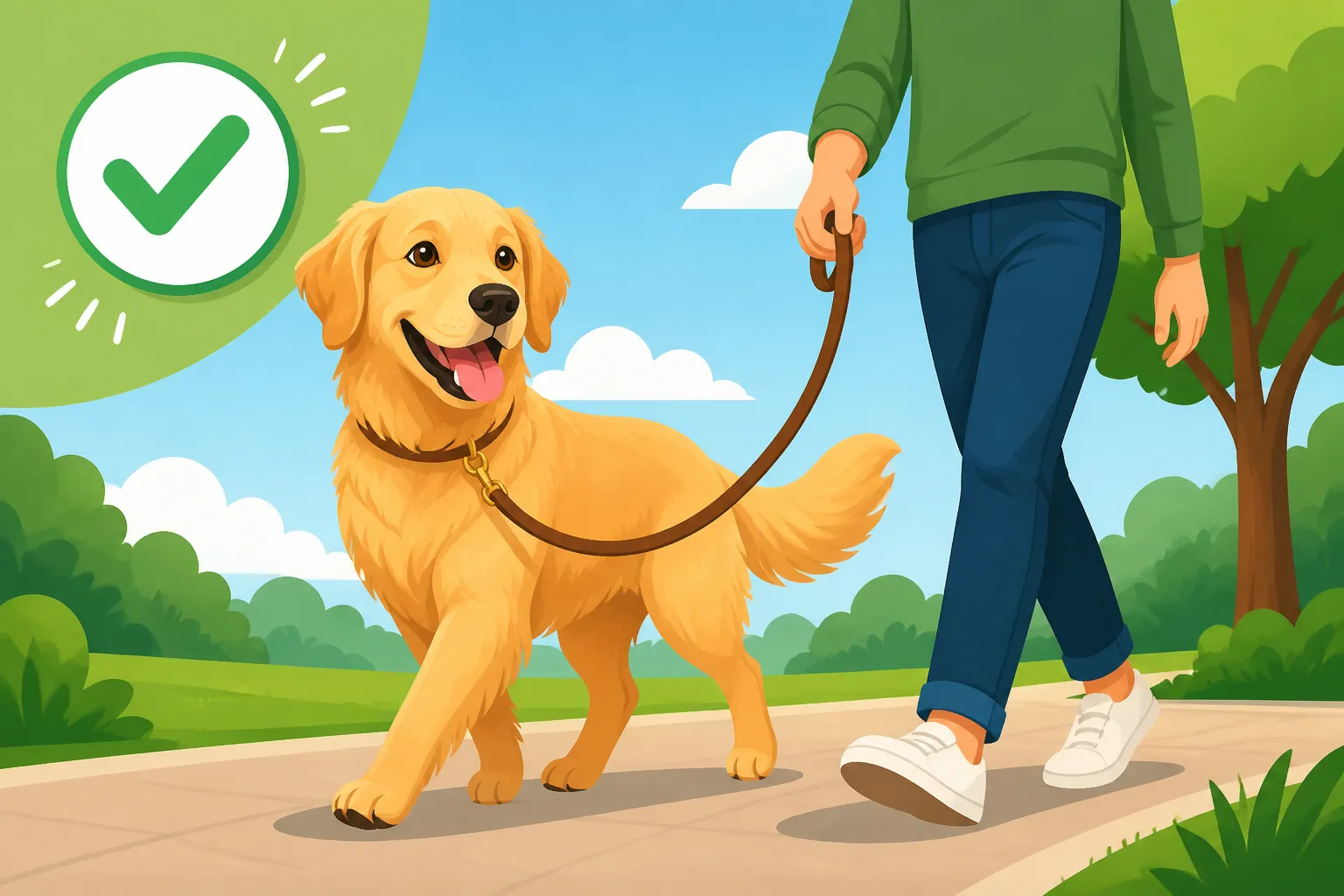
Loose Leash Walking With a Golden Retriever
One of the most common frustrations for Golden Retriever owners is the infamous "Golden pull" on the leash. That strong, enthusiastic tug can turn what should be a peaceful stroll into a frustrating battle of wills, leaving your arm aching and your patience tested. This guide is here to walk you through everything you need to know to transform those walks into enjoyable, loose-leash experiences for both you and your beloved Golden.
Understanding Why Golden Retrievers Pull on Leash
Before we can teach our Goldens not to pull, it's really helpful to understand why they do it in the first place. It’s not usually out of defiance, but rather a combination of natural instincts, high energy, and often, a lack of clear communication from us. Recognizing these underlying reasons is the first step toward effective training.
The Golden Retriever's Natural Instincts
Golden Retrievers were quite literally bred to work alongside humans, retrieving game, often over long distances and through varied terrain. This means they possess a natural drive to move forward with purpose and enthusiasm. Their powerful bodies are built for action, and their noses are constantly taking in the world around them. When you step outside, every scent, every rustle, every passing squirrel is a compelling invitation for them to investigate. They're wired to explore, and for many Goldens, the world is just one big, exciting adventure they want to get to as fast as possible. This innate drive to pull isn't malicious; it's just them being a Golden Retriever, eager and full of life. Understanding their Golden Retriever Temperament and Personality can help you appreciate this drive.
Think about it: from their perspective, pulling gets them closer to that fascinating smell or that interesting tree. If it works even once, they've learned that pulling is an effective strategy. We often inadvertently reinforce this by continuing to move forward even when they're tugging.
Lack of Early Leash Training
Many of us bring home a cute, cuddly Golden Retriever puppy, and those first few walks are less about perfect leash manners and more about just getting them out for potty breaks and exposure. We might use a retractable leash (a big no-no for teaching loose leash walking, by the way) or let them sniff wherever they please. While early socialization is incredibly important, neglecting formal leash training during those critical puppy months can set the stage for pulling habits that are much harder to break later on.
Puppies learn incredibly fast, and if they learn from day one that the leash means a consistent, gentle connection rather than a tug-of-war, you'll be light-years ahead. Often, owners don't realize how quickly a small tug from a puppy becomes a powerful lunge from a full-grown Golden. The longer a dog practices a behavior, the more ingrained it becomes. A young Golden Retriever who hasn't been explicitly taught what "loose leash" means will simply follow their instincts to pull.
Over-Arousal and Excitement
Golden Retrievers are renowned for their joyful, effervescent personalities. This is part of what makes them such wonderful companions! However, that boundless enthusiasm can also translate into excessive excitement on walks. When your Golden sees another dog, a person, or even a leaf blowing by in a particularly intriguing way, their arousal levels can spike. Their adrenaline kicks in, their brain gets flooded with exciting sensory input, and suddenly, all that careful training can seem to fly out the window.
This isn't them being disobedient; it's their emotional state taking over. They want to greet, play, or investigate, and that desire often outweighs their ability to think calmly and walk politely. We see this often in younger Goldens, especially during their adolescent phase, where they might seem to regress in their training. The Golden Retriever Teenage Regression is a real phenomenon that can exacerbate pulling. It's crucial to address this over-arousal by teaching them to calm themselves and focus on you even in stimulating environments.
Essential Gear for Loose Leash Walking
The right equipment can make a world of difference in your loose leash walking journey. While no piece of gear is a magical solution on its own – consistent training is always key – certain tools can help you communicate more effectively with your Golden Retriever and reduce their ability to pull.
Front-Clip Harnesses and Head Halters
When your Golden is pulling, a traditional back-clip harness or a standard flat collar often works against you. A back-clip harness allows them to lean into the pull with their full body weight, making it feel like you're trying to stop a freight train. A flat collar, while it provides some control, can put uncomfortable pressure on your dog's neck and throat, especially if they're a strong puller, and can even cause injury over time.
This is where front-clip harnesses and head halters come in.
- Front-Clip Harnesses: These harnesses have the leash attachment point at your dog's chest. When your Golden starts to pull, the leash redirects their momentum gently to the side, turning them back towards you. This makes it physically difficult for them to pull forward with full force and encourages them to stay by your side. They are generally comfortable for the dog and distribute pressure evenly across their chest, rather than their neck. There are many options available on platforms like Amazon, but popular choices include the Easy Walk Harness or the Freedom No-Pull Harness. For more details on these, you might find Golden Retriever Pulling and Front-Clip Harnesses helpful.
- Head Halters (Halti, Gentle Leader): These devices loop around your dog's muzzle and behind their ears, similar to a halter for a horse. The leash attaches under their chin. With a head halter, where the nose goes, the body follows. If your Golden tries to pull, their head is gently turned to the side, making it uncomfortable for them to pull forward. While incredibly effective for strong pullers, some dogs initially resist head halters because of the sensation on their muzzle. It's essential to introduce them slowly and positively, pairing them with high-value treats to create a positive association. Never yank or use a head halter forcefully; it's a steering tool, not a muzzle or a punishment device.
Both types of gear offer advantages over traditional collars for teaching loose leash walking by giving you more leverage and control without causing pain or discomfort if used correctly.
Leash Selection and Length
The leash itself is your primary communication line with your Golden, so choosing the right one matters.
- Material: Opt for a sturdy material like nylon or leather. Avoid thin, flimsy leashes that can cut your hands if your Golden pulls hard. Leather leashes are durable, comfortable to hold, and become softer over time. Nylon leashes are often more affordable and come in various colors.
- Length: A standard 4-foot or 6-foot leash is generally ideal for loose leash walking training.
- 6-foot leash: This provides enough slack for your Golden to walk comfortably beside you without feeling constricted, but not so much that they can wander too far ahead or get tangled easily. It also allows enough room for them to move a bit to sniff or investigate safely.
- 4-foot leash: Can be useful in very crowded areas or for dogs who consistently walk very close to your side.
- Avoid Retractable Leashes: Seriously, put those away for loose leash training. Retractable leashes teach dogs that pulling is acceptable because the line is always extending. They also offer minimal control in an emergency and can cause serious injuries to both dog and handler. The variable tension is the opposite of what you need to teach consistent loose leash manners.
- Handle: Look for a comfortable handle that won't chafe your hand, especially if your Golden is a work in progress. Some have padded loops.
The Role of Collars
While we advocate for front-clip harnesses or head halters for training loose leash walking, a flat collar still plays an important role in your Golden's life.
- Identification: This is paramount. Your Golden should always wear a comfortable flat collar with up-to-date ID tags (name, phone number) and their rabies tag. This is their first line of defense if they ever get lost. Microchipping is also essential, but tags offer immediate identification.
- Light-Duty Control: Once your Golden has mastered loose leash walking, you might find you can transition back to using a flat collar for everyday walks in less distracting environments. However, for ongoing training, especially in new or challenging places, revert to the front-clip harness or head halter if needed.
- Attachment Point for Leashes: A flat collar is the standard place to attach a leash, but for strong pullers, it's not the most effective training tool for teaching loose leash manners due to the pressure on the neck and lack of redirection.
- Back-Up: If you use a head halter, it's always a good idea to attach the leash to both the head halter and the flat collar (or a safety clip that connects both) for added security, just in case the head halter comes off or breaks.
Foundation Training: Teaching the Basics
Successful loose leash walking isn't about stopping pulling; it's about teaching your Golden Retriever what you want them to do. This means starting with clear communication, positive reinforcement, and a consistent approach.
The "Heel" Command and Lure Training
The "heel" command, or simply teaching your dog to walk politely by your side, is the cornerstone of loose leash walking. It means your dog is attentive to you and maintains a loose leash, walking at your pace.
- Start Indoors, or a Low-Distraction Area: Begin in a quiet room or your backyard where there are minimal distractions. You want your Golden to focus entirely on you.
- High-Value Treats: Arm yourself with irresistible, small, soft treats that your Golden absolutely loves. Think boiled chicken, cheese, or specialized training treats. Best Treats for Training a Golden Retriever can offer some ideas.
- Lure Training: Hold a treat in your hand and use it to lure your Golden into the desired position by your side (usually your left, but consistency is key). As they walk with their shoulder aligned with your leg, mark the behavior with a verbal cue like "yes!" or a clicker, and immediately give them the treat.
- One Step, Two Steps: Start by taking just one step, luring, marking, and rewarding. Then progress to two steps, then three, gradually increasing the number of steps they take beside you with a loose leash before getting their reward. The key is to reward before they pull.
- Add the Cue: Once your Golden understands the mechanics, start adding your verbal cue, "heel!" or "let's go!", just as they get into the correct position. This links the word to the action.
- Change Direction: To keep their attention and prevent them from forging ahead, frequently change direction. If they're pulling, pivot and walk the other way. The moment the leash goes slack, mark and reward. This teaches them that their attention needs to be on you.
Remember, the leash should be shaped like a "J" – a gentle curve – not taut. If the leash tightens, you've gone too far. Stop, reset, and try again.
Rewarding Loose Leash Behavior
Positive reinforcement is crucial. Your Golden needs to understand that walking nicely by your side is incredibly rewarding.
- Frequent Rewards: Especially in the beginning, reward very frequently for even short bursts of loose leash walking. Every few steps, if the leash is slack and they are near you, "yes!" and treat. You are essentially painting a picture for them of what "loose leash" means.
- Varied Rewards: Don't just rely on treats. Use praise, gentle petting, or a quick game of "find it" with a scattered treat. The walk itself should be a reward for good behavior.
- Life Rewards: Sometimes, the reward is simply getting to continue the walk. If your Golden pulls, you stop. The moment the leash goes slack, you start walking again. This teaches them that polite walking makes the good things (moving forward) happen.
- "Check-ins": Encourage your Golden to look at you. Every time they make eye contact while the leash is loose, mark and reward. This builds engagement and attentiveness, which is vital in distracting environments.
The goal is to make walking politely by your side the most rewarding thing they can do, outweighing the desire to pull towards every distraction. This builds a strong, positive association with you during walks.
Consistent Practice and Patience
This is perhaps the hardest part for us humans! Consistency means every single walk, every single time, whether it's a quick potty break or a long stroll.
- Short, Frequent Sessions: Instead of one long, frustrating walk, aim for several short training sessions throughout the day. Five to ten minutes of focused loose leash practice is far more effective than an hour of pulling.
- Every Family Member: Everyone who walks your Golden Retriever needs to use the same commands, the same techniques, and the same expectations. Inconsistency will confuse your dog and slow down progress. Consider online resources like BAXTER & Bella, which offer comprehensive training programs that can ensure consistency across all family members.
- Be Patient: Your Golden didn't learn to pull overnight, and they won't unlearn it overnight either. There will be good days and bad days. Don't get discouraged by setbacks. Every walk is an opportunity to practice and reinforce good habits.
- Manage Expectations: Don't expect perfection immediately, especially when you introduce new environments. Start in low-distraction areas and gradually increase the challenge as your Golden masters each stage. A quick five-minute session around the block might be all you can manage without frustration on some days, and that's perfectly fine.
- Know Your Dog's Energy Levels: A Golden Retriever needs adequate exercise. If they are bursting with pent-up energy, they will be harder to train. Ensure they get appropriate physical and Mental Enrichment for a Bored Golden Retriever before attempting a structured walk. This helps them approach training with a calmer mind.
Addressing Common Pulling Scenarios
Once your Golden has a grasp of loose leash walking in a quiet environment, the real challenge begins: applying those skills in the real world, where distractions abound. This requires strategic training and specific techniques to handle common triggers.
Managing Distractions on Walks
The world outside is a symphony of exciting smells, sights, and sounds for your Golden Retriever. Successfully managing distractions is about teaching them to choose you over the environment, even when that environment is incredibly tempting.
- The "Look at Me" Command: This is an invaluable tool. Practice it at home first. Hold a treat near your nose, say "look at me," and when your Golden makes eye contact, mark and reward. Gradually increase the duration of eye contact. Then, start practicing this in increasingly distracting environments. When you see a distraction approaching (another dog, a person, a squirrel), cue "look at me," and reward them for choosing to focus on you.
- Proximity is Key: Start practicing around distractions from a distance where your Golden can still succeed. If they're fixated on something, you're too close. Move further away until they can acknowledge the distraction but still respond to your cues. Slowly decrease the distance over time.
- "Engage/Disengage" Game: This teaches your Golden that looking at a distraction and then looking back at you (disengaging) is highly rewarding. When they spot something interesting, wait for them to look back at you (even for a split second), then mark and reward. The idea is to make checking in with you more rewarding than being completely absorbed by the distraction.
- Environmental Enrichment: Make your walks dynamic. Incorporate sniffing opportunities as rewards for loose leash walking. Instead of pulling to a lamppost, walk politely to it, then release them with a "go sniff!" command. This teaches them that polite walking earns them the chance to explore. Remember, a Golden's nose is a powerful thing, and allowing controlled sniffing can be very enriching.
- Be Prepared: Always have high-value treats on hand. If your usual kibble isn't cutting it around other dogs, upgrade to something irresistible. Knowing your Golden's Golden Retriever Puppy Socialization Windows can help you proactively prepare them for various stimuli during early development.
Dealing with Leash Reactivity
Leash reactivity is different from simple pulling due to excitement. A reactive Golden might bark, lunge, growl, or become highly agitated when they see other dogs, people, or specific triggers while on leash. This is often rooted in fear, frustration, or over-arousal.
- Identify Triggers: What specifically sets your Golden off? Is it all dogs, only certain breeds, people with hats, children, bicycles? Knowing their triggers is crucial.
- Threshold Training: This is about keeping your Golden below their emotional threshold. Find a distance from their trigger where they notice it but don't react explosively. At this distance, they should still be able to respond to your commands, even if they're a little tense.
- Counter-Conditioning and Desensitization:
- Counter-Conditioning: Change your Golden's emotional response to the trigger. The moment they see their trigger (at threshold distance), immediately start feeding them high-value treats. The goal is for them to associate the sight of the trigger with delicious food, changing their negative emotion to a positive one. Trigger appears = yummy treats. Trigger disappears = treats stop.
- Desensitization: Gradually decrease the distance to the trigger as your Golden's comfort level increases. This must be done slowly, over many sessions, ensuring they remain below their threshold.
- Engage/Disengage (Again!): This game is particularly powerful for reactivity. As soon as your Golden sees their trigger at a safe distance, if they look at it and then voluntarily look back at you, mark and reward heavily. You're rewarding them for checking in rather than fixating and reacting.
- Avoidance is Not Failure: Sometimes, the best strategy is simply to avoid a trigger if you're not in a training session or if your dog is having an off day. Cross the street, turn around, or create distance. Protecting your Golden from practicing reactive behavior is important.
- Consider a Professional: Leash reactivity can be complex and emotionally taxing for both dog and owner. Don't hesitate to seek help from a certified professional dog trainer or veterinary behaviorist. They can create a tailored plan for your Golden. Choosing a Positive Reinforcement Trainer for a Golden can guide you.
Stopping Sudden Lunging
A sudden lunge, whether towards another dog, a person, or an exciting scent, can catch you off guard and potentially cause injury. This often happens because the Golden has practiced pulling and has learned that a strong lunge sometimes gets them what they want.
- Anticipation and Observation: Become a master of observation. Watch your Golden's body language. Are their ears perked? Tail stiff? Are they staring intently? These are early warning signs that a lunge might be coming. Also, scan your environment constantly for potential triggers.
- Pre-Emptive Action: If you anticipate a lunge:
- Change Direction: Before they even think about lunging, smoothly pivot and walk in the opposite direction or take a wide detour. This breaks their focus and prevents the lunge from happening.
- "Watch Me" / "Look at Me": If you have a strong "look at me" cue, use it immediately as you see the trigger approaching. Reward heavily if they maintain eye contact with you.
- Increase Distance: If possible, put more distance between your Golden and the trigger.
- The "Anchor" or "Tree" Method: If a lunge does happen:
- Become a Tree: Stop moving immediately. Plant your feet, stand still, and hold the leash firmly but without yanking. Do not move forward until the leash goes slack and your Golden disengages, even for a second. The moment the leash is loose, you can resume walking. This teaches them that pulling gets them nowhere.
- Front-Clip Harness Advantage: This is where a front-clip harness shines. A sudden lunge will naturally turn your Golden to the side, preventing them from gaining full traction and often making the lunge less impactful for both of you.
- Consistency is Key: Every time a lunge is met with a complete stop or redirection, your Golden learns that lunging is ineffective. If you sometimes let it slide, you're only reinforcing the behavior.
| Gear Type | Attachment Point | Primary Benefit | Considerations | Ideal For |
|---|---|---|---|---|
| Flat Collar | Back/Neck | ID tags, light control for well-trained dogs | Puts pressure on neck, easy to pull against | Identification, already loose-leash trained dogs |
| Back-Clip Harness | Back | Comfortable for dog, good for joint issues, distributes pressure | Still allows pulling with full body, no redirection | Dogs who don't pull, short walks, general comfort |
| Front-Clip Harness | Chest | Redirects pulling, prevents full forward momentum | Can sometimes twist the harness, need correct fit | Strong pullers, training loose leash manners |
| Head Halter | Muzzle/Chin | Excellent control, where nose goes body follows | Some dogs dislike initial muzzle sensation, needs careful introduction | Very strong pullers, reactive dogs, advanced control |
Advanced Techniques and Troubleshooting
Once your Golden Retriever is walking politely in most situations, it's time to refine those skills and address any lingering challenges. Loose leash walking is an ongoing process, not a one-time fix.
Proofing Your Training in Varied Environments
"Proofing" means practicing a learned behavior in many different environments, with different distractions, and with different people. Just because your Golden walks perfectly in your quiet neighborhood doesn't mean they'll do the same at a busy park or a bustling downtown area.
- Gradual Increase in Difficulty: Don't jump from your living room to a dog park. Systematically increase the level of distraction.
- Start in your backyard.
- Move to a quiet street.
- Progress to a slightly busier park at off-peak hours.
- Then try peak hours, or areas with more people and dogs.
- Practice with different family members walking the dog.
- Varying Surfaces and Sounds: Walk on different terrains (grass, pavement, gravel) and expose your Golden to various sounds (traffic, construction, children playing). This helps them generalize their loose leash skills.
- Duration and Distance: Once your Golden can walk politely for short distances, gradually extend the length of your walks. Build up their endurance for maintaining loose leash manners. This ties into understanding their Daily Walk Length for a Golden Retriever.
- "Surprise!" Distractions: Sometimes, you can set up controlled distractions with a friend. Have a friend walk a calm dog past at a distance, or stand still across the street. This allows you to practice your "look at me" or redirection cues in a controlled way before being ambushed by unexpected triggers.
- Always End on a Good Note: During proofing sessions, if things get too overwhelming, step back to an easier environment or end the session with a successful, easy exercise. You want your Golden to always feel like they can succeed.
Proofing builds confidence in your Golden and solidifies their understanding that loose leash walking applies everywhere, not just in specific contexts.
Maintaining Loose Leash Manners Long-Term
Consistency isn't just for training; it's for life. Loose leash walking is a perishable skill, meaning if you stop practicing and reinforcing it, your Golden can revert to old habits.
- Continue Reinforcement: You don't need to treat every single step for the rest of your dog's life, but continue to offer intermittent high-value rewards for excellent loose leash walking, especially in challenging situations. Random rewards are actually more powerful than predictable ones.
- Regular "Check-ins": Continue to ask for your Golden's attention with "look at me" or by changing direction, rewarding them for engagement. This keeps them connected to you on the walk.
- Never Let Them Pull "Just This Once": This is the quickest way to unravel months of hard work. If you're having an off day or are in a hurry, it's better to shorten the walk or postpone it than to let your Golden practice pulling. Every time they successfully pull, they're reinforced for it.
- Regular Exercise and Mental Stimulation: A tired Golden is a well-behaved Golden. Ensure your dog gets enough physical exercise suitable for their age and health, as well as plenty of mental stimulation. A Golden bursting with pent-up energy will have a much harder time focusing on polite leash manners. Consider their Exercise a Golden Retriever Needs Each Day.
- Refreshers: If you notice your Golden starting to revert to pulling, go back to basics. Conduct a few short, focused training sessions in a low-distraction environment to refresh their skills. It's often easier to correct a problem early than to let it become a deeply ingrained habit again.
- Utilize Tools When Needed: There's no shame in using a front-clip harness or head halter throughout your Golden's life if it helps both of you enjoy walks more. It's about successful outings, not about graduating from all tools.
When to Seek Professional Help
Sometimes, despite your best efforts, you might feel stuck. Pulling can be a deeply ingrained habit, or it might be intertwined with other behavioral issues like strong reactivity or anxiety. Don't feel like a failure if you need professional guidance.
- Persistent Pulling: If your Golden's pulling doesn't improve significantly after consistent training over several weeks or months, a professional can offer fresh eyes and tailored strategies.
- Aggression or High Reactivity: If your Golden is showing aggression (growling, snapping, lunging with intent to harm) towards other dogs or people, professional help is not just recommended, it's essential. This goes beyond simple pulling and requires expert intervention for safety and your dog's well-being.
- Feeling Overwhelmed or Frustrated: Training can be emotionally draining. If you're constantly frustrated, dread walks, or feel like you're losing your bond with your Golden, a trainer can help restore peace and enjoyment to your relationship.
- Lack of Progress: If you've been diligently applying the techniques outlined here and seeing minimal to no progress, a professional can identify any missing pieces in your training approach or underlying issues you might not be aware of.
- Specific Behavioral Concerns: If the pulling is linked to other issues like separation anxiety, fear, or resource guarding, a certified professional can help address the root causes comprehensively. Training an Adopted Adult Golden Retriever often involves addressing established habits and might benefit from professional guidance from the start.
Look for a certified professional dog trainer who uses positive reinforcement methods. Avoid trainers who advocate for harsh corrections, choke chains, prong collars (for primary training), or e-collars, as these can damage your Golden's trust and create fear-based responses, often masking the underlying problem rather than solving it. A good trainer will teach you how to work with your dog effectively.
Disclaimer
This article is for general informational purposes only and does not constitute professional advice. Laws, prices and regulations vary by location and change over time. Consult a qualified professional for guidance on your specific situation.