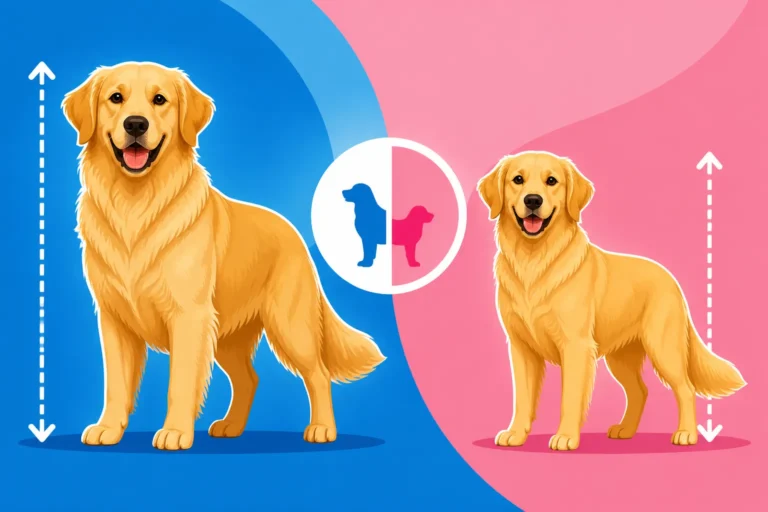
What a Goldendoodle Inherits From the Golden Side
It’s totally understandable to be captivated by the charm of a Goldendoodle! These wonderful dogs have exploded in popularity, often advertised as the best of both worlds: the Golden Retriever’s loving personality blended with the Poodle’s intelligence and low-shedding coat. But when you’re thinking about bringing a Goldendoodle into your home, you might find yourself wondering, "Okay, but what exactly are they getting from the Golden Retriever side?" It’s a great question, because while both breeds are fantastic, their traits aren't simply a 50/50 split. This guide will dive deep into the specific characteristics, behaviors, and even potential health predispositions that a Goldendoodle can inherit from their Golden Retriever parent, helping you understand what to realistically expect.
Understanding the Golden Retriever Influence
When you look at a Goldendoodle, you're seeing a genetic lottery in action. While the Poodle brings its own set of impressive traits, the Golden Retriever parent contributes a significant, often beloved, foundation to the Goldendoodle's overall makeup. Understanding these core Golden characteristics is key to appreciating your mixed breed's unique personality and physical attributes.
Temperament and Personality Traits
Ah, the Golden Retriever temperament – it's practically legendary! Goldens are renowned for being incredibly friendly, patient, and eager to please, and these are often the very traits people hope their Goldendoodle inherits. A Goldendoodle who takes after their Golden parent in temperament is usually a sweet, outgoing dog that loves to be right in the thick of family life. They thrive on companionship and genuinely enjoy interacting with people, whether it’s a familiar face or a new guest. This isn't just a superficial friendliness; Goldens are known for their deep loyalty and a desire to be involved in whatever their humans are doing.
You might find your Goldendoodle exhibiting that classic Golden Retriever "soft mouth," a trait that was carefully bred into them for retrieving delicate game without damage. This means they might gently carry toys, slippers, or even your hand around without applying much pressure, a truly endearing behavior. They're typically very patient with children and other pets, making them excellent family dogs. However, this same high sociability can sometimes manifest as needing a lot of attention, and if they don't get enough mental and physical stimulation, they can become a bit bored or destructive, just like their Golden ancestors. They generally retain a youthful, playful spirit well into adulthood, often acting like overgrown puppies even when they're senior dogs.
Physical Characteristics Beyond the Coat
While the coat is often the first thing people notice, the Golden Retriever contributes more to a Goldendoodle's physique than just hair. Goldens have a sturdy, athletic build. They possess a well-proportioned body with strong legs, a deep chest, and a powerful gait that allows them to move with grace and endurance. When a Goldendoodle inherits these physical traits, they'll typically have a more substantial frame compared to a Poodle of a similar size. You might see the characteristic broad head of a Golden Retriever, complete with those soulful, expressive eyes that just melt your heart.
Their ears, though often hidden by fluff, typically maintain the Golden Retriever's medium length and pendulous drop, which frame their face beautifully. The tail, too, often shows a Golden influence – a thick, well-feathered plume that they wag with enthusiastic whole-body joy. Even if their coat is curly like a Poodle's, the underlying bone structure and musculature often lean heavily toward the Golden Retriever side, giving them a more robust and less delicate appearance than a purebred Poodle. This sturdy build means they're often built for activity and can be quite strong, requiring good leash manners if they decide to put their weight into a pull. What the AKC Standard Says About Golden Retriever Size gives a good idea of what the purebred standard aims for.
Health Considerations from the Golden Line
This is where understanding the Golden Retriever genetics becomes really important for a Goldendoodle owner. Mixed breeds often benefit from hybrid vigor, which can sometimes reduce the incidence of certain genetic conditions, but it doesn't eliminate them entirely. A Goldendoodle still carries the genetic blueprint from their Golden Retriever parent, meaning they are potentially susceptible to many of the same health issues that plague Goldens.
One of the most significant concerns for Golden Retrievers is cancer, which accounts for a heartbreakingly high percentage of deaths in the breed. Goldendoodles, therefore, can also be at risk for various cancers, including hemangiosarcoma, lymphoma, osteosarcoma, and mast cell tumors. This makes it vital to choose a breeder who performs thorough health clearances on both parent dogs, not just for hips and elbows, but also for cardiac and eye health, and ideally screens for genetic markers for common cancers. Cancer in Golden Retrievers and Why the Breed Is Hit Hardest is a sobering read for any potential owner.
Beyond cancer, Golden Retrievers are notoriously prone to orthopedic issues like hip and elbow dysplasia. These conditions can lead to arthritis and chronic pain, significantly impacting a dog's quality of life. A Goldendoodle can absolutely inherit these predispositions, which is why sound joint health in the Golden Retriever parent is non-negotiable. Other conditions that might crop up include certain heart conditions like subaortic stenosis (SAS) and various eye conditions such as Progressive Retinal Atrophy (PRA) or pigmentary uveitis. Thyroid issues, specifically hypothyroidism, are also seen in Goldens and can be passed on. Being aware of these possibilities allows owners to be proactive with preventative care, choose appropriate food (perhaps a large breed puppy formula found at Chewy), and recognize early warning signs.
The Golden Retriever's Coat and What it Means for a Goldendoodle
The coat is probably the most talked-about aspect of a Goldendoodle, and for good reason! It's the primary factor in their "hypoallergenic" appeal (more on that later), and the Golden Retriever's contribution here is far more complex than just providing a color.
The Double Coat of a Golden Retriever
Purebred Golden Retrievers are known for their beautiful, dense double coats. This coat consists of a thick, water-repellent outer coat and a soft, insulating undercoat. This design was specifically bred for their original purpose as retrieving dogs, allowing them to withstand cold water and harsh weather. However, this magnificent coat comes with a significant trade-off: shedding. Golden Retrievers are serious shedmasters, especially during seasonal "coat blows" in spring and fall. Even outside of these times, you'll find their golden hairs everywhere – on your clothes, furniture, and pretty much every surface in your home.
When a Goldendoodle inherits a strong genetic influence from the Golden's double coat, they will shed. It might not be as profuse as a purebred Golden, but it will happen. This shedding can vary greatly from dog to dog, even within the same litter, depending on how much of the Poodle's single-coat genetics they inherited. Owners often find themselves investing in good quality grooming tools, like deshedding brushes and undercoat rakes, which are readily available at stores like Chewy, to help manage the hair. Understanding the Golden's coat helps temper expectations that all Goldendoodles are magically non-shedding. Grooming a Golden Retriever's Double Coat delves into the specifics of this beautiful but high-maintenance coat.
Goldendoodle Coat Variations
Because of the genetic interplay between the Golden Retriever's double coat and the Poodle's single, non-shedding coat, Goldendoodles come in a fascinating array of coat types. There isn't just one "Goldendoodle coat."
Here are the main types you might see, influenced by the Golden side:
- Flat Coat: This coat is the most Golden-like. It's often straight or slightly wavy and will shed, sometimes quite a lot. These Goldendoodles inherit more of the Golden's dominant coat genes. They might have the classic Golden feathering around their ears, legs, and tail.
- Wavy Coat (Fleece Coat): This is probably the most common and sought-after Goldendoodle coat. It’s a soft, shaggy coat with waves, often resembling a teddy bear. It typically sheds minimally to moderately, depending on the individual dog's genetics. This is a good blend of both parents, where the Poodle's non-shedding gene has a partial influence.
- Curly Coat (Wool Coat): This coat is very Poodle-like, with tight curls. It is generally the least shedding and most "hypoallergenic" of the Goldendoodle coats. Even with this curly texture, the color and texture can still have a hint of the Golden's richness.
The color of a Goldendoodle's coat, of course, almost exclusively comes from the Golden Retriever parent (unless the Poodle parent also carries unique color genes, but often Poodles are bred for specific colors to match the Golden). Goldendoodles commonly exhibit shades of cream, gold, apricot, and red, all variations seen within the Golden Retriever breed. So, while the curl might be Poodle, the rich, warm hue is all Golden.
Golden Retriever Instincts and Goldendoodle Behaviors
Beyond their looks and overall disposition, Golden Retrievers bring a rich history of working instincts to the Goldendoodle equation. These aren't just cute quirks; they're deeply ingrained behaviors that can profoundly shape a Goldendoodle's personality and training needs.
The Retrieving Drive
It's right there in their name: "Retriever." Golden Retrievers were originally bred to retrieve waterfowl for hunters, a job that required intelligence, a soft mouth, and an unwavering desire to please their handler. This retrieving drive is a powerful instinct, and it's one of the most common Golden Retriever traits seen in Goldendoodles. Many Goldendoodles absolutely adore playing fetch. They'll bring you toys, balls, or anything they can fit in their mouth, eager for you to throw it again and again.
This isn't just about playing in the yard; it can manifest in everyday life. A Goldendoodle might greet you at the door with a favorite toy in their mouth, a common Golden behavior. They might try to "help" by carrying items for you, or they might just enjoy having something in their mouth to hold onto, a comforting habit. Understanding this instinct is helpful for training and enrichment. Incorporating retrieve games into their daily exercise, or giving them appropriate chew toys and puzzle feeders from Chewy, can help satisfy this innate drive and keep them happy and mentally stimulated. Golden Retriever Retrieving Instinct and How to Use It offers excellent insights into channeling this natural behavior.
Trainability and Eagerness to Please
Both Golden Retrievers and Poodles are highly intelligent and eager to please, making Goldendoodles often incredibly trainable. However, the Golden Retriever's specific brand of "eagerness to please" is legendary. They genuinely want to make their humans happy, which translates into a dog that is typically very responsive to positive reinforcement training. They love to learn, they love to work with you, and they often pick up new commands and tricks with remarkable speed.
This intelligence and biddability mean that a Goldendoodle can excel in various dog sports and activities, from obedience and agility to therapy work. If your Goldendoodle inherits a strong dose of this Golden characteristic, you'll likely find them highly motivated by praise, attention, and treats. This makes them a joy to train, even for first-time dog owners. However, their intelligence also means they need mental stimulation; a bored Goldendoodle is an unhappy Goldendoodle, and an unhappy Goldendoodle might find less desirable ways to entertain themselves! Regular training sessions, puzzle toys, and consistent expectations are key to harnessing this wonderful Golden trait.
Common Misconceptions and Realistic Expectations
With any mixed breed, especially one as popular as the Goldendoodle, myths and misunderstandings abound. It's crucial to separate fact from fiction to ensure you have realistic expectations about what your Goldendoodle will be like.
The "Hypoallergenic" Myth
This is perhaps the biggest misconception surrounding Goldendoodles, and it's directly tied to the Poodle's contribution. While Poodles are often considered hypoallergenic because they shed minimally, no dog is truly 100% hypoallergenic. Allergies are typically caused by dander (flakes of skin), saliva, and urine, not just hair. However, dogs that shed less release less dander into the environment, making them more tolerable for many allergy sufferers.
Here’s the rub: a Goldendoodle's coat type is a genetic roll of the dice. If they inherit more of the Golden Retriever's shedding double coat genes, they will shed, and they will produce more dander. Even Goldendoodles with curly, Poodle-like coats can still trigger allergies in sensitive individuals. The idea that all Goldendoodles are hypoallergenic is simply not true. It depends entirely on the specific genetic makeup of each individual puppy. If allergies are a concern, spending time with the specific puppy you're considering, or ideally, with their adult Goldendoodle parent, is far more reliable than relying on breed assumptions. You might even find yourself needing specific allergen-reducing shampoos and sprays, which can be purchased on Chewy.
Temperament Guarantees
Another common misconception is that a Goldendoodle will automatically get "the best" traits from both parents, resulting in a perfect dog. While Goldendoodles are often wonderful companions, temperament is not a guaranteed outcome. You might hope for the Golden Retriever's laid-back friendliness and the Poodle's sharpness, but genetics don't work that way. A Goldendoodle could inherit a higher energy level from the Poodle side, or be more prone to shyness than a typical Golden. Golden Retriever Temperament and Personality shows just how universally friendly purebreds are.
Furthermore, a dog's temperament is influenced by more than just genetics; early socialization, training, and environment play enormous roles. Even if a Goldendoodle puppy has the genetic potential for a calm, friendly disposition from their Golden parent, without proper socialization and training during their crucial developmental windows, they could still develop behavioral issues. Always remember that a Goldendoodle is a mixed breed, and their individual personality can truly be a blend, a leaning towards one parent, or even a unique combination. It's best to prepare for a range of possibilities and commit to consistent training and socialization from day one. Socializing a Golden Retriever Puppy offers valuable guidance that also applies to Goldendoodles.
Here’s a quick overview of how Golden Retriever traits might show up in a Goldendoodle:
| Golden Retriever Trait | How it Might Manifest in a Goldendoodle |
|---|---|
| Friendly/Eager to Please | Very sociable, loves people, generally good with kids and other pets. Highly trainable due to desire to make you happy. |
| Intelligent | Quick to learn commands and tricks, enjoys mental challenges. Can become bored and destructive if not sufficiently stimulated. |
| Retrieving Drive | Loves playing fetch, carries toys around, might bring you items. Benefits from games that engage this instinct. |
| Sturdy Build | More robust bone structure, broader head, and substantial body compared to a pure Poodle. Can be quite strong; needs good leash training. |
| Double Coat (shedding) | Can lead to a flat or wavy coat in the Goldendoodle that sheds to varying degrees. Requires regular brushing; may not be truly "hypoallergenic." |
| Cancer Predisposition | Goldendoodles are still at risk for various cancers (e.g., hemangiosarcoma, lymphoma). Emphasizes the need for health clearances on the Golden parent. |
| Hip/Elbow Dysplasia Risk | Susceptible to these joint conditions. Health clearances on Golden parent are critical to reduce risk. |
| Heart Conditions (SAS) | Potential to inherit cardiac issues. Vet screenings for parent dogs are important. |
| Hypothyroidism | Can inherit a predisposition to underactive thyroid. Watch for symptoms like lethargy or coat changes. Golden Retriever Hypothyroidism Symptoms Owners Notice provides more detail. |
| Love for Water | Many Goldendoodles will share the Golden's affinity for swimming and splashing, though not all. Swimming Safety for Golden Retrievers applies to many Goldendoodles. |
| High Energy (especially young) | Goldendoodles, like Goldens, often have a lot of energy, particularly in their younger years. They need daily exercise to stay happy and well-behaved. |
Ultimately, welcoming a Goldendoodle into your life means embracing the wonderful, sometimes unpredictable, blend of two incredible breeds. Understanding the Golden Retriever's significant genetic contributions—from their heartwarming temperament and sturdy physique to their distinctive coat and potential health challenges—empowers you to be a more informed and prepared owner. By acknowledging what a Goldendoodle inherits from the Golden side, you can better appreciate their unique qualities and provide them with the best possible care. For all your puppy supplies, from food to toys and grooming tools, remember that stores like Chewy offer a vast selection.
Disclaimer
This article is for general informational purposes only and does not constitute professional advice. Laws, prices and regulations vary by location and change over time. Consult a qualified professional for guidance on your specific situation.