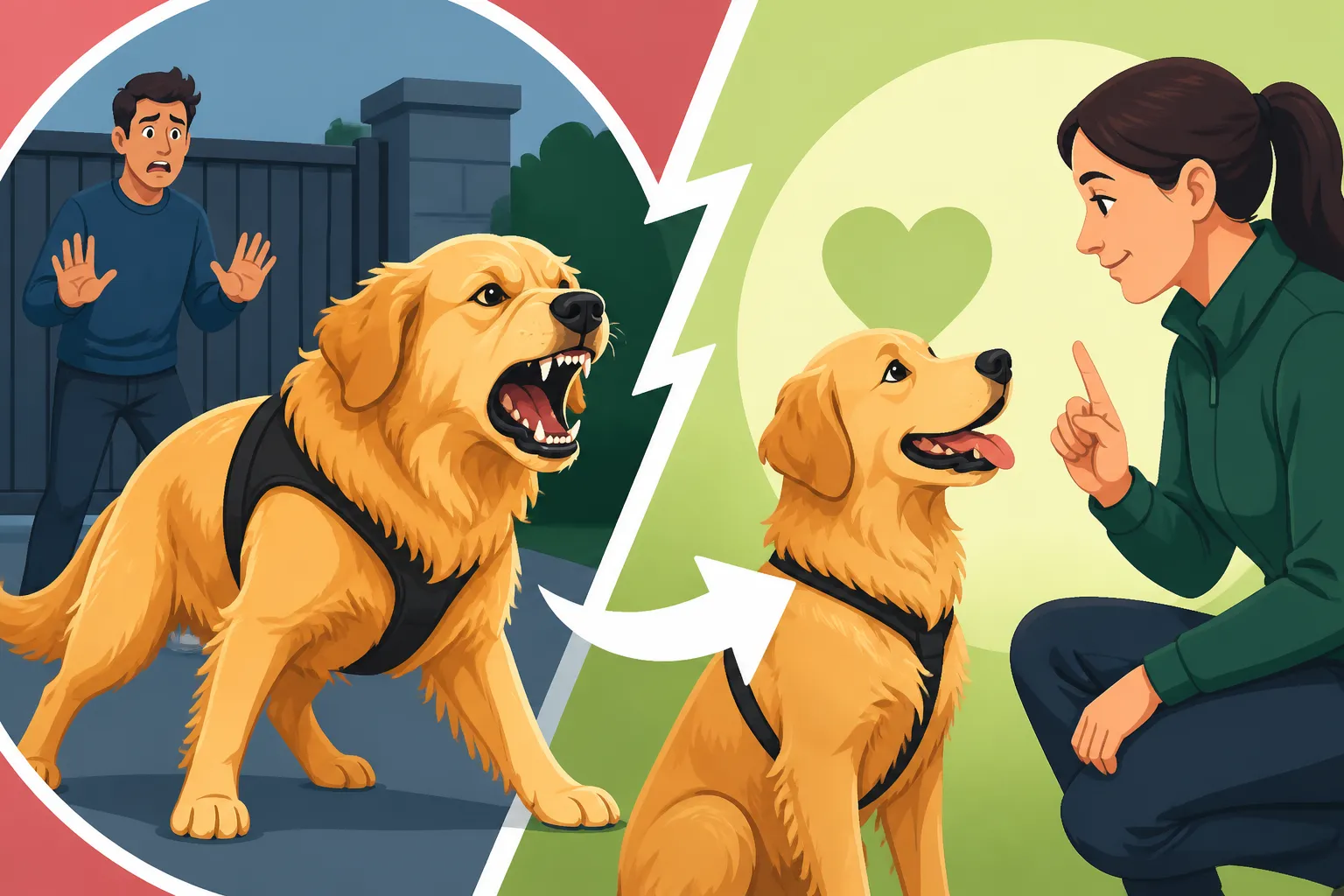
When Golden Retriever Guarding Needs a Behaviorist
It’s incredibly upsetting and frankly, a bit scary, when your sweet, loving Golden Retriever suddenly starts acting possessive over their food bowl, a favorite toy, or even their spot on the couch. This isn't just "being a little protective"; it's a serious behavior called resource guarding, and it can leave you feeling frustrated, confused, and worried about your dog's safety and the safety of those around them. This comprehensive guide will help you understand what resource guarding is, recognize when it has escalated beyond your ability to manage, and explain why professional intervention from a certified applied animal behaviorist might be the crucial next step.
Understanding Resource Guarding in Golden Retrievers
Resource guarding, at its core, is a natural canine behavior where a dog protects items they perceive as valuable from being taken or approached by others. While it might feel personal, especially when your otherwise affectionate Golden turns into a growling, stiff-bodied guardian, it's rarely about aggression for aggression's sake. It's often rooted in fear, anxiety, or a strong instinct to protect what's theirs.
What Does Resource Guarding Look Like?
The manifestations of resource guarding can range from subtle to overtly aggressive. As a Golden Retriever owner, you might first notice slight changes, and it's important to catch these early. Imagine your Golden, usually so happy-go-lucky, suddenly tensing up when you walk past their food bowl while they're eating. Their body might go stiff, their ears might pin back slightly, and their gaze might become fixed on you, not the food. This is often the first sign.
If you continue to approach, or heaven forbid, try to take the item, the behavior can escalate. You might hear a low growl, a warning that often makes your stomach drop because it's so out of character for your typically gentle companion. They might show their teeth, snap the air, or even lunge forward to protect the item. Common items they guard include food bowls, high-value chew bones, favorite toys, sleeping spots (like their bed or a prime spot on the sofa), and sometimes even people they bond strongly with. For instance, if your Golden is resting their head on your lap and another family member approaches, they might emit a warning growl. Recognizing these early signals is crucial for addressing the behavior safely and effectively. It's a spectrum, and understanding where your Golden falls on it helps you know how to react.
Why Do Golden Retrievers Resource Guard?
It’s easy to think your Golden is being defiant or dominant, but that’s rarely the case. Resource guarding in Golden Retrievers, like in other breeds, typically stems from a deeper place of anxiety or insecurity. Some dogs, especially those from less-than-ideal beginnings, might have learned to guard resources out of necessity, fearing scarcity. If a rescue Golden, for example, had to compete for food in a previous home, that instinct can be deeply ingrained. Even Goldens from loving homes can develop this behavior due to various factors.
Sometimes, it's simply a strong genetic predisposition. Goldens were bred to retrieve, and while this usually translates to a "soft mouth" and a desire to bring things to you, a strong possessive instinct can manifest in guarding certain items they deem exceptionally valuable. A dog might also learn to guard if their resources are frequently taken away or if they've been punished for guarding in the past, leading them to believe they must protect their items more aggressively. It’s also important to remember that medical conditions or pain can sometimes trigger behavioral changes, including guarding, so a vet check is always a good first step to rule out any underlying health issues. Signs a Golden Retriever Is in Pain can sometimes be subtle, and guarding might be one of them.
When to Intervene with a Certified Behaviorist
It’s one thing if your Golden gives a soft grumble when you get too close to their extra-special chew. It’s quite another if that grumble turns into a snap, a bite, or if the behavior becomes unpredictable and generalizes to multiple items or people. Knowing when to call in the cavalry – a qualified professional – is paramount for safety and successful intervention.
Red Flags: Escalating Guarding Behavior
There are clear indicators that your Golden Retriever's resource guarding has moved beyond a manageable stage and requires professional assistance. The biggest red flag is any instance of biting or breaking skin. A snap and retreat is a serious warning, but a bite, even if minor, signifies a breakdown in the dog's ability to communicate their boundaries effectively without resorting to aggression. If your Golden has bitten someone, even a family member, it's time to seek immediate professional help.
Another major red flag is the escalation of warning signals. If your Golden used to just growl, but now they're growling, snarling, showing teeth, or lunging, the behavior is worsening. The predictability of the guarding is also key. If they guard only their food bowl from other dogs, that's one scenario. If they start guarding their bed from guests, their leash from you, or even their spot on the sofa from your children, it shows the behavior is generalizing and becoming more ingrained and dangerous. This is particularly concerning if the guarding extends to people, especially children, who may not understand or respect the dog's warning signals. Golden Retriever Stealing Food From Children is a related issue that can quickly escalate if not addressed.
Consider also the range of items being guarded. If it's just one specific, high-value bone, that's different from guarding any toy, any food item, or even random objects like socks or remote controls. The more frequently and broadly the guarding occurs, the more urgent the need for professional guidance. It's also a significant concern if the guarding prevents you from performing necessary care, like picking up their bowl, taking them to the vet, or grooming them.
The Dangers of Mismanaging Guarding
Many well-meaning owners, understandably frustrated or scared, try to "dominate" their Golden Retriever out of resource guarding. They might try to forcefully take items, punish their dog for growling, or physically push them away from guarded items. This approach is not only ineffective but incredibly dangerous. When you punish a dog for growling, you teach them that their warning signals are unacceptable. This doesn't eliminate the underlying fear or possessiveness; it simply suppresses the warning.
Imagine your Golden growls at you for approaching their guarded bone. If you punish that growl, next time, they might skip the growl and go straight to a snap or a bite because they've learned that growling only gets them into trouble. This creates a "silent but deadly" guarder, a dog whose aggression comes out of nowhere, seemingly without warning, but in reality, their early signals were suppressed. This significantly increases the risk of serious bites.
Furthermore, direct confrontation can erode the trust between you and your Golden. These dogs thrive on positive relationships and clear communication. If they feel threatened or that their resources are constantly at risk, it can increase their overall anxiety and make the guarding behavior more severe and generalized. What might start as an isolated issue could blossom into a dog who feels constantly on edge, leading to other behavioral problems like fear-based aggression or even separation anxiety. Whether Golden Retrievers Get Separation Anxiety is a different concern, but an anxious dog is more prone to other behavioral issues.
| Warning Sign Category | Initial/Mild Concern | Red Flag for Professional Help |
|---|---|---|
| Vocalizations | Soft grumble, low growl | Snarling, barking intensely, high-pitched growling |
| Body Language | Stiffening, quick glance at item, subtle ear pin | Fixed hard stare, raised hackles, lip curling, lunging |
| Physical Contact | Freezing, moving away slightly with item | Snapping in air, nipping clothes, contact bite (any skin broken) |
| Items Guarded | Specific high-value bone or food bowl | Any food, multiple toys, bed, space, stolen household items |
| People Guarded From | Other pets, specific family member | All family members, guests, children, vet staff |
| Frequency/Context | Only when eating a special chew, once in a while | Multiple times daily, unpredictable, in various locations |
| Impact on Life | Mild inconvenience | Prevents necessary care, creates fear in household, limits social interaction |
Steps a Behaviorist Will Take
Once you've decided that professional help is needed – and honestly, that's a huge, brave step in itself – you'll want to find a certified applied animal behaviorist (CAAB) or a veterinary behaviorist (DACVB). These professionals have extensive education and experience in diagnosing and treating complex behavioral issues, often holding advanced degrees in animal behavior or veterinary medicine with a specialization in behavior. Choosing a Positive Reinforcement Trainer for a Golden can help you find someone qualified.
Initial Assessment and Environmental Management
When you first consult with a behaviorist, they won't jump straight into training. Their first priority is to understand the full picture of your Golden Retriever's guarding behavior. This involves a thorough assessment that includes:
- Detailed History: Expect to talk a lot about your dog's background, daily routine, specific guarding incidents (when, where, with whom, what item, what was the outcome), and any attempts you've made to address it. They'll want to know about your Golden’s general temperament, health history, and any perceived triggers.
- Observation: The behaviorist will likely observe your Golden in their home environment (or a simulated one) to see the guarding behavior firsthand, often without directly provoking it. They'll look for body language cues, stress signals, and how your dog interacts with different people and items.
- Ruling Out Medical Issues: While a regular vet visit is a good first step, a behaviorist will often coordinate with your veterinarian to ensure there are no underlying medical conditions, pain, or neurological issues contributing to the guarding. For example, joint pain might make a dog guard their bed more aggressively if moving is uncomfortable.
Based on this assessment, the behaviorist will help you implement immediate environmental management strategies. This is crucial for safety and to prevent the behavior from rehearsing and getting worse. These strategies might include:
- Removing Triggers: Temporarily remove all high-value items that your Golden guards, or only provide them when the dog is safely separated from others (e.g., in their crate or a separate room). For example, if your Golden guards specific chew toys, they might only get them when alone in their crate.
- Controlled Feeding: If food guarding is an issue, the behaviorist might recommend hand-feeding all meals for a period, or using a designated, safe feeding area where no one approaches while the dog is eating. This can include using a slow feeder bowl, which can be found on Amazon, to make meal times longer and less rushed.
- Barrier Management: Using baby gates or crates to create safe spaces where your Golden can have their resources without feeling threatened by approach. This prevents opportunities for guarding incidents.
These initial steps are not about training the behavior away, but about managing the environment to ensure safety and reduce the stress on both you and your dog, creating a foundation for more advanced behavior modification.
Implementing Behavior Modification Protocols
Once the immediate safety and management protocols are in place, the behaviorist will guide you through specific behavior modification techniques. These are almost always based on positive reinforcement, counter-conditioning, and desensitization, which work to change your Golden's emotional response to the perceived threat.
-
Counter-Conditioning and Desensitization: This involves gradually exposing your Golden to the trigger (e.g., you approaching their food bowl) while simultaneously associating that trigger with something highly positive (e.g., a super tasty treat). The goal is to change your dog's emotional association from "threat" to "good things happen." For example, the behaviorist might have you stand a safe distance from your Golden's bowl, toss a high-value treat towards it (not in it, initially), and then walk away. Over many repetitions, and gradually decreasing the distance, your dog learns that your approach means more good things, not taking things away. Best Treats for Training a Golden Retriever are key here.
-
"Trade" Games: For guarding objects like toys, a behaviorist will often teach a "trade" game. You offer an even higher-value treat or toy for the item your Golden is guarding. This empowers the dog to willingly give up the item, building trust and teaching them that letting go of something results in an even better reward. This skill is vital and helps avoid confrontation.
-
"Drop It" and "Leave It" Commands: While these are basic obedience commands, a behaviorist will tailor their training to specifically address guarding behaviors, starting in low-distraction environments and gradually increasing difficulty. Teaching a reliable "drop it" from a distance can be a lifesaver. Online training platforms, like BAXTER & Bella, often have comprehensive modules on these foundational commands, which can be a great supplement to in-person behaviorist work for maintaining consistency.
-
Hand-Feeding and Proximity Work: If food guarding is severe, hand-feeding can be a powerful tool to rebuild trust and positive associations around food and human presence. The behaviorist will guide you on how to do this safely and effectively. Gradually, you'll work on teaching your Golden to tolerate your presence closer to their food bowl without guarding. This is often a slow process, built on trust and consistency.
It's important to understand that behavior modification is a process, not a quick fix. It requires patience, consistency, and a commitment to follow the behaviorist's instructions precisely. Progress can be gradual, and there might be setbacks, but with professional guidance, many Golden Retrievers can learn to manage their guarding behaviors and live happy, safe lives.
Living With and Preventing Resource Guarding
Even after working with a behaviorist and seeing significant improvement, living with a Golden Retriever who has a history of resource guarding requires ongoing awareness and management. It's about setting them up for success and continuing to build their confidence.
Maintaining a Predictable, Low-Stress Environment
Consistency is truly the unsung hero when it comes to managing any behavioral issue, and resource guarding is no exception. Goldens thrive on routine and predictability, which helps reduce anxiety. Ensure meal times are consistent, valued items are always provided in safe, predictable ways, and interactions around those items follow the established training protocols. For instance, if you've been hand-feeding or using trade games, continue to integrate these practices periodically to reinforce the positive associations.
It’s crucial to prevent accidental triggers or situations where your Golden might feel the need to guard. This means teaching everyone in the household, especially children, the rules about approaching your Golden when they have certain items. Children, bless their hearts, often don't understand canine body language, and an accidental reach for a toy can trigger a serious incident. Teaching children to "leave the dog alone when they're eating or chewing" is a golden rule, no pun intended. Using visual cues, like a special mat your Golden lies on when they have a chew, can help signal to everyone that the dog needs space.
Consider the layout of your home. Does your Golden have a designated, undisturbed space where they can eat or chew high-value items? This could be their crate, a bed in a quiet corner, or a room with a closed door. Products like high-quality gates (easily found on Amazon) can create these safe zones effectively. The goal is to minimize perceived threats and create an environment where your Golden feels secure with their possessions. Remember, a dog that feels secure rarely feels the need to guard aggressively.
Ongoing Management and Reinforcement
Behavior modification isn't a one-and-done deal. Just like with any learned behavior, consistency in reinforcing the desired actions and managing the environment is key for the long haul. Regularly practice "drop it" and "trade" commands, always making it a positive experience with high-value rewards. This keeps the skills sharp and reinforces the idea that giving up an item leads to something even better.
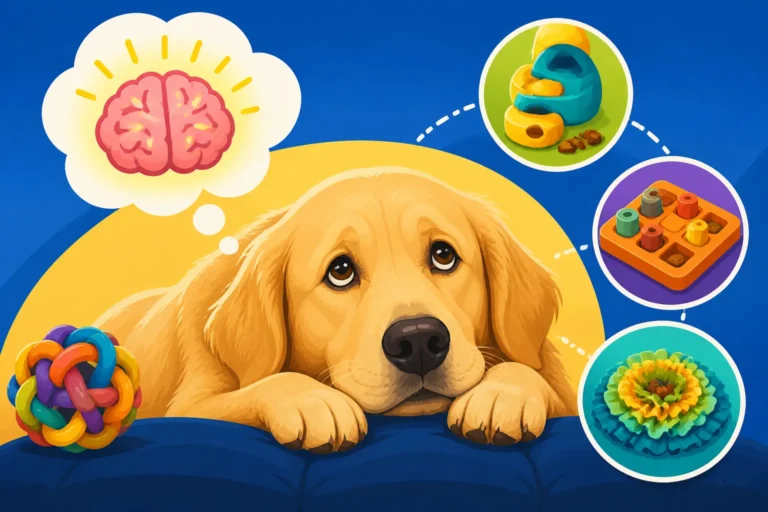
Keep an eye out for any subtle signs of regression or new guarding triggers. If your Golden suddenly starts guarding a new item or in a new situation, it’s a cue to re-evaluate and potentially consult with your behaviorist again. It’s not a failure; it’s simply part of the journey of managing a complex behavior. Regular mental enrichment can also help reduce overall stress and boredom, which can sometimes exacerbate guarding tendencies. Mental Enrichment for a Bored Golden Retriever could involve puzzle toys or scent games that keep their minds active and satisfied.
Finally, managing expectations is important. While many Goldens can significantly improve their guarding behavior with professional help, some may always require careful management around certain items or in specific situations. It's about understanding your individual dog, respecting their boundaries (within reason and safety), and creating a harmonious environment where everyone, including your Golden, feels safe and secure. The journey might be challenging, but the reward of a calmer, more confident Golden Retriever is absolutely worth it.
Disclaimer
This article is for general informational purposes only and does not constitute professional advice. Laws, prices and regulations vary by location and change over time. Consult a qualified professional for guidance on your specific situation.