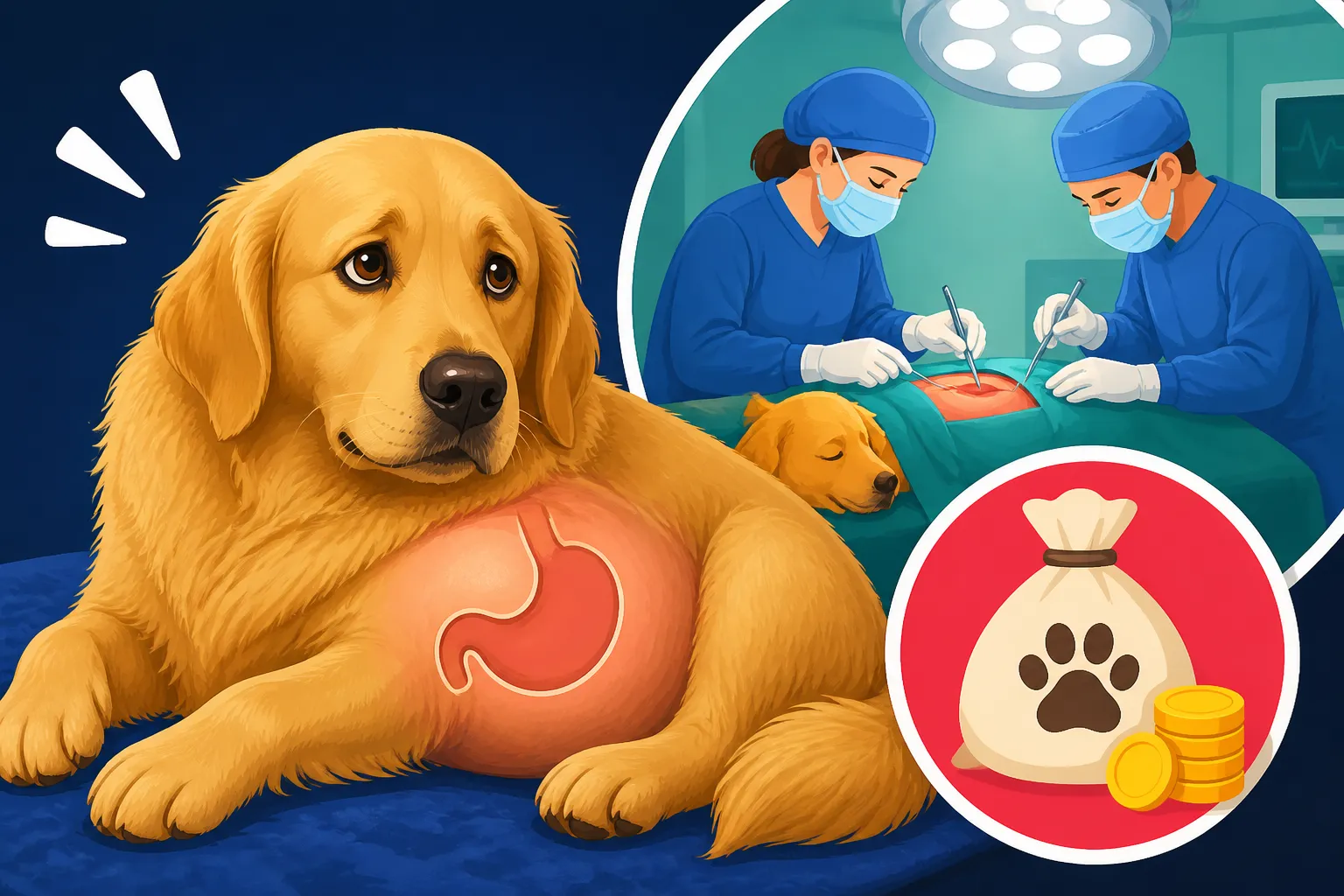
Emergency Bloat Surgery Costs for a Golden
The sudden onset of bloat in a Golden Retriever is one of the most terrifying emergencies a dog owner can face. It strikes without much warning, turning a perfectly happy dog into one in excruciating pain and facing a life-threatening situation within hours, sometimes even minutes. This guide will walk you through what bloat is, why it's so dangerous for our beloved Goldens, and critically, what you can expect in terms of emergency bloat surgery costs.
Understanding Bloat and Why It's an Emergency for Golden Retrievers
Bloat, scientifically known as Gastric Dilatation-Volvulus or GDV, isn't just an upset stomach. It's a rapidly progressing, life-threatening condition that requires immediate veterinary intervention. For Golden Retriever owners, understanding this silent killer is paramount because our deep-chested companions are unfortunately predisposed to it. The sheer terror of seeing your dog suddenly distressed, pacing, drooling, and trying to vomit without success is a moment etched into the memory of any owner who has experienced it.
What is Gastric Dilatation-Volvulus GDV?
Imagine your Golden Retriever's stomach like a balloon. In GDV, two things happen: first, the stomach rapidly fills with gas, air, or fluid, causing it to swell dramatically – this is the "dilatation" part. This expansion puts immense pressure on other organs, making it hard for your dog to breathe and cutting off blood flow. Second, and even more dangerously, this distended stomach can twist on its axis, often 180 to 360 degrees. This is the "volvulus" part. When the stomach twists, it traps the gas and fluid inside, and more critically, it cuts off the blood supply to the stomach and spleen. Without blood flow, the tissue quickly begins to die, leading to shock, organ failure, and eventually death if not corrected immediately.
It’s a truly horrific condition because it’s so sudden and the progression is incredibly fast. One minute your Golden could be happily playing in the yard, and the next they are showing subtle signs of discomfort that can escalate to a full-blown emergency in less than an hour. The speed at which it can turn fatal is why immediate action is not just recommended, but absolutely essential. There's no waiting to see if it gets better; bloat is always a 911 situation.
Why Goldens Are at Higher Risk
Our beautiful Golden Retrievers, with their deep chests and often relaxed, food-loving dispositions, unfortunately, fit the classic profile for breeds prone to GDV. It's not just a random occurrence; there are specific anatomical and behavioral factors at play that put them at a disadvantage compared to other breeds. Their chest conformation creates more space for the stomach to shift and twist when distended. This is a commonality found in many large, deep-chested breeds like Great Danes, German Shepherds, and Standard Poodles.
Beyond anatomy, certain behaviors and feeding habits can also contribute to the risk. Eating too quickly, drinking large amounts of water before or after exercise, a single large meal instead of smaller, more frequent ones, and even stress can be potential triggers. Genetics also play a role, with some lines appearing more prone than others, though pinpointing specific genes is still an ongoing area of research. We've talked extensively about the unique risks Goldens face in our article, Bloat Risk in a Deep-Chested Golden, and it’s truly a situation where knowledge is power for us Golden owners.
Recognizing the Urgent Signs of Bloat
Knowing the signs of bloat can literally be the difference between life and death for your Golden. They often start subtle and escalate rapidly. Don't wait for all of them to appear; if you see even a few, it's time to head to the emergency vet. One of the most common early indicators is restlessness and discomfort. Your dog might pace, try to lie down and get back up, or constantly shift positions as if they can't get comfortable. They might also appear anxious or distressed.
Another classic sign is unproductive retching or dry heaving. Your Golden will try repeatedly to vomit, straining forcefully, but nothing comes up except perhaps some foam or saliva. Their abdomen may start to appear distended or swollen, especially on the left side, and it might feel hard and tight to the touch, like a drum. Other signs include excessive drooling, difficulty breathing, a rapid heart rate, weakness, and pale gums. The moment you suspect bloat, it’s a race against the clock. Head to the nearest emergency veterinary hospital immediately. There's no time for a "wait and see" approach. We cover more on this in Bloat in Golden Retrievers and the Signs Owners Miss.
Breaking Down the Costs of Emergency Bloat Surgery
The immediate rush to the emergency room with a suspected bloat case is terrifying enough, but then reality hits: the cost. Emergency bloat surgery is one of the most expensive veterinary procedures, and rightly so, given the complexity and the life-saving nature of the intervention. These costs can vary widely depending on where you live, the veterinary facility, the severity of the case, and how quickly you get help. It’s not uncommon for owners to face bills ranging from several thousand dollars to well over $10,000 in severe cases.
Initial Emergency Vet Visit and Diagnostics
When you arrive at the emergency vet, the first priority is to stabilize your Golden Retriever and confirm the diagnosis. This initial assessment itself comes with costs. Expect an emergency exam fee, which is often higher than a regular vet visit. To confirm GDV, the vet will typically perform X-rays of the abdomen. These images are crucial to visualize the distended stomach and confirm if it has twisted. Blood work will also be run to assess your dog's overall health, check for signs of shock, organ damage, and to prepare for surgery. This might include a complete blood count (CBC) and a chemistry panel.
Intravenous (IV) fluids will almost certainly be started immediately to combat shock and maintain hydration. Pain medication will be administered to provide some relief to your distressed Golden. In some cases, the vet might attempt to decompress the stomach by inserting a tube down the esophagus or using a needle through the abdominal wall, which helps relieve pressure and can sometimes buy a little more time before surgery. All these initial diagnostic and stabilization efforts, while critical, accumulate charges before any surgical incision is even made.
The Surgical Procedure Itself
If GDV is confirmed, your Golden Retriever will need emergency surgery, often referred to as a laparotomy and gastropexy. This is where the bulk of the cost typically lies. The surgical team will open the abdomen, carefully untwist the stomach back into its normal position, and then check for any dead or damaged tissue, especially on the stomach wall or spleen, which might need to be removed. If the spleen has been severely damaged or twisted, a splenectomy (removal of the spleen) might be necessary, adding to the complexity and cost of the procedure.
A crucial part of the surgery, and one that significantly reduces the risk of future bloat episodes, is a gastropexy. This involves surgically tacking the stomach to the abdominal wall. While it doesn't prevent the stomach from distending with gas, it does prevent it from twisting again. This preventative measure is highly recommended and almost always performed during bloat surgery. The cost of the surgery will include the surgeon's fee, anesthesia, monitoring during the procedure, and the use of the operating room and specialized equipment. It's a highly skilled, time-sensitive operation, and you're paying for expertise that can save your dog's life. More details about this preventative procedure can be found in Gastropexy Surgery for Golden Retrievers.
Post-Operative Care and Recovery
The journey doesn't end when your Golden leaves the operating room; intensive post-operative care is vital and adds significantly to the overall bill. After surgery, your Golden will need to be closely monitored, often in an intensive care unit (ICU) for several days. This monitoring includes checking vital signs, pain levels, and watching for potential complications like cardiac arrhythmias, further organ damage, or infection. IV fluids will continue, and your dog will receive a variety of medications, including antibiotics, pain relievers, and sometimes anti-nausea drugs.
The length of the hospital stay can range from 2-5 days, depending on how quickly your Golden recovers and if any complications arise. Each day in the hospital, especially in an ICU setting, has a daily charge. Follow-up visits with your regular veterinarian will also be necessary to check incision healing and ensure proper recovery. The full scope of care often includes recheck exams, suture removal, and potentially further medication. All these aspects of recovery are critical to ensure a positive outcome and contribute to the final cost.
Here's an estimated breakdown of potential costs you might encounter for emergency bloat surgery for a Golden Retriever. Please remember these are general estimates and can fluctuate widely.
| Cost Category | Estimated Range (USD) | What it Covers |
|---|---|---|
| Emergency Exam & Triage | $150 – $350 | Initial assessment, stabilization, immediate pain relief. |
| Diagnostics (X-rays, Blood Work) | $400 – $800 | Confirming GDV, assessing overall health and organ function. |
| Anesthesia & Monitoring | $800 – $1,500 | General anesthesia, continuous monitoring of vitals during surgery. |
| Surgical Procedure (Laparotomy, Pexy) | $2,500 – $6,000 | Untwisting stomach, stomach tacking (gastropexy), tissue inspection. |
| Splenectomy (if needed) | Add $1,000 – $2,500 | Removal of the spleen if damaged or necrotic. |
| Hospitalization (2-5 days ICU) | $1,000 – $3,000+ | Overnight stay, continuous monitoring, IV fluids, wound care. |
| Medications (During & Post-Op) | $200 – $500 | Antibiotics, pain relief, anti-nausea, other supportive meds. |
| Total Estimated Cost | $5,050 – $14,650+ | Comprehensive care from emergency to initial recovery. |
Navigating the Financial Burden of Bloat Surgery
Facing a bill that could easily hit five figures for a sudden emergency like bloat is incredibly daunting for any pet owner. It’s a moment where your love for your Golden Retriever is weighed against the very real practicalities of your finances, and it's a terrible position to be in. However, there are various strategies and resources available to help manage these significant costs, and knowing about them before an emergency strikes can make all the difference.
The Role of Pet Insurance
Pet insurance can be an absolute lifesaver in emergency situations like GDV, but it’s crucial to understand how it works. Most comprehensive pet insurance plans, like those offered by Healthy Paws, cover emergency surgeries, diagnostics, and hospitalization for unexpected illnesses and accidents. However, there are usually deductibles you’ll need to meet, and reimbursement rates (e.g., 70%, 80%, 90% of the covered costs) will vary based on your plan. Perhaps most importantly, pet insurance operates with waiting periods. You cannot purchase a policy today and expect it to cover a bloat emergency that happens tomorrow. Typically, there's a waiting period of 14 days or more for illnesses before coverage kicks in.
This means the time to get pet insurance is when your Golden Retriever is a healthy puppy or young adult, long before any emergencies occur. While the monthly premiums might seem like an added expense, they pale in comparison to a $7,000 emergency vet bill. It’s peace of mind, knowing that if the worst happens, you won't be forced to make heartbreaking decisions based solely on cost. For more on this, check out our guide on Pet Insurance for a Golden Retriever.
Alternative Financial Options
Even with pet insurance, or if you don't have it, there are other avenues to explore when faced with a hefty emergency vet bill. Many veterinary clinics and emergency hospitals offer payment plans through third-party services like CareCredit. These are essentially credit cards for healthcare expenses that often provide interest-free financing for a set period, allowing you to pay off the bill in installments. It’s not a handout, but it can provide critical breathing room.
Another increasingly popular option is building a dedicated emergency fund for your Golden Retriever. Setting aside even a small amount each month into a separate savings account can accumulate into a substantial fund over time. This acts as your personal "pet insurance" deductible or even covers the entire cost for less expensive emergencies. Non-profit organizations and breed-specific rescues sometimes offer financial assistance programs for owners facing major vet bills, though these are often needs-based and have specific criteria. Websites like RedRover, The Pet Fund, and specific Golden Retriever rescue groups might offer grants or assistance. We discuss how to prepare for this in How Big an Emergency Fund a Golden Retriever Needs.
Preventative Measures and Their Cost
While you can’t completely eliminate the risk of bloat, you can take significant preventative steps that are often less expensive than emergency surgery. One of the most effective measures is a prophylactic gastropexy, which is a surgery to tack the stomach to the abdominal wall before bloat ever occurs. This procedure can often be done concurrently with spaying or neutering, making it more cost-effective as your dog is already under anesthesia. The cost for an elective gastropexy can range from $400 to $1,500, which is substantially less than emergency surgery.
Other preventative strategies include feeding smaller, more frequent meals throughout the day instead of one large meal, using a slow feeder bowl to prevent rapid eating (Chewy offers a wide variety of these!), and avoiding strenuous exercise immediately before or after meals. Some studies have also looked into the role of diet and specific ingredients, but evidence is still evolving. Discussing these preventative options with your veterinarian is highly recommended, as they can assess your Golden's individual risk factors. The choice of feeding bowls, for instance, is explored in Slow Feeder Bowls for a Fast-Eating Golden.
Life After Bloat: Recovery and Long-Term Considerations
Surviving bloat surgery is a huge hurdle, but the recovery period and subsequent long-term management are just as important for your Golden Retriever's well-being. It’s a time of careful monitoring, adherence to veterinary advice, and a fair bit of emotional support from you, their loving owner.
Home Care and Restricted Activity
Once your Golden is discharged from the hospital, the real at-home recovery begins. You'll need to meticulously follow your vet's instructions for wound care, which includes keeping the incision site clean and dry and preventing your dog from licking or chewing it (an E-collar or surgical recovery suit will be your best friend). Medications for pain and any other supportive care will need to be administered on schedule. Restricted activity is crucial; no running, jumping, or strenuous play for several weeks to allow internal and external incisions to heal properly. Short, leashed potty breaks are generally the only outdoor activity permitted.
Your vet will likely recommend a bland diet, introduced gradually, and you'll need to switch to smaller, more frequent meals. This might mean feeding 3-4 times a day instead of two. This new feeding regimen helps prevent the stomach from getting too full too quickly. Monitoring your Golden for any signs of discomfort, changes in appetite, or complications is paramount during this period. It’s a lot of work, but your Golden will appreciate your dedication.
Potential Complications and Follow-Up Visits
Even after successful surgery, complications can arise, which is why close observation and follow-up vet visits are critical. Some potential issues include incision infections, cardiac arrhythmias (heart problems due to the initial shock), aspiration pneumonia (if they vomited or regurgitated before/during the emergency), or continued digestive upset. Your vet will schedule follow-up appointments to check the incision, assess overall healing, and ensure your Golden is recovering as expected.
These follow-up visits might involve further diagnostics if concerns arise, adding to the overall cost, but they are essential for detecting and addressing any problems early. The gastropexy performed during surgery significantly reduces the risk of future GDV events, but it doesn't eliminate all risk of simple bloat (gas accumulation without twisting). Therefore, maintaining preventative feeding habits remains important for the rest of your Golden’s life.
The Emotional Toll on Owners
Let’s be honest, experiencing a pet emergency, especially one as sudden and terrifying as bloat, takes a huge emotional toll on owners. The fear, the rush to the vet, the agonizing wait during surgery, and then the worry during recovery can be incredibly stressful. You’re watching your beloved companion suffer, making quick decisions under pressure, and dealing with significant financial implications. It’s okay to feel overwhelmed, anxious, and even exhausted.
Support groups, talking to friends and family, or even reaching out to a pet loss/grief counselor if the outcome is not positive, are all valid ways to cope. Remember, you did everything you could for your Golden Retriever in a dire situation. Celebrating their recovery, even the small milestones, can help reaffirm the incredible bond you share and the immense effort you put into their care.
Disclaimer
This article is intended for informational purposes only and does not constitute professional veterinary advice. Always consult with a qualified veterinarian for any health concerns or before making any decisions about your Golden Retriever's care, diet, or treatment. Costs provided are estimates and can vary significantly based on location, clinic, and individual circumstances.