Fence Height a Golden Retriever Needs
Bringing a Golden Retriever home is pure joy, but nothing can strike fear into a dog owner's heart quite like the thought of their beloved companion escaping the yard. Whether it's a curious puppy exploring new boundaries or an adolescent with a sudden burst of wanderlust, figuring out the right fence to keep your Golden safe and sound can feel like a huge challenge. This guide will walk you through everything you need to consider, from the ideal fence height to other critical security features, so you can rest easy knowing your furry friend is contained.
Why a Golden Retriever's Fencing Needs Go Beyond Just Height
It's easy to think a tall fence is all you need, but with a Golden Retriever, it's a bit more nuanced than that. Their charming personalities, intelligence, and physical capabilities mean we need to think beyond just vertical feet when securing our yards. Understanding why they might try to escape helps us build a better barrier.
The Curious Nature and Drive to Explore
Golden Retrievers are inherently curious and love to investigate their surroundings. They were bred to work closely with humans, retrieving game, and their strong sense of smell and desire to follow interesting scents can be powerful motivators. If there's something fascinating on the other side of the fence – a squirrel, another dog, or even just a new smell – their natural drive can kick in. This isn't necessarily a sign of a badly behaved dog; it's often just their breed instincts at play. A golden retriever with insufficient daily exercise might also become bored and seek their own adventures, so make sure you're providing enough Daily Walk Length for a Golden Retriever This innate curiosity means a fence needs to be not just a physical barrier, but also a mental one that doesn't offer easy visual or olfactory access to "greener pastures."
Athleticism and Problem-Solving Skills
Don't let their goofy charm fool you; Golden Retrievers can be surprisingly agile and intelligent. While they aren't typically known as high-jumping escape artists like some leaner, more athletic breeds, they are certainly capable of clearing a surprisingly low fence, especially if sufficiently motivated. More often, they'll test the boundaries in other ways: digging under, pushing through weak spots, or even trying to climb if the fence material provides paw holds. They're problem-solvers. If they see a weakness, they might just exploit it. This is why a secure perimeter isn't just about height, but also about the integrity of the entire structure. Consider a Golden Retriever's growth plates and joints when they are young; intense jumping or forced exercise before they're fully mature can be detrimental. You can learn more about this by checking out why Forced Exercise and Golden Retriever Growth Plates
Addressing Boredom and Separation Anxiety
A bored Golden Retriever is a destructive Golden Retriever, and an anxious Golden Retriever is often an escape artist. If your dog isn't getting enough mental and physical stimulation, or if they suffer from Golden Retriever Separation Anxiety Signs when left alone, they might put more effort into finding a way out of the yard. This isn't just about protecting them from the outside world, but also protecting your fence! Dogs with separation anxiety can chew, dig, and even climb with incredible determination. Providing plenty of Mental Enrichment for a Bored Golden Retriever and working on alone-time training are crucial steps, regardless of your fence type. Products available on sites like Chewy can help, offering everything from puzzle toys to durable chew items that can keep a Golden occupied and less inclined to eye the fence line.
The Gold Standard: Recommended Fence Heights for Golden Retrievers
When it comes down to the numbers, what's truly safe for a Golden Retriever? The answer often isn't a single, fixed measurement, but rather a range that accounts for your dog's individual personality, your property's specific challenges, and your peace of mind.
The Minimum Safe Height: Four Feet
For most well-adjusted Golden Retrievers, a four-foot fence is considered the absolute minimum. This height can deter casual wanderers and provides a decent visual barrier. It's often sufficient for Goldens who are generally content, well-exercised, and not particularly motivated to escape. This works best if your Golden isn't prone to jumping and you're regularly supervising them outdoors.
However, it's crucial to acknowledge that a four-foot fence can be scaled by a determined or particularly athletic Golden. If your Golden is highly prey-driven, exceptionally bouncy, or has an adventurous spirit, a four-foot fence might not provide the security you need. For example, if you live in an area with a lot of wildlife or other dogs passing by, that extra motivation can make a four-foot fence seem like a suggestion rather than a solid boundary. Many dog owners eventually learn that investing a little more upfront saves a lot of stress and potential emergency vet bills (which, by the way, is where pet insurance like Healthy Paws can really shine if an escape leads to an injury).
The Ideal Height for True Security: Five to Six Feet
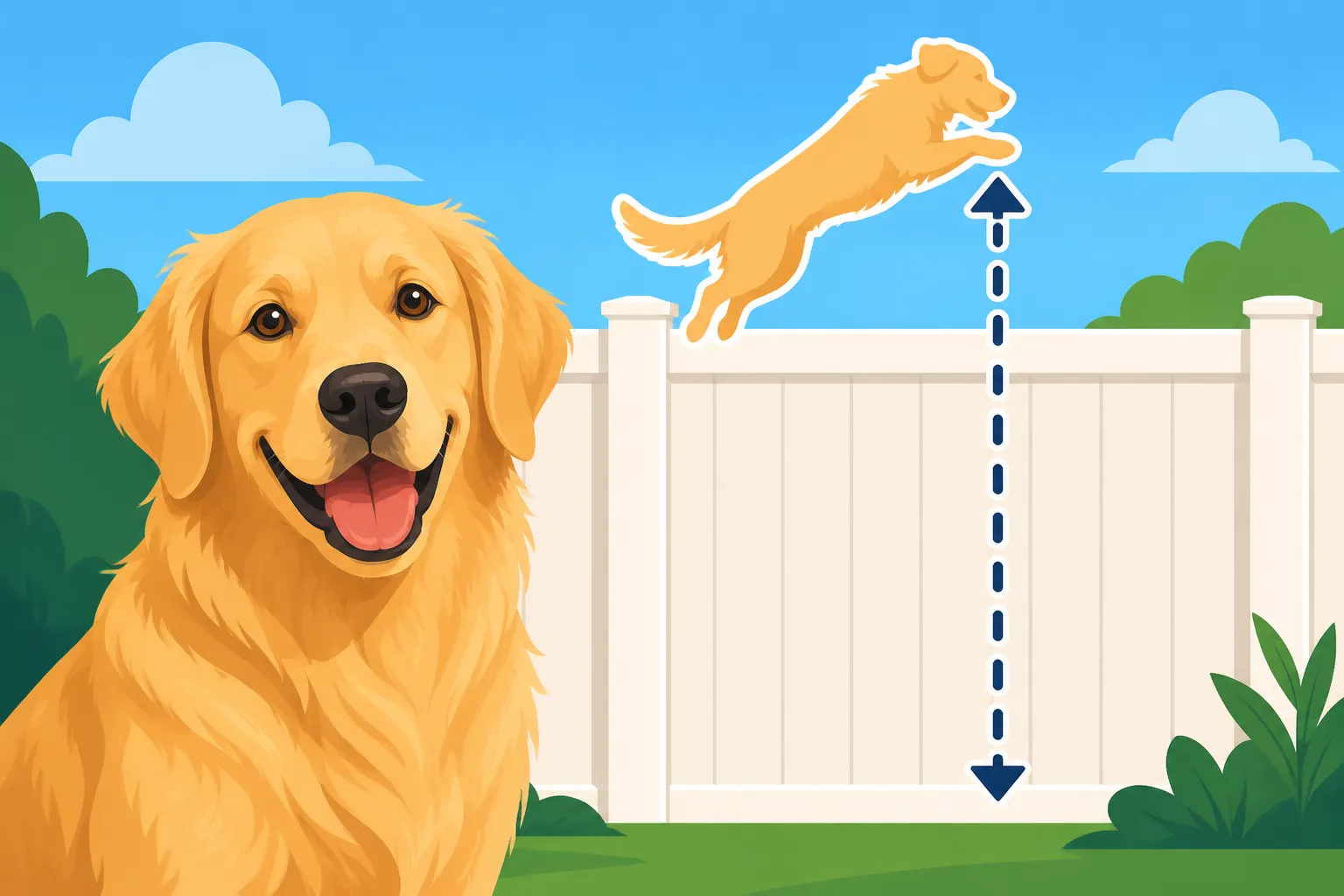
For ultimate peace of mind and to truly deter most Golden Retrievers, a fence height of five to six feet is generally recommended. This range offers a significant deterrent for almost all Goldens, making it much harder for them to clear, even with a running start or a boost from nearby objects.
- Five-Foot Fence: This height is often a sweet spot for many Golden owners. It's tall enough to discourage jumping for the vast majority of Goldens, without feeling overwhelmingly tall in a residential yard. It provides excellent security against casual escapes and makes it more challenging for a dog to get enough leverage to climb over.
- Six-Foot Fence: If you have a particularly athletic Golden, live in an area with potential hazards (busy roads, wildlife), or simply want the highest level of security, a six-foot fence is your best bet. This height is incredibly difficult for a Golden to clear and adds an extra layer of protection, particularly if you're not always able to provide constant, direct supervision. It’s also often a requirement for homeowners insurance in some areas to qualify for certain liability coverages if you have a larger breed dog. Understanding Homeowners Insurance and Golden Retrievers can save you a headache later.
A higher fence also helps prevent external factors from tempting your Golden. If they can't easily see over the fence, they're less likely to be enticed by things outside the yard, reducing the motivation to try to get out.
Special Considerations for Fence Height
There are always exceptions and unique situations to consider.
- Puppies and Seniors: While puppies might not be able to jump as high, they can squeeze through smaller gaps or dig more easily. Seniors might have reduced mobility, making a lower fence feel more secure, but you still need to account for their curiosity.
- Terraced or Uneven Yards: If your yard has slopes or retaining walls, remember that the effective height of your fence can be reduced. A Golden on a higher terrace might easily clear a fence that appears tall from a lower vantage point. Always measure from the highest point inside the enclosure.
- Objects Near the Fence: Don't forget to look for "launch pads" near the fence line. Dog houses, storage bins, landscaping features, or even piles of firewood can provide a boost, effectively reducing your fence's height. Keep these items away from the fence line to eliminate easy climbing aids.
Securing the Perimeter: Beyond Vertical Clearance
As we've established, height is only one piece of the puzzle. A truly escape-proof yard for a Golden Retriever requires attention to the entire perimeter, ensuring there are no weak points for digging, climbing, or squeezing through.
Preventing the Great Escape: Digging Deterrents
Golden Retrievers aren't typically avid diggers compared to some terrier breeds, but a bored or determined Golden can certainly try to dig under a fence. This is especially true if they scent something interesting on the other side or are experiencing Digging Behavior in Golden Retrievers due to boredom. To prevent this, you'll need to think about what's happening at ground level.
- Burying the Fence Line: One of the most effective methods is to bury the bottom of your fence a few inches into the ground. For chain-link fences, you can angle the bottom portion of the fence inwards, creating an "L-footer" that's buried horizontally. When your Golden tries to dig, they'll hit the fence and be deterred.
- Concrete or Gravel Trench: Pouring a shallow concrete footing along the fence line, or even filling a trench with heavy gravel, can create a digging-resistant barrier. This is a more permanent solution and can be quite effective.
- Chicken Wire or Hardware Cloth: Attaching a strip of heavy-gauge chicken wire or hardware cloth to the bottom of the fence and burying it horizontally (again, in an L-shape facing inwards) can also prevent digging. This provides a less expensive, but still effective, underground barrier.
- Landscape Timbers or Rocks: While less foolproof, placing heavy landscape timbers or large, flat rocks along the inside base of the fence can make digging more difficult. However, a persistent Golden might still find a way around these.
Eliminating Climbable Surfaces and Gaps
A fence might be tall, but if it offers a ladder, it's not truly secure. Wooden fences with horizontal rails can provide excellent paw holds, making them climbable for agile dogs. Chain-link fences also offer easy climbing if the mesh size is large enough for paws to grip.
- Smooth Surfaces: Opt for fence materials that are difficult to climb. Vinyl or solid wood fences with vertical slats and no horizontal rails on the inside are ideal. They offer no purchase for paws.
- Privacy Fencing: Solid privacy fences (at least six feet tall) are often excellent because they block your Golden's view of the outside world, reducing the visual temptations that can spur escape attempts.
- Preventing "Squeeze Through" Escapes: Check for any gaps between fence panels, under gates, or where the fence meets the house. Even a seemingly small gap can be exploited by a persistent Golden, especially if they are a puppy. A Golden Retriever puppy's enthusiasm means they will test every boundary! Ensure gates close flush and latch securely, and consider adding sweeps or risers under gates to eliminate gaps at the bottom.
Gate Security is Paramount
The gate is often the weakest point in any fence system. It's where humans enter and exit, and mistakes can happen.
- Self-Latching Gates: Install self-latching gates that close and latch automatically. This prevents accidental escapes if someone forgets to manually secure it.
- Double Latches or Locks: For extra security, especially if you have children or guests who might not be familiar with dog-proofing, consider gates with a second latch or even a lockable system.
- Proper Installation: Ensure gates are hung correctly and don't sag over time, creating gaps at the bottom or sides. Regular maintenance, including tightening hinges and checking latches, is crucial.
Weighing Your Options: Different Fence Types and Their Suitability for Goldens
Choosing the right fence material involves balancing security, aesthetics, cost, and maintenance. Each type has its pros and cons when it comes to containing a Golden Retriever.
Wood Fencing
Wooden fences are a classic choice, offering privacy and a natural look. They can be very effective if designed and installed correctly.
- Pros:
- Privacy: A solid wood fence blocks your Golden's view of outside distractions, which can significantly reduce their motivation to escape.
- Sturdiness: Well-built wood fences are robust and difficult for a Golden to push through.
- Aesthetics: They blend well with many home styles and can enhance curb appeal.
- Cons:
- Climbing Potential: If built with horizontal rails on the inside, a Golden can easily use them as a ladder. Opt for smooth, vertical pickets on the inside.
- Maintenance: Wood requires regular staining, painting, or sealing to prevent rot, warping, and splintering, which can create weak spots.
- Gaps: Gaps can develop between boards as wood dries and shrinks, or if boards warp. These need to be monitored and repaired.
- Digging: Without buried footers or deterrents, a Golden can dig under a wooden fence just like any other.
Vinyl Fencing
Vinyl fencing has become incredibly popular for its low maintenance and clean appearance. It's often an excellent choice for Golden Retriever owners.
- Pros:
- No Climbing: Most vinyl fences feature smooth, vertical panels, making them almost impossible for a Golden to climb.
- Low Maintenance: They don't rot, warp, or need painting. A simple wash keeps them looking new.
- Durability: Vinyl is very durable and stands up well to chewing (though no fence is entirely chew-proof for a determined pup!).
- Privacy: Many vinyl options offer full privacy, blocking external sights.
- Cons:
- Cost: Vinyl can be more expensive upfront than wood or chain-link.
- Repairs: While durable, if a panel is damaged, it might be harder or more expensive to repair than a wooden board.
- Digging: Still susceptible to digging underneath if not installed with proper ground-level deterrents.
Chain-Link Fencing
Chain-link is a common and budget-friendly option, but it comes with distinct challenges for Golden Retriever containment.
- Pros:
- Affordability: Generally the least expensive fence option.
- Visibility: You can easily see your Golden and they can see out (though this can be a con too, as discussed).
- Easy Installation: Relatively quick to install.
- Cons:
- Climbing Hazard: The mesh provides a perfect ladder for climbing. A motivated Golden can easily scale it.
- Visibility (Con): Allows your Golden to see and react to everything outside the yard, increasing their motivation to escape.
- Aesthetics: Some find chain-link less aesthetically pleasing than other options.
- Digging: Easy to dig under without proper installation of an L-footer or concrete.
- Injury Risk: While generally safe, older or arthritic Goldens could potentially get a limb caught if the fence is damaged or loose. For information on joint issues, you can refer to Golden Retriever Arthritis and Joint Decline.
If you opt for chain-link, aim for at least a six-foot height and consider weaving privacy slats through the mesh to reduce visual stimulation. You'll also absolutely need to install a buried L-footer to prevent digging.
Ornamental/Wrought Iron Fencing
Ornamental metal fences offer beauty and durability but may not be the most practical for Golden Retrievers, particularly when it comes to containment.
- Pros:
- Durability: Extremely strong and long-lasting.
- Aesthetics: Offers an elegant and classic look.
- Visibility: Provides an open feel to the yard.
- Cons:
- Climbing Potential: Vertical bars can be climbed, and horizontal rails provide footrests.
- Gaps: Significant gaps between pickets can allow small or agile dogs to squeeze through if not spaced correctly. You'd need very narrow spacing, which is less common.
- Cost: Often the most expensive option.
- Visibility (Con): Allows your Golden to see everything outside the yard.
- Digging: Similar to other fences, susceptible to digging if not properly installed with a solid base.
Electric/Invisible Fencing
Invisible fences, like those from PetSafe or DogWatch, use a buried wire and a collar that delivers a static correction when your dog crosses the boundary. While they have their place, they are generally not recommended as a primary containment solution for Golden Retrievers, especially not as the only barrier.
- Pros:
- Aesthetics: No visible fence to obstruct views.
- Cost: Can be less expensive than traditional fencing for large areas.
- Installation: Relatively quick to install.
- Cons:
- No Physical Barrier: The biggest drawback. It doesn't physically stop your Golden. A highly motivated Golden (prey drive, fear, separation anxiety) can easily run through the correction.
- No Protection From Outside: Doesn't prevent other animals or people from entering your yard, potentially endangering your Golden.
- Training Dependent: Requires extensive, consistent training for the dog to understand the boundary and the correction. If the dog is distracted or highly motivated, the training can fail.
- Power Dependent: Relies on electricity and battery life in the collar.
- Behavioral Issues: Can cause fear or anxiety in some dogs if not introduced carefully, potentially leading to barrier frustration or even aggression towards perceived threats on the boundary.
- Legality: Some municipalities have restrictions or bans on invisible fences as primary containment.
For a Golden Retriever, an invisible fence should only be considered as a secondary layer of security within an already physically fenced yard, or for very specific, temporary situations where constant supervision is guaranteed. For a deeper dive into these systems, you can explore Invisible Fence Costs for a Golden Retriever.
Here’s a quick overview of common fence types and their suitability for Golden Retrievers:
| Fence Type | Recommended Height | Climbing Risk | Digging Risk | Privacy | Maintenance | Suitability for Goldens (Primary Containment) |
|---|---|---|---|---|---|---|
| Wood (Solid) | 5-6 ft | Low (if smooth interior) | Moderate (if no footer) | High | Moderate | Excellent (with smooth interior) |
| Vinyl (Solid) | 5-6 ft | Very Low | Moderate (if no footer) | High | Low | Excellent |
| Chain-Link | 6 ft (min) | High | High (if no footer) | Low | Low | Fair (requires significant modifications) |
| Ornamental Iron | 5-6 ft | Moderate | Moderate (if no footer) | Low | Low | Fair (gaps must be very narrow) |
| Invisible/Electric | N/A (no physical barrier) | N/A | N/A | N/A | Low | Poor (not recommended as primary) |
Ultimately, investing in a robust, well-installed physical fence is one of the best ways to ensure your Golden Retriever's safety and your own peace of mind. Combine that with consistent training, plenty of exercise, and mental stimulation, and you'll have a happy, securely contained companion.
Disclaimer
This article provides general information and recommendations regarding fence heights and types for Golden Retrievers. Every dog is an individual, and specific needs may vary based on temperament, training, and environmental factors. Always consult with a professional fence installer and consider your dog's unique behaviors and your local zoning regulations before making a final decision. The safety and well-being of your Golden Retriever should always be the top priority.