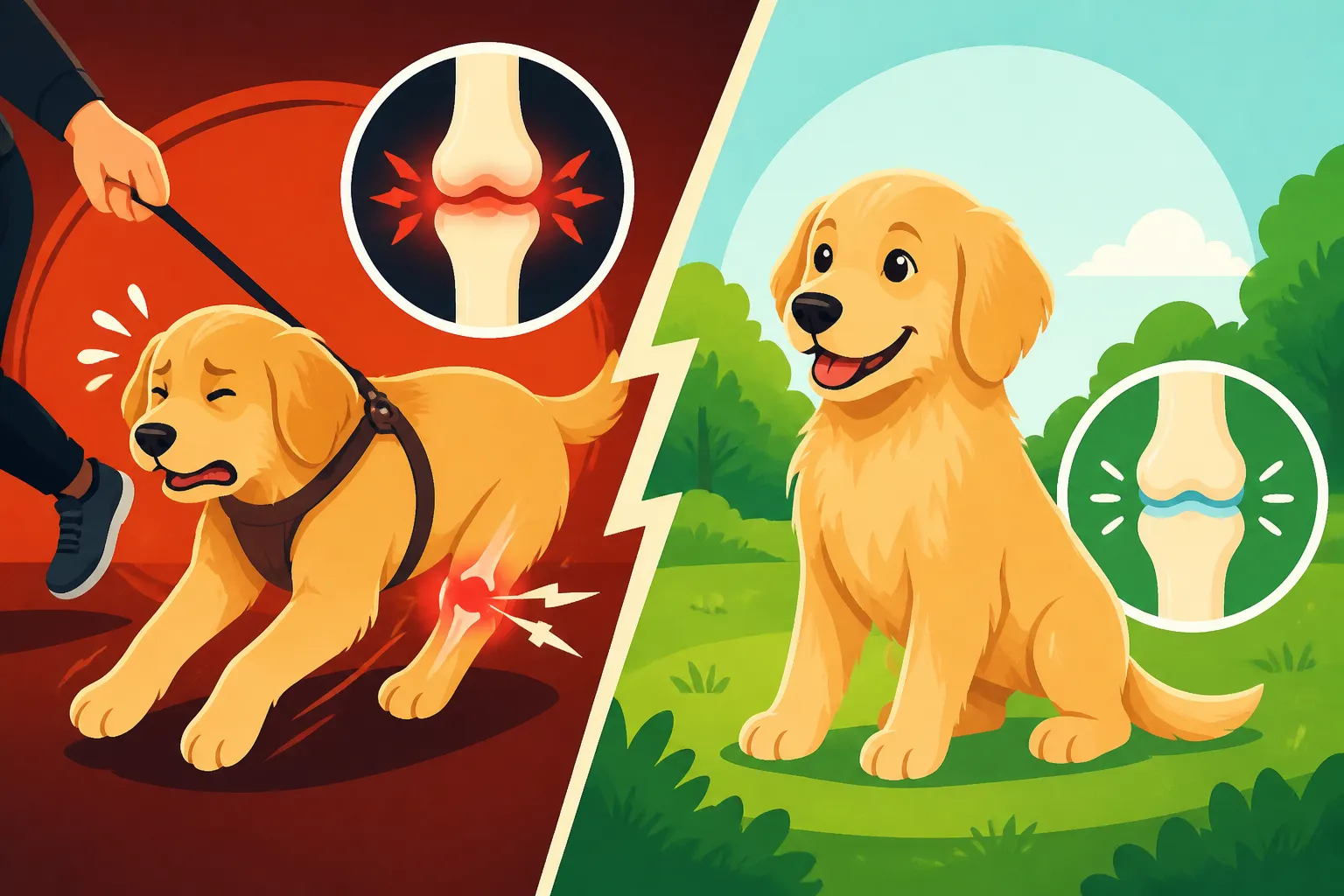
Forced Exercise and Golden Retriever Growth Plates
It’s a truly exhilarating moment when you bring home that fluffy Golden Retriever puppy. You dream of long walks, endless games of fetch, and all the adventures you'll share. There's a natural urge to get them out there, exploring and burning off all that boundless puppy energy. However, for a rapidly growing large breed like our beloved Goldens, too much of a good thing can quickly turn harmful, especially when it comes to their developing bodies. This guide is here to shed light on a crucial, yet often misunderstood, aspect of puppy care: forced exercise and its impact on your Golden Retriever's growth plates, ensuring you can raise a happy, healthy dog without inadvertently causing long-term joint issues.
Understanding Golden Retriever Growth Plates and Why They Matter
When you look at your adorable Golden Retriever puppy, it's easy to forget that beneath all that soft fur and clumsy play, their skeletal system is undergoing a massive transformation. Their bones aren't just getting bigger; they're literally growing and changing shape, and a key component of this growth is incredibly delicate and vulnerable.
What Exactly Are Growth Plates?
Think of growth plates, scientifically known as epiphyseal plates, as the "construction zones" at the ends of your puppy's long bones. Unlike adult bones, which are solid and rigid, a puppy's bones have these specialized areas made of cartilage. This cartilage is constantly dividing and then turning into bone, allowing the long bones in their legs to lengthen as your puppy grows from a tiny fluffball into a stately adult. They're soft, porous, and much more susceptible to injury than the hardened bone that eventually replaces them. For a large, fast-growing breed like the Golden Retriever, these plates are particularly active and remain open for a significant period, making them prime candidates for damage if not handled with care.
Imagine a stack of soft LEGO bricks, where new bricks are being added to the bottom, pushing the whole structure upward. If you apply too much pressure or twist those soft bricks incorrectly, the whole structure can become unstable, or even break. That's essentially what can happen to a puppy's growth plates under undue stress.
When Do Growth Plates Close in Golden Retrievers?
The closure of growth plates isn't an overnight event; it's a gradual process that involves the cartilage cells ceasing their division and hardening into solid bone. For Golden Retrievers, this typically occurs between 12 and 18 months of age, though it can vary. Smaller breeds might have their plates close much earlier, sometimes around 6-8 months, while some giant breeds might take even longer than Goldens. Females often mature a bit faster than males, so their growth plates might close on the earlier side of that range.
It's important to understand that "closed" doesn't necessarily mean "invincible." While the risk of growth plate injury significantly decreases once they've fused, an adult dog can still sustain joint injuries. However, the unique vulnerability of the growth plate is gone. Until a veterinarian confirms through X-rays that these plates are fully closed and calcified, it's best to err on the side of caution. Even then, pushing an adolescent Golden too hard too soon can still impact joint health down the line. Many Golden owners are surprised to learn that even a seemingly minor slip or jump can have lasting consequences before these plates are fully mature. If you're wondering about the specific timeline for your own dog, you might find more detailed information in our guide, When a Golden Retriever's Growth Plates Close.
The Dangers of "Forced" Exercise for Growing Goldens
The intention behind wanting to exercise a rambunctious Golden Retriever puppy is always good. Owners want to ensure their puppy is healthy, well-behaved, and gets enough mental and physical stimulation. However, sometimes our best intentions, when applied without understanding a puppy's unique physiology, can lead to serious problems down the road.
What Constitutes Forced Exercise for a Puppy?
Forced exercise, in the context of a growing Golden Retriever, refers to any type of sustained, repetitive, or high-impact physical activity that the puppy is made to do, rather than initiating and stopping on their own terms. It's about duration, intensity, and the lack of choice.
Consider these scenarios:
- Structured Runs or Jogs: Taking your eight-month-old Golden on a three-mile run around the neighborhood, even if they seem to keep up, is forced exercise. Their joints are simply not designed to withstand that kind of repetitive impact for extended periods.
- Prolonged Fetch Sessions: While fetch is a classic Golden activity, forcing a puppy to retrieve a ball for 20-30 minutes non-stop, especially on hard surfaces, can be detrimental. The sudden stops, starts, and twists are hard on their soft joints.
- Agility Training: While fantastic for adult Goldens, competitive agility, with its demanding jumps and weaves, is generally considered too high-impact for puppies. Their bodies aren't ready for the twisting and jumping required.
- Jumping from Heights: Allowing a puppy to repeatedly jump off the couch, bed, or out of the car can put immense strain on their still-developing hips, elbows, and spine. Their enthusiasm often outweighs their physical limitations.
- Long Walks at a Consistent Pace: Even a walk that feels leisurely to you can be a marathon for a puppy. If you're setting the pace and direction for a significant distance, it's considered forced.
The key distinction is free play. When a puppy engages in free play, they naturally burst into activity, then rest, then play again. They self-regulate. Forced exercise removes that self-regulation, pushing their bodies beyond what they would naturally choose, and potentially beyond what their delicate growth plates can handle.
How Forced Exercise Harms Developing Joints
The potential for damage from forced exercise stems directly from the vulnerability of the growth plates and other developing joint structures. Unlike the elastic cartilage of an adult, a puppy's growth plates are softer and still actively forming bone.
Here's how harm can occur:
- Damage to Cartilage: Repetitive impact, especially on hard surfaces, can bruise, crack, or even prematurely compress the soft cartilage cells within the growth plates. This can lead to uneven growth between bones, causing deformities. Imagine constantly bumping a delicate plant shoot; it might not break, but its growth could be stunted or crooked.
- Premature Closure or Fracture: A severe impact or chronic stress can cause a growth plate to close prematurely, meaning that bone stops growing in that area while other areas continue. This results in limbs of unequal length or abnormal joint development. In worst-case scenarios, a growth plate can actually fracture, requiring immediate veterinary intervention and potentially surgery.
- Exacerbation of Genetic Predispositions: Even if a Golden Retriever has excellent genetic clearances for hip and elbow dysplasia, excessive forced exercise during puppyhood can contribute to the manifestation of these conditions. The physical stress can override genetic predisposition, creating microtraumas that lead to improper joint formation. This is a heartbreaking reality for many owners who did everything right by choosing a reputable breeder but pushed their puppy too hard. You can read more about how this impacts your dog in Golden Retriever Hip and Elbow Dysplasia Explained.
- Early Onset Arthritis: The microtraumas and abnormal joint development caused by forced exercise often don't manifest as obvious lameness right away. Instead, they can lead to inflammation and wear and tear that accelerate the onset of arthritis much earlier in a dog's life, turning a vibrant Golden into a painful, stiff senior dog long before their time. Owners often lament seeing their five-year-old Golden already suffering from joint pain that could have been avoided. This kind of rapid growth and stress is a big factor in Why Fast Growth Damages a Golden Retriever's Joints.
Understanding these risks isn't about creating fear, but empowering owners to make informed choices that safeguard their Golden's long-term health and mobility.
Safe and Healthy Exercise for Your Golden Retriever Puppy
Okay, so we know what not to do. But what should you do? A Golden Retriever puppy, with all their energy and zest for life, absolutely needs exercise. The trick is to provide it in a way that nurtures their growing body, rather than harming it. It's about smart, gentle activity that builds strength and coordination without putting undue stress on vulnerable joints.
Encouraging Appropriate Free Play
Free play is the cornerstone of healthy exercise for a Golden Retriever puppy. This means allowing your puppy to move, run, sniff, and explore at their own pace, stopping when they're tired, and choosing what activities they want to engage in.
Here's how to foster healthy free play:
- Supervised Backyard Time: A securely fenced yard (or a long leash in an open area) is perfect for free play. Let your puppy zoom around, sniff every blade of grass, pounce on imaginary prey, and chew on a favorite toy. The key is supervision to prevent them from engaging in risky jumps or chasing wildlife too intensely.
- Short, Spontaneous Bursts: Watch your puppy. They'll naturally have bursts of energy where they might zoomie around the house or yard. Let them do it! These short, intense bursts followed by rest are exactly what their bodies are designed for. When they start to slow down or lie down, their body is telling them it's time for a break.
- Varying Surfaces: Encourage play on softer surfaces like grass, dirt, or carpet. These surfaces absorb impact much better than concrete, asphalt, or hardwood floors, which can be jarring on developing joints.
- Mental Stimulation Through Play: Instead of endless fetch, incorporate games that engage their minds, like hiding treats around the yard for them to sniff out, or letting them "hunt" for a favorite squeaky toy you've tossed into tall grass. This tires them out mentally without over-stressing their bodies. Many online pet retailers like Chewy offer a fantastic selection of puzzle toys and enrichment items that can provide this kind of mental workout.
- Short, Leash-Led Exploration: Short walks, perhaps 5-10 minutes for very young puppies, allowing them to sniff and explore the world, are great for socialization and gentle exercise. Let them dictate the pace. If they want to stop and sniff a bush for two minutes, let them! This isn't about covering distance; it's about experiencing the world.
Avoiding Common Puppy Exercise Pitfalls
Even with the best intentions, it's easy to fall into certain habits that can be detrimental to a Golden Retriever puppy's joints. Being aware of these common pitfalls can help you steer clear of them.
- No Long-Distance Runs or Jogs: This is perhaps the most critical rule. Do not take your Golden Retriever puppy on structured runs, jogs, or bike rides. Their growth plates are simply not built for the sustained, repetitive impact. Wait until they are at least 18 months old, and ideally get an all-clear from your vet, before introducing any serious running regimen.
- Minimize Jumping from Heights: Repeatedly jumping off high furniture, beds, or out of vehicles puts incredible strain on growing joints. Consider investing in pet ramps for your car or steps for the couch if your puppy is a frequent jumper. These small investments can save significant vet bills later. Our post Do Golden Retriever Puppies Need Ramps? delves deeper into this.
- Limit Stair Climbing: While occasional stair use is unavoidable, try to minimize repetitive stair climbing, especially for very young puppies. Their long bodies and developing joints aren't well-suited for the strain. Carrying them up and down stairs if possible, or using baby gates to restrict access, can be helpful. For more advice, see Stairs and a Golden Retriever Puppy's Growing Joints.
- Watch Slippery Surfaces: Hardwood, tile, or laminate floors can be incredibly treacherous for a puppy, leading to slips and falls that can cause painful injuries. Consider rugs or runners in high-traffic areas where your puppy plays, or use paw grips to help them get traction.
- Appropriate Toys: Choose toys that are suitable for their age and chewing habits. Avoid extremely hard toys or bones that can damage developing teeth or encourage excessive, high-impact chewing that jars their jaw and neck. Soft, durable rubber toys are generally a good choice. You can find a wide array of safe, puppy-appropriate toys on Amazon or Chewy.
The key is to remember that a puppy's body is a work in progress. Gentle, age-appropriate activity is always better than intense, forced exercise.
The Role of Nutrition in Joint Health
Beyond exercise, what you feed your Golden Retriever puppy plays an incredibly significant role in the healthy development of their bones and joints. Nutrition isn't just about growth; it's about controlled growth and ensuring the right building blocks are in place.
- Choose Large Breed Puppy Food: This is absolutely critical for Golden Retrievers. Large breed puppy formulas are specifically designed to support slower, more controlled growth. They typically have carefully balanced levels of calcium and phosphorus, as well as appropriate calorie counts, to prevent your puppy from growing too quickly. Rapid growth, often fueled by standard puppy food or overfeeding, is a major risk factor for developmental orthopedic diseases like hip and elbow dysplasia. Many reputable brands offer excellent large breed puppy food. You can explore options on Chewy or Amazon, and even fresh food services like Ollie cater to breed-specific needs. Our article Large Breed Puppy Food and Why Goldens Need It provides more details.
- Avoid Overfeeding: It's tempting to give your adorable puppy extra kibble, but overfeeding leads to excess weight, which puts immediate and unnecessary stress on their developing joints. Follow the feeding guidelines on your chosen large breed puppy food, and adjust as needed based on your puppy's activity level and body condition. A puppy that is too heavy, even slightly, increases their risk of joint problems. We talk more about this in How Extra Weight Shortens a Golden Retriever's Life.
- Balanced Calcium and Phosphorus: The ratio of these two minerals is crucial for bone development. Too much or too little, or an imbalance, can negatively impact growth plates and bone density. Large breed puppy foods are formulated with this balance in mind, which is why feeding them adult food too early or supplementing indiscriminately can be dangerous. If you're curious about the specifics, check out Calcium Levels in Golden Retriever Puppy Food.
- Quality Ingredients: A diet rich in high-quality protein, healthy fats (like Omega-3 fatty acids), and essential vitamins and minerals supports overall health, including strong bones, resilient cartilage, and healthy connective tissues. These are the foundational components for a robust musculoskeletal system that will serve your Golden well throughout their life.
| Exercise Type | Appropriate Age | Description & Why It's Safe/Unsafe |
|---|---|---|
| Free Play in Yard | 8 weeks+ | Safe: Self-regulated bursts of running, sniffing, wrestling on soft surfaces. Puppy decides when to stop. Builds natural strength without sustained impact. |
| Short Leash Walks | 8 weeks+ | Safe: 5-15 minutes, allowing sniffing and exploration. Focus is on exposure and gentle movement, not distance. Puppy sets the pace. |
| Mental Games | 8 weeks+ | Safe: Puzzle toys, scent games, short training sessions. Tires puppy mentally, reducing physical overexertion. |
| Swimming | 4-6 months+ | Safe (controlled): Excellent low-impact exercise once comfortable and supervised. Builds muscle without joint strain. Avoid forcing a puppy into water. |
| Long Jogs/Runs | 18 months+ | Unsafe (before 18m): Repetitive, high-impact stress on open growth plates. Significant risk of permanent damage and early arthritis. |
| Agility Training | 12-18 months+ | Unsafe (before 12-18m): Involves high jumps, tight turns, and impact. Wait until growth plates are closed and body is mature to prevent injury. |
| Prolonged Fetch | 12-18 months+ | Unsafe (before 12-18m): Repeated sprints, hard stops, and twists can be jarring on developing joints, especially on hard surfaces. Keep sessions short and infrequent. |
| Repetitive Jumping | Never (from heights) | Unsafe: Jumping from furniture, beds, or vehicles puts excessive strain on hips, elbows, and spine. Use ramps or lift young puppies. |
Monitoring Your Golden for Signs of Strain or Injury
Even with the most careful planning, sometimes accidents happen, or a puppy might overdo it during free play. It’s crucial to be vigilant and know what signs to look for that might indicate your Golden Retriever puppy is experiencing pain, discomfort, or an injury related to their growth and activity levels. Early detection can make a world of difference in preventing minor issues from becoming major, lifelong problems.
Subtle Clues Your Puppy is Over-Exercised
Puppies, being the stoic creatures they often are, won't always cry out in pain like a human child might. Their signs of discomfort or being over-exercised can be subtle, requiring a keen eye and an understanding of their normal behavior.
Look out for these clues:
- Limping or Favoring a Leg: This is perhaps the most obvious sign. Even a slight, intermittent limp after a play session, or favoring one leg over another, should not be ignored. Don't assume it will "work itself out."
- Stiffness or Reluctance to Move: Does your puppy seem stiff when getting up after a nap? Do they hesitate before jumping (even small jumps onto a couch) or seem less enthusiastic about going for a walk or playing? This could indicate muscle soreness or joint discomfort.
- Changes in Gait: Observe how your puppy walks and runs. Are they "bunny hopping" with their back legs (moving both back legs together like a rabbit) when they run? This can be a sign of hip discomfort or dysplasia. Our guide The Bunny Hopping Gait in Golden Retrievers explains this further. Are they shifting their weight more to one side, or does their movement seem less fluid than usual?
- Excessive Panting or Fatigue: While puppies get tired, if your Golden is panting heavily and seems unusually exhausted after what you thought was a moderate activity level, they might be overdoing it. A healthy puppy should recover relatively quickly from play.
- Reluctance to Play or Interact: A Golden Retriever puppy's natural state is usually one of joyful enthusiasm. If they seem unusually subdued, aren't interested in their favorite toys, or just want to lie down more than usual, it could be a sign of physical discomfort.
- Vocalization or Sensitivity to Touch: If your puppy yelps when touched in a certain area, or seems unusually sensitive around their joints, it's a clear red flag. Watch for subtle flinches or attempts to pull away. Our article Signs a Golden Retriever Is in Pain offers more detailed insights into puppy pain signals.
Any of these signs, even if they seem minor, warrant your attention. It's always better to be overly cautious when it comes to a growing puppy's joints.
When to Seek Veterinary Advice
While some mild stiffness might resolve with a day or two of rest, there are clear instances where a vet visit is absolutely necessary. Don't delay if you observe any of the following:
- Persistent Lameness: If your puppy is limping consistently for more than a few hours, or if the lameness worsens, it's time to see the vet.
- Sudden Inability to Bear Weight: If your puppy suddenly can't put weight on a limb, or seems to have lost function, this is an emergency.
- Swelling or Heat Around a Joint: Any visible swelling, warmth, or tenderness around a joint could indicate inflammation, infection, or injury.
- Obvious Pain: If your puppy is crying, yelping, or guarding a limb when touched, they are clearly in pain and need immediate medical attention.
- Behavioral Changes Coupled with Physical Signs: If your puppy is not eating, seems lethargic, or is experiencing any other concerning symptoms alongside physical discomfort, a vet visit is essential.
Your veterinarian is your best partner in ensuring your Golden's healthy development. They can perform a physical examination, and if necessary, X-rays, to assess the condition of growth plates and joints. They can also provide guidance on appropriate exercise levels as your puppy grows and help you establish a routine that supports their long-term orthopedic health. Regular vet check-ups are also crucial for catching issues early, which is why Why Goldens Need Vet Visits Twice a Year is a topic we often emphasize. Taking a proactive approach now will lay the foundation for a lifetime of happy, healthy golden years for your beloved companion.
Disclaimer
This article is for general informational purposes only and does not constitute professional advice. Laws, prices and regulations vary by location and change over time. Consult a qualified professional for guidance on your specific situation.