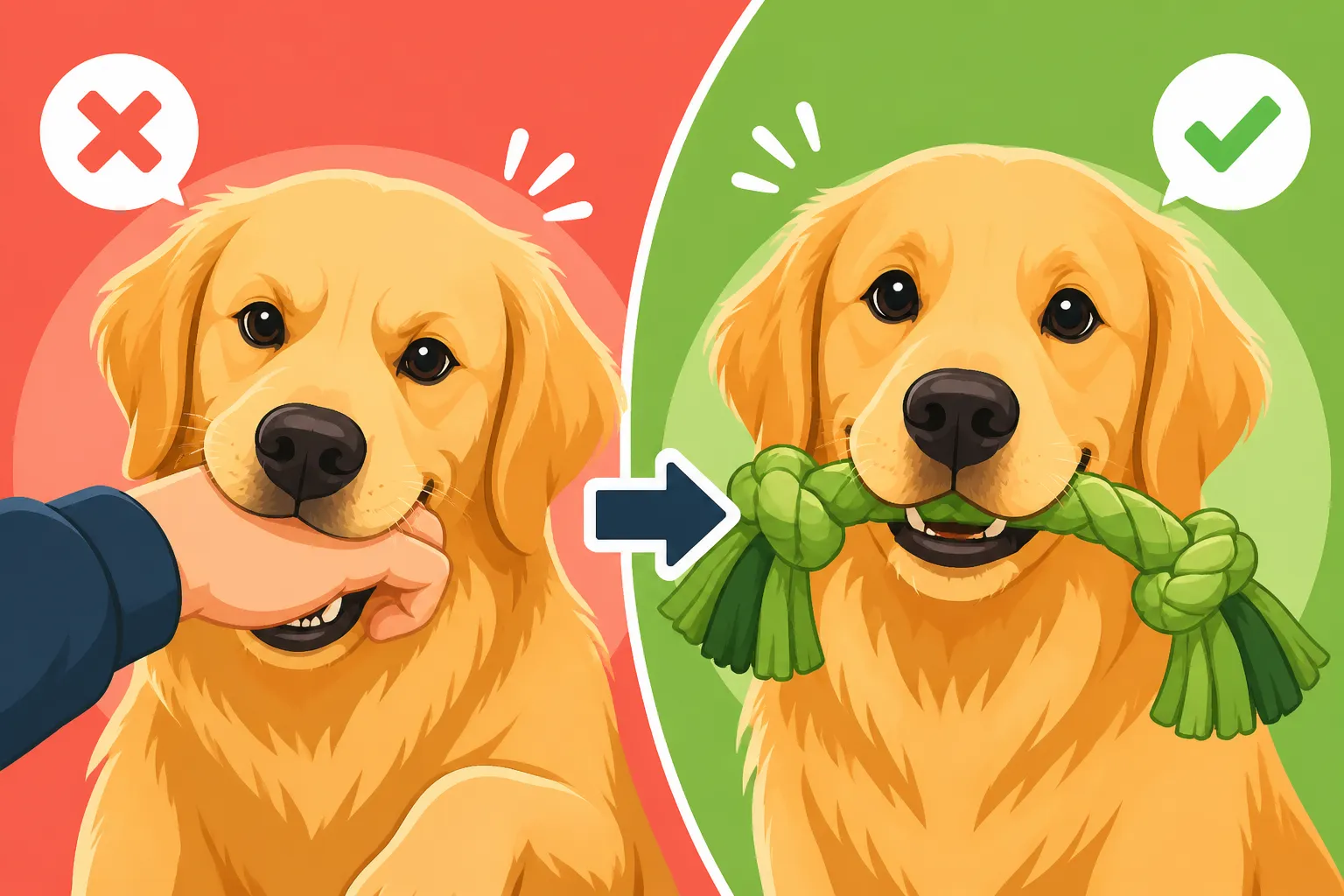
Giving a Mouthy Golden Something to Carry Instead
One of the most common, and let's be honest, frustrating challenges new Golden Retriever puppy owners face is the relentless mouthing and nipping. Those needle-sharp puppy teeth can turn affectionate play into a painful ordeal, leaving your hands and ankles looking like pin cushions. This guide dives deep into a highly effective strategy for managing this natural Golden Retriever behavior: giving your mouthy companion something appropriate to carry or chew on instead of you.
Understanding Why Your Golden Retriever is So Mouthy
Golden Retrievers are renowned for their "soft mouths," a trait meticulously bred into them for retrieving downed game without damaging it. However, this innate desire to hold and carry things manifests in puppies as a strong urge to explore the world with their mouths – and sometimes, that means your hands. Understanding the root causes behind this behavior is the first step toward effective management.
The Instinctual Drive to Carry and Mouth
It's literally in their name: "Retriever." Golden Retrievers have a powerful genetic predisposition to retrieve and carry objects. From the moment they're born, they use their mouths to interact with their littermates, their mother, and their environment. As they grow, this instinct doesn't disappear; it just needs appropriate outlets. When your puppy is constantly putting your fingers, clothes, or furniture in their mouth, they're not necessarily being "bad." They're simply acting on a deep-seated instinct to explore, chew, and carry, often out of boredom or a need for engagement. It's crucial to acknowledge this innate behavior rather than trying to suppress it entirely. You'll find more success by channeling it into acceptable behaviors.
Think about it: they don't have hands to explore with. Their mouth is their primary tool for understanding textures, temperatures, and shapes. Without proper guidance, anything within reach becomes a potential mouth-toy. This is a big reason why Why Golden Retriever Puppies Are So Mouthy is such a common query among new owners.
Teething Pain and Oral Exploration
Just like human babies, Golden Retriever puppies go through an intense teething phase. This typically starts around 3-4 weeks of age when their baby teeth emerge, and then escalates as those baby teeth fall out and their permanent adult teeth come in, usually between 4-7 months. During this period, their gums are sore, swollen, and itchy, and the pressure of chewing provides immense relief.
When your Golden puppy nips or mouths at you, it might be an attempt to alleviate that discomfort. They're not trying to hurt you; they're trying to make their aching gums feel better. Providing a variety of appropriate chew toys designed for teething can be a lifesaver during this time. Soft rubber toys, frozen kongs, or even a chilled carrot can offer the soothing sensation they crave, diverting their attention from your delicate skin. Remember, this phase will pass, but consistent redirection and providing suitable alternatives are essential. You might even notice them Teething Toys That Calm a Golden Retriever Puppy in their crate.
Seeking Attention or Play
Sometimes, your Golden Retriever's mouthing isn't about instinct or teething pain at all; it's a direct bid for your attention. Goldens are highly social and thrive on interaction. If they've learned that nipping or mouthing you results in you looking at them, talking to them, or engaging with them (even if it's to scold them), they've achieved their goal: your attention. This can quickly become a self-reinforcing cycle.
It's vital to recognize when mouthing is an attention-seeking behavior. In these scenarios, reacting by pulling your hand away dramatically or yelling might inadvertently reinforce the behavior. Instead, the strategy should shift to ignoring the unwanted behavior (as long as it's not truly painful or destructive) and immediately rewarding calm, non-mouthy interaction. This teaches them that gentle behavior, or engaging with an appropriate toy, is what earns them your positive response and playtime.
The Art of Redirection: Offering Acceptable Alternatives
The core of managing a mouthy Golden Retriever is not to punish the mouthing, but to redirect it to appropriate outlets. This involves teaching them what they can put in their mouths, rather than simply telling them what they cannot. It's a much more positive and effective approach that builds a stronger bond with your dog.
Choosing the Right "Carry" Toys
This is where the real magic happens. You need to equip your Golden with an arsenal of irresistible "carry" and chew toys that are more appealing than your flesh or household items. Variety is key here. Think about different textures, shapes, and sizes. Soft plush toys are excellent for fulfilling their carrying instinct, offering that soft-mouth experience without damage. Durable rubber toys, like classic KONGs or chew-resistant brands available on Amazon, are fantastic for satisfying their need to chew vigorously. Puzzle toys that dispense treats can also be a wonderful distraction, engaging their minds while keeping their mouths busy.
Consider what your Golden values most. Do they love squeaky toys? Rope toys for tugging? Or perhaps something that smells faintly of you, like an old t-shirt (but be careful they don't ingest fabric)? Having a few go-to options readily available at all times, especially in areas where you interact frequently, will make redirection much easier. Rotate toys to keep things fresh and exciting, preventing boredom. For serious chewers, look for Chew Toys That Survive a Golden Retriever.
Teaching "Take It" and "Leave It"
These two commands are foundational for any dog, but especially for a mouthy Golden Retriever. "Take It" encourages them to pick up and hold an appropriate toy, channeling their natural retrieving drive. "Leave It" teaches them to disengage from something inappropriate (like your hand, or that tempting sock on the floor) and instead focus on you or a designated toy.
Start with "Take It" by holding a desirable toy and, as your puppy approaches it, say "Take it!" and allow them to gently take it. Praise lavishly. Practice this often. For "Leave It," initially use a less appealing treat or toy. Place it on the floor, cover it with your hand, say "Leave It!" and wait. The moment your puppy looks away or disengages, reward them with a much higher-value treat from your other hand. Gradually, you can uncover the item and increase the distraction. These commands are invaluable tools for managing their oral fixation and building impulse control. Many online programs, like those offered by BAXTER & Bella, include comprehensive modules on teaching these crucial commands, making them accessible even for novice owners.
Consistency is Key
I can't stress this enough: consistency is the absolute cornerstone of effective puppy training, especially when addressing mouthing. Every single interaction you have with your Golden Retriever puppy is a training opportunity. If you sometimes allow them to mouth your hand gently, and other times you yelp and pull away, you're sending mixed signals. Your puppy won't understand the rules, leading to frustration for both of you.
Establish clear boundaries early on and stick to them. If the rule is "no teeth on human skin," then always redirect to a toy the moment teeth touch you. If the rule is "only chew on designated chew toys," then always pick up shoes or remote controls and immediately replace them with an appropriate toy. Get your entire household on board with the same rules and responses. This unwavering consistency helps your Golden understand what's expected of them quickly and reduces confusion, leading to faster results. Remember that When Golden Retriever Puppy Biting Stops largely depends on how consistent you are.
Implementing the "Something to Carry" Strategy Effectively
Putting the theory into practice requires a bit of foresight, quick reflexes, and a whole lot of patience. This isn't a one-and-done solution; it's a continuous process that integrates into your daily interactions with your Golden Retriever.
Strategic Toy Placement and Timing
To make redirection effective, you need to be prepared. This means having appropriate "carry" and chew toys everywhere your puppy spends time. Have a toy in your pocket, one by your armchair, several scattered around the living room floor, and even one or two near the kitchen. When your puppy approaches you with that tell-tale look of wanting to mouth, or when you anticipate a bout of zoomies that might involve nipping, you need to be able to immediately produce an acceptable alternative.
Timing is critical. The moment those puppy teeth start to make contact with your skin, or even before they do if you see the intention, gently but firmly redirect. Say "No (or 'ouch!')," immediately offer a toy, and then praise enthusiastically when they take it. This teaches them that appropriate chewing leads to positive attention and rewards, while mouthing you leads to the removal of attention or a prompt redirection. Think of it as a preemptive strike against unwanted nipping.
Managing Over-Excitement and Over-Stimulation
Golden Retriever puppies are bundles of joy, but they can also get easily over-excited, especially during playtime. When a puppy becomes over-stimulated, their impulse control often goes out the window, and that's when the mouthing and nipping can become more intense and difficult to manage. Recognizing the signs of over-excitement – frantic zoomies, exaggerated play bows, intense nipping that borders on biting – is crucial.
When you notice your Golden reaching this point, it's time for a "time-out" or a calm-down period. This doesn't mean punishment. It means gently disengaging from play, perhaps walking away, or putting them in their crate for a few minutes with a special chew toy (like a frozen Kong) to decompress. Teaching your Golden to calm down and self-regulate is an important life skill. Sometimes, even just a minute or two of quiet can reset their energy levels and bring them back to a state where they can respond to redirection more effectively. Don't be afraid to utilize their crate during these moments; it's a safe space for them to settle. If you're struggling with them settling in their crate, you might find tips in Crate Training a Golden Retriever Who Cries.
When to Seek Professional Guidance
While redirection and consistency work wonders for most Golden Retriever puppies, there might be times when you feel you're hitting a wall. If the mouthing is particularly intense, aggressive, or doesn't seem to respond to your efforts, it might be time to bring in professional help. A certified professional dog trainer or a veterinary behaviorist can assess your specific situation, identify underlying causes, and provide tailored strategies.
They can offer invaluable insights into canine body language, help you refine your timing and technique, and introduce advanced exercises for impulse control. Don't view seeking professional help as a failure; view it as a proactive step to ensure your Golden Retriever grows into a well-behaved, happy adult. Many trainers, including those associated with BAXTER & Bella, offer virtual consultations or in-person classes that can be incredibly beneficial. Exploring options like Choosing a Positive Reinforcement Trainer for a Golden can make a huge difference.
Beyond Carrying: Complementary Strategies for a Mouthy Golden
While giving your Golden Retriever something to carry is a powerful technique, it's most effective when combined with other positive reinforcement training methods. A holistic approach will help you raise a polite, well-mannered companion who understands appropriate interactions.
Enforcing Bite Inhibition
Bite inhibition is the process of teaching your Golden Retriever to control the pressure of their bite. Even though the ultimate goal is no teeth on skin, puppies need to learn how hard is too hard. This is typically learned during play with their littermates. When one puppy bites another too hard, the bitten puppy yelps, and play stops. Your role is to mimic this natural learning process.
If your puppy nips you too hard, let out a sharp "yelp!" (like a puppy would), immediately withdraw your hand, and end playtime for a few moments. If the nipping continues, you might need to leave the room for 30 seconds to a minute. This teaches your puppy that hard bites make the fun stop. Once they've calmed down, you can re-engage with an appropriate toy. Gradually, as their bite inhibition improves, you'll work towards them never putting teeth on skin. This critical step is often covered in detail when learning about Bite Inhibition Training for a Golden Retriever.
Providing Ample Mental and Physical Exercise
A tired Golden Retriever is often a well-behaved Golden Retriever. These dogs were bred for activity and intelligent work. If their physical and mental needs aren't met, they can become bored, frustrated, and channel that excess energy into destructive behaviors, including excessive mouthing. Simply going for a walk around the block might not be enough for a energetic Golden puppy.
Incorporate daily sessions of active play, like fetch in a secure yard, or structured walks where they get to sniff and explore. Beyond physical exertion, challenge their intelligent minds with puzzle toys, scent games, and short, engaging training sessions. A busy brain can be just as tiring as a long run! Things like Puzzle Feeders That Occupy a Golden Retriever or engaging in scent work can provide excellent mental stimulation. This can drastically reduce the likelihood of them seeking out your hands for entertainment.
Structured Training and Impulse Control
Regular, structured training sessions are not just for teaching commands; they are invaluable for building impulse control, which is directly related to managing mouthing. Commands like "sit," "stay," and "down" require your Golden to pause, focus, and resist immediate urges. When your puppy learns to wait for a treat or to remain in a "stay" position despite distractions, they are strengthening the neural pathways that govern self-control.
Enroll in a puppy class or work through a positive reinforcement training program. These environments provide structured learning and often include socialization opportunities, which are critical for puppies. A well-trained Golden who understands boundaries and can control their impulses is far less likely to resort to frustrated or attention-seeking mouthing. Start with basic obedience training like When to Start Training a Golden Retriever Puppy and expand from there.
This table provides a quick overview of common mouthing scenarios and effective redirection tactics:
| Scenario | Golden Retriever Behavior | Owner's Action (Redirection) | Goal |
|---|---|---|---|
| Play Biting | Puppy nips hands/ankles during excited play. | Yelps, immediately withdraws hand, offers a tug or chew toy. | Teach soft mouth, redirect play to toys. |
| Attention Seeking | Puppy mouths to get your notice. | Ignores mouthing, waits for calm, then rewards calm interaction/toy play. | Teach that calm, non-mouthy behavior gets attention. |
| Teething Pain | Puppy chews indiscriminately on furniture, hands. | Provides a variety of appropriate chew toys (frozen, rubber, textured). | Alleviate gum pain with acceptable items. |
| Over-Excitement | Frenetic nipping during zoomies or intense play. | Initiates a brief "time-out" (e.g., in crate with a chew, owner leaves room). | Helps puppy self-regulate and calm down. |
| Greeting Guests | Puppy jumps and mouths excitedly at visitors. | Teaches "sit" for greetings, redirects to a plush toy to carry to greet. | Polite greetings, gives mouth an appropriate job. |
| Boredom/Lack of Stimulation | Puppy mouths at clothes, household items, or themselves. | Engages with puzzle toys, short training sessions, scent games, active play. | Provides mental and physical enrichment, reduces frustration. |
| Walking on Leash | Puppy mouths at leash, owner's hand. | Offers a specific "walking toy" to carry, practices "leave it" on leash. | Keeps mouth busy, teaches focus on walk. |
By consistently applying these strategies, you'll not only curb the unwanted mouthing but also foster a deeper understanding and communication with your wonderful Golden Retriever. It takes patience, but the reward of a well-behaved companion is absolutely worth it.
Disclaimer
This article is for general informational purposes only and does not constitute professional advice. Laws, prices and regulations vary by location and change over time. Consult a qualified professional for guidance on your specific situation.