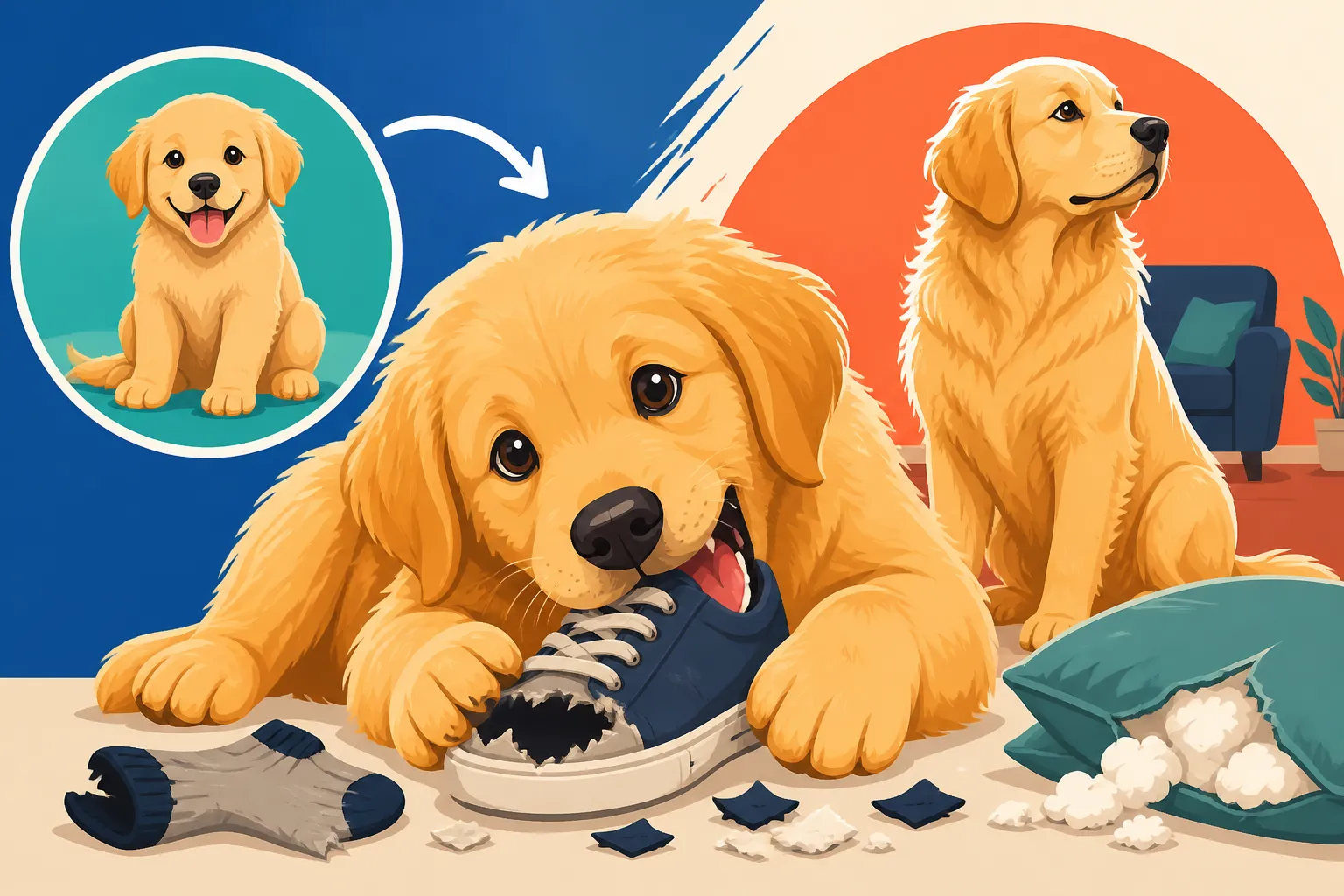
Golden Retriever Chewing Through Adolescence
Ah, the adolescent Golden Retriever. It's a stage that can truly test the patience of even the most devoted dog owner, often marked by a sudden, intense resurgence of chewing that leaves you wondering if your sweet puppy has been replaced by a small, furry piranha. This guide is here to walk you through why your Golden seems obsessed with chewing everything in sight during these teenage months, how to protect your home and your sanity, and most importantly, how to guide them through this perfectly normal (if frustrating) phase.
Understanding Adolescent Chewing in Golden Retrievers
When your adorable Golden Retriever puppy was little, you probably braced yourself for the teething phase, stocking up on chew toys and puppy-proofing every accessible surface. Then, things seemed to calm down a bit, only for your now larger, stronger, and seemingly more determined adolescent to suddenly reignite their passion for gnawing on forbidden objects. It's a common story, and it's not because your Golden is trying to spite you. There are very real, developmental reasons behind this behavior.
Why Chewing Intensifies During Adolescence
Think of canine adolescence as the equivalent of human teenage years – a period of rapid physical and mental change, bursting with hormones, energy, and a fair amount of chaotic self-discovery. For Golden Retrievers, this typically kicks in around 6 months and can last all the way up to 18-24 months. During this time, while their adult teeth have fully emerged, their jaws are still strengthening, and their brains are rapidly developing. Chewing isn't just about discomfort anymore; it's a multi-purpose activity.
Firstly, chewing is a massive stress reliever for dogs. The act of gnawing releases endorphins, which can help calm an overstimulated or anxious adolescent Golden. These dogs are experiencing a lot: growth spurts, new social dynamics, an increase in energy levels, and sometimes, a bit of an identity crisis as they transition from puppyhood to adulthood. All this can create an underlying hum of nervous energy that needs an outlet. Secondly, it's a way for them to explore their world. Goldens are mouthy by nature; they use their mouths like we use our hands to investigate objects, textures, and even tastes. As they gain more confidence and independence during adolescence, they're more likely to push boundaries and explore objects they previously ignored. Their curiosity combined with their need for mental and physical stimulation often manifests as increased chewing, especially on things that smell interesting or have a satisfying texture.
Normal Chewing Versus Destructive Chewing
It's important to distinguish between what's a normal, albeit vigorous, phase of chewing and what might be considered genuinely destructive or problematic. Normal chewing, even if it feels intense, often occurs when your Golden is engaging with appropriate chew toys. They might spend hours happily deconstructing a sturdy rubber toy or working on a long-lasting dental chew. They understand the difference between their things and your things, for the most part, and can be redirected successfully.
However, destructive chewing crosses a line when your Golden consistently targets inappropriate items despite having plenty of proper outlets. This includes furniture legs, baseboards, door frames, clothing, shoes, or even drywall. When your Golden is chewing out of boredom, anxiety, or a complete lack of understanding of boundaries, that's when it shifts into destructive territory. It's not just the what they chew, but the why. A Golden chewing the leg of your dining room table while home alone for hours is likely acting out of separation anxiety or profound boredom, which is different from a Golden happily shredding a cardboard box you gave them. If you're seeing a regression in house manners, this could also be part of The Golden Retriever Teenage Regression. Understanding the root cause is the first step to addressing it effectively, which might involve a deeper look into their daily routine, training, and emotional well-being.
Common Chewing Targets and Their Dangers
Golden Retrievers are intelligent and curious, and in their adolescent phase, this curiosity extends to almost anything within reach of their powerful jaws. What might seem harmless to us can quickly become a serious hazard for them, and an expensive headache for us.
Household Items at Risk
During the adolescent chewing phase, your home transforms into a minefield of potential chew targets. Everything from your favorite pair of sneakers to the legs of your antique coffee table can look like a tempting challenge to a bored or stressed Golden. For many owners, the battle begins with shoes, remote controls, children's toys (especially plush ones that squeak or have interesting textures), and socks. These items often carry your scent, making them particularly appealing. Your Golden isn't trying to be naughty; they're often seeking comfort or attention, and anything that smells like "you" provides that connection.
Beyond personal items, furniture can become a casualty. Chair legs, table corners, even the edges of kitchen cabinets or the trim around doors and windows are fair game. These offer a satisfying resistance and texture that many Goldens find irresistible. Soft furnishings like cushions and blankets can be shredded, becoming a snowstorm of fluff. Electrical cords, while less common, are extremely dangerous targets and can be hidden hazards behind entertainment centers or desks. It truly pays to get down on your hands and knees and look at your house from a Golden's perspective to anticipate what might look appealing and ensure everything is out of reach or thoroughly puppy-proofed. Sometimes, the solution is as simple as tucking cords away or using cord protectors, which you can find easily on sites like Amazon.
Identifying Unsafe Chewing Materials
Not all chewables are created equal, and some common household items can pose serious health risks to your Golden. Beyond the obvious dangers like electrical cords, smaller items that can be easily ingested are a huge concern. Socks, underwear, pieces of fabric from shredded blankets, or small plastic parts from toys can lead to intestinal blockages, which are life-threatening emergencies requiring immediate veterinary intervention. Cooked bones are another big no-no, as they can splinter and cause internal damage.
Chemicals and toxins are also lurking dangers. If your Golden chews on cleaning supplies, certain houseplants, or medications, the consequences can be severe. Always keep these items securely stored away, ideally in locked cabinets. Even seemingly innocuous items like cardboard can be dangerous if ingested in large quantities, as it can expand and cause blockages. When selecting toys, always choose those designed for strong chewers and supervise your Golden, especially with new toys, to ensure they aren't tearing off and swallowing pieces. Remember, if it can fit in their mouth, there's a good chance they might try to chew or swallow it. Being proactive about identifying and removing unsafe items is paramount for their safety and your peace of mind.
Strategies for Managing Adolescent Chewing
Managing adolescent chewing isn't about stopping your Golden from chewing entirely – that's an impossible and unfair task. Chewing is a fundamental canine behavior. Instead, it's about redirecting that natural urge onto appropriate outlets and managing their environment to prevent undesirable behavior. It requires consistency, patience, and a multi-pronged approach.
Providing Appropriate Chew Outlets
The cornerstone of managing adolescent chewing is to make sure your Golden always has a readily available supply of irresistible, appropriate chew toys. These need to be tough enough to withstand a Golden's strong jaws but not so hard that they risk breaking teeth. Look for durable rubber toys, such as those from Kong or Nylabone, designed for aggressive chewers. Fillable toys are particularly excellent because they offer both a chewing challenge and mental stimulation as your Golden works to get the treat out. Frozen carrots, ice cubes, or a frozen Kong stuffed with peanut butter or plain yogurt can also provide long-lasting, soothing relief, especially if they still have a lingering oral fixation.
Rotate these toys regularly to keep them interesting. Having a basket of 5-6 different types and textures of chew toys, and only offering 2-3 at a time before swapping them out, can keep your Golden engaged. Always ensure the size of the chew toy is appropriate for your Golden's mouth to prevent choking hazards. If you notice a toy is starting to break down or pieces are coming off, it's time to replace it. A trip to a pet store or a quick search on Amazon for "indestructible dog chews" can yield many good options. The goal is to make the "right" thing to chew far more appealing and available than the "wrong" thing.
Environmental Management and Puppy-Proofing
While we often call it "puppy-proofing," this task needs to be rigorously re-evaluated during Golden Retriever adolescence. Your adolescent Golden is taller, more agile, and more determined than they were as a small puppy. What was out of reach before might now be easily accessible. Go through your home room by room, at dog height, and remove or secure anything valuable or dangerous.
This means putting shoes in closets, keeping dirty laundry in hampers with lids, securing trash cans, and ensuring all electrical cords are either covered or inaccessible. Baby gates can be invaluable for restricting your Golden's access to certain rooms when you can't supervise them directly. Crate training, if you started it early, is also a fantastic management tool for when you need to leave your Golden unsupervised, even for short periods. A comfortable, appropriately sized crate provides a safe, chew-proof space. This isn't about punishment; it's about setting your Golden up for success by removing the temptation to chew on inappropriate items. Remember, prevention is always easier than trying to stop a destructive behavior after it has started.
Training "Leave It" and Redirection
Beyond providing appropriate outlets, active training and redirection are crucial. The "Leave It" command is arguably one of the most important commands you can teach your Golden Retriever, especially during this phase. It teaches them to disengage from an object they are interested in, whether it's a dropped piece of food on the sidewalk or your shoe. Start practicing "Leave It" with low-value items, gradually increasing the difficulty. Reward them generously with a high-value treat when they successfully ignore the forbidden item.
When you catch your Golden chewing something they shouldn't, avoid yelling or harsh punishment. This can create fear and anxiety, potentially exacerbating the chewing problem. Instead, calmly interrupt the behavior with a firm "Ah-ah!" or "Leave It!" Then, immediately redirect their attention to an appropriate chew toy. As soon as they take the correct toy into their mouth, praise them enthusiastically and reward them. The key is to be consistent every single time. Your Golden needs to learn that chewing their toys earns them praise and good things, while chewing your things results in interruption and redirection, but not punishment. Many online training programs, like those offered by BAXTER & Bella, have excellent modules on teaching these foundational commands effectively.
Addressing Underlying Causes of Excessive Chewing
Sometimes, excessive chewing isn't just about the natural urges of adolescence. It can be a symptom of deeper issues that need to be addressed. Just like a human teenager might lash out when stressed, a Golden Retriever might resort to destructive chewing when their emotional or physical needs aren't being met.
Boredom and Lack of Mental Stimulation
Golden Retrievers are intelligent, active dogs. If they're not given enough physical exercise and, perhaps more importantly, enough mental stimulation, they will find their own ways to entertain themselves – and those ways often involve chewing. A Golden who spends hours alone with nothing to do will quickly become bored, and chewing is a fantastic way for them to pass the time and burn off pent-up energy. This can lead to your Golden destroying things when home alone.
A good daily routine should include more than just a quick walk around the block. Goldens thrive on purpose. Incorporate interactive play sessions, like fetch or tug-of-war, which can satisfy their retrieving instincts and provide a healthy physical outlet. But don't forget their brains! Puzzle feeders, scent work, and short, engaging training sessions can challenge their minds and tire them out more effectively than just physical exercise alone. Think about hiding treats around the house for them to sniff out, or teaching them new tricks. Even enrolling in an online training program can provide structure and new challenges. A mentally tired Golden is far less likely to be a destructive chewer. Consider Mental Enrichment for a Bored Golden Retriever to keep their minds active.
Anxiety or Stress-Related Chewing
Chewing is a self-soothing behavior, so if your adolescent Golden is experiencing anxiety or stress, it's very likely they'll turn to chewing as a coping mechanism. The most common form of anxiety leading to destructive chewing is separation anxiety. If your Golden chews intensely only when left alone, particularly around exit points like doors and windows, or if it's accompanied by other signs like excessive barking, howling, pacing, or house-soiling, then separation anxiety is a strong possibility. For a deeper dive, check out Golden Retriever Separation Anxiety Signs.
Other stressors can also trigger chewing. Changes in routine, a new pet or family member, loud noises (like thunderstorms or fireworks), or even inconsistent training can make a sensitive Golden feel uneasy. Observing when and where the chewing occurs can give you clues. If it's always during certain situations, or only on specific items, it points to a potential stressor. Addressing anxiety involves identifying the trigger and then systematically working to reduce your Golden's stress response through counter-conditioning, desensitization, and potentially the help of a veterinary behaviorist. Creating a calm, predictable environment and ensuring they feel secure can go a long way in alleviating stress-induced chewing.
When to Seek Professional Help for Chewing
While adolescent chewing is a normal phase, there are times when it escalates beyond what you can reasonably manage on your own. Recognizing these signals and knowing when to call in the experts is crucial for both your Golden's well-being and your sanity.
Recognizing Problematic Chewing Behavior
How do you know if your Golden's chewing has moved past "adolescent phase" and into "problematic territory"? Here are some signs to watch for:
- Self-harm or injury: If your Golden is chewing on themselves (paws, tail) to the point of causing irritation, hot spots, or open wounds, this is a definite red flag.
- Ingestion of dangerous items: If, despite your best efforts at puppy-proofing and redirection, your Golden repeatedly ingests non-food items that could cause blockages or toxicity (e.g., fabric, large pieces of plastic, toxic plants), it's a serious concern.
- Extreme property destruction: While a chewed shoe is one thing, consistently destroying expensive furniture, digging through walls, or tearing up carpet beyond repair indicates a deeper issue.
- Chewing driven by severe anxiety: If the chewing is clearly linked to intense separation anxiety or other significant fears (like noise phobias) and is accompanied by other distress signals, it's not just a training problem anymore.
- Aggression or guarding around items: If your Golden growls, snaps, or attempts to bite when you try to remove an inappropriate item they are chewing, this points to resource guarding, which needs professional intervention. For more on this, see Golden Retriever Guarding a Bone or Toy.
- Lack of response to training: If you've diligently implemented redirection, provided ample appropriate chews, ensured plenty of exercise and mental stimulation, and the destructive chewing persists or worsens, it's time to re-evaluate.
Consulting a Vet or Professional Trainer
If you observe any of the problematic behaviors mentioned above, or if you simply feel overwhelmed and out of ideas, don't hesitate to seek professional help. Your first call should always be to your veterinarian. They can rule out any underlying medical conditions that might contribute to excessive chewing, such as dental pain, gastrointestinal issues, or nutritional deficiencies. They can also offer advice on anxiety medications if necessary or refer you to a veterinary behaviorist.
If medical issues are ruled out, the next step is a certified professional dog trainer or a certified behavior consultant. Look for someone who uses positive reinforcement methods and has experience with adolescent Golden Retrievers and anxiety-related behaviors. A good trainer can observe your Golden in their environment, identify specific triggers, and develop a tailored training and management plan. They can help you refine your "Leave It" command, teach impulse control, and address specific behavioral issues like separation anxiety or resource guarding. When choosing a trainer, it's essential to look for credentials and references. Organizations like the Certification Council for Professional Dog Trainers (CCPDT) or the International Association of Animal Behavior Consultants (IAABC) provide lists of certified professionals. Never be afraid to ask for help; it's a sign of a responsible owner committed to their Golden's well-being. Look into Choosing a Positive Reinforcement Trainer for a Golden for guidance.
Comparative Table: Common Chew Toy Types for Adolescent Goldens
To help you navigate the vast world of chew toys, here's a comparison of popular types, highlighting their pros, cons, and best uses for your adolescent Golden Retriever.
| Chew Toy Type | Pros | Cons | Best For |
|---|---|---|---|
| Durable Rubber Toys | Extremely tough, long-lasting, often fillable for treats. | Can be expensive; some Goldens lose interest if not stuffed. | Strong chewers, mental stimulation (when filled), soothing. |
| Nylon Bones/Chews | Very durable, provide good oral stimulation, various shapes. | Can be very hard (risk of tooth fracture), not digestible, can splinter if aggressively chewed. | Moderate to strong chewers, dental health (some varieties). |
| Edible Chews (e.g., bully sticks, dental chews) | Highly palatable, satisfying, some offer dental benefits. | Can be consumed quickly, some are high in calories, potential choking hazard (small pieces). | All chewers (supervised), occasional high-value treat, dental cleaning. |
| Rope Toys | Great for tug-of-war, helps with dental cleaning. | Easy to fray and ingest strands, which can cause blockages. | Interactive play (supervised), gentle chewers. Not for unsupervised chewing. |
| Puzzle/Dispensing Toys | High mental stimulation, slows down eating, rewarding. | Requires refills, some dogs can figure them out too quickly, can be noisy. | Boredom busting, mental exercise, mealtime enrichment. |
| Natural Chews (e.g., antlers, hooves) | Very long-lasting, natural, provides minerals. | Very hard (high risk of tooth damage), some can splinter, can be expensive. | Extremely strong, persistent chewers (with caution and supervision). |
Always supervise your Golden with any new chew toy, especially during the adolescent phase, to ensure it's safe and appropriate for their chewing style.
Disclaimer
This article is for general informational purposes only and does not constitute professional advice. Laws, prices and regulations vary by location and change over time. Consult a qualified professional for guidance on your specific situation.