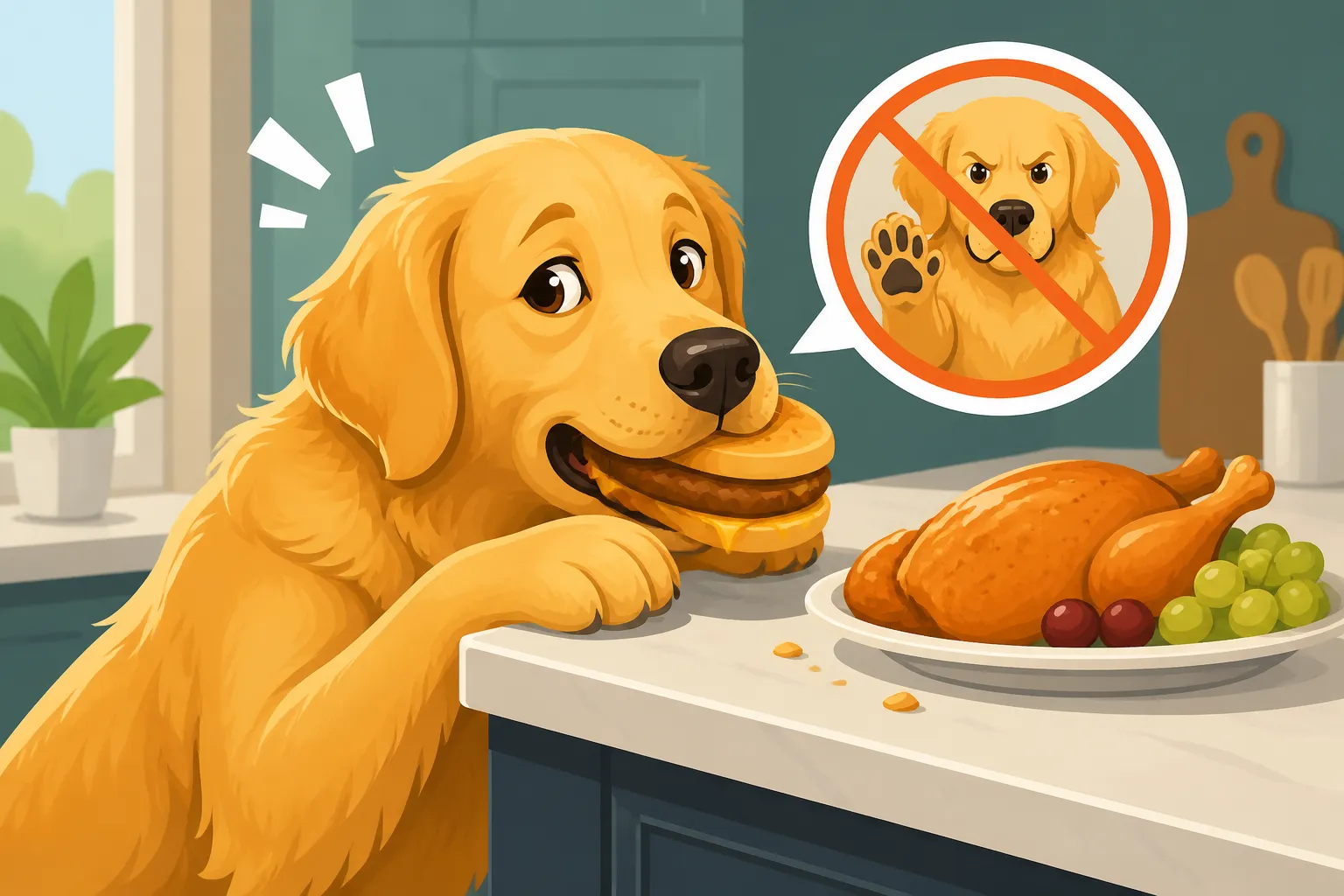
Golden Retriever Counter Surfing and Food Stealing
There are few things more frustrating than walking into your kitchen to find your beloved Golden Retriever with their front paws planted firmly on the counter, nose deep in whatever deliciousness you'd momentarily left unattended. Or perhaps it's the mystery of the missing sandwich, the vanished cookie, or the tell-tale crumbs on the floor – clear evidence that your clever canine companion has once again mastered the art of food stealing. This guide is here to help you understand why your Golden is so persistent in their quest for counter-surfed delights and, more importantly, how to put a stop to this often-maddening, sometimes dangerous, behavior.
Understanding Why Golden Retrievers Counter Surf and Steal Food
It’s easy to get angry when your Golden pulls off another food heist, but understanding the root causes of this behavior is the first step toward managing it effectively. Goldens are notoriously smart, food-motivated, and, let’s be honest, often a little opportunistic.
The Golden Retriever's Insatiable Appetite
Golden Retrievers, bless their hearts, often act like they haven't eaten in a week, even after a full meal. Their strong food drive is a hallmark of the breed, a remnant of their retrieving heritage where being rewarded with a tasty morsel or simply a job well done around food was highly motivating. This inherent love for food means that any accessible edible item, no matter how mundane it seems to us, is viewed as a potential treasure. They're not being malicious; they're simply following their instincts. They're driven by scent and the promise of a delicious payoff. If they smell something appealing on the counter, especially something rich or meaty, their brains immediately light up with the potential for a reward. This deep-seated drive is a big part of Golden Retriever Temperament and Personality, making them eager learners but also eager snackers.
The Allure of Novelty and Scents
Beyond just basic hunger, Goldens are also incredibly curious creatures. A new scent wafting from the kitchen counter or a low-lying table is an irresistible invitation for exploration. That pizza box you left out? To your Golden, it's a giant puzzle box emitting tantalizing smells. The half-eaten plate of toast? A thrilling discovery! They're not just looking for food; they're investigating new and exciting aromas. This makes even "safe" items, like a forgotten grocery bag with a box of crackers, fair game for investigation. Their powerful noses are constantly working, detecting odors we can't even imagine, turning your kitchen into a landscape of edible possibilities.
Learned Behavior and Reinforcement
The biggest reason Golden Retrievers become repeat offenders when it comes to counter surfing and food stealing is simple: it works. Every single time your dog successfully grabs a treat from the counter, even if it’s just a crumb, they receive an immediate, powerful reward. This positive reinforcement cements the behavior in their minds. They learn that investigating the counter can lead to delicious things. Even if they only succeed once out of ten attempts, that one success is enough to keep them trying. Think of it like a slot machine for dogs – the occasional jackpot keeps them pulling the lever. This "jackpot" could be anything from a dropped piece of cheese to an entire plate of dinner, making the stakes high and the learning rapid.
Common Scenarios and the Damage They Cause
It’s not just about the frustration of losing your dinner. Counter surfing and food stealing can lead to a whole host of problems, from minor inconveniences to serious health risks for your beloved Golden.
Counter Clearances Gone Wrong: The Grab-and-Run
This is the classic scenario: you step away for a moment – maybe to answer the door, use the restroom, or simply grab a forgotten ingredient from the pantry – and when you return, the plate of cooling cookies or the roast you were carving is half-gone or, worse, completely vanished. Golden Retrievers are masters of the "grab-and-run" because they are quick, agile, and often possess a surprisingly long reach when motivated. They might knock over a plate in their haste, scattering food everywhere, or deftly swipe a whole item before you even realize what's happening.
I remember one time I had a beautiful loaf of artisan bread cooling on the counter, just minding its own business. I turned my back for literally thirty seconds to grab my phone, and when I looked back, my Golden, Daisy, was proudly trotting out of the kitchen with the entire loaf, looking like she'd just won the lottery. The damage isn't just the missing food; it's the mess, the broken dishes, and the feeling that you're constantly on guard in your own home. It’s a constant battle of wits, and sometimes, our Goldens win.
The Silent Thief: Sneaking Food Off Plates and Low Tables
Not all food stealing involves dramatic counter-leaping. Many Goldens are far more subtle. They become "silent thieves," carefully inching closer to a coffee table where you've left a snack, or even approaching a dining room table when guests are distracted. They might subtly nudge a plate closer to the edge with their nose, or use their long, gentle muzzle to deftly extract a dropped piece of food from under a chair. This stealthy approach is often harder to catch in the act, making it more challenging to correct.
Imagine you're enjoying a movie, and you've got a bowl of popcorn on the coffee table. Your Golden is snoozing peacefully on the rug… or so you think. A quick glance reveals a distinct lack of popcorn in your bowl and a suspicious licking of lips from your furry companion. These subtle thefts often go unnoticed until it's too late, reinforcing the behavior because the dog never gets caught or corrected for it.
Beyond Just Missing Food: Health Risks and Home Damage
The most worrying aspect of counter surfing and food stealing isn't the lost meal, it's the potential harm to your Golden Retriever. Many human foods are downright dangerous for dogs. Chocolate, grapes, raisins, onions, garlic, avocados, and anything containing xylitol (a common sugar substitute) can be toxic, leading to severe illness, organ damage, or even death. A Golden who swallows a chicken bone might suffer internal damage. Eating rich, fatty foods can trigger pancreatitis, a painful and serious condition.
Beyond food, there's the risk of ingesting non-food items. A Golden might grab a dishtowel with a food stain, then ingest part of the towel, leading to a blockage. They could knock over a hot pan, spill boiling water, or break glass. I know of a Golden who, in her eagerness, once pulled a entire crock-pot of chili off the counter, resulting in burns to her paws and a trip to the emergency vet – not to mention a giant mess. These incidents can lead to expensive vet bills, like those covered in Golden Retriever Emergency Vet Bills, and untold worry. You can find a comprehensive list of what to avoid in Foods That Are Dangerous for Golden Retrievers.
Proactive Prevention: Making Your Home "Golden-Proof"
When it comes to counter surfing and food stealing, prevention truly is worth a pound of cure. It's much easier to manage your environment than to constantly try to outsmart a determined Golden.
Kitchen Management: The First Line of Defense
The absolute best way to stop your Golden from counter surfing is to remove the temptation entirely. This means developing new habits in your kitchen. Never leave food unattended on counters, tables, or low surfaces, even for a second. Get into the routine of immediately clearing plates from the table and wiping down counters after cooking or eating. A crumb left behind is an invitation. If you're cooking, try to have your Golden in a separate area, like behind a baby gate or in their crate, especially if you're preparing something particularly tempting.
Think about how you're cooling baked goods. Instead of on an open counter, consider placing them in an oven (turned off, of course!) or a closed pantry. If you have children, teach them the importance of not leaving their plates unattended on low coffee tables or dropping food on the floor. Consistency from everyone in the household is key here.
Secure Storage and Containment Strategies
Beyond just clearing surfaces, consider how you store food. Invest in airtight containers for pantry items that might be within reach if knocked over. Secure your trash cans with lids that your Golden can't easily open. Many Goldens are experts at tipping over open bins for a quick rummage. For particularly determined counter surfers, baby gates can be an absolute lifesaver. You can use a sturdy gate to block off kitchen access when you're not actively supervising, effectively creating a "dog-free zone."
Sometimes, the best containment strategy is a comfortable crate. If your Golden is crate-trained, putting them in their Crate Size and Potty Training a Golden Retriever while you're cooking or eating can prevent any opportunity for mischief. Many dog owners find that crate time helps their Golden learn to relax while the family is busy, and it's invaluable for preventing unwanted behaviors. Remember, even a small opening in a pantry or a slightly ajar door can be an opportunity for a curious Golden.
Environmental Deterrents
Sometimes, despite our best efforts, a Golden might still test the waters. This is where environmental deterrents can come in handy. These are tools designed to make the counter undesirable without you having to be present to correct the behavior.
- Scat Mats: These mats emit a mild static pulse when stepped on, startling the dog. They are often battery-operated and can be placed strategically on counters or near temptation spots.
- Motion-Activated Alarms: These devices emit a loud, startling sound when motion is detected, effectively scaring your dog away from the forbidden zone.
- Booby Traps (Safe Ones!): A classic trick involves stacking empty aluminum cans on the edge of the counter, balanced precariously so they fall with a loud clatter if disturbed. The noise is startling but harmless.
- Sticky Paws: This is a clear, sticky tape that you can apply to counter edges. Dogs dislike the tacky feel on their paws, making the counter less appealing. You can often find options like this on Amazon.
It's important to note that deterrents should be used as tools to help your Golden associate the counter with an unpleasant experience, rather than something they get yelled at for. The goal is for them to decide the counter isn't worth it on their own, especially when you're not around.
Here's a quick comparison of some common deterrents:
| Deterrent Type | Pros | Cons | Best For |
|---|---|---|---|
| Scat Mats | Consistent, dog-controlled consequence; no human needed | Can be expensive; some dogs learn to jump over them | Persistent counter surfers; training when not supervised |
| Motion-Activated Alarms | Startling noise without physical contact; covers wide area | Can be accidentally triggered; some dogs habituate to the sound | General area deterrence; initial training to break habit |
| Stacked Cans/Booby Traps | Inexpensive; simple to set up | Can be inconsistent; might make a mess if they fall too hard | Mild curiosity; teaching initial boundary awareness |
| Sticky Paws/Tacky Strips | Non-aversive; creates unpleasant texture | Can be messy; some dogs may lick it off; needs frequent replacement | Dogs who dislike certain textures; maintaining boundaries |
Training Strategies to Curb the Behavior
While prevention is critical, teaching your Golden Retriever alternative behaviors and reinforcing good choices will lead to a more reliable solution in the long run. This is where consistent training comes in.
"Leave It" and "Off" Commands as Your Best Friends
Two commands that will prove invaluable in your fight against counter surfing are "Leave It" and "Off."
The "Leave It" command teaches your Golden to ignore an item, even if it's tempting. Start with low-value items on the floor, rewarding them heavily for looking away. Gradually increase the distraction, moving to more tempting items, and eventually practicing with food items on a low chair, then a counter. The key is to reward them before they even think about going for the item. The moment they glance at you instead of the food, praise and treat them. Best Treats for Training a Golden Retriever are key here.
The "Off" command teaches your dog to remove their paws from any surface they shouldn't be on. If you see your Golden put their paws on the counter, calmly say "Off" and lure them down with a treat. When all four paws are on the floor, immediately praise and reward. Over time, you'll be able to use the verbal cue without a lure. The goal is to make it clear that having their paws on the counter never results in a reward, while having all Teaching a Golden Retriever Four on the Floor does. This takes patience and repetition.
Reinforcing "Four on the Floor"
This concept ties directly into the "Off" command but is more about general manners around food. Your Golden should understand that when people are eating or preparing food, their place is on the floor, ideally in a designated "place" like their bed or a mat. This is a behavior you actively teach and reward. Start by asking your Golden to "place" or "bed" while you are just starting to prepare food. Reward them for staying there, even if it's just for a few seconds initially. Gradually extend the duration.
If they get up and approach the counter or table, calmly lead them back to their spot without scolding and have them "place" again. Reward them for settling. Many online training programs, like those offered by BAXTER & Bella, emphasize these foundational obedience skills which are crucial for household manners. The more you reinforce that good things happen when they stay in their designated spot during food times, the less appealing the counter will become.
Mental Stimulation to Reduce Boredom
A bored Golden Retriever is an innovative Golden Retriever. If they aren't getting enough mental and physical exercise, they might turn to counter surfing as a way to relieve boredom or seek attention. Golden Retrievers are intelligent dogs who thrive on having a "job" to do, even if that job is just solving a puzzle. Incorporate puzzle toys, scent games, and regular training sessions into their daily routine.
Instead of just putting all their food in a bowl, use a portion of their daily kibble in a puzzle feeder. This makes them work for their food and provides valuable mental enrichment. This can also help regulate How Much an Adult Golden Retriever Eats Daily. You can find a fantastic array of Puzzle Feeders That Occupy a Golden Retriever on Amazon. Regular walks, fetch games, and even teaching new tricks can help tire them out mentally and physically, making them less likely to invent their own "games" in the kitchen. A Golden who has had a good mental workout is often too content to bother with forbidden expeditions.
What to Do in the Moment
Even with the best prevention and training, every Golden owner knows that sometimes, despite your best efforts, they'll still try to pull a fast one. Knowing how to react in the moment is crucial.
Catching Them in the Act: Timing is Everything
If you catch your Golden with their paws on the counter as it's happening, a sharp, startling sound can be effective. A loud "Aht!" or a clap can break their focus and startle them down. The key here is timing. It has to happen the very second their paws touch the counter or their nose reaches for the food. If you wait even a few seconds, they won't associate your correction with the act of counter surfing itself, but rather with whatever they happen to be doing when you react (like walking away).
The goal is not to scare them forever, but to create a momentary disruption that interrupts the behavior. Immediately after they get "off," praise them for having four paws on the floor. Consistency is vital; every time you see them start to go for the counter, try to interrupt them in the exact same way. They need to learn that "counter = startling interruption," not "counter = human gets mad sometimes."
The Ineffectiveness of Punishment After the Fact
This is perhaps the most important rule: never punish your Golden Retriever after they've already succeeded in stealing food. If you walk into the room and find the evidence (empty plate, crumbs, guilty look), it's already too late. Your Golden won't connect your anger to the act of counter surfing that happened minutes or even seconds ago. Instead, they will only learn to associate your return with an unpredictable, scary outburst, which can damage your bond and make them fearful. They might even become better at hiding their misdeeds rather than stopping them.
The "guilty look" that dogs give us is often a reaction to our angry tone or body language, not a recognition of their past misbehavior. It's a response to our current mood, not a confession of a crime. So, as frustrating as it is to find your dinner gone, take a deep breath, clean up, and recommit to your prevention and training strategies. It's tough, but it's the only effective way.
Redirecting Their Attention Effectively
Instead of always correcting, sometimes the best approach is redirection. If you anticipate your Golden might be eyeing the counter while you're busy, redirect their attention before they even make a move. Give them a durable chew toy, a stuffed Kong, or send them to their "place" with a special treat. This not only keeps them occupied but also rewards them for choosing an appropriate activity over potential mischief.
This ties back to mental stimulation. If they have something engaging and acceptable to do, they are less likely to seek out forbidden activities. It’s about setting them up for success. By providing them with appropriate outlets for their chewing and retrieving instincts, you're giving them a clear alternative to counter surfing. A good rule of thumb: if your Golden is occupied with something appropriate, they can't be getting into trouble.
When to Seek Professional Help
Even with all the tips and tricks, some Golden Retrievers are incredibly persistent, or their behavior might be tied to deeper issues. Knowing when to call in the experts can save you a lot of headache and potentially keep your Golden safer.
Recognizing When You're Out of Your Depth
There's no shame in admitting that you need professional help. If you've tried all the prevention methods, consistently applied training, and your Golden Retriever is still regularly counter surfing or stealing food, it might be time for an outside perspective. Perhaps your dog is particularly clever, or maybe their food drive is exceptionally high. Sometimes, what we perceive as a training issue might have underlying behavioral components that a professional can identify.
For instance, if your Golden is showing signs of anxiety or stress that manifest around food, or if the counter surfing is accompanied by other destructive behaviors, it's a good indicator that a deeper dive is needed. Remember, your goal is a harmonious home, and sometimes that requires specialized guidance beyond what a typical blog post can offer.
The Value of a Certified Professional Dog Trainer or Behaviorist
A certified professional dog trainer or a veterinary behaviorist can provide tailored strategies specific to your Golden's personality, your home environment, and the specific challenges you're facing. They can observe your Golden in action (or help you set up scenarios to observe them) and pinpoint exactly why the current methods aren't working. They can also teach you more advanced techniques for impulse control and provide hands-on guidance for implementing them effectively.
Look for trainers who use positive reinforcement methods and who are certified by reputable organizations. A good trainer will help you build a stronger bond with your Golden while teaching them appropriate behaviors. They'll also ensure that any tools or techniques used are safe and humane. When choosing a trainer, ask questions about their methods and philosophy. Choosing a Positive Reinforcement Trainer for a Golden is a great step to ensure you get the right help.
Advanced Tools and Techniques
In some cases, a professional might recommend specialized tools or more advanced training techniques. This could include using management tools in different ways, like specific tethers or temporary boundaries, or implementing more intricate behavioral modification protocols. They might also help you identify if there are any nutritional factors contributing to your Golden's intense food drive, or if the dog's Golden Retriever Weight and Joint Damage means certain deterrents aren't safe.
For extreme cases where the Golden's health is constantly at risk due to ingesting dangerous items, a professional might even discuss things like crate rest during all meal prep and meal times, or specific conditioning exercises to build strong impulse control. These are not typically the first line of defense but can be invaluable for particularly challenging situations where traditional methods have failed.
Ultimately, stopping a Golden Retriever from counter surfing and food stealing requires a combination of vigilance, consistency, and positive reinforcement. By understanding their motivations, managing your environment, and engaging in dedicated training, you can help your clever companion learn to keep "four on the floor" and enjoy a safer, happier home for everyone.
Disclaimer
This article is for general informational purposes only and does not constitute professional advice. Laws, prices and regulations vary by location and change over time. Consult a qualified professional for guidance on your specific situation.