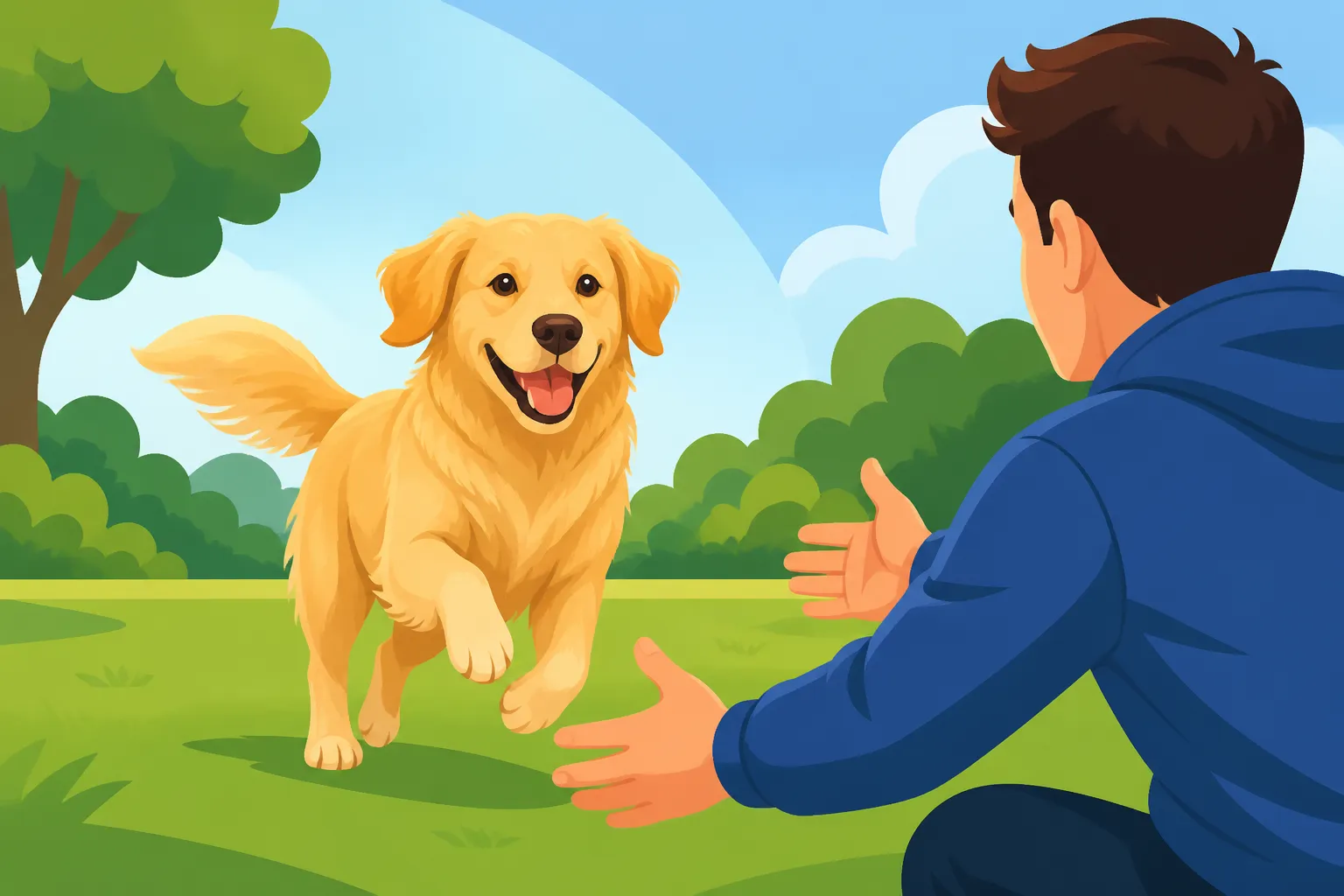
Teaching a Golden Retriever to Come When Called
There are few things more frustrating for a Golden Retriever owner than calling your beloved companion, only to have them ignore you completely, tail wagging as they bound in the opposite direction. It’s a moment that can send a jolt of fear through you, especially if you’re near a busy road or an unexpected hazard. This guide is here to equip you with the strategies, patience, and understanding you need to teach your Golden Retriever a reliable "come when called," turning those moments of panic into confident reunions.
Understanding the "Why" Behind the Recall Challenge
Before we dive into the nuts and bolts of training, it’s really helpful to understand why recall can be such a struggle, especially with a breed as wonderful and, let's be honest, distractible as a Golden Retriever. It’s not that they don’t love you; it’s just that the world is often a more exciting place than your voice in that particular moment.
The Golden Retriever Instinct to Explore
Golden Retrievers were bred to work closely with humans, yes, but they also possess a strong retrieving instinct and an incredible nose. This means their natural inclination is often to follow interesting scents, chase after moving objects (like squirrels or leaves), or investigate new sights and sounds. When your Golden is off-leash in an open space, their senses are on overdrive, processing a myriad of fascinating stimuli. Your call to "come" has to compete with all of that.
Think about it from their perspective. They're tracking a really exciting new smell, perhaps the faint scent of a rabbit that passed by hours ago, or they see another dog bounding towards them, inviting play. In those moments, their primal instincts and social drives can be far more compelling than even the most enthusiastic call from you. It's not defiance; it's just the overwhelming nature of their world, drawing them in. We need to acknowledge this powerful drive and work with it, not against it, in our training.
Why "Come" Becomes Optional for Your Golden
For many dogs, "come" starts as a fun game in the house, but then it quickly loses its luster. Why? Often, it's because owners inadvertently teach their dogs that "come" means the fun is over. Imagine you're at the park, and your Golden is having the time of their life sniffing around. You call "come," and they do, only to be immediately leashed up and taken home. They learn very quickly that "come" equals the end of freedom and adventure.
Another common mistake is only calling them when you absolutely need them to come, usually for something they might not enjoy, like a bath, nail trim, or leaving the dog park. If every "come" leads to something unpleasant or to their beloved playtime ending, they'll naturally start to avoid it. We have to make "come" mean amazing things are about to happen, or at least that the fun doesn't always stop. The goal is for your Golden to think, "Oh, my human called! I wonder what awesome treat or game I'm going to get!"
The Importance of Positive Association with Recall
The foundation of a reliable recall for your Golden Retriever is built entirely on positive association. This means every time you call them and they come, something wonderfully rewarding should happen. This isn't just about treats (though high-value treats are crucial!), it's about making the act of coming to you the most delightful, reinforcing experience possible.
This positive reinforcement creates an emotional connection to the word "come." Instead of dread, your Golden associates it with joy, praise, and rewards. When you start, your rewards should be top-tier: cooked chicken, cheese, hot dogs – whatever your Golden absolutely adores. As they get better, you can vary the rewards, sometimes a quick game of tug, sometimes vigorous petting, sometimes just a few pieces of their regular kibble, but always, always enthusiastic praise. This consistent positivity ensures that, even amidst distractions, the thought of returning to you remains incredibly appealing.
Laying the Foundation: Puppy Recall Basics
Building a strong recall starts the moment you bring your Golden Retriever puppy home. The younger they are, the more receptive they usually are to learning, and the fewer bad habits you'll need to undo later.
The "Party Here!" Game
This is one of the most fun and effective ways to start teaching recall to a young Golden Retriever. The idea is to make coming to you feel like the biggest, most exciting party in the world! Start in a quiet, distraction-free environment, like your living room. Get down on your puppy's level, open your arms wide, and use a cheerful, enthusiastic voice to call their name followed by your chosen recall cue, like "Fido, come!" or "Fido, here!"
As soon as they take even a step towards you, start praising them lavishly. When they reach you, give them a jackpot of high-value treats – several small pieces one after another – and shower them with happy praise and gentle scratches. Don't grab them or immediately put them on a leash. Instead, after they've enjoyed their "party," let them wander off again on their own terms. Repeat this many times throughout the day, randomly, making sure it’s always a positive, un-demanding experience. The goal is to build an irresistible connection between your call and pure joy. When to Start Training a Golden Retriever Puppy offers more insights into early training.
Using a Long Line for Control and Practice
Once your Golden puppy understands the "Party Here!" game indoors, it's time to take it outside, but with a safety net. This is where a long line becomes your best friend. A long line, which can be anywhere from 15 to 30 feet, allows your puppy to explore a bit while still giving you control and the ability to prevent them from practicing ignoring you. You can find excellent options for durable long lines on platforms like Amazon. Attach it to a well-fitting harness (never just a collar, as a sudden stop could injure their neck).
Start in a quiet, fenced area where distractions are minimal. Let your puppy explore the full length of the line. When they're not too distracted, call them with your recall cue. If they hesitate, gently reel them in while continuing to praise. The moment they reach you, it's party time: treats, praise, and perhaps a quick game with a favorite toy. Then, release them to explore again. The key is to make them feel like they're choosing to come to you, even though the long line offers a gentle nudge. This tool is invaluable for practicing recall safely before you trust them off-leash. For a deeper dive, consider Long Line Training for a Golden Retriever.
Introducing the Recall Cue Consistently
Consistency is absolutely vital when teaching your Golden Retriever to come when called. Choose one specific word or phrase as your recall cue and stick to it. "Come" is the classic, but "Here," "Front," or "With me" can also work. What matters most is that everyone in the household uses the exact same cue, in the same cheerful tone, and follows up with the same high-value rewards.
Avoid using their name as the recall cue, e.g., "Fido!" for "come." Their name should be a general attention-getter, not a command. If you say "Fido, come!" and they come, that's great. If you just say "Fido!" and they get used to it meaning "come," then when you actually need their attention for something else, they might ignore "Fido" if no treat is forthcoming. Always pair their name with the command. During these early stages, don't call them if you suspect they won't come, especially if you can't physically retrieve them. Each time they ignore the cue, they're inadvertently practicing ignoring you, which makes the problem harder to fix.
Building a Rock-Solid Recall in Distracting Environments
Once your Golden has a solid recall in a quiet, controlled setting, it's time to systematically introduce distractions. This is where many owners get stuck, but with a gradual approach, you can truly proof your recall.
Gradually Increasing Distractions
The secret to building a strong recall in the real world is to introduce distractions incrementally. Never jump from your quiet backyard to a busy dog park. Instead, create a "ladder of distractions." Start with a very mild distraction: perhaps a family member sitting quietly nearby, or a few toys scattered on the ground but not actively being played with. Once your Golden comes reliably in that setting, move to the next step.
This might mean practicing in a slightly busier part of your yard, then a quiet public park during off-peak hours, then a park with a few people walking by, then eventually a park with other dogs at a distance. Only when your Golden consistently comes with one level of distraction do you move to the next. Always use your long line for safety and control during this process. Each successful recall in the face of a new distraction strengthens their understanding that you are still the source of the best rewards, regardless of what else is happening around them. For tips on managing play, see Golden Retrievers With Other Dogs at the Park.
Practicing in Different Locations
Think about it: a dog might learn that "come" means "run to Mom in the living room," but that doesn't automatically translate to "run to Mom at the beach." To achieve a truly reliable recall, you need to practice in a wide variety of locations. Each new environment presents different smells, sights, and sounds, all of which act as distractions your Golden needs to learn to overcome.
Take your Golden to a new park, a friend's fenced yard, an empty ball field, or even just a different room in your house. The more novel environments you introduce during training, the more generalized their understanding of "come" becomes. Always start with minimal distractions in a new location, even if they're masters of recall in your usual spots. Use your long line, keep sessions short and fun, and always end on a high note. This diversified practice ensures that your Golden learns that "come" isn't tied to a specific place but is a universal command from you.
The Emergency Recall: A Lifesaving Command
While a regular recall should be excellent, it's wise to have an "emergency recall" for truly high-stakes situations. This is a separate, highly distinct cue that you only use when your Golden's safety is at risk – perhaps they're bolting towards a road, a dangerous animal, or a toxic substance. This cue needs to be ingrained as the absolute highest priority, linked to the most incredible rewards possible.
Choose a unique word you don't use often, like "Front!" or "Touch!" or a sharp whistle. This cue should always, always result in a huge jackpot of their absolute favorite, super high-value treats (like freeze-dried liver or cooked meat) and an immediate, enthusiastic "party." Never use this cue casually, or it will lose its potency. Practice it occasionally in low-distraction environments to keep it fresh, but preserve its "emergency" status. When you use it in a real emergency, your Golden should drop everything and rocket back to you, knowing the biggest reward of their life awaits. This is your ultimate safety net. Building Reliable Recall in a Golden Retriever delves deeper into creating this kind of response.
Troubleshooting Common Recall Problems
Even with the best intentions, you might run into bumps on the road to a perfect recall. It's okay! Many Golden owners face similar challenges. The key is to identify the specific issue and adjust your approach.
When Your Golden Is "Deaf" to Your Calls
It’s a classic scenario: you call, and your Golden freezes, perhaps glancing at you for a split second before resuming their important sniffing. Or worse, they pretend they didn't hear you at all, especially when something really interesting has caught their attention. This isn't usually spite; it's often a sign that the reward for coming isn't currently outweighing the reward of the distraction. They've calculated the odds, and the squirrel won.
To fix this, go back to basics. Re-evaluate your reward system: are your treats truly high-value? Are you making enough of a fuss? Make sure your enthusiasm is genuine and over-the-top. More importantly, drastically reduce the level of distraction you're practicing in. If they're ignoring you at the park, go back to your yard. If they ignore you in the yard, go back to the living room. Build up very slowly again, ensuring success at each step. Don't call them if you're not confident they'll come, and always, always use your long line for safety and to prevent them from practicing ignoring you. A training program like the one offered by BAXTER & Bella can also provide structured lessons to help overcome this "selective hearing."
The "Catch Me If You Can" Game
Ah, the infamous "Catch Me If You Can" game. You call your Golden, they come close, maybe even brush your hand, then dart away playfully, clearly enjoying the chase. While it seems cute, it's incredibly frustrating and teaches them that coming isn't the end goal, but rather the start of a fun game of evasion. This often happens because in the past, when they did come, they were immediately grabbed, leashed, or the fun ended.
To break this habit, change the game. When your Golden comes close, instead of grabbing them, reward them lavishly and then release them to play again. Call them multiple times, reward, release. Call them again, reward, release. Make coming to you a positive interruption, not a definitive end. If you absolutely need to leash them, call them, reward them, then attach the leash casually while they’re still enjoying a treat or praise, then immediately give them another treat and release them for a few more minutes of play before actually leaving. This teaches them that the leash isn't always the end, and sometimes, it just means more good things. Golden Retriever Recall Around Other Dogs emphasizes how distractions can make this game more likely.
Addressing Fear or Negative Associations
Sometimes, a Golden Retriever might be reluctant to come not because of distraction or a game, but because they've developed a negative association with the recall cue or the person calling them. This can happen if "come" was used in an angry tone, or if coming resulted in punishment, scolding, or a scary experience (like being startled by something after being called). Rescue Goldens, in particular, might come with past negative experiences that impact their recall.
If you suspect fear or negative association, the first step is to completely reset. Change your recall cue to a brand new word or sound. Then, go back to the very basic "Party Here!" game in a safe, quiet space, using the most irresistible treats imaginable. Your tone must be consistently joyful, inviting, and never angry or frustrated. Work on rebuilding trust and positive associations. If your Golden is showing signs of fear, such as cowering, tail tucked, or avoiding eye contact when called, consider consulting a certified professional dog trainer or a veterinary behaviorist. They can help you create a tailored plan to gently recondition your Golden's response. Choosing a Positive Reinforcement Trainer for a Golden can guide you in finding the right professional.
Advanced Recall Training and Maintenance
Achieving a rock-solid recall isn't a "one and done" deal; it's an ongoing commitment. Just like any skill, if you don't use it, you lose it!
Incorporating Recall into Daily Life
The best way to maintain a strong recall is to weave it seamlessly into your daily routine. Don't just practice recall during specific training sessions; use it throughout the day in low-stakes, low-distraction moments. Call your Golden to you before meals, for a belly rub, to get a toy, or just when they’re relaxing nearby. Each time they come, reward them with a small treat, praise, or affection.
For example, if your Golden is lounging on their bed, call them over, give them a quick pat and a treat, and then tell them "go lie down" or release them to their previous spot. This reinforces that "come" doesn't always mean the fun ends or they'll be trapped. The more you use it positively and randomly, the more automatic and ingrained it becomes. It makes the command part of the fabric of your relationship, rather than just a formal exercise.
Varying Rewards and Reinforcement
While high-value treats are crucial during the initial stages and for proofing recall in distracting environments, you don't want your Golden to become entirely dependent on them. As your Golden’s recall strengthens, begin to vary your rewards. Sometimes it's a piece of chicken, sometimes a favorite squeaky toy, sometimes a vigorous game of tug, sometimes just enthusiastic verbal praise and a good scratch behind the ears.
This unpredictability actually strengthens the behavior, similar to how slot machines work – you never know when the big payout is coming, so you keep playing. Your Golden learns that coming to you is always worth it, because something good will happen, and sometimes it will be truly amazing. Keep the rewards proportional to the difficulty of the recall; a recall in a highly distracting environment still warrants a higher-value reward than a recall from across the living room. Best Treats for Training a Golden Retriever offers ideas for varying your reward arsenal.
Maintaining Recall as Your Golden Ages
As your Golden Retriever transitions from energetic puppy to wise senior, their recall needs will evolve, and so should your training approach. Older Goldens might not have the same speed or hearing, and issues like arthritis can make a quick dash less comfortable. It's crucial to continue practicing recall, adapting to their physical capabilities.
Keep practicing in safe, familiar, low-distraction areas. Use your verbal cue and, if their hearing is diminishing, add a hand signal that they've learned to associate with "come." Be patient if they move a little slower. Your rewards might shift from energetic play to comforting pets and gentle, easy-to-chew treats. Continue to make coming to you a highly positive and comfortable experience. An older Golden might spend more time relaxing, so those spontaneous "come, get a treat!" moments throughout the day become even more important for keeping the behavior sharp and reminding them that coming to you is always a good thing. Caring for a Senior Golden Retriever provides more context on adjusting to an aging dog's needs.
| Training Stage | Environment / Distraction Level | Key Techniques | Reward Type & Value | Safety Equipment |
|---|---|---|---|---|
| Phase 1: Foundation | Quiet, indoors (living room, hallway) | "Party Here!" game, multiple short sessions | High-value, varied (chicken, cheese, liver) | None initially |
| Phase 2: Introduction | Quiet, fenced yard or low-distraction area | Long line practice, consistent cue | High-value, varied | Long line, harness |
| Phase 3: Proofing | Gradually increasing distractions (quiet park, few people, other dogs at distance) | Long line, multiple locations, varied practice | High-value initially, then varying | Long line, harness |
| Phase 4: Emergency | Any environment (introduced in low-stakes first) | Unique, distinct cue, used sparingly | TOP-TIER jackpot (never regular kibble) | Long line for practice |
| Phase 5: Maintenance | Daily life, varied environments | Random calls, varying rewards, short sessions | Mixed (treats, praise, play) | Optional long line for new places |
Disclaimer
This article is for general informational purposes only and does not constitute professional advice. Laws, prices and regulations vary by location and change over time. Consult a qualified professional for guidance on your specific situation.