How Subaortic Stenosis Turns Up on a Golden’s Exam
It’s a moment no Golden Retriever owner wants to experience: your beloved dog is at their routine veterinary check-up, tail wagging, seemingly in perfect health, when suddenly your vet’s expression shifts. They tell you they’ve heard a heart murmur, and mention a condition you might never have heard of – subaortic stenosis. This guide is here to walk you through exactly how subaortic stenosis (SAS) is typically discovered and diagnosed in a Golden Retriever, from that initial vet visit to the advanced diagnostics that provide a clearer picture.
The Initial Clues: What a Vet Hears During a Routine Exam
Often, the first indication of subaortic stenosis in a Golden Retriever is something subtle, picked up during a standard physical examination. Your vet is listening intently, not just for the comforting thump-thump of a healthy heartbeat, but for any unusual sounds that might signal an underlying issue.
Detecting a Heart Murmur
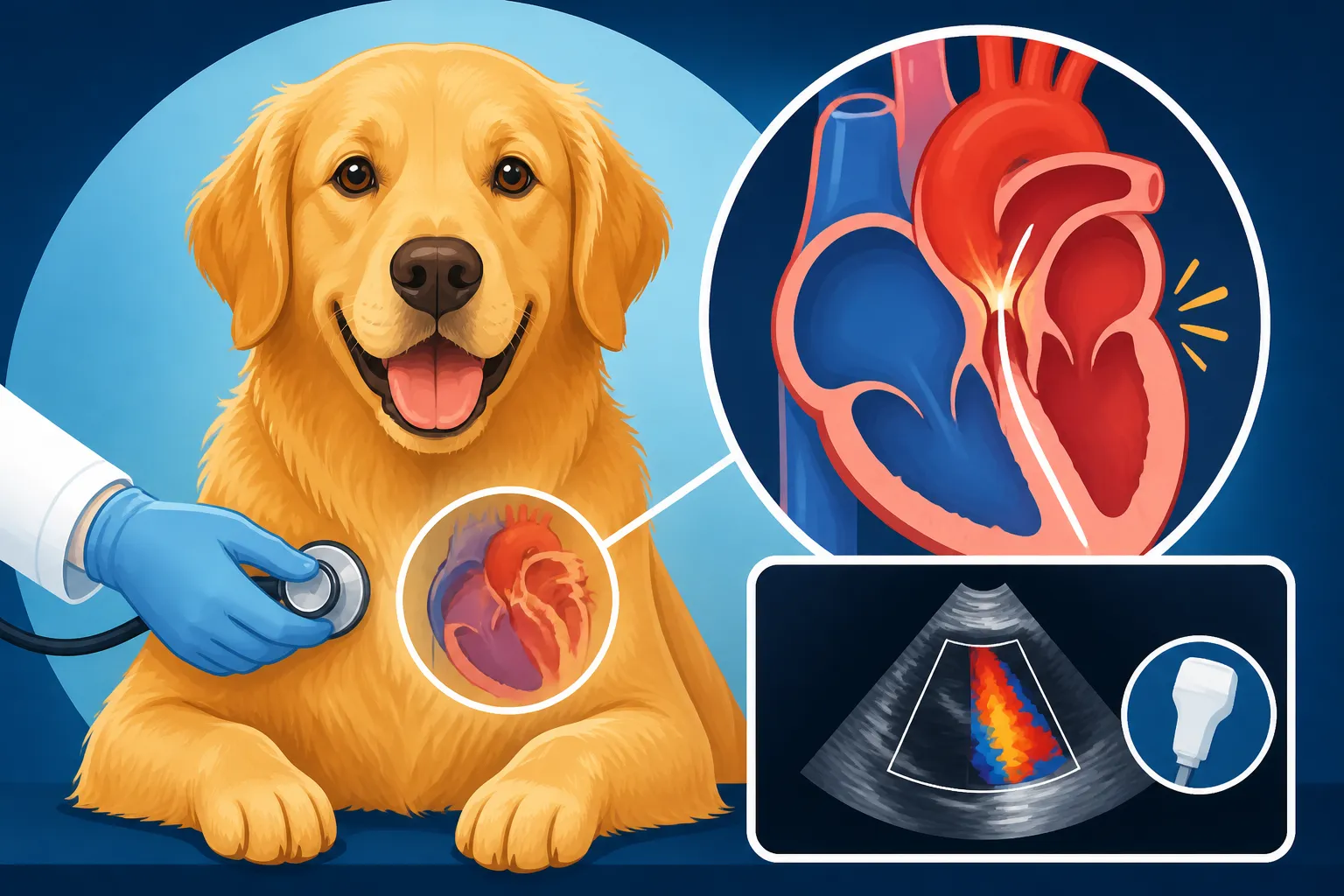
During auscultation – the fancy term for listening with a stethoscope – your vet is checking the rhythm, rate, and sounds of your Golden's heart. A heart murmur is essentially an abnormal whooshing sound, caused by turbulent blood flow. Instead of the blood flowing smoothly, it’s hitting an obstruction or leaking through a valve, creating that extra noise. For Golden Retrievers, a murmur often heard at the left heart base, typically described as a 'systolic ejection murmur,' is a red flag for potential SAS.
It's a common misconception that all murmurs are severe. They're actually graded on a scale from I to VI. A Grade I murmur is very faint and hard to hear, while a Grade VI murmur is so loud it can often be felt by simply placing a hand on the chest. The higher the grade, the more turbulent the blood flow, and generally, the more severe the underlying heart condition. When a Golden Retriever has a murmur, especially one detected in puppyhood or early adolescence, it immediately raises concerns about congenital heart defects like subaortic stenosis. It's a common enough concern that many vets are acutely aware of the breed's predisposition. For more in-depth information, you can read our article on Golden Retriever Heart Murmurs a Vet Hears.
Early Symptoms Owners Might Miss
Sometimes, a heart murmur is the only sign, especially in milder cases of SAS. However, as the condition progresses or if it's severe from the outset, owners might notice subtle changes in their Golden Retriever's behavior or activity levels that, in hindsight, were red flags. These aren't always specific to heart disease, which is why a vet's ear is so crucial. You might see:
- Exercise intolerance: Your usually energetic Golden might tire more quickly on walks or during playtime. They might lag behind, or need more frequent breaks. What used to be a joyful romp could become a struggle.
- Coughing: While often associated with respiratory issues, a persistent cough, especially one that worsens at night or after exercise, can be a sign of fluid buildup in the lungs due to heart failure, a late-stage complication of severe SAS.
- Fainting or collapsing (syncope): This is a more alarming symptom and suggests significant blood flow obstruction. If your Golden experiences this, it’s a critical emergency requiring immediate veterinary attention. This happens when the heart can't pump enough blood to the brain, particularly during periods of excitement or exertion.
- Poor growth or stunted development: In puppies with severe SAS, the strain on their heart can impact their overall development, leading to them being smaller or less robust than their littermates. This is less common but can occur.
These symptoms alone don't confirm SAS, but combined with a detected heart murmur, they certainly strengthen the suspicion and prompt further diagnostic investigation. The cost of such diagnostics can be a worry for many pet parents, but having a good pet insurance plan, such as one from Healthy Paws, can make a huge difference in being able to afford crucial tests.
Deepening the Investigation: Advanced Diagnostics for Subaortic Stenosis
Hearing a heart murmur is the start, but it’s just the tip of the iceberg. To definitively diagnose subaortic stenosis and determine its severity, your veterinarian will recommend advanced cardiac diagnostics. This is where the real detective work begins, often involving a veterinary cardiologist.
The Gold Standard: Echocardiogram
An echocardiogram, often simply called an "echo," is the cornerstone of diagnosing SAS. Think of it as an ultrasound for the heart. This non-invasive procedure uses sound waves to create real-time images of your Golden Retriever's heart structure and function. During an echo, the cardiologist can visualize:
- The aortic valve: This is the critical valve that connects the left ventricle (the main pumping chamber) to the aorta, the body's largest artery. In SAS, there’s an obstruction just below this valve.
- The subvalvular ridge: This is the characteristic lesion of SAS. It’s a ring of fibrous tissue that narrows the outflow tract from the left ventricle, making it harder for blood to pump out into the aorta. The cardiologist can see this ridge and assess its size and shape.
- Blood flow velocity: Using Doppler technology, the echo measures the speed of blood flowing through the narrowed area. The faster the blood accelerates through the obstruction, the more severe the stenosis. This velocity measurement is crucial for grading the severity of SAS.
- Heart chamber size and wall thickness: The echo can also reveal if the left ventricle has thickened (a condition called concentric hypertrophy) due to working harder to pump blood against the obstruction. It also shows if the heart chambers are enlarged, which could indicate early signs of heart failure.
An echo provides an incredible amount of detail, allowing the cardiologist to not only confirm SAS but also to classify its severity – mild, moderate, or severe – based on specific measurements and criteria. This classification is vital for determining prognosis and management strategies. Our article on Subaortic Stenosis in Golden Retrievers delves deeper into the condition itself.
Other Complementary Tests
While the echocardiogram is paramount, other tests might be used to provide a fuller picture of your Golden's overall heart health and to rule out other conditions.
- Electrocardiogram (ECG/EKG): An ECG measures the electrical activity of the heart. While it doesn't directly diagnose SAS, it can detect arrhythmias (irregular heartbeats) that can sometimes occur secondary to SAS, or reveal signs of left ventricular enlargement. It's particularly useful if your Golden has had episodes of fainting or weakness.
- Chest Radiographs (X-rays): Chest X-rays primarily evaluate the size and shape of the heart and lungs. In cases of SAS, they might show subtle signs of an enlarged heart (cardiomegaly) or, in more advanced stages, fluid accumulation in the lungs (pulmonary edema), indicating congestive heart failure. They help assess the overall impact of the heart condition on the chest cavity.
- Blood Pressure Measurement: High blood pressure can put additional strain on an already compromised heart, so checking blood pressure is a routine part of a full cardiac workup.
- Genetic Testing: While not a diagnostic tool for an existing murmur, genetic testing can sometimes identify markers associated with a predisposition to certain heart conditions in Golden Retrievers. This is more often used by responsible breeders as part of Health Clearances a Golden Retriever Breeder Must Show to try and reduce the incidence of such diseases in future generations. It's a proactive measure rather than a diagnostic one for an individual dog with symptoms.
The combination of these tests, particularly the detailed echo, allows the veterinary team to provide an accurate diagnosis and understand the full extent of your Golden Retriever's subaortic stenosis.
Understanding the Implications: What a Subaortic Stenosis Diagnosis Means
Receiving a diagnosis of subaortic stenosis can be incredibly frightening for any Golden Retriever owner. It's a serious condition, but understanding what it means for your specific dog, including potential outcomes and management, can help you navigate the path forward.
Classifying Severity and Prognosis
The severity of SAS is largely determined by the measurements obtained during the echocardiogram, specifically the velocity of blood flow through the narrowed subvalvular region.
- Mild SAS: Goldens with mild SAS might have no clinical signs and a normal lifespan. The murmur may be low grade (I-II/VI), and the obstruction is minimal. These dogs usually require regular monitoring but often don't need medication right away.
- Moderate SAS: Dogs with moderate SAS are at a higher risk of developing clinical signs like exercise intolerance or fainting. Their murmur will likely be louder (III-IV/VI), and the blood flow velocity is significantly increased. They may require medication to manage the condition and slow its progression. Their lifespan might be shortened compared to unaffected Goldens.
- Severe SAS: This is the most concerning form. Goldens with severe SAS often develop clinical signs early in life, including fainting, exercise intolerance, and even sudden death. The murmur is typically very loud (V-VI/VI), and blood flow velocity is extremely high. The heart works incredibly hard to overcome the obstruction, leading to significant thickening of the left ventricle. Sadly, many dogs with severe SAS have a significantly reduced lifespan, often dying suddenly before two or three years of age, or developing congestive heart failure.
It’s important to remember that this prognosis can vary. Your cardiologist will give you the most accurate prediction based on all of your Golden's test results and clinical presentation.
Risks and Potential Complications
Subaortic stenosis places immense strain on your Golden Retriever's heart. The left ventricle has to pump much harder to push blood past the obstruction. This constant overwork leads to several risks:
- Left Ventricular Hypertrophy: The muscle walls of the left ventricle thicken and become less flexible, reducing the heart's efficiency.
- Congestive Heart Failure: Over time, the overworked heart can start to fail, leading to fluid buildup in the lungs (pulmonary edema) or abdomen (ascites). This is a life-threatening condition that requires aggressive management.
- Arrhythmias: The thickened heart muscle can become electrically unstable, leading to irregular heart rhythms that can be dangerous or even fatal.
- Sudden Death: This is one of the most tragic complications of SAS, particularly in severely affected Goldens. It can occur without warning, often due to a fatal arrhythmia or a sudden inability of the heart to pump effectively during exertion. This is why careful management and understanding Exercise Limits for a Golden Retriever With SAS are so crucial.
- Endocarditis: The turbulent blood flow across the narrowed valve creates an environment where bacteria can more easily adhere and cause an infection of the heart lining, known as bacterial endocarditis. This is a rare but serious complication.
Because of these risks, regular monitoring with a veterinary cardiologist is essential for any Golden Retriever diagnosed with SAS. These specialized vets are best equipped to handle these complex conditions, and knowing When a Golden Retriever Needs a Cardiologist is vital for your dog's long-term health.
Living with Subaortic Stenosis: Management and Outlook
While there's no cure for subaortic stenosis, effective management strategies can significantly improve your Golden Retriever's quality of life and, in some cases, extend their lifespan. The goal is always to minimize the heart's workload and prevent or delay the onset of complications.
Medical Management and Lifestyle Adjustments
For most Golden Retrievers with SAS, medical management is the primary course of action. This typically involves:
- Beta-blockers: Medications like atenolol are commonly prescribed. These drugs help to reduce the heart rate and the force of contraction, which lessens the strain on the left ventricle and decreases the turbulence of blood flow. By doing so, they can help prevent the heart muscle from thickening further and reduce the risk of arrhythmias and sudden death. It's a critical component of managing the condition.
- Activity Restriction: This is perhaps one of the hardest adjustments for an energetic Golden Retriever. Depending on the severity of SAS, your vet will recommend specific exercise limitations. For mild cases, it might just mean avoiding extreme exertion. For moderate to severe cases, it could mean no off-leash running, no intense fetch sessions, and carefully monitored, shorter walks. The idea is to prevent the heart from being pushed to its limits, which can trigger dangerous arrhythmias or sudden death.
- Dietary Considerations: While no specific diet cures SAS, maintaining a healthy weight is paramount. Obesity puts extra strain on the heart, exacerbating the condition. A balanced, high-quality diet appropriate for their life stage is important. In later stages, if congestive heart failure develops, a low-sodium diet might be recommended to help manage fluid retention.
- Regular Veterinary Check-ups: Consistent monitoring is absolutely vital. This means frequent visits to your primary vet and regular recheck echocardiograms with a cardiologist, often every 6-12 months, depending on the severity. These check-ups allow your vet to track the progression of the disease, adjust medications as needed, and screen for early signs of complications. This is a prime example of why Why Goldens Need Twice-Yearly Vet Exams is so important, even for seemingly healthy dogs.
Surgical Interventions and Emerging Therapies
While open-heart surgery to remove the subvalvular ridge is possible in specialized centers, it's a highly invasive and costly procedure with its own significant risks. It's not a common treatment for most SAS cases in dogs.
More recently, a procedure called balloon valvuloplasty has shown promise for some forms of SAS. In this procedure, a catheter with a balloon is inserted into the narrowed area and inflated to stretch the obstruction. However, its effectiveness for the specific type of fibrous ring often seen in Golden Retrievers with SAS can be limited, and the obstruction may re-narrow over time. It’s also a specialized procedure performed by only a few veterinary cardiologists.
For the vast majority of Golden Retrievers with SAS, medical management and careful lifestyle adjustments remain the cornerstone of care. Understanding the long-term outlook and being prepared for potential challenges can help you provide the best possible life for your beloved companion. Many owners find peace of mind knowing that financial support for these ongoing vet bills is available through pet insurance plans like Healthy Paws.
| Murmur Grade (I-VI) | Common SAS Severity | Typical Management | Prognosis |
|---|---|---|---|
| I – II | Mild | Monitoring, mild exercise limits | Good, normal lifespan likely |
| III – IV | Moderate | Beta-blockers, moderate exercise limits | Guarded, potentially shortened lifespan |
| V – VI | Severe | Beta-blockers, strict exercise limits, advanced care | Poor, significantly shortened lifespan, sudden death risk |
Living with a Golden Retriever diagnosed with SAS means being vigilant, committed to their care, and providing them with a loving and low-stress environment. For owners with older Goldens, understanding Caring for a Senior Golden Retriever can offer valuable insights into managing age-related health issues alongside SAS. It's a challenging road, but with proper veterinary guidance and your unwavering love, you can ensure your Golden has the happiest life possible.
Disclaimer
The information provided in this article is for educational and informational purposes only and does not constitute veterinary medical advice. Always consult with a qualified veterinarian for any health concerns or before making any decisions about your pet's health or treatment.