Teaching a Golden Retriever to Heel
It can be incredibly frustrating to walk your gorgeous Golden Retriever when they're constantly pulling on the leash, zig-zagging to sniff every blade of grass, or dragging you towards every person and dog they see. You dream of those serene walks you see in movies, where the dog glides effortlessly by your side. This guide is here to walk you through, step by step, how to teach your Golden Retriever the "heel" command, transforming those chaotic outings into enjoyable, controlled strolls you both deserve.
Understanding What "Heel" Really Means for Your Golden Retriever
Before we dive into the nitty-gritty of training, let's get crystal clear on what "heel" actually signifies. It's more than just a vague suggestion to walk nicely; it's a precise command that sets your Golden up for success in a world full of distractions. Many people confuse "loose-leash walking" with "heeling," but while they both involve a dog not pulling, they are distinct skills.
More Than Just Walking Beside You
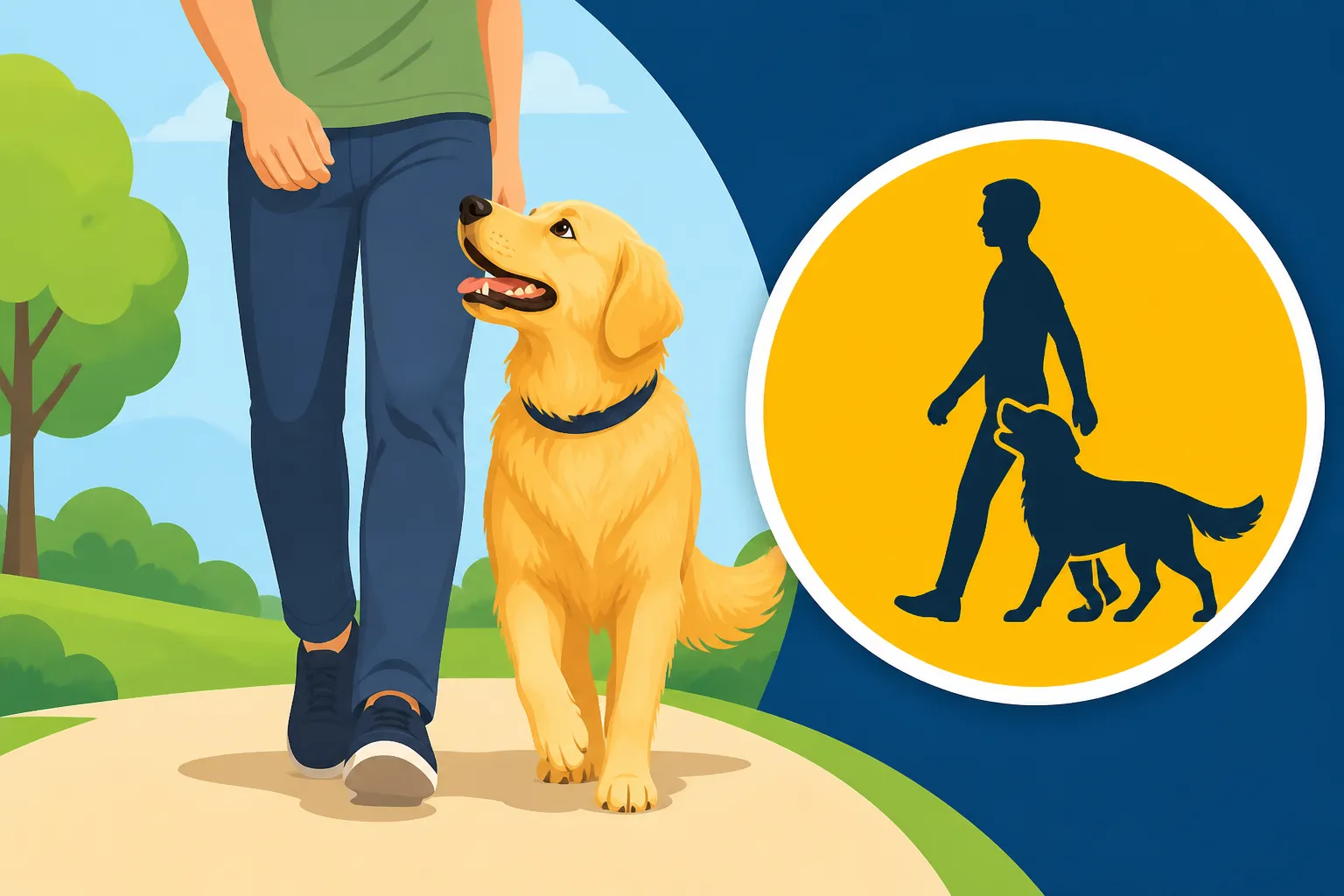
When you teach your Golden Retriever to heel, you're not just asking them to walk anywhere near you. The traditional "heel" position dictates that your dog should be walking immediately by your left side, with their shoulder aligned with your knee. They should be attentive to you, ready for your next direction, and not pulling on the leash in any direction. This is a structured, controlled position, often used in obedience competitions, but incredibly valuable for real-world situations too.
Think of it this way: loose-leash walking is like having a casual conversation with a friend while strolling through a park, where you might drift apart slightly but generally stay together. Heeling, on the other hand, is like being partners in a precise dance routine – you're connected, synchronized, and moving as one unit with a specific purpose. Your Golden's focus should be on you, not the exciting smells or sights around them. It requires their active participation and mental engagement, far beyond merely not yanking your arm off.
It's a precision skill that builds incredible communication between you and your dog. When your Golden understands "heel," they know exactly what you're asking of them: stay close, stay focused, and match my pace. This level of understanding can be a game-changer for navigating busy streets, crowded events, or any situation where you need your Golden to be absolutely reliable and responsive.
The Importance of a Reliable Heel
For a breed as large, strong, and inherently friendly as the Golden Retriever, a reliable heel command isn't just a nice-to-have – it's often a necessity for safety and peace of mind. Goldens are wonderful, social dogs, but their enthusiasm can sometimes get the better of them. A sudden lunge towards another dog, an unexpected sprint after a squirrel, or an over-exuberant greeting can quickly turn a pleasant walk into a challenging or even dangerous situation.
Imagine walking past a busy playground or a street with heavy traffic. With a solid heel, you can confidently guide your Golden through these environments, knowing they'll remain right by your side, attentive to your movements and commands. It prevents them from darting into traffic, getting tangled around a passerby, or accidentally knocking over a small child with their wagging tail. This control is empowering, not just for you, but for your Golden too, as they learn to trust your leadership in navigating the world.
Beyond safety, a reliable heel builds immense confidence in both you and your dog. When you know you can control your Golden, you're more likely to take them to more places and expose them to new experiences, which in turn enriches their life. It also strengthens your bond, as your Golden learns that working closely with you yields positive rewards and a clear understanding of expectations. It's a foundational skill that can make a huge difference in your shared life, paving the way for more advanced obedience training or even therapy dog work.
Essential Tools and Mindset for Heel Training Success
Getting started with heel training requires more than just a leash and a dream. The right equipment can make a significant difference in your success, and cultivating the correct mindset will set both you and your Golden Retriever up for an enjoyable and effective learning experience. It's about setting the stage for positive reinforcement and clear communication.
Choosing the Right Gear for Your Golden
When it comes to gear, you've got options, and what works best often depends on your individual Golden and their current pulling habits. For heel training, you want tools that help you communicate effectively without causing discomfort or fear.
A standard six-foot leash is generally ideal for heel work. It gives your Golden enough room to move naturally while keeping them close for control. Avoid retractable leashes for heel training, as they teach your dog that pulling extends their freedom, which is the opposite of what we want. When choosing collars or harnesses, there are a few types to consider. A flat buckle collar is great for carrying identification tags, but it offers minimal control against a strong Golden's pulling, making it less suitable for actively teaching heel. Martingale collars, which tighten slightly when pulled, can prevent your dog from backing out of their collar and offer a bit more control without choking, making them a good option for some Goldens.
However, for many Golden Retrievers, especially those who are enthusiastic pullers, a front-clip harness can be a game-changer. These harnesses, widely available on platforms like Amazon, have the leash attachment point on your dog's chest. When your Golden pulls, the harness gently redirects them to the side, making it uncomfortable to forge ahead. This physically discourages pulling without causing pain. We've got a whole guide on Front-Clip Versus Back-Clip Harness for a Golden if you want to dive deeper into those. Some owners also find head halters (like a Halti or Gentle Leader) effective, as they give you control over your dog's head, which naturally guides their body. While some dogs initially dislike them, they offer excellent control for strong or easily distracted Goldens.
Beyond the leash and restraint, don't forget the power of positive reinforcement! High-value treats are your secret weapon. These are small, soft, incredibly tasty rewards that your Golden absolutely loves – think bits of cooked chicken, cheese, or specialized training treats. Keep them easily accessible in a treat pouch that clips to your waist; quick delivery is crucial for effective marking. A clicker can also be an invaluable tool. It allows you to precisely mark the exact moment your Golden hits the correct heel position, helping them understand what behavior earned the reward. For more on fueling your training success, check out our guide on Best Treats for Training a Golden Retriever.
Building a Foundation of Focus and Connection
Before you even utter the word "heel," your Golden needs to understand that you are the most interesting thing in their world, even when exciting distractions abound. This foundation of focus and connection is paramount. Think of it as building a strong relationship where your Golden wants to pay attention to you, rather than feeling forced.
Start with engagement exercises in a quiet, distraction-free environment, like your living room. Practice calling your Golden's name and rewarding them instantly when they look at you. Use a happy, encouraging tone. Play simple games like "look at me," where you hold a treat near your eye, wait for eye contact, then mark and reward. This teaches them that focusing on you leads to good things. Lure training is another fantastic way to build this connection. Use a treat to guide your Golden into different positions, rewarding them for following your hand. This gentle guidance helps them understand that your hands and body language are cues for movement.
Remember that Goldens are highly intelligent and eager to please, which works to your advantage. Keep training sessions short, frequent, and positive, especially in the beginning. Five to ten minutes, several times a day, is far more effective than one long, tedious session. End every session on a high note, even if it means doing something super easy that you know your Golden will succeed at. This builds their confidence and keeps them excited for the next training opportunity. Building this strong foundation means that when you eventually introduce the heel command, your Golden is already pre-disposed to paying attention and working cooperatively with you. If you're looking for structured guidance on foundational training, programs like BAXTER & Bella offer comprehensive online support that can be incredibly helpful for new and experienced owners alike. For more on developing vital skills, our article on Building Reliable Recall in a Golden Retriever offers great insights into gaining your dog's attention even from a distance.
Step-by-Step Guide to Teaching the Heel Command
Now that you've got the right gear and a solid foundation of focus, it's time to break down the "heel" command into manageable steps. Remember, patience and positive reinforcement are your best friends here. Don't rush the process; celebrate every small success!
Starting Indoors and in Low-Distraction Areas
The key to successful heel training is to begin in an environment where your Golden Retriever can truly focus on you without being overwhelmed. Your living room or a quiet hallway is the perfect classroom.
- Luring into Position: Start with your Golden on your left side. Hold a high-value treat in your left hand, just at their nose level. Use it as a lure to guide them into the heel position: shoulder aligned with your knee, close to your side. As soon as they are in that perfect spot, mark the behavior with your clicker or a verbal marker like "Yes!" and immediately give them the treat. Repeat this many, many times. The goal here is for them to associate that specific body position with a reward. Don't expect perfection immediately; any attempt at getting into the right spot deserves a reward.
- Adding the "Heel" Cue: Once your Golden is reliably moving into the heel position with the lure, it's time to add the verbal cue. Just as you begin to lure them into position, say "Heel." Then, as they settle into place, mark and reward. The verbal cue should precede the action. Eventually, they will start to connect the word "Heel" with the desired action of getting into position. This is similar to the principles discussed in Marker Training a Golden Retriever With a Clicker.
- Taking the First Steps: When your Golden consistently gets into heel position with the verbal cue, take one small step forward. Keep the treat hand close to their nose as a guide, maintaining their position. If they stay in heel, mark and reward immediately. Gradually increase the number of steps – two steps, then three, and so on. If they break position, stop, reset, and try again. Don't pull or scold; just make it clear that the walk stops when they leave heel.
- Practicing Turns: Walking in a straight line is one thing, but real-world walks involve turns. Practice left turns (your Golden pivots around you), right turns (your Golden steps with you), and about turns (your Golden swings behind you to change direction). Each turn is a small training opportunity. Use your lure to guide them through the turn, mark, and reward when they successfully maintain heel. These are more advanced steps, so take your time and don't introduce them all at once. For other foundational commands, check out First Commands to Teach a Golden Retriever.
Progressing to Outdoor Environments and Distractions
Once your Golden is a pro at heeling indoors, it's time to take the show on the road – but do it gradually! Jumping straight from your quiet living room to a bustling park is a recipe for frustration.
- Controlled Outdoor Spaces: Start in your backyard or a very quiet, fenced-in area with minimal distractions. The familiar smells and sounds of the outdoors will already be more stimulating than indoors. Apply the same techniques you used inside: lure, cue, mark, and reward for maintaining heel over short distances. Keep these initial outdoor sessions brief and highly rewarding. If your Golden is easily overstimulated, consider doing short practice sessions first thing in the morning when the world is quieter.
- Gradual Increase in Distractions: This is where the real "proofing" of the heel command begins. Slowly introduce more distractions. Start with a quiet neighborhood street, then perhaps a park during off-peak hours. Work on heeling when another person walks by at a distance, then when a leashed dog passes far away. Never set your Golden up to fail. If a distraction is too intense, increase the distance or wait until it passes before continuing. The idea is to incrementally challenge their focus while maintaining a high rate of reward for success. This systematic approach helps them learn to generalize the command to different situations. Our article When a Golden Retriever Ignores You Outdoors has more tips on dealing with those tempting outdoor distractions.
- "Magnet Hand" Technique: As you introduce distractions, your treat hand can continue to be a powerful magnet, keeping your Golden's nose close to your side. Gradually, you'll start to fade the lure, so the treat isn't always visible. Instead, you'll still reward frequently, but the treat will come from your pouch after they've performed the heel correctly on your verbal cue alone. This transition is important to ensure your Golden is responding to the command, not just the sight of food.
Troubleshooting Common Heel Training Challenges
Even with the best intentions, you'll likely encounter a few bumps in the road during heel training. It's totally normal! Understanding common challenges and how to address them can save you a lot of frustration.
- Pulling Ahead or Lagging Behind: This is probably the most common issue. If your Golden starts to pull ahead, immediately stop moving. Do not move forward until the leash goes slack and they return to your side. You can use your lure to guide them back into position. When they are back in heel, mark and reward, then start walking again. If they lag behind, gently encourage them forward with your voice or a slight tug on the leash (if using a front-clip harness, this will naturally encourage them to move forward). Again, reward when they catch up. The key here is consistency: the walk only continues when they are in heel position. Using a front-clip harness can be particularly effective for Stopping a Golden Retriever From Pulling on Leash by making it physically uncomfortable for them to forge ahead.
- Sniffing and Distractions: Golden Retrievers love to sniff, and the world is full of fascinating scents! If your Golden's nose hits the ground or they get fixated on something else, stop walking. Use their name to get their attention, and when they look at you, reward them. Then, lure them back into heel position and continue. If the distraction is too strong, you might need to increase the distance from it or move to a less distracting area. Make yourself more interesting than the environment by using exciting treats and praise. Short, focused sessions help, as a Golden Retriever puppy's attention span can be quite short, as detailed in How Long a Golden Retriever Puppy Can Focus.
- Frustration (from dog or owner): If either you or your Golden are getting frustrated, it's time for a break. Training should always be a positive experience. If you find yourself getting irritated, stop the session. Take a deep breath, go grab a cup of coffee, and come back to it later with a fresh perspective. If your Golden seems confused or unwilling to engage, go back to an easier step you know they can succeed at, reinforce that, and end the session on a positive note. Never punish mistakes; simply redirect and reward correct behavior.
Maintaining and Proofing Your Golden's Heel
Teaching the heel command is just the first step; maintaining and "proofing" it in various situations is where the real work, and fun, begins. You want your Golden Retriever to understand that "heel" means the same thing, whether you're in your quiet neighborhood or a bustling city park.
Consistency is Key
The biggest factor in maintaining a reliable heel is consistency. This means everyone who walks your Golden needs to understand and use the command in the same way. If one person allows pulling and another expects a perfect heel, your Golden will quickly become confused and will likely choose the path of least resistance (i.e., pulling!). Establish clear rules for when "heel" is expected versus when they're allowed to have a more relaxed, loose-leash walk for sniffing and exploring.
Don't just practice heel during dedicated training sessions. Incorporate it into your daily routine. Ask for a brief heel when you cross a busy street, when you enter or exit a building, or when you encounter another dog or person you want to pass calmly. These short, real-world applications reinforce the command and show your Golden its practical purpose. It's about building muscle memory and making the correct behavior a default. Remember to always reward, even if it's just with verbal praise and a happy tone, when they nail it in these everyday moments.
Think about the environment your Golden spends most of their time in. If they spend a lot of time indoors, practice brief heel segments inside, navigating around furniture or through doorways. If you live in a busy area, try to expose them to those controlled distractions regularly. The more situations you practice in, the more solid their understanding will become. The more consistently you apply the rules, the faster your Golden will integrate the heel command into their everyday behavior, making your walks together far more enjoyable and stress-free.
Making Heel a Habit for Life
To truly make "heel" a habit for life, you need to continue challenging your Golden and making it a fun, rewarding experience. This isn't just about avoiding bad behavior; it's about celebrating good behavior, even when it's unexpected.
Start by randomly rewarding your Golden when they offer a perfect heel even without a direct command. Did they just naturally fall into step beside you at a light? "Good heel! Yes!" and a treat. This encourages them to offer the behavior proactively. Gradually, increase the duration and distance you expect them to hold the heel position before receiving a reward. Don't fall into the trap of only rewarding after every five steps; vary it! Sometimes it's one step, sometimes it's ten, sometimes it's after navigating a tricky corner. This keeps them guessing and highly engaged, knowing a reward could come at any moment.
Next, continue to proof the behavior in increasingly challenging environments. A quiet park path is different from a bustling downtown sidewalk or a local farmer's market. Introduce new sounds, smells, and sights that might typically break their focus. Always start with short bursts of heel in these new places, setting your Golden up for success. If they struggle, take a step back to an easier environment or increase the value of your treats. This process of proofing ensures that your Golden understands "heel" is a universal command, not just something they do in familiar settings.
Finally, consider enrolling in advanced obedience classes or even exploring dog sports like competitive obedience or rally. These activities build upon a solid heel foundation and can be an incredible way to deepen your bond, challenge your Golden mentally, and keep their skills sharp. Our article on Golden Retriever Obedience Titles and Sports provides a great overview of these opportunities. A well-trained Golden Retriever, who understands and respects the heel command, is a joy to live with and a wonderful ambassador for the breed, making every outing a pleasure.
| Training Aid | Description | Pros | Cons | Best Use for Heel Training |
|---|---|---|---|---|
| Flat Buckle Collar | Standard collar, attaches to leash. | Comfortable, good for ID. | Offers minimal control against pulling. | Identification, very calm dogs, general loose-leash walking. |
| Martingale Collar | Loop design tightens slightly under tension. | Prevents slipping off, more control than flat collar. | Can still allow some pulling if not fitted correctly. | Dogs with narrow heads, moderate pullers, general training. |
| Front-Clip Harness | Leash attaches at the chest, redirects pulling pressure. | Reduces pulling significantly, comfortable. | Can sometimes cause gait changes if poorly fitted. | Excellent for managing pulling, good for puppies and adults. |
| Head Halter | Loops around muzzle and behind ears, like a horse halter. | Offers excellent control, directs head for focus. | Some dogs dislike it initially, can look like a muzzle. | Strong pullers, highly distracted dogs, advanced control. |
| Standard 6-foot Leash | Standard length for walking and training. | Versatile, common. | Can feel short in open spaces, long enough for tangles. | General obedience, heel training with adequate control. |
| Treat Pouch | Worn on waist, easy access to rewards. | Quick reward delivery, keeps hands free. | Can be cumbersome if overfilled. | Essential for positive reinforcement, especially during luring. |
| Clicker | Small device making a distinct "click" sound. | Precise marking of desired behavior. | Requires timing practice for effective use. | Marking exact moments of correct heel position. |
Disclaimer
This article is for general informational purposes only and does not constitute professional advice. Laws, prices and regulations vary by location and change over time. Consult a qualified professional for guidance on your specific situation.