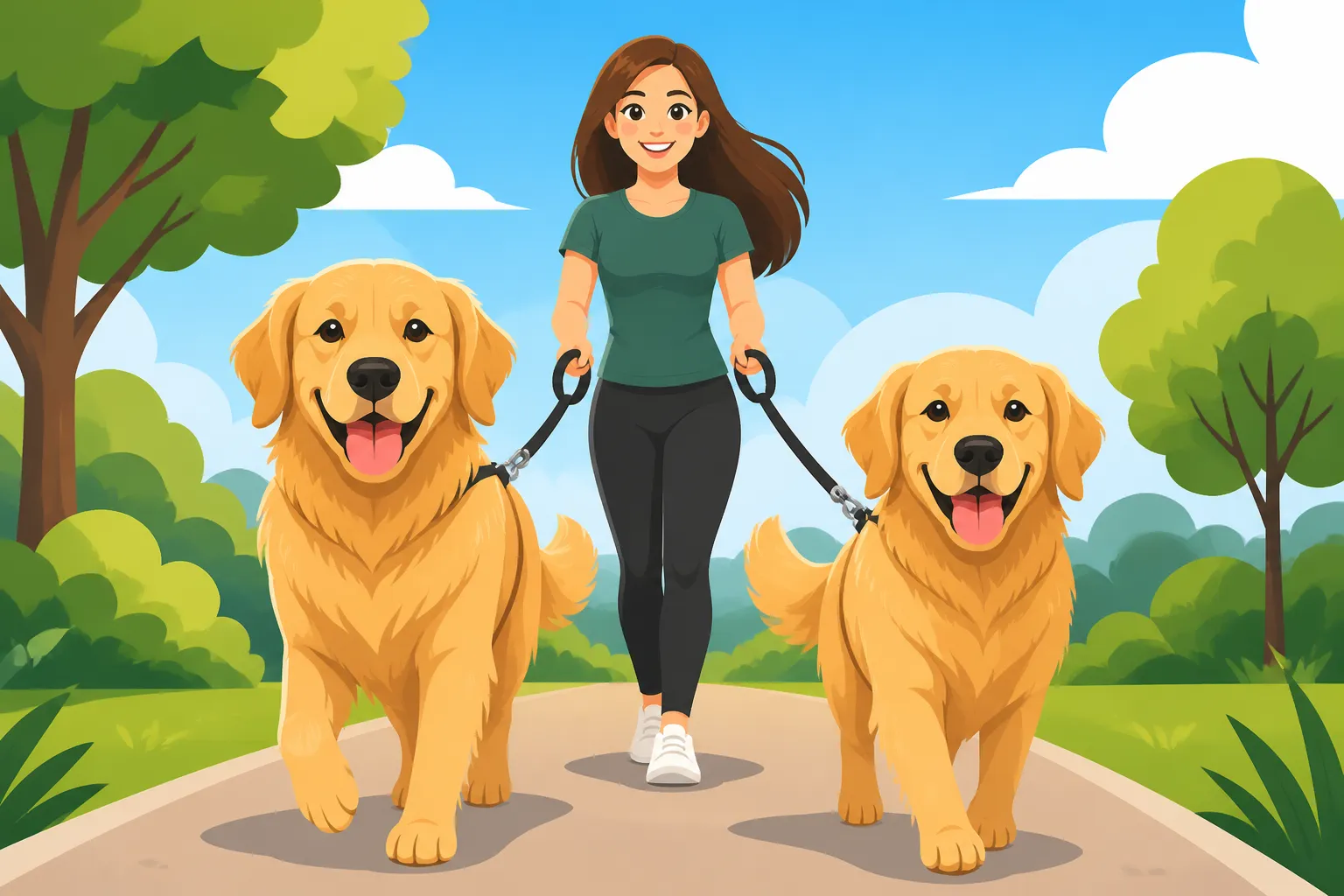
Walking Two Golden Retrievers at Once
Walking one Golden Retriever is often a joyous, sometimes boisterous, experience filled with tail wags and enthusiastic greetings. But the moment you clip leashes onto two Goldens, your serene stroll can quickly transform into a tangled mess of canine enthusiasm, differing sniffing priorities, and sudden lurches. Many of us have felt that familiar pang of dread when two separate squirrels appear, each tempting a furry companion in a different direction. This guide is dedicated to helping you navigate the very real complexities of walking two Golden Retrievers at once, providing practical advice, essential gear recommendations, and training strategies to make your tandem walks enjoyable and stress-free.
Understanding the Unique Challenges of Double-Dog Walking
Let's be honest: walking two Golden Retrievers isn't simply twice the fun; it's often a whole new equation of physics, patience, and dog management. While Goldens are generally biddable and eager to please, their size, strength, and boundless energy mean that coordinating two of them on a walk requires forethought and strategy. It's easy to feel overwhelmed, but recognizing the common hurdles is the first step toward overcoming them.
The Inevitable Tangle of Leashes
One of the most universal frustrations for owners walking two dogs is the dreaded leash tangle. You start out neatly, dogs on either side, and within minutes, they've crossed paths, circled each other, or decided to swap sides mid-stride, resulting in a knotty mess around your legs or between them. This isn't just annoying; it can be a safety hazard, causing you to trip or restricting one dog's movement dangerously if the other pulls hard.
Imagine you're walking down a busy sidewalk, one Golden suddenly decides to investigate a particularly interesting patch of grass, while the other spots a friendly passerby and wants to say hello. Before you know it, their two individual leashes have intertwined, creating a rope bridge around your ankles. Untangling them often requires stopping, bending over, and trying to unthread the chaos, all while holding two eager dogs who might see this pause as an invitation to pull even harder or get into more mischief. This is a battle many of us have fought, and it can quickly drain the joy from an otherwise pleasant walk.
Managing Different Paces and Distractions
Even if your Goldens are from the same litter, they might have entirely different walking styles and interests. One might be a dedicated sniff-hound, wanting to stop every five feet to thoroughly investigate a scent. The other might be a power-walker, eager to cover ground and maintain a brisk pace. This mismatch in walking rhythm creates a constant push-pull scenario, where you're simultaneously trying to encourage one dog to move faster and the other to slow down.
Then there are the distractions. A squirrel scurries up a tree, a jogger passes by, another dog barks from a yard – suddenly, your two well-behaved Goldens become two separate forces of nature, each reacting differently. One might lunge playfully, while the other might let out a series of excited "woofs." Without proper gear and training, these reactions can turn into an unmanageable tug-of-war, leaving you feeling like a human anchor trying to hold back a pair of eager sled dogs. This is especially true if you haven't yet mastered Loose Leash Walking With a Golden Retriever individually.
Dealing with Two Sets of Greetings
Golden Retrievers are renowned for their friendly, outgoing nature. They love people, they love other dogs, and they generally want to say hello to everyone. While this is one of their most endearing qualities, it can make double-dog walks tricky. When you encounter another dog or person, you're not just managing one polite greeting; you're managing two.
One Golden might be a little too enthusiastic, jumping up, while the other remains calm. Or perhaps both decide to launch a full-body greeting at once. If they're both pulling on separate leashes, it can be nearly impossible to keep them from overwhelming the person or dog they're trying to greet. Even if you've worked on Socializing a Golden Retriever Puppy from a young age, managing two excited adolescents can test the limits of your arm strength and patience. This challenge only amplifies in busy areas like dog parks or downtown streets, making structured greetings a must.
Essential Gear for Harmonious Double Walks
Before you even think about advanced training techniques, having the right equipment is paramount. The gear you choose can either amplify your frustrations or significantly ease the burden of walking two strong, enthusiastic Golden Retrievers. It's not about expensive gadgets, but about choosing tools that provide control, prevent tangles, and are comfortable for both you and your dogs.
Dual Leashes and Couplers
Forget trying to juggle two separate leashes in one hand – it's a recipe for disaster. Investing in a solution designed for two dogs is a game-changer. There are primarily two categories here: integrated dual leashes and leash couplers. An integrated dual leash usually has two separate leash lines that merge into a single handle, often with swiveling hardware to minimize twisting. Leash couplers, on the other hand, are short Y-shaped attachments that connect to two dogs' harnesses and then clip onto your existing single leash.
Many owners find success with specialized couplers or double leashes, easily found on platforms like Amazon, that attach to two harnesses and then to a single handle. These tools dramatically reduce tangling around your legs and free up your second hand, which can be invaluable for carrying treats, picking up waste, or simply having a bit more balance. When selecting one, look for durable materials, comfortable handles, and swivel clasps that prevent the lines from twisting. This simple addition can make a world of difference in your daily walks, transforming a chaotic event into something much more manageable.
Harnesses for Control and Comfort
While a flat collar is fine for ID tags, it's generally not the best choice for walking a Golden Retriever, let alone two, especially if they have a tendency to pull. Harnesses distribute pressure across the chest and shoulders, reducing strain on their neck and trachea. For managing pulling, front-clip harnesses are often highly recommended. These harnesses have a leash attachment point on the dog's chest, which redirects them to the side if they pull, naturally discouraging the behavior without causing discomfort.
A good harness not only prevents choking but also gives you more leverage and control over your strong Goldens. When choosing harnesses for two dogs, ensure they are individually fitted correctly, as a poorly fitting harness can chafe or allow a Houdini Golden to escape. Many brands offer durable, comfortable front-clip options. For owners struggling with strong pullers, a front-clip harness, sometimes referred to in discussions about Golden Retriever Pulling and Front-Clip Harnesses, can be a real game-changer. It's a key piece of the puzzle in teaching Leash Manners for a Strong Golden Retriever.
Hands-Free Options for Added Freedom
If you're an active owner who enjoys running, hiking, or simply appreciates having both hands free during walks, a hands-free leash system can be a fantastic solution. These systems typically involve a sturdy belt that you wear around your waist, to which your leash (or a coupler attached to two dogs) is secured. This setup is particularly beneficial when you need to pick up poop, open a gate, or navigate tricky terrain.
However, a hands-free system requires a higher degree of leash training. If your Goldens are prone to sudden lunges or strong pulling, a hands-free leash can throw you off balance or even cause injury. It's best reserved for dogs who have already mastered Loose Leash Walking With a Golden Retriever and don't routinely pull. If your Goldens are still learning, it might be safer to stick with a hand-held system until their leash manners are impeccable. Think of it as an upgrade once you've achieved a good baseline of control and cooperation with your two furry companions.
Here’s a quick comparison of popular gear types for walking two Goldens:
| Gear Type | Description | Pros | Cons | Best For |
|---|---|---|---|---|
| Two Separate Leashes | Each dog has its own leash, held individually. | Max individual control, easy to detach for separate needs. | High risk of tangling, requires two hands, can be overwhelming. | Highly trained dogs, short, low-distraction walks, or if only one walker is available briefly. |
| Leash Coupler/Splitter | Y-shaped attachment connecting two harnesses to one leash. | Reduces tangling, allows single-hand control of both dogs. | Less individual control if one dog pulls much harder, specific length. | Dogs with similar walking paces, minimal reactivity, or owners needing a free hand. |
| Integrated Dual Leash | Single handle with two separate, swiveling leash lines. | Streamlined design, swivels reduce tangles, single hand. | Fixed length, can be bulky, may not offer enough individual control for very strong pullers. | Dogs with good leash manners, for convenience and tangle reduction. |
| Front-Clip Harness | Leash attaches to a ring on the dog's chest. | Redirects pulling, prevents choking, generally comfortable. | Can twist if not fitted well, some dogs dislike chest pressure. | All Goldens, especially those prone to pulling or with neck sensitivity. |
| Hands-Free Leash System | Leash attaches to a belt worn by the walker. | Frees up hands, great for running/hiking, even weight distribution. | Requires excellent leash manners from dogs, can pull walker off balance if dogs lunge. | Well-trained, non-pulling Goldens, active owners. |
Training Strategies for Double-Dog Success
Having the right gear is a solid start, but it won't magically make your Goldens walk perfectly in sync. Consistent, positive reinforcement training is the bedrock of successful double-dog walks. It's about teaching both dogs to respect boundaries, respond to cues, and ideally, enjoy walking calmly side-by-side.
Establish Individual Leash Manners First
Before you even attempt to walk two Goldens together, ensure each dog has rock-solid individual leash manners. Trying to teach two dogs simultaneously to walk nicely on a leash when neither has mastered it alone is an exercise in futility. Work with each Golden separately until they can reliably walk without pulling, respond to "leave it" cues, and maintain focus on you, even amidst minor distractions.
This might mean more individual walks initially, but it pays dividends in the long run. If one Golden is a champion puller, focus on Stopping a Golden Retriever From Pulling on Leash with them first. Once each dog can walk politely on a leash with you alone, the transition to tandem walks will be significantly smoother. Think of it as building two strong individual foundations before constructing a unified structure. Resources like BAXTER & Bella offer detailed online courses that can guide you through these individual training steps, often providing personalized support.
Practice Parallel Walking in Low-Distraction Areas
Once both Goldens have decent individual leash manners, start practicing parallel walking in a very controlled environment. Begin in your backyard or a quiet park during off-peak hours where there are minimal distractions. The goal is to get them comfortable walking side-by-side without crossing, pulling, or getting overly fixated on each other.
Use plenty of high-value treats to reward calm, parallel movement. When one dog starts to drift or pull, gently redirect them and reward them when they return to position. Keep initial sessions short and positive. If you notice signs of stress or over-excitement, end the session on a good note before frustration sets in. This incremental approach helps them build positive associations with walking together and understand your expectations. Remember, Golden Retriever Training Sessions That Are Too Long can be counterproductive, especially when introducing new concepts.
Teach "Wait" and "Heel" Reliably
Two essential commands for double-dog walking are "wait" and "heel." "Wait" is invaluable for pausing at curbs, letting people pass, or allowing you to untangle a minor leash snag without your dogs forging ahead. "Heel" teaches them to walk directly beside you, maintaining a specific position, which is crucial for navigating crowded areas or when you need tighter control.
Practice these commands individually first, then introduce them during your parallel walking sessions. For "wait," practice at your front door, before crossing streets, or before entering a park. For "heel," start with short bursts and gradually increase the duration and distance. Consistency is key here. Every time they respond correctly, reward them generously. This helps solidify their understanding and makes them more reliable partners on your walks. Being able to rely on these cues will make all the difference when you're managing two lively Goldens. Teaching a Golden Retriever to Come When Called is another critical skill for general safety and control, even when on-leash, in case of accidental drops or escapes.
Safety and Troubleshooting on Double-Dog Walks
Even with the best gear and training, life happens. Squirrels will dart, unexpected noises will occur, and your Goldens will occasionally test your patience. Knowing how to react safely and having a few troubleshooting tricks up your sleeve can make all the difference between a minor hiccup and a full-blown chaotic event.
Always Be Aware of Your Surroundings
When walking two dogs, your situational awareness needs to be heightened. You're not just watching for cars; you're scanning for other dogs, children, potential hazards like broken glass, and even interesting smells that might trigger a sudden lunge from one or both of your Goldens. Anticipating potential distractions allows you to intervene before your dogs react.
If you see another dog approaching, for example, you can preemptively move your Goldens to the side of the path, engage them in a "heel" or "watch me" command, and reward them for remaining calm. This proactive approach is far more effective than trying to regain control once they've already become over-stimulated. Pay attention to their body language as well; a sudden stiffening or intense stare might indicate they've spotted something before you have. Managing Golden Retriever Energy Level by Age also plays into this, as younger Goldens often have a lower threshold for distraction.
Implement Emergency Stop Cues
Beyond "wait" and "heel," an "emergency stop" or "anchor" cue can be a lifesaver. This is a command that tells both dogs to immediately stop and sit (or lie down) no matter what's happening around them. It's for those moments when a car backfires, a bicycle whizzes by too close, or a small child suddenly runs towards them. This cue should be practiced diligently in controlled environments and rarely used, reserving it for true emergencies so it retains its power.
To train an emergency stop, choose a distinct word like "freeze!" or "stop!" Practice it by having your dogs on leash, then suddenly giving the cue and immediately rewarding them for stopping, even if it's just for a second. Gradually increase distractions, ensuring they understand that this command means instant halt and focus on you. The goal is for this command to override whatever excitement or distraction they might be experiencing.
Troubleshooting Common Problems
Even seasoned double-dog walkers run into issues. Here are a few common problems and how to approach them:
- Uneven Pulling: If one Golden consistently pulls harder than the other on a coupler, consider walking them on two separate leashes, but still with a single person holding both (one in each hand). This gives you more individual control over each dog's movement and allows you to apply different levels of correction or redirection. Alternatively, ensure the pulling dog has an effective front-clip harness, as discussed in Front-Clip Versus Back-Clip Harness for a Golden, which can help mitigate the force.
- Constant Tangling (despite gear): Sometimes, dogs just love to weave! If a coupler isn't solving the tangling, try reinforcing your "side" or "place" cues more strictly. Practice having them walk on specific sides of you, rewarding heavily for maintaining that position. You can also try a slightly longer coupler to give them more room, or if practical, walk them on separate leashes, one held in each hand.
- Over-Excitement/Reactivity: If your Goldens get overly excited by other dogs or people, your training focus needs to be on desensitization and counter-conditioning. Start at a distance where they notice the trigger but don't react, and reward them for looking at you instead of the distraction. Gradually decrease the distance over many sessions. This is a long process, but crucial for peaceful walks. For more severe cases, professional guidance from a certified dog trainer might be beneficial. If you're looking for training support, services like BAXTER & Bella can offer tailored programs to help with reactivity.
- Differing Energy Levels: If one Golden tires out faster than the other, adjust your walk length to suit the less energetic dog, then give the more energetic one some Mental Enrichment for a Bored Golden Retriever at home, or an additional shorter, solo walk if your schedule allows. Remember, Exercise a Golden Retriever Needs Each Day can vary between individuals, so it's important to tailor activities to each dog.
Disclaimer
This article is for general informational purposes only and does not constitute professional advice. Laws, prices and regulations vary by location and change over time. Consult a qualified professional for guidance on your specific situation.