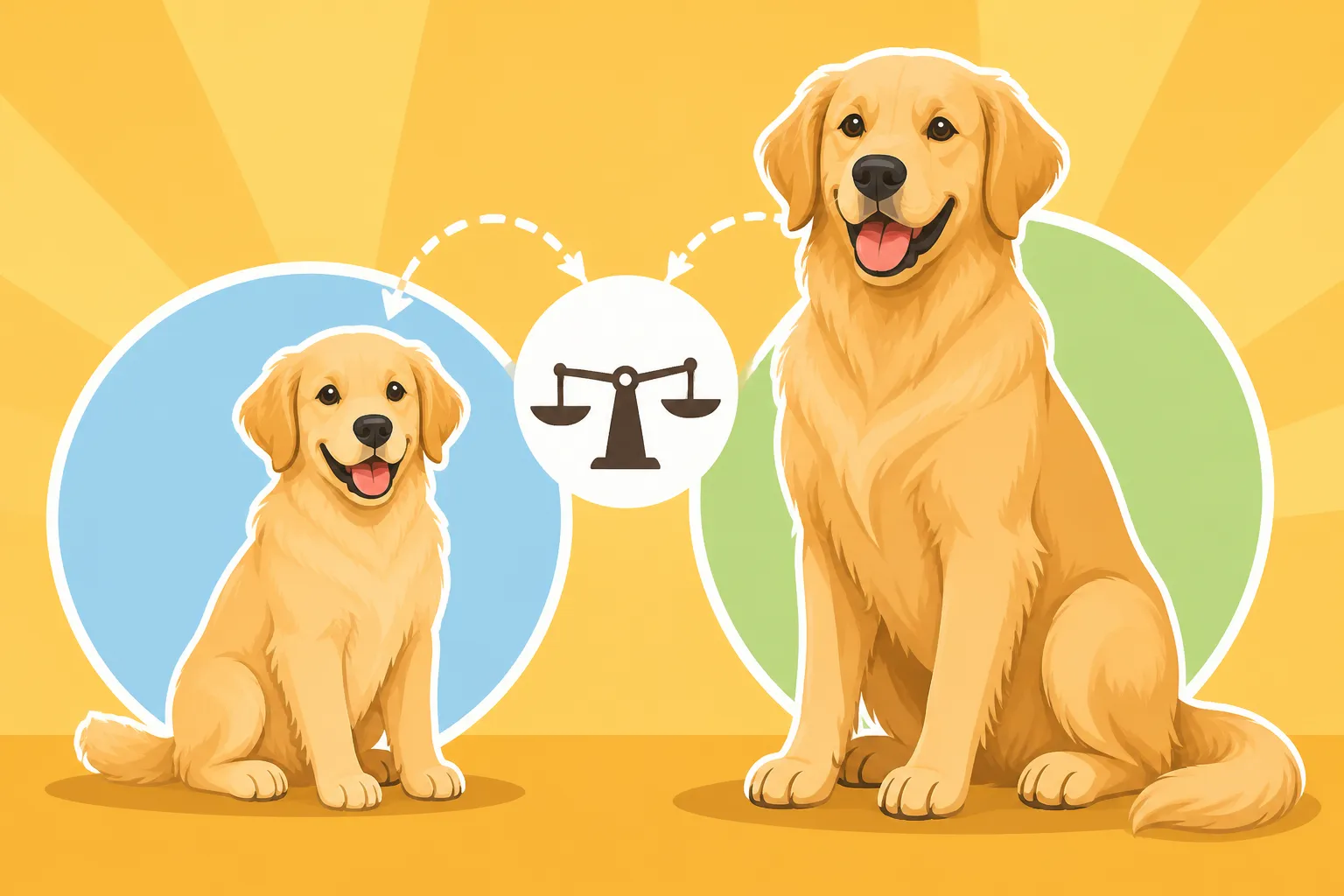
Why Some Golden Retrievers Look Smaller
You’ve probably seen it before: two beautiful Golden Retrievers, both unmistakably Goldens, but one looks notably smaller or more petite than the other. It’s a common observation that can leave owners and admirers alike wondering if there’s a distinct "mini" Golden or if their eyes are playing tricks on them. This guide aims to clear up those curiosities, diving deep into the fascinating reasons behind the size variations you might notice in these beloved dogs, from genetics and breed lines to individual health and maturation.
Unpacking the Natural Range of Golden Retriever Size
It’s easy to assume all Golden Retrievers should look exactly alike in size, but just like people, there’s a natural range of variation within the breed. This isn't about some being "runts" or "giants," but rather the beautiful spectrum that exists, largely influenced by their lineage, sex, and how they mature. When you look at Golden Retriever Size and Adult Proportions, you'll quickly see that the breed standard provides a range, not a single fixed number.
The Impact of Breeding Lines: Field Versus Show
One of the most significant factors influencing a Golden Retriever's size and build is its breeding line. Historically, Golden Retrievers were developed as hunting companions, excelling at retrieving game. Over time, two distinct types or "lines" emerged within the breed, each favored for different traits, and these often come with subtle size and build differences.
Field-bred Goldens, often called "working line" Goldens, are bred primarily for their athleticism, drive, and performance in activities like hunt tests, agility, and obedience. They tend to be leaner, more agile, and often slightly smaller in overall mass and bone structure than their show-bred counterparts. Their coats might be a bit shorter and less dense, and their build is designed for endurance and quick movement in the field. When you see a Golden that looks particularly streamlined and athletic, it’s quite possible you’re looking at a field line dog. These dogs embody the essence of what Goldens were originally bred to do, and their physical traits reflect that purpose. You can learn more about their specific characteristics in Field Line Golden Retriever Traits.
Show-bred Goldens, on the other hand, are bred to conform closely to the official breed standard as judged in conformation shows. This often results in a dog with a heavier bone structure, a broader head, and a more substantial, often lusher coat. While still athletic and capable, their build might appear more robust and powerful compared to the leaner field lines. They often give the impression of being "bigger" or "fuller" due to their musculature and dense coat, even if their height doesn't significantly exceed a field Golden's. These dogs are beautiful examples of the breed's aesthetic ideals. For further reading, check out American Show Line Golden Retriever Traits.
Male Versus Female: Expected Size Differences
Beyond breeding lines, the most obvious natural variation in Golden Retriever size comes down to sex. Just like many animal species, male Golden Retrievers are typically larger and heavier than females. This is a consistent pattern across the breed, regardless of whether they come from field or show lines.
Male Goldens generally stand taller at the shoulder and possess a more muscular, robust frame. They often appear to "fill out" more, developing broader chests and heavier bone structure as they mature. The official breed standard reflects this, allowing for a greater height and weight range for males. You might be interested in reading about the Ideal Height for a Male Golden Retriever to get a clearer picture of their typical stature.
Female Goldens, while still substantial dogs, are usually more refined and feminine in their build. They tend to be a few inches shorter and lighter in weight than their male counterparts. This isn't to say they are delicate; a female Golden is still a strong and capable dog, but her overall frame will typically be less massive than a male's. If you’re seeing a Golden that looks smaller, it very well could be a female, simply exhibiting the natural size difference between the sexes. For specific details on their dimensions, see Ideal Height for a Female Golden Retriever.
Age and Growth: When Do They Stop Growing?
Another crucial factor in a Golden Retriever's size perception is their age and stage of development. Puppies, of course, are small, but even adolescent Goldens can seem smaller or "gangly" before they fully mature. Golden Retrievers are large breed dogs, and their growth plates don't close until they are quite mature, typically between 12 and 18 months of age, sometimes even later for larger males.
During their first year, Golden puppies grow rapidly in height, often looking long-legged and somewhat lean. They might appear smaller than you'd expect a fully grown Golden to be because they haven't yet put on the muscle mass and depth of chest that define an adult. It's often during their second year that they truly "fill out," gaining weight and muscle, and their proportions become more balanced. So, an 18-month-old Golden might still look smaller than a 3-year-old simply because it's still maturing. Understanding When a Golden Retriever Reaches Full Height can give you a better idea of their growth timeline.
This slow maturation is why it's so important for growing Golden Retrievers to have appropriate nutrition and exercise, avoiding activities that put undue stress on their developing joints. Observing a young Golden still in its growth phase can certainly lead to the impression of a "smaller" dog, especially when compared to a fully mature adult.
Understanding the Official Golden Retriever Breed Standard
When we talk about a Golden Retriever's size, the breed standard is our official guide. It provides the ideal range for height and weight, setting the expectations for what a well-bred Golden Retriever should look like. However, it's important to remember that these are guidelines, and not every Golden will fit perfectly within them.
What the AKC Standard Says About Golden Retriever Size
The American Kennel Club (AKC) breed standard for Golden Retrievers specifies a height and weight range for both males and females. These figures are measured at the highest point of the shoulder blades, and dogs outside these ranges might be considered too small or too large in the show ring, but they are still very much Golden Retrievers.
Let's look at the general guidelines:
| Characteristic | Male Golden Retriever | Female Golden Retriever |
|---|---|---|
| Height (at shoulder) | 23-24 inches (58-61 cm) | 21.5-22.5 inches (55-57 cm) |
| Weight | 65-75 pounds (29.5-34 kg) | 55-65 pounds (25-29.5 kg) |
This table clearly illustrates the difference in expected size between males and females. A male at the lower end of the height and weight range might be considered "smaller" compared to a male at the higher end, but both are well within the breed standard. Similarly, a female at the top of her range might still appear smaller than many males.
It's also worth noting that these are just averages and ideals. There will always be healthy, well-adjusted Goldens who fall slightly outside these numbers. What matters most is that the dog is well-proportioned, healthy, and of a sound temperament. For a deeper dive, read What the AKC Standard Says About Golden Retriever Size and Golden Retriever Weight Ranges in the Standard.
Why Perception Can Play Tricks on Our Eyes
Sometimes, a Golden Retriever might seem smaller than others due to optical illusions or factors that influence our perception, rather than actual physical size. It's a bit like how different clothing styles can make a person appear taller or shorter.
For instance, a Golden Retriever with a less dense coat or shorter feathering might appear more compact and streamlined, making them look smaller than a Golden with a thick, flowing double coat, even if their underlying bone structure is very similar. The luxuriant coat of a show-line Golden can add considerable visual bulk.
The setting and comparison also matter. If you always see your Golden next to a very large male Golden, your dog might seem small by comparison. But place them next to a smaller breed, and suddenly your Golden looks quite substantial. Even things like their posture, how they carry themselves, or whether they're wet versus dry can temporarily alter how "big" they appear. A Golden after a swim, with its coat plastered down, often looks significantly smaller than when it's fluffy and dry.
Health and Lifestyle Factors Affecting a Golden's Apparent Size
While genetics, sex, and age are primary drivers of a Golden Retriever's size, certain health and lifestyle factors can also influence their actual size or how large they appear to be. An underweight Golden, for example, will naturally look smaller, and this can sometimes be a sign of an underlying issue.
Underweight Goldens: When Smaller Signals a Problem
If your Golden Retriever looks significantly smaller or very lean, it's important to consider if they might be underweight. An ideal Golden Retriever should have a waist that tucks up slightly when viewed from above, and you should be able to feel their ribs easily without seeing them prominently. If the ribs, hip bones, or vertebrae are clearly visible, your Golden is likely underweight.
Being underweight can stem from several issues:
- Insufficient nutrition: Not eating enough food, or not getting food with adequate calories and nutrients for their activity level.
- High metabolism: Some Goldens naturally have a very fast metabolism and need more food to maintain weight.
- Underlying health conditions: Illnesses like parasites, gastrointestinal issues, thyroid problems (Hypothyroidism in Golden Retrievers), or even certain cancers can cause weight loss despite a good appetite. If you notice sudden or unexplained weight loss, a vet visit is crucial.
- High activity levels: Extremely active Goldens, especially those involved in demanding sports or working roles, might burn more calories than they consume if their diet isn't adjusted accordingly.
An underweight Golden may appear smaller not just because of less body mass, but also because their muscle definition might be reduced, and their frame less filled out. Monitoring your Golden's body condition is vital for their overall health. You can learn more about assessing this through Golden Retriever Body Condition Scoring. If you are concerned your Golden is too skinny, consulting with your vet and reviewing their diet, perhaps on a platform like Chewy, is the first step.
The Role of Nutrition and Exercise in Development
Proper nutrition and appropriate exercise play a monumental role in a Golden Retriever's healthy growth and maintenance of an ideal adult size. These factors influence not only their weight but also their muscle development and overall physique.
Nutrition: During puppyhood, feeding a high-quality large-breed puppy food is essential. These formulas are specifically designed to support slow, steady growth, preventing too rapid development that can stress growing joints. Overfeeding a puppy can lead to excessive weight gain, which can damage their developing skeletal system, while underfeeding can stunt growth. As adults, a balanced diet that provides adequate protein, fats, and carbohydrates is key to maintaining muscle mass and an ideal weight. If a Golden isn't getting enough calories or proper nutrients, they might struggle to reach their genetic potential in terms of size and muscle development, appearing smaller or less robust. Feeding a Golden Retriever Through Every Life Stage provides an excellent guide on this topic. Many reputable brands found on Chewy offer formulas specifically tailored for large breeds.
Exercise: Regular, appropriate exercise helps Goldens develop strong muscles and maintain a healthy body composition. Puppies need plenty of play, but strenuous, forced exercise should be avoided until their growth plates have closed to protect their joints. Adult Goldens thrive on a balance of physical and mental stimulation. Too little exercise can lead to obesity, which makes a dog appear larger than their frame might support, while too much activity without adequate caloric intake can lead to an underweight dog, making them look smaller. It's a fine balance. Learning about Signs a Golden Retriever Is Getting Too Much Exercise can help you adjust their routine.
A Golden Retriever's size is a tapestry woven from many threads: their genetic blueprint, their sex, the specific breeding line they come from, their age, and the care they receive throughout their lives. While you might notice some Goldens looking smaller than others, these variations are usually normal and part of the breed's diverse charm. Whether your Golden is a leaner field line, a more petite female, or simply a young dog still growing into their full potential, as long as they are healthy, well-fed, and loved, they are a perfect example of this wonderful breed. If you have concerns about your Golden's weight or health, always consult with your veterinarian.
Disclaimer
This article is for general informational purposes only and does not constitute professional advice. Laws, prices and regulations vary by location and change over time. Consult a qualified professional for guidance on your specific situation.