What an OFA Fair Rating Means for a Golden Puppy
When you're deeply invested in your Golden Retriever puppy's health, receiving an official orthopedic rating can feel like a high-stakes moment. Many owners breathe a sigh of relief with an "Excellent" or "Good" hip rating, but a "Fair" rating often brings a wave of confusion and worry. Does it mean future problems are inevitable? Will your beloved Golden suffer? This guide aims to demystify what an OFA "Fair" rating truly signifies for your Golden Retriever puppy, helping you understand its implications and how to ensure a healthy, happy life for your companion.
Understanding the OFA Hip Evaluation Process
Before we dive into what "Fair" means, it’s important to understand the Orthopedic Foundation for Animals (OFA) and its critical role in canine health. The OFA is a not-for-profit organization established in 1966 with the goal of promoting the health and welfare of companion animals through the reduction of genetic disease. For Golden Retrievers, hip and elbow dysplasia are significant concerns, and the OFA provides a standardized screening process to evaluate joint health.
Why Hip Evaluations Matter for Golden Retrievers
Golden Retrievers are, unfortunately, predisposed to hip and elbow dysplasia. These are complex genetic conditions where the hip or elbow joint doesn't form correctly, leading to looseness (laxity) that can cause pain, lameness, and debilitating arthritis over time. Breeders committed to improving the health of the breed utilize OFA evaluations to screen their breeding stock, ensuring they are not passing on these conditions. For pet owners, understanding your dog's OFA status, especially if you got them from a responsible breeder, gives you valuable insight into their potential long-term joint health. It's a snapshot, but an important one, that can help guide future care and management. You can learn more about this prevalent issue in our article, Golden Retriever Hip and Elbow Dysplasia Explained.
The OFA Hip Rating System Explained
The OFA's hip evaluation involves taking specific X-rays of your dog's hips, usually around two years of age, though preliminary evaluations can sometimes be done earlier. These radiographs are then reviewed by three independent, board-certified veterinary radiologists who assess seven specific criteria to determine the dog's hip conformation. Based on their consensus, a final rating is assigned.
Here’s a quick overview of the seven hip ratings:
- Excellent: Superior hip conformation, with a tightly fitted joint.
- Good: Well-formed hip joint with good congruence and significant coverage of the femoral head by the acetabulum.
- Fair: Minor irregularities in hip joint conformation. The joint components are still congruent, but there might be slight laxity or minor anatomical variations compared to "Good" or "Excellent" hips.
- Borderline: Not clearly dysplastic nor normal. This rating often leads to a recommendation for re-evaluation in 6-12 months.
- Mild Dysplasia: Evidence of hip dysplasia, usually indicating some laxity and changes associated with early degenerative joint disease.
- Moderate Dysplasia: Significant evidence of hip dysplasia, with noticeable laxity and degenerative joint disease.
- Severe Dysplasia: Marked evidence of hip dysplasia, often with painful arthritic changes, flattening of the femoral head, and shallow acetabulum.
As you can see, "Fair" sits squarely in the middle of the "normal" range. It's not perfect, but it's certainly not dysplastic.
Decoding the "Fair" Rating for Your Golden
When your Golden Retriever puppy receives an OFA "Fair" rating, it can be perplexing. You might have heard breeders striving for "Good" or "Excellent," and "Fair" sounds, well, just okay. But in the context of OFA, "Fair" is still considered a passing grade, denoting functionally normal hips.
What "Fair" Hips Really Look Like
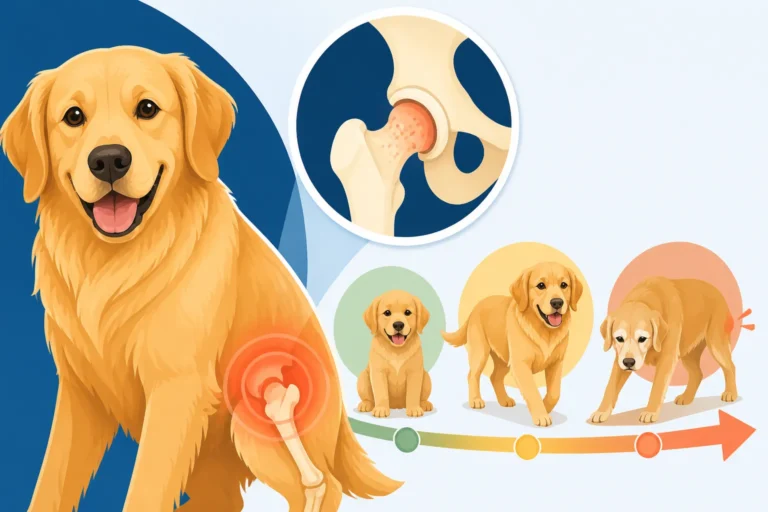
A "Fair" hip conformation means that the joint components (the ball, or femoral head, and the socket, or acetabulum) are congruent, meaning they fit together properly. However, there might be slight subluxation of the femoral head, meaning the ball of the joint is slightly less snugly seated in the socket compared to a "Good" or "Excellent" rating. There might also be minor irregularities or slight evidence of degenerative joint disease, but not enough to classify it as dysplastic. Think of it like a perfectly functional door that might have a slightly larger gap in the frame than a perfectly crafted one – it still closes, opens, and works as it should, just with minor imperfections. These minor imperfections are generally not debilitating for a dog in their daily life.
The Nuance Between "Fair," "Good," and "Excellent"
The difference between "Fair," "Good," and "Excellent" can be incredibly subtle on a radiograph, sometimes visible only to the most experienced eye. It's not a dramatic jump in joint quality but rather a sliding scale within what's considered healthy.
- Excellent hips are textbook perfect, with the femoral head deeply seated in a congruent acetabulum, providing maximum stability.
- Good hips are also well-formed, with slightly less congruence than excellent, but still very stable and healthy.
- Fair hips show those minor irregularities or slight laxity. The joint is still functional and considered normal, but it's not as tightly conformed as "Good" or "Excellent."
It's crucial to remember that all three—Excellent, Good, and Fair—are considered phenotypically normal. This means, based on their observable physical characteristics (the X-ray), the hips appear healthy and functional. The main implications for a breeder are often regarding what they choose to breed, as many aim for "Good" or "Excellent" to continuously improve their lines. For a pet owner, a "Fair" rating means your dog has normal hips, even if not absolutely perfect. It doesn't automatically mean a life of pain or severe arthritis.
Is a Fair Rating Common in Golden Retrievers?
Yes, a "Fair" rating is quite common within the Golden Retriever breed and other large breeds. According to OFA statistics, "Fair" is one of the more frequent passing grades. It speaks to the challenges of breeding for perfect joint conformation in a breed prone to these issues. Many reputable breeders will produce dogs with "Fair" hips and still consider them suitable for pet homes, provided the overall health and temperament are good. The ideal scenario of all "Excellent" hips for every Golden Retriever puppy is unfortunately unrealistic. What matters most is that it's a passing grade, signifying a low likelihood of developing severe, early-onset hip dysplasia.
Living With a Golden Retriever With a Fair OFA Rating
Receiving a "Fair" OFA rating for your Golden Retriever shouldn't be a cause for panic. Instead, it should empower you with information to proactively support your dog's joint health throughout their life. It means you have healthy, functional hips, but a little extra care can go a long way in preventing future issues.
Proactive Care and Management Strategies
Even with normal hips, supporting joint health is paramount for any Golden Retriever. For a dog with a "Fair" rating, it becomes even more important to be mindful of certain lifestyle factors.
- Weight Management: This is perhaps the single most impactful thing you can do. Extra weight puts significant stress on joints, exacerbating any underlying predisposition to arthritis. Keeping your Golden Retriever lean and at a healthy weight is crucial. If you're unsure about your dog's ideal weight, consult your vet or check out our guide on Golden Retriever Ideal Weight by Sex. Even a few extra pounds can have a profound impact on their joints in the long run.
- Appropriate Exercise: While exercise is vital for muscle development and overall health, moderation is key. Avoid high-impact activities that involve excessive jumping, twisting, or hard landings, especially during puppyhood and adolescence when growth plates are still open. Instead, focus on low-impact activities like swimming, walking on soft surfaces, and controlled play. A good routine for an adult Golden Retriever might involve a daily walk of moderate length combined with some mental enrichment. You can read more about Exercise a Golden Retriever Needs Each Day.
- Nutrition: Feed a high-quality large-breed dog food that supports joint health. Some formulations include ingredients like glucosamine and chondroitin, though their efficacy as preventative measures is still debated. Ensure the food is appropriate for their life stage, especially for puppies, to prevent too rapid growth which can stress developing joints. Check out our article on Choosing Dog Food for a Golden Retriever.
- Supplements: Discuss with your veterinarian whether joint supplements, such as glucosamine, chondroitin, or omega-3 fatty acids, would be beneficial for your Golden Retriever. Brands like Healthy Paws often cover costs associated with joint issues, but preventative care is always the best route. While not a cure, these supplements can sometimes help support cartilage health and reduce inflammation, potentially delaying the onset of arthritis.
- Soft Surfaces and Ramps: Provide comfortable, orthopedic beds to cushion joints. Consider using ramps to help your dog get into cars or onto furniture, especially as they age, to avoid high-impact jumps that can strain hips.
Monitoring for Signs of Joint Discomfort
Even with the best preventative care, it's wise to be vigilant for any signs of joint discomfort or pain. Golden Retrievers are stoic and may not always clearly show when they're hurting.
Look for subtle changes like:
- Changes in Gait: A slight limp, stiffness, or an altered way of walking, such as the "bunny hop" when running.
- Reluctance to Move: Hesitation to jump, climb stairs, or engage in activities they once enjoyed.
- Difficulty Rising: Taking longer to get up after resting.
- Lethargy or Behavioral Changes: A general decrease in energy or unusual grumpiness, which can be signs of chronic pain.
- Licking or Chewing: Persistent licking or chewing at a particular joint.
- Muscle Atrophy: Noticeable loss of muscle mass in the hindquarters.
If you observe any of these signs, don't delay in consulting your veterinarian. Early intervention is key to managing joint conditions effectively. You can learn more about the early signs in our article, Signs a Golden Retriever Is in Pain.
Long-Term Outlook for a Golden With Fair Hips
The good news is that many Golden Retrievers with "Fair" OFA hips live long, active, and pain-free lives. A "Fair" rating is not a death sentence for an active lifestyle, nor does it guarantee future issues. It simply means that their joint conformation isn't "perfect," but it is still considered functionally normal.
The proactive management strategies mentioned above, particularly maintaining a healthy weight and appropriate exercise, significantly contribute to a positive long-term outlook. Regular veterinary check-ups, especially twice-yearly visits as they age, allow your vet to monitor joint health and address any emerging issues promptly. Pet insurance plans, such as those offered by Healthy Paws, can be invaluable in covering potential costs associated with arthritis or other joint conditions that might arise later in life, providing peace of mind. By taking a proactive and informed approach, you can help your Golden Retriever with "Fair" hips thrive for many years to come.
Breeding Decisions and the Fair Rating
While this guide focuses on your Golden Retriever puppy's individual health, it's worth briefly touching on the "Fair" rating in the context of breeding, as this is where the OFA categories carry significant weight. For pet owners, understanding breeder decisions helps you choose a responsible source for your puppy.
Breeder Ethics and Using OFA Results
Reputable Golden Retriever breeders invest heavily in health clearances, including OFA hip and elbow evaluations, for their breeding stock. The goal is to produce puppies with the best possible chance of living healthy lives, free from debilitating genetic conditions.
- Strict Guidelines: Most ethical breeders strive to breed only dogs with "Good" or "Excellent" OFA hip ratings. This is a general guideline to consistently improve the breed's health over generations. The Golden Retriever Club of America (GRCA), for example, typically recommends breeding only Goldens with hip ratings of "Good" or "Excellent."
- The "Fair" Dilemma for Breeders: While a "Fair" rating is a passing score and indicates a functionally normal hip, many breeders will think twice about breeding a dog with only "Fair" hips. The concern is that even minor irregularities, when combined with another dog that also has less-than-perfect hips, could increase the likelihood of producing offspring with actual hip dysplasia.
- Consideration of the Full Picture: A responsible breeder might, in rare cases, consider breeding a dog with "Fair" hips if that dog excels in every other aspect (temperament, genetic health clearances for other conditions like heart and eyes, and overall conformation) and is bred to a dog with "Excellent" hips. However, this is a careful decision, often made with genetic counseling and a deep understanding of the dog's pedigree, and it's not the norm. The emphasis is always on producing healthier puppies.
Why Genetic Predisposition Matters
It's crucial to remember that hip dysplasia is polygenic, meaning multiple genes contribute to its development. Environmental factors (like rapid growth from overfeeding, excessive exercise in youth, or improper nutrition) also play a significant role. Even dogs with "Excellent" OFA parents can technically develop hip dysplasia, though the risk is significantly lower. Conversely, a dog with "Fair" hips, if managed correctly, may never show clinical signs of arthritis.
This complexity is why the OFA stresses that while evaluations are a crucial tool for breeders, they are not a perfect guarantee. They are, however, the best tool we currently have to assess the phenotype (physical expression) of hip health. As pet owners, getting a puppy from parents with the best possible health clearances, whether it's OFA, PennHIP, or a combination, gives you the strongest foundation for your Golden Retriever's long-term well-being. Looking into Health Clearances a Golden Retriever Breeder Must Show can help you understand these expectations.
Ultimately, a "Fair" OFA hip rating for your Golden Retriever puppy means you have a dog with normal, functional hips. It's an opportunity to be proactive with their care, ensuring they maintain that joint health throughout their wonderful life.
| OFA Hip Rating | Interpretation | Breeder Implication | Pet Owner Implication |
|---|---|---|---|
| Excellent | Superior hip conformation, minimal laxity, deep socket. | Highly desirable for breeding, indicates strong genetic foundation. | Very low risk of hip dysplasia. Encourage normal activity. |
| Good | Well-formed hips, good congruence, slight laxity, but within normal limits. | Desirable for breeding, common passing grade. | Low risk of hip dysplasia. Encourage normal activity. |
| Fair | Minor irregularities or slight laxity, but joint components are still congruent. Considered functionally normal. | Passing grade, but some breeders may choose not to breed (or carefully select a mate). | Still normal hips. Proactive care (weight, exercise, supplements) recommended to maintain joint health. |
| Borderline | Hips are not clearly normal nor dysplastic. Radiologists are divided. | Usually recommended to re-evaluate after 6-12 months before breeding. | Monitor closely, may indicate increased risk. Re-evaluate if advised by vet. |
| Mild Dysplasia | Early evidence of hip dysplasia, some laxity, minor degenerative changes. | Not recommended for breeding due to clear signs of genetic predisposition. | Likely to develop arthritis. Aggressive management (vet care, supplements, controlled exercise) needed. |
| Moderate Dysplasia | Clear evidence of hip dysplasia, significant laxity, and degenerative changes. | Absolutely not recommended for breeding. | Significant risk of pain and arthritis. Requires comprehensive veterinary management. |
| Severe Dysplasia | Marked hip dysplasia, severe laxity, extensive degenerative joint disease. | Absolutely not recommended for breeding. | High probability of severe pain and lameness. Requires intensive medical and potentially surgical intervention. |
Disclaimer
The information provided in this article is for educational purposes only and is not intended to be a substitute for professional veterinary advice, diagnosis, or treatment. Always seek the advice of your veterinarian or other qualified animal health provider with any questions you may have regarding a medical condition or the health and welfare of your pet.