PennHIP Distraction Index for Golden Retrievers
The worry over your beloved Golden Retriever's joint health can cast a long shadow, especially when you know how prone our wonderful breed is to hip and elbow dysplasia. Many of us have heard the stories, or even experienced the heartbreak, of a Golden slowing down far too soon due to painful arthritis. This guide aims to demystify the PennHIP Distraction Index, a powerful tool that can give you crucial insights into your Golden's hip health, sometimes long before traditional methods can, empowering you to make the best decisions for their future.
What Exactly is the PennHIP Distraction Index?
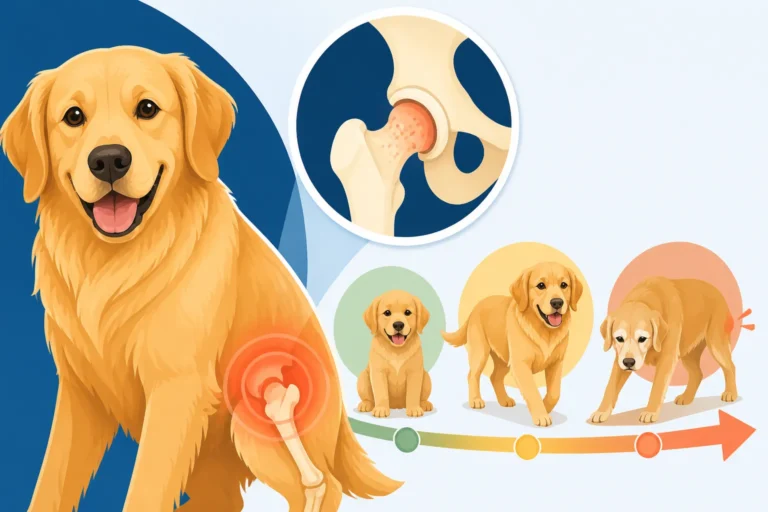
When we talk about hip dysplasia in Golden Retrievers, it’s not just about hips that look "bad" on an X-ray. It’s fundamentally about the laxity or looseness of the hip joint. Imagine a ball (the femoral head) sitting in a socket (the acetabulum). If that ball is too loose in the socket, it can move around excessively, leading to wear and tear over time. This wear and tear eventually causes inflammation, pain, and the degenerative joint disease we know as osteoarthritis, which is the hallmark of hip dysplasia. The PennHIP Distraction Index (DI) is a measurement specifically designed to quantify this hip laxity, providing a far more precise and predictive assessment than conventional X-ray methods.
Understanding Hip Laxity and Dysplasia
Golden Retrievers are undeniably predisposed to hip dysplasia. It's a polygenic trait, meaning multiple genes are involved, making it a complex issue to breed out entirely. However, environmental factors like rapid growth, excessive exercise as a puppy, and nutrition also play significant roles. The core problem, however, remains the inherent looseness of the joint. In a healthy hip, the ball fits snugly into the socket, distributing weight evenly across the joint cartilage. When there's too much laxity, the joint surfaces don't align perfectly, causing abnormal pressure points and friction during movement. This leads to micro-traumas over time, which the body tries to repair, often by laying down new bone – the very bony remodeling that characterizes osteoarthritis. This vicious cycle is why early detection of laxity is so critical. For a deeper understanding of the condition, you might want to read our article on Golden Retriever Hip and Elbow Dysplasia Explained.
How the Distraction Index is Measured
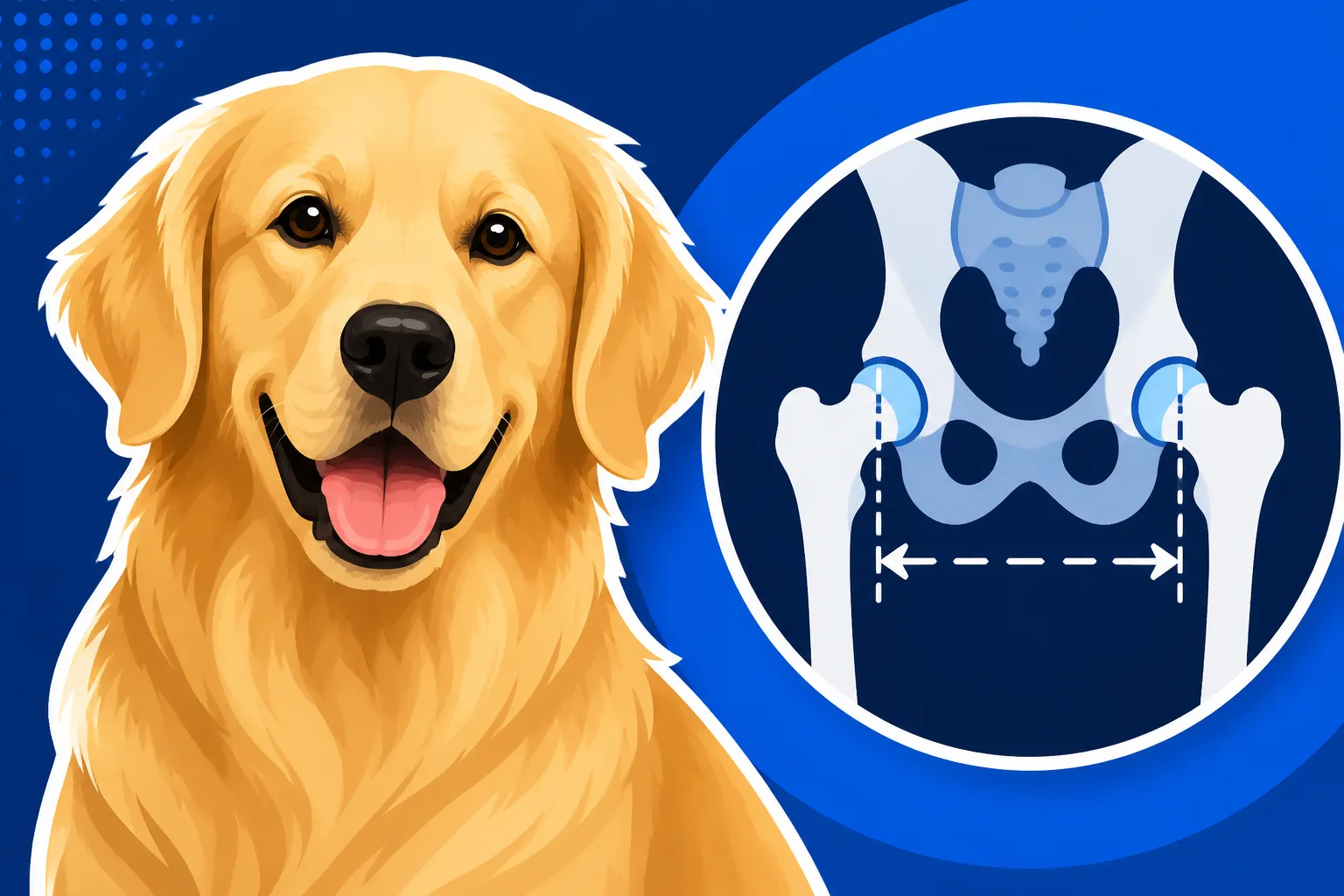
The genius behind the PennHIP method lies in its unique "distraction view" X-ray. Unlike the standard hip-extended view used in traditional screening methods like OFA, where the hips are pulled straight back, the PennHIP distraction view actively distracts the femoral heads (the ball part of the joint) out of the acetabula (the socket). This is achieved by placing a specially designed distractor device between the dog's thighs while a certified veterinarian takes an X-ray. The amount of distraction, measured in millimeters, is then divided by the radius of the femoral head. This ratio is the Distraction Index. A larger DI number indicates greater hip laxity, meaning the ball can move further out of the socket. This direct measurement of passive hip laxity is a much more accurate predictor of which dogs are likely to develop hip dysplasia and associated osteoarthritis later in life.
The Science Behind PennHIP's Accuracy
PennHIP, developed at the University of Pennsylvania School of Veterinary Medicine, is rooted in decades of scientific research. Studies have consistently shown that the Distraction Index is a more sensitive and reliable indicator of a dog's susceptibility to hip dysplasia compared to traditional extended-hip radiographs. This is because the extended view can sometimes mask true hip laxity by artificially pulling the femoral head deeper into the socket. The distraction view, by contrast, stresses the joint in a way that reveals its true inherent looseness. This objective, quantitative measurement allows for earlier and more accurate risk assessment, which is invaluable for both breeders aiming to reduce the incidence of hip dysplasia in their lines and pet owners looking to manage their Golden's joint health proactively.
The PennHIP Procedure: What to Expect for Your Golden
Deciding to get PennHIP screening for your Golden Retriever is a proactive step, and understanding the process can help alleviate any concerns. It's a veterinary procedure that requires specific training and equipment, so it's not something every clinic offers. However, for many Golden owners, the peace of mind and actionable information it provides are well worth the effort.
The Ideal Age for PennHIP Screening
One of the significant advantages of PennHIP over other methods is that it can be performed on puppies as young as 16 weeks (4 months) of age. This is a game-changer for breeders who want to make informed decisions about their breeding stock much earlier, and for pet owners who want to get a head start on preventative care. Traditional methods often recommend waiting until a dog is two years old, which means two years of potential joint damage before you even know the full picture. Getting a PennHIP evaluation for your young Golden puppy means you can begin to tailor their exercise, diet, and even consider early interventions if a higher risk is identified. If you're curious about the difference, our guide on PennHIP Versus OFA for a Golden Retriever offers a detailed comparison.
The Sedation and X-Ray Process
To ensure proper positioning and accurate results, your Golden Retriever will need to be sedated for the PennHIP procedure. This isn't a full general anesthetic, but enough to relax their muscles completely, preventing any tensing that could skew the measurements. Once sedated, a certified PennHIP veterinarian or technician will take three specific X-ray views:
- Distraction View: This is the critical view where the hips are gently distracted to measure the maximum joint laxity.
- Compression View: Here, the femoral heads are pushed firmly into the sockets to measure the maximum joint congruity, essentially how well the joint surfaces fit together.
- Hip-Extended View: This is a standard view, similar to what's used in OFA evaluations, which provides an anatomical assessment of the hip joints.
These three views, taken together, provide a comprehensive picture of your Golden's hip morphology and laxity. The images are then submitted to the PennHIP analysis center, where specially trained radiologists evaluate them and generate a report.
Finding a Certified PennHIP Vet
Because the PennHIP procedure requires specific training, equipment, and a standardized protocol, not all veterinary clinics are certified to perform it. If you're considering PennHIP for your Golden, you'll need to seek out a veterinarian who has undergone the necessary training and certification. The PennHIP website (often maintained by the University of Pennsylvania) usually has a searchable directory of certified veterinarians by location. It's a good idea to call ahead, discuss the procedure, the sedation protocol, and the associated costs. Finding a vet familiar with the process and experienced in working with Golden Retrievers can make the experience smoother for both you and your dog.
Interpreting Your Golden's Distraction Index Score
Once your Golden Retriever's PennHIP radiographs have been analyzed, you'll receive a detailed report that includes the all-important Distraction Index (DI) scores for each hip. Understanding these numbers is key to knowing what steps to take next for your furry family member. Don't worry, it's not as complicated as it might sound!
What the Numbers Mean
The Distraction Index is represented as a number between 0 and 1.
- A DI score closer to 0 indicates very tight hips with minimal laxity. This is the ideal scenario, as tighter hips are less likely to develop hip dysplasia.
- A DI score closer to 1 indicates significant hip laxity. A DI of 1 would mean the femoral head is completely out of the socket.
It's important to remember that this is a continuous scale, not just a pass/fail. The report will typically provide a DI score for both the right and left hip, allowing you to see if there's any asymmetry. For instance, a Golden with a DI of 0.30 would have much tighter hips than one with a DI of 0.70.
Risk Categories for Hip Dysplasia
The DI score is directly correlated with the risk of developing painful osteoarthritis (OA), the long-term consequence of hip dysplasia. PennHIP uses the DI to place dogs into risk categories based on extensive research. While specific thresholds can vary slightly with ongoing research, generally:
| Distraction Index (DI) | Hip Laxity Level | Risk of Developing OA | Typical Actions/Considerations |
|---|---|---|---|
| 0.0 – 0.30 | Extremely Tight | Very Low | Suitable for breeding (if all other health clearances met), minimal preventative care needed beyond general health. |
| 0.31 – 0.49 | Mild Laxity | Low to Moderate | Often suitable for breeding. Consider diligent preventative care, weight management. |
| 0.50 – 0.69 | Moderate Laxity | Moderate to High | Not recommended for breeding. Proactive joint health management, controlled exercise, supplements. |
| 0.70 – 1.00 | Severe Laxity | High | Definitely not for breeding. Aggressive joint health management, potential early intervention strategies, regular veterinary monitoring. |
This table provides a general guideline. Your PennHIP report will always compare your Golden's score to the breed average (more on that next!) and offer specific recommendations. A higher DI doesn't necessarily mean your dog will be crippled, but it signifies a significantly increased risk that demands proactive management.
Comparing Your Golden to the Breed Average
Beyond just the raw DI score, the PennHIP report also includes something incredibly valuable: a percentile ranking for your Golden Retriever compared to other Golden Retrievers in the PennHIP database. This gives you context. For example, your Golden might have a DI of 0.45. On its own, that might seem good. But if the report states that your dog is in the 80th percentile, it means 80% of Golden Retrievers in the database have tighter hips, and only 20% have laxer hips. Conversely, if your dog is in the 10th percentile, it means only 10% of Goldens have tighter hips, and 90% have laxer hips – a very good outcome! This comparative data is exceptionally useful for breeders in selecting suitable breeding pairs and for owners to understand their dog's individual risk within the breed standard. This kind of precise information is why many consider PennHIP a superior assessment for joint health.
Making Decisions Based on PennHIP Results
Receiving your Golden Retriever's PennHIP results can be a moment of clarity, whether it's relief or a call to action. The true power of this early and accurate assessment lies in the ability to make informed decisions that will positively impact your Golden's health and longevity. It's about being proactive rather than reactive.
Guiding Breeding Choices
For responsible Golden Retriever breeders, PennHIP results are an indispensable tool in the fight against hip dysplasia. By accurately assessing the hip laxity of potential breeding dogs, breeders can select individuals with tighter hips (lower DI scores), thereby reducing the likelihood of passing on genes for hip laxity to future generations. The general recommendation is to only breed dogs with DI scores significantly tighter than the breed average, often aiming for the top 10-20th percentile (meaning 80-90% of Goldens have laxer hips). A dog with a moderate to high DI score (e.g., above 0.50 for Goldens) should absolutely not be used for breeding, regardless of how wonderful their temperament or other qualities might be. This responsible approach, combined with other crucial Health Clearances a Golden Retriever Breeder Must Show, is how dedicated breeders strive to improve the health of the breed.
Tailoring Your Golden's Care and Lifestyle
Even if your Golden isn't a breeding dog, a PennHIP assessment provides invaluable information for their individual care. If your Golden has a higher DI score, indicating increased laxity and a higher risk for developing osteoarthritis, you can implement proactive strategies immediately. This might include:
- Controlled Exercise: Avoiding high-impact activities, excessive jumping, or forced strenuous exercise, especially during their growth phases. Swimming is often an excellent low-impact option.
- Weight Management: Keeping your Golden at an ideal, lean body weight is perhaps one of the most impactful things you can do to protect their joints. Every extra pound puts additional stress on loose hips. Our article on Golden Retriever Weight and Joint Damage goes into detail on this.
- Joint Supplements: Incorporating supplements like glucosamine, chondroitin, and omega-3 fatty acids (fish oil) can help support joint health and potentially slow the progression of arthritis. Talk to your vet about the best Joint Supplements for a Golden Retriever.
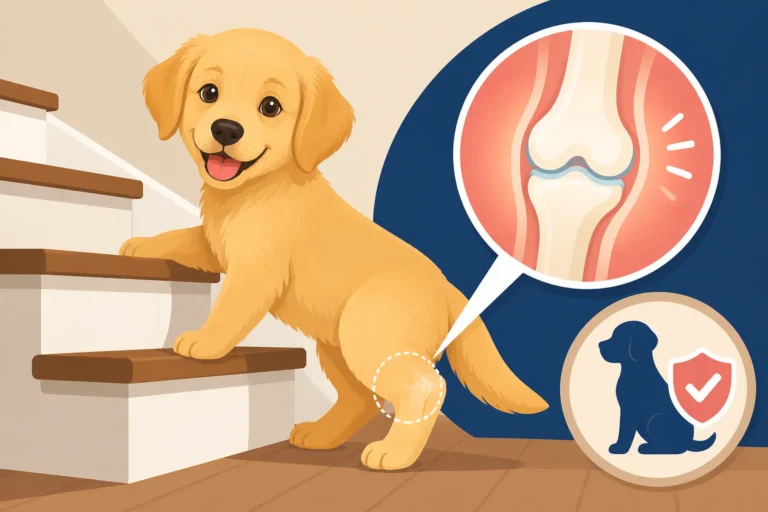
- Supportive Environment: Providing orthopedic beds, using ramps instead of stairs, and ensuring good traction on floors can make a big difference.
Understanding your dog's inherent risk allows you to collaborate with your veterinarian to create a personalized preventative care plan. While it might feel daunting to learn your Golden has a higher DI, early knowledge is truly power when it comes to managing conditions like hip dysplasia. For owners concerned about potential future treatment costs, having pet insurance from providers like Healthy Paws can be a lifesaver, as it can help cover diagnostics, medications, and even surgeries that might arise from joint issues down the line.
Proactive Veterinary Care and Monitoring
A Golden Retriever with a higher DI score benefits significantly from proactive veterinary care and regular monitoring. This means more frequent vet visits, perhaps twice a year, as your dog approaches middle and senior age, even if they aren't showing overt signs of pain. Early signs of arthritis can be subtle and easily missed, but a vet who knows your dog's history of hip laxity will be on high alert. They might recommend:
- Regular physical exams: To assess joint mobility, muscle mass, and pain response.
- Baseline X-rays: To monitor the development of osteoarthritis over time.
- Early pain management: If arthritis starts to develop, non-steroidal anti-inflammatory drugs (NSAIDs), alternative therapies, or Physical Therapy for a Golden Retriever With Bad Hips can be introduced early to maintain comfort and mobility, delaying more severe issues.
Even for Goldens with excellent DI scores, regular vet check-ups are essential for overall health. However, for those with higher scores, this vigilance becomes even more critical. Knowing the PennHIP Distraction Index provides a clear roadmap for providing the best possible care, helping your beloved Golden Retriever live a comfortable, active, and happy life for as long as possible. Many treatments and preventative measures, while effective, can be costly over time, and a robust pet insurance plan like those offered by Healthy Paws can significantly ease the financial burden if extensive care becomes necessary.
Disclaimer
Please remember that the information provided in this guide is for educational purposes only and should not replace professional veterinary advice. Always consult with a qualified veterinarian for any health concerns or before making any decisions about your Golden Retriever's medical care or treatment plan.