Using an Undercoat Rake on a Golden Retriever
If you share your life with a Golden Retriever, you know the pure joy and companionship they bring. You also know the reality of living with a walking fur factory, especially during shedding season. The sheer volume of hair can feel overwhelming, clinging to furniture, clothes, and practically becoming a household accessory. This guide is here to walk you through the proper use of an undercoat rake, a truly essential tool that can dramatically cut down on shedding and keep your Golden's magnificent coat healthy and comfortable.
Understanding Your Golden Retriever's Double Coat
Before we dive into the mechanics of using an undercoat rake, it's really helpful to understand why Goldens shed so much and what exactly that rake is designed to do. Your Golden Retriever isn't just fluffy; they're equipped with a highly functional double coat, a marvel of natural engineering that serves them well in various climates and conditions. Understanding this structure helps us appreciate the tools and techniques needed for proper grooming.
The Purpose of the Undercoat
A Golden Retriever's double coat consists of two distinct layers, each with its own crucial job. The outer layer, known as the guard coat, is made up of longer, water-repellent hairs. This smooth, somewhat coarse topcoat acts like a natural raincoat, protecting your dog from moisture, dirt, and harmful UV rays. It's the layer you typically see and feel first, giving them that classic, lustrous Golden sheen.
Beneath this protective outer layer lies the undercoat. This second layer is dense, soft, and much shorter, composed of fine, woolly hairs. Its primary function is insulation. In cold weather, it traps warm air close to the body, keeping your Golden cozy. In warmer months, it helps regulate body temperature by preventing excessive heat absorption, acting almost like a natural air conditioner when properly maintained and not matted. It's a critical component for their comfort and health.
Why Goldens Shed So Much
Given the dual functionality of their coat, Golden Retrievers shed, and they shed a lot. It's a natural process designed to adapt their insulation to the changing seasons. They typically experience "coat blows" twice a year, usually in spring to shed their heavy winter coat and in fall to prepare for a thicker winter one. During these times, you'll notice a significant increase in loose, dead undercoat coming out. But honestly, Goldens also shed a fair amount year-round, just at a less intense rate.
The dead undercoat needs to be removed because if it's left in place, it can become matted and trap moisture, leading to skin irritation, hot spots, and even infections. Mats also prevent proper air circulation, making your Golden less comfortable in both hot and cold weather. Think of it as wearing a heavy, clumpy sweater that you can't take off – not fun for anyone! Regular grooming, especially with an undercoat rake, is essential to keep this process healthy and manageable, reducing the amount of fur that ends up decorating your home. You'll find more on this in How Much a Golden Retriever Sheds Year Round.
Choosing the Right Undercoat Rake for Your Golden
When it comes to tackling that formidable Golden Retriever fur, not all grooming tools are created equal. Walking into a pet supply store or browsing online can be overwhelming with the sheer variety of brushes, combs, and rakes available. For a Golden's double coat, however, an undercoat rake is a specific and incredibly effective tool that stands out from the rest. The key is knowing which type to choose and what features matter most.
Different Types of Undercoat Rakes
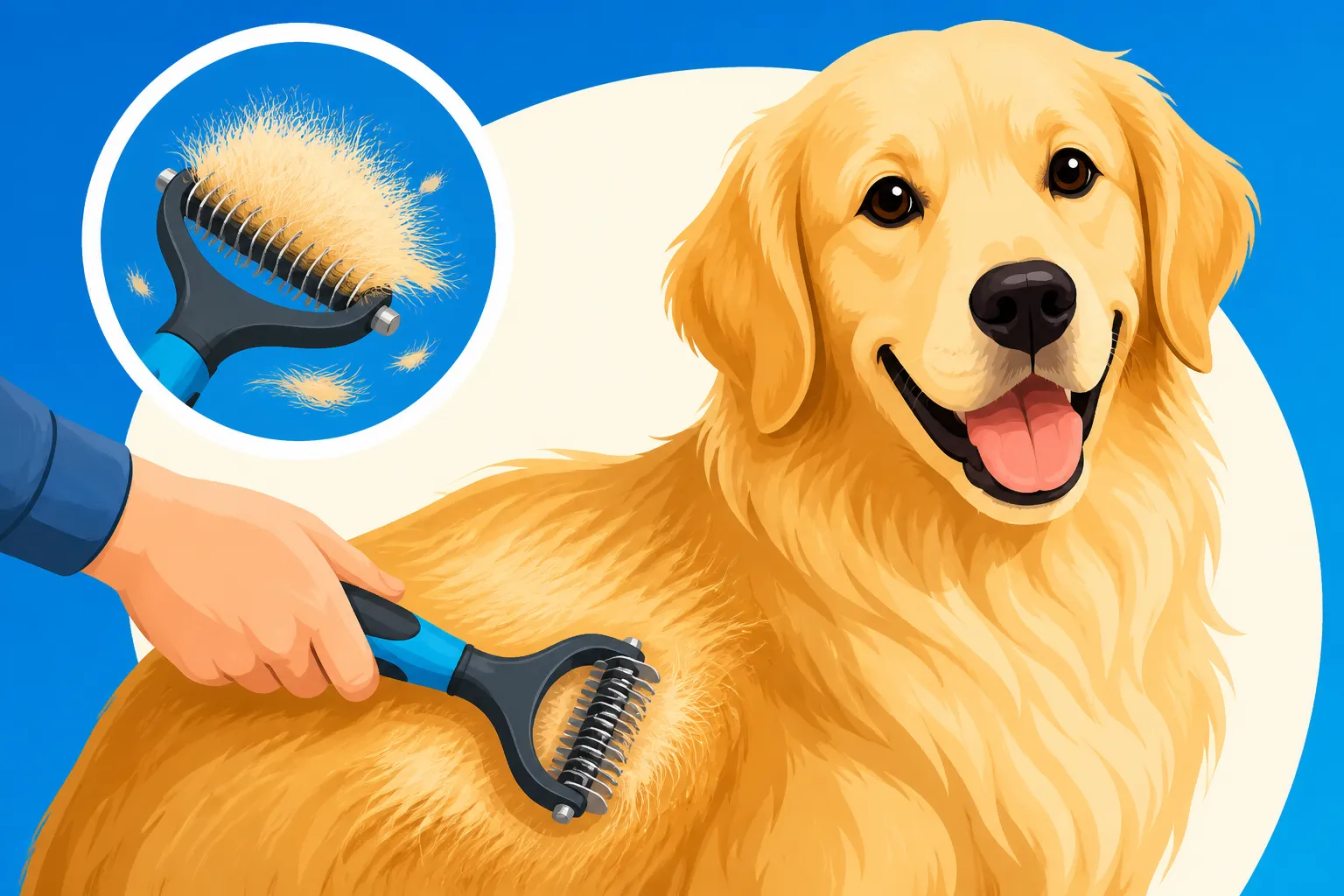
It's important to clarify that an "undercoat rake" generally refers to a tool with a single row of long, rotating, or fixed pins designed to penetrate the topcoat and gently pull out loose undercoat. These pins are usually blunt-ended to avoid scratching the skin. They often look like a small garden rake, hence the name. These are different from deshedding tools like a popular "Furminator" style blade, which some people mistakenly call undercoat rakes. While deshedding blades do remove undercoat, they work by cutting or thinning the undercoat and sometimes the guard hairs, which can damage the coat if used incorrectly or too frequently.
A true undercoat rake, with its widely spaced, blunt pins, is designed to separate and lift the dead, woolly undercoat without cutting the healthy topcoat or irritating the skin. They come in various tooth lengths and spacing. For a Golden Retriever, you'll generally want one with pins long enough to reach through their thick topcoat to the undercoat below. Some have rotating teeth which can be gentler on tangles, while fixed teeth are often more robust for very dense coats. You might also encounter tools specifically marketed as "deshedding combs" or "grooming rakes" that fall into this category. Brands like Andis or Safari often produce good quality undercoat rakes that can be found on sites like Chewy or Amazon.
What to Look for in a Quality Tool
When you're sifting through the options, here's what to keep in mind for your Golden Retriever:
- Pin Length and Spacing: The pins should be long enough to reach through the guard coat to the undercoat. For Goldens, this usually means pins that are at least an inch to an inch and a half long. The spacing between the pins should be wide enough to prevent tugging on the topcoat but close enough to effectively grab the loose undercoat. Too fine, and it won't penetrate; too wide, and it won't pull enough hair.
- Blunt, Rounded Ends: This is paramount for your Golden's comfort and safety. Sharp or pointed pins can scratch and irritate their skin, especially if they have any underlying sensitivities like those seen in Golden Retriever Skin, Ear and Allergy Problems. Always choose a rake with smooth, rounded pin ends. You can test this by running the pins against your own forearm – it should feel dull, not scratchy.
- Comfortable Handle: You'll be spending a fair bit of time grooming, so a comfortable, ergonomic handle is a must. Look for one with a non-slip grip that fits well in your hand to prevent fatigue and ensure better control.
- Durability: Goldens have a lot of hair, and you want a tool that will stand up to repeated use. Metal pins are generally more durable than plastic ones. Read reviews to see how well the tool holds up over time.
- Material: Stainless steel pins are durable and easy to clean. Look for sturdy construction overall.
Remember, the goal is to remove the loose undercoat, not to cut or thin the guard hairs. A good quality undercoat rake, used correctly, will achieve this efficiently and comfortably for your beloved Golden. If you're unsure, ask a professional groomer for their recommendations – they spend their days battling Golden hair and know what works!
Step-by-Step Guide to Using an Undercoat Rake Safely and Effectively
Okay, you've got your trusty undercoat rake in hand, and your Golden is eyeing you with a mixture of curiosity and slight suspicion. Don't worry, with a little patience and the right technique, grooming can become a bonding experience rather than a wrestling match. The key is consistency and making it a positive event for your dog.
Preparing Your Golden for Grooming
Before you even touch your Golden with the rake, a little prep work goes a long way. First, choose a quiet time when both you and your dog are relaxed. If your Golden is high-strung, a long walk or some playtime beforehand can help them settle down. Get your supplies ready: the undercoat rake, a slicker brush, a regular comb, and plenty of high-value treats. You might want to do this outdoors or in an area that's easy to clean, as a lot of hair will come out!
Start with a gentle all-over brushing using a slicker brush or a pin brush. This helps to remove any surface tangles, loose dirt, and gives you an initial feel for their coat. It also serves as a warm-up, getting your Golden used to being handled before the more intense raking begins. Check for any mats or knots in their "feathering" – the longer hair on their legs, tail, and chest. If you find any, gently work them out with a detangling spray and a comb before using the undercoat rake. Trying to rake through a mat will be painful and can damage their skin. Once their topcoat is relatively smooth and free of major tangles, you're ready for the rake. Consider checking Brushing a Golden Retriever's Coat Properly for more tips on initial coat prep.
The Raking Technique
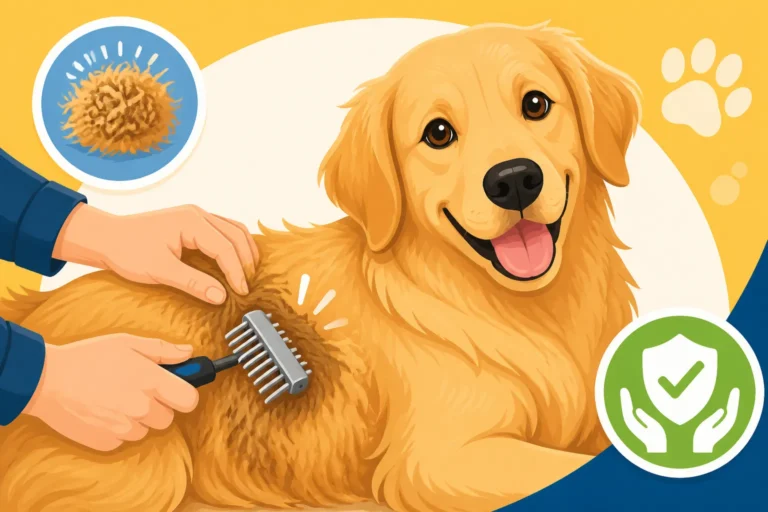
Now for the main event! Position your Golden comfortably, either standing on a non-slip surface or lying down if they prefer. Start in an area where they are least sensitive, like their back or sides. Avoid sensitive spots like the belly, groin, or behind the ears until they are more comfortable. Use short, gentle strokes, moving with the direction of hair growth. Never rake against the grain, as this can be painful and pull on their skin.
The idea is to apply enough pressure to penetrate the topcoat and reach the undercoat, but not so much that you're digging into their skin. Think of it like a gentle massage. After each stroke or two, lift the rake and remove the collected hair. You'll be amazed at how much comes out! Continue working section by section. If you encounter a snag, stop immediately. Don't pull. Gently try to work it out with your fingers or a comb, or move to another area and come back to it. Use plenty of praise and treats throughout the process to keep it a positive experience. You can even break it up into shorter sessions if your Golden gets antsy. Pay special attention to areas like their hindquarters, neck ruff, and behind their ears, where the undercoat can be particularly dense.
Post-Rake Care and Cleanup
Once you've thoroughly raked your Golden's coat and removed as much loose undercoat as possible, give them another quick brush with a slicker or pin brush to smooth down their topcoat and catch any remaining strays. You'll notice their coat looks sleeker, feels softer, and often has a renewed shine because you've removed the dull, dead hair that was obscuring it. This final brush also helps distribute natural oils, promoting a healthy coat.
After grooming, inspect your Golden's skin for any redness or irritation, especially if you're new to using the rake. If you notice any, you might have been pressing too hard or grooming for too long in one spot. A gentle wipe-down with a damp cloth can help remove any remaining loose hairs. Offer your Golden a well-deserved treat and some affection. Clean your undercoat rake thoroughly to ensure it's ready for next time. And now, for the cleanup of your home – you'll likely have quite a pile of Golden floof! A good vacuum cleaner is your friend here. By making this a regular part of your routine, especially during When Golden Retriever Shedding Season Starts, you'll keep both your Golden and your home much happier.
Common Mistakes to Avoid When Using an Undercoat Rake
While an undercoat rake is an incredibly useful tool for Golden Retriever owners, it's not foolproof. Like any grooming tool, it requires proper technique and a good understanding of your dog's coat to be used effectively and, more importantly, safely. Falling into common traps can lead to discomfort for your Golden and even damage to their beautiful coat. Let's make sure you're avoiding these pitfalls.
Too Much Pressure or Force
One of the biggest mistakes novice groomers make is applying too much pressure or trying to yank through tangles with the undercoat rake. Remember, the goal is to gently lift and remove loose undercoat, not to scrape the skin or rip through healthy hair. Golden Retrievers have sensitive skin, and excessive force can cause irritation, redness, and even brush burn. Imagine someone scrubbing your scalp with a stiff brush – it's not pleasant!
If you find yourself having to apply a lot of pressure, it's a sign that either the rake isn't suitable for your Golden's coat type, or there are underlying mats that need to be addressed with a different tool first. Always use short, light strokes, lifting the rake frequently to clear accumulated hair. If your Golden flinches, pulls away, or shows any signs of discomfort, ease up immediately. A positive grooming experience is built on trust and gentleness, not brute force. If you suspect deeper mats, a professional groomer can safely address them without causing pain or unnecessary stress for your dog.
Over-Grooming and Skin Irritation
While regular grooming is essential, it is possible to over-groom with an undercoat rake. Using the rake too frequently or spending too long on one spot can strip away too much healthy undercoat or irritate the skin. The undercoat, even the dead portions, is there for a reason, and removing too much can temporarily compromise your Golden's natural insulation and protection. During coat blows, more frequent raking is appropriate, but outside of these periods, a weekly or bi-weekly session might suffice.
Signs of over-grooming include excessive redness, flaky skin, or if your Golden starts to resist grooming sessions more than usual. The rake should glide through the coat relatively easily once the loose undercoat is removed. If you keep raking and only tiny amounts of hair are coming out, you're likely just irritating the skin. It's about finding that balance – removing the dead, shedding hair without damaging the living coat or causing discomfort. Pay attention to your Golden's cues and the amount of hair coming out of the rake.
Neglecting Other Grooming Needs
An undercoat rake is a fantastic tool, but it's just one piece of the grooming puzzle for a Golden Retriever. Relying solely on the undercoat rake and neglecting other essential grooming tasks is another common mistake. Goldens need a comprehensive grooming routine that includes regular brushing with a slicker brush to prevent mats, especially in their feathering, and to distribute natural oils. You'll find a good all-around guide in Golden Retriever Shedding and How to Manage It.
Their ears need regular cleaning to prevent infections, and their nails require frequent trimming to maintain paw health. Regular bathing with a good quality shampoo, like those available at Chewy, also helps loosen dead hair and keeps their skin and coat healthy. Using a deshedding shampoo during bath time can also aid in the removal of dead undercoat. Even their diet plays a role; high-quality foods, perhaps like those offered by Ollie, contribute to a healthier coat, which in turn can lead to less excessive shedding. Think of grooming as a holistic approach, where the undercoat rake is a specialized tool within a broader care regimen. Neglecting any part of this routine will make the overall task harder and can compromise your Golden's well-being.
| Grooming Tool | Primary Purpose | When to Use | Notes for Golden Retrievers |
|---|---|---|---|
| Undercoat Rake | Removes loose, dead undercoat without cutting topcoat | During shedding season (coat blows), weekly | Essential for dense undercoats, gentle on skin if used correctly. |
| Slicker Brush | Removes surface tangles, loose hair, stimulates skin | Daily to every other day | Great for feathering, good all-around brush. |
| Pin Brush | Gentle detangling, overall brushing, distributes oils | Daily | Good for longer topcoat and general grooming. |
| Wide-Tooth Comb | Works out mats, checks for missed tangles | As needed, after initial brushing | Essential for checking for mats in sensitive areas. |
| Deshedding Blade | Reduces shedding by thinning undercoat | Sparingly, typically every few weeks | Can cut guard hairs if overused, use with caution. |
| Nail Clippers/Grinder | Trims nails to prevent discomfort and splaying | Every 2-4 weeks | Start early, make it positive. |
| Ear Cleaner | Prevents ear infections | Weekly or as needed | Especially important for floppy-eared Goldens. |
Using an undercoat rake properly is truly a game-changer for managing your Golden Retriever's glorious, but shedding, coat. It's not just about reducing hair around your house; it's about contributing to your dog's comfort, skin health, and overall well-being. With the right tool and a gentle, consistent approach, you can keep their double coat functioning beautifully, allowing them to look and feel their best, no matter the season.
Disclaimer
This article is for general informational purposes only and does not constitute professional advice. Laws, prices and regulations vary by location and change over time. Consult a qualified professional for guidance on your specific situation.