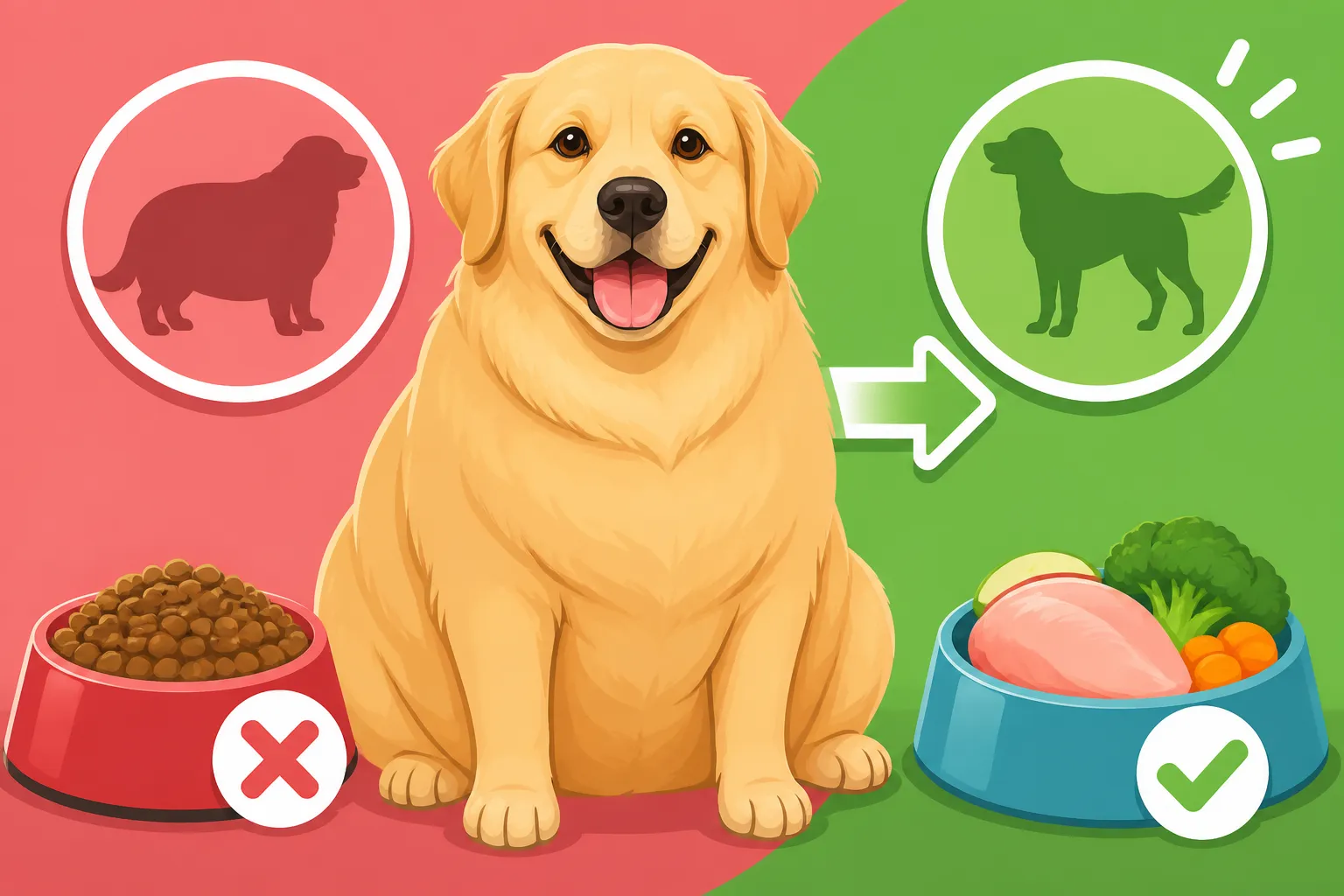
Putting an Overweight Golden Retriever on a Diet
It's tough to admit your beloved Golden Retriever has packed on a few too many pounds, isn't it? As pet parents, we often show our love with extra treats or a generous scoop of kibble, and before we know it, that lean, athletic build has become a little, well, rounder. This guide will walk you through understanding why your Golden might be overweight, how to assess their current condition, and practical, safe steps to get them back to a healthy weight, all while validating the real struggles we face in keeping our furry friends fit.
Recognizing the Weight Problem: More Than Just a "Chubby" Golden
That extra cushion might seem endearing, but it’s a silent threat to your Golden Retriever’s health and longevity. It's easy to dismiss it as "just a little fluff," especially with their thick coats, but the reality is that excess weight contributes to a host of serious issues. Recognizing the problem isn't about shaming ourselves or our dogs, but about giving them the best chance at a long, happy, and pain-free life.
The Subtle Signs Your Golden Is Overweight
Sometimes, the signs are so gradual we barely notice them. Your Golden might still be happy, still wagging their tail, making it harder to see the creeping weight gain. One of the first physical indicators is the loss of that distinctive Golden Retriever "tuck-up" or waist when viewed from above. Instead of a clear indentation between their ribs and hips, their body might look more like a straight line or even bulge outwards. You might also notice their back looks broader, and it becomes much harder to feel their ribs without pressing firmly. A healthy Golden's ribs should be easily palpable, much like feeling the back of your hand.
Beyond the visual cues, there are often behavioral changes that signal a weight issue. Has your typically energetic Golden started slowing down on walks? Are they less enthusiastic about a game of fetch, or do they tire more quickly? Maybe they struggle to jump into the car or onto the couch with the same agility they once had. Heavy breathing after minimal exertion, even in mild weather, can also be a red flag. These aren't necessarily signs of old age; they can be direct consequences of carrying extra weight, which puts immense strain on their heart, lungs, and joints.
Left unchecked, these subtle signs can escalate into more serious health complications. Overweight Golden Retrievers are at a significantly higher risk for developing conditions like Golden Retriever Arthritis and Joint Decline, diabetes, heart disease, certain types of cancer, and even breathing problems. It really is a slippery slope. We want to spoil them, of course, but true spoiling means ensuring they are as healthy as possible, not inadvertently shortening their happy years with us. It’s a hard truth, but an important one to face for their well-being.
Why Goldens Are Prone to Packing on Pounds
It's not just your imagination; Golden Retrievers do seem to have a knack for gaining weight. Part of it is their inherent nature: Goldens are notoriously food-motivated, enthusiastic eaters, and incredibly adept at charming us into giving them "just one more treat." They're people-pleasers, and that often translates to being very good at soliciting snacks. Their friendly, outgoing personalities mean they're often the first to greet visitors, hoping for a dropped crumb or an offered tidbit. This natural love for food, coupled with their often slightly less intense exercise needs compared to some other working breeds, can create a perfect storm for weight gain.
Another significant factor, particularly for many family Goldens, is their lifestyle. Most aren't out retrieving waterfowl all day, which means their calorie intake often far exceeds their daily energy expenditure. The average Golden thrives on consistent, moderate exercise, but if walks become shorter, playtime dwindles, or they spend more time lounging, those unburned calories quickly add up. Furthermore, many owners overlook the impact of spaying and neutering on metabolism. It's a well-known fact that Why a Neutered Golden Retriever Gains Weight can be a real concern, as their metabolic rate often drops post-surgery, requiring a careful re-evaluation of their diet and exercise routine.
Then there are our own habits, which we often don't even realize are contributing to the problem. Guilt feeding—giving treats because we feel bad leaving them alone, or because they look so sad when we're eating—is a common culprit. Sharing human food, even seemingly harmless bits, can add a huge amount of hidden calories and fat. And let's be honest, how many of us actually measure out our dog's kibble with precision every single time? A generous scoop here, an extra handful there, and suddenly you've added hundreds of calories to their daily intake without even realizing it. Understanding these contributing factors is the first step toward making sustainable changes. After all, we're all just trying our best to love them!
Assessing Your Golden's Current Condition and Ideal Weight
Before you embark on any weight loss journey, it's absolutely crucial to get a clear picture of where your Golden stands right now. This isn't just about stepping on a scale; it's about a holistic assessment that involves visual inspection, tactile examination, and a frank discussion with your veterinarian. This initial assessment will form the baseline for your Golden's diet plan.
The Body Condition Score (BCS) Explained
The Body Condition Score (BCS) is a standardized tool veterinarians use to assess a pet's fat reserves. It's much more reliable than just looking at a number on a scale because it accounts for individual variations in size and build. Most BCS systems use a 5-point or 9-point scale, with a score of 3/5 or 4-5/9 being ideal. This score is determined by both looking at your dog and feeling their body. You're essentially evaluating how easily you can feel their ribs, spine, and hip bones, and observing their waistline and abdominal tuck.
A healthy Golden Retriever, scoring a 4 or 5 out of 9, should have ribs that are easily felt without excessive pressure, much like running your hand over the knuckles of your loosely clenched fist. When you look down at them from above, they should have a discernible waist, and from the side, a nice abdominal tuck where their belly rises up towards their hind legs. There should be a minimal fat layer, and their bones should not be protruding sharply, nor should they be buried under a thick layer of fat. Learning to do Feeling a Golden Retriever's Ribs the Right Way is a practical skill for any Golden owner.
On the other hand, an overweight Golden will typically score 6-9 out of 9. At a 6, their ribs might be difficult to feel without firm pressure, and their waistline is less distinct. By the time they reach 7, their ribs are covered by a thick fat layer, the waist is absent or barely visible, and there's a noticeable broadening of their back. At a score of 8 or 9, their ribs are virtually impossible to feel, there's a heavy fat covering over their spine and tail base, and their belly often sags. This heavy fat layer can make them appear 'blocky' rather than streamlined. Performing this check regularly is vital, as it allows you to catch weight gain early before it becomes a major problem.
Here's a simplified look at the BCS scale:
| BCS Score (out of 9) | Description | Appearance/Feel |
|---|---|---|
| 1-3 | Underweight | Ribs, spine, hip bones easily visible/palpable with no fat. Severe abdominal tuck. |
| 4-5 | Ideal Weight | Ribs easily palpable with minimal fat. Visible waist from above, abdominal tuck from side. |
| 6-7 | Overweight | Ribs difficult to feel with moderate fat. Minimal to no waist. Abdominal tuck starting to disappear. |
| 8-9 | Obese | Ribs not palpable under heavy fat. No waist, broad back. Prominent abdominal distension. Heavy fat deposits over back and tail base. |
Calculating Their Ideal Healthy Weight
Determining your Golden's ideal healthy weight is less about picking an arbitrary number and more about understanding what's healthy for their individual build and frame. The breed standard gives us a general range for Golden Retriever Ideal Weight by Sex, typically around 65-75 pounds for males and 55-65 pounds for females, but this is just a guideline. A taller, more athletic field-line Golden might naturally be at the lower end, while a stockier show-line Golden might be at the higher end, all while being perfectly healthy.
The best way to calculate your Golden's ideal weight is in consultation with your veterinarian. They can use the BCS, along with their knowledge of your dog's history and breed characteristics, to pinpoint a realistic target weight. Often, they might suggest aiming for a 10-20% reduction from their current weight as a starting point, with the ultimate goal being a healthy BCS of 4 or 5. If your Golden is currently 80 pounds and scoring a 7/9, your vet might suggest an ideal weight closer to 65-70 pounds, which represents a significant but achievable reduction.
Once you have that target in mind, the key is to aim for gradual, sustainable weight loss. A safe and healthy rate for dogs is generally considered to be about 1-2% of their total body weight per week. Trying to achieve rapid weight loss can be detrimental to their health and is rarely sustainable. For example, if your Golden needs to lose 15 pounds, it might take 3-4 months to reach that goal safely. This isn't a race; it's a marathon to improve their overall quality of life. Patience, consistency, and regular check-ins with your vet will be your best allies on this journey. How Fast a Golden Retriever Should Lose Weight isn't about speed, but about steady progress.
Crafting a Safe and Effective Diet Plan
Once you've assessed your Golden's weight and have a target in mind, it's time to create a diet plan. This is where most of the heavy lifting happens, but remember, small, consistent changes are far more effective than drastic, short-lived efforts. This isn't just about cutting calories; it's about making smarter choices about what and how much your Golden eats.
Adjusting Their Current Food Intake
The single most critical step in putting an overweight Golden Retriever on a diet is accurate portion control. No more guessing! Eyeballing portions, even if you think you're pretty good at it, almost always leads to overfeeding. You'd be surprised how much difference just a quarter-cup of kibble can make over the course of a week or a month. Start by using a dedicated measuring cup for every single meal, or even better, invest in a digital kitchen scale to measure their food by weight. This is the gold standard for accuracy and eliminates variations that can occur with volume measurements.
To determine how much to feed, your vet will likely recommend a starting point of reducing their current intake by 10-20%. So, if your Golden currently eats 3 cups of food per day, you might reduce it to 2.5 or 2.75 cups. It's essential to check the calorie count on your specific dog food bag, as "cups" can vary wildly in caloric density between brands. Most bags provide a feeding guide based on ideal weight, but for weight loss, you'll want to follow your vet's specific recommendations, which will likely be slightly below the maintenance calories for their ideal weight, not their current overweight state.
Consistency is absolutely paramount. Ensure every member of the household is on board with the new feeding regimen and understands the exact portion sizes. Posting a feeding schedule and amounts on the fridge can be helpful. Also, consider splitting their daily food allowance into two or even three smaller meals. This can help keep them feeling fuller throughout the day and prevent them from feeling excessively hungry between meals, which can lead to begging or looking for scraps. These small, consistent changes build into significant progress over time.
Choosing the Right Food for Weight Loss
Sometimes, simply reducing portions of their current food might not be enough, or your Golden might feel perpetually hungry. This is when switching to a "light," "weight management," or "low-calorie" formula can be beneficial. These foods are specifically designed to have fewer calories per serving while still providing all the necessary nutrients. They often achieve this by increasing fiber content, which helps dogs feel fuller, and sometimes increasing protein to help maintain muscle mass during weight loss. Many excellent brands offer such formulas, and you can explore a wide variety on platforms like Chewy to find one that suits your Golden's preferences and your budget.
When you're looking at different food options, don't just go by the marketing claims. Instead, turn to the back of the bag and focus on the guaranteed analysis and the calorie count per cup or per kilogram (often listed as metabolizable energy or ME kcal/kg). A lower ME per serving is what you're truly after. You might find that some "diet" foods aren't significantly lower in calories than a regular food, so reading labels carefully is key.
For more significant weight loss needs, your veterinarian might recommend a prescription weight loss diet. These diets are formulated with very specific nutrient profiles to safely and effectively reduce weight, often with higher fiber and protein levels to maximize satiety and muscle retention while strictly controlling calories. Brands like Hills Prescription Diet or Royal Canin Veterinary Diet have highly effective options. If you're also considering fresh food options, companies like Ollie offer pre-portioned, human-grade meals that can be custom-formulated for weight loss, often providing a lower-calorie, nutrient-dense alternative, but again, portion control is paramount. Always consult your vet before making a major food switch, especially to a prescription diet or a dramatically different feeding style.
Smart Snacking and Treat Strategies
This is often the trickiest part for us Golden Retriever parents, isn't it? Those puppy-dog eyes are incredibly effective. But treats, while seemingly small, are often silent calorie bombs that can quickly derail a diet. A single dental chew or a handful of commercial dog biscuits can contain as many calories as a significant portion of their meal. It's time to rethink treats entirely.
Instead of calorie-dense commercial treats, pivot to healthy, low-calorie alternatives. Many fruits and vegetables are perfectly safe and much healthier for your Golden. Small pieces of carrots, green beans, broccoli, cucumber, or apple slices (without seeds) make fantastic, crunchy, satisfying treats. Just be sure to always check Fruits and Vegetables Safe for Golden Retrievers to avoid anything toxic. These can be used for training, for stuffing into puzzle toys, or simply as a reward for good behavior. They offer bulk and crunch without the excessive calories.
Another excellent strategy is to use a portion of their daily kibble allowance as training treats throughout the day. This way, you're not adding extra calories, but merely redistributing their existing food. Invest in a good training treat pouch (you can find many convenient options on Amazon) to keep kibble readily accessible during walks or training sessions. Remember the 10% rule: treats should never make up more than 10% of your Golden's total daily caloric intake. For a dog on a weight loss journey, aim for even less, prioritizing nutrient-dense whole foods and their regular meal portions. This takes discipline, but your Golden will thank you with improved health and vitality.
Boosting Activity Without Overdoing It
Diet is paramount, but exercise plays a vital supporting role in weight loss and overall well-being. For an overweight Golden Retriever, exercise isn't just about burning calories; it's about building muscle, improving joint health, boosting mood, and preventing further health complications. However, it's crucial to approach exercise cautiously, especially if your Golden is carrying a lot of extra weight.
Incorporating Gentle, Consistent Exercise
If your Golden is currently quite overweight, jumping straight into long runs or intense fetch sessions could be detrimental, especially to their joints, which are already under strain. The key is to start slow and build up gradually. Begin with gentle, consistent walks. Even 10-15 minutes, two or three times a day, is a great starting point if they're currently sedentary. Focus on a comfortable pace for them, not for you. Monitor them for signs of fatigue, heavy panting, or discomfort, and stop if necessary. Exercising a Golden Retriever With Bad Hips requires particular care, so always consult your vet for tailored advice if your dog has existing joint issues.
As their stamina and weight improve, you can slowly increase the duration and intensity of their walks. Aim to eventually reach the recommended How Long a Golden Retriever Should Walk Daily for a healthy adult Golden, which is typically 60 minutes or more per day, often split into two walks. Beyond walking, consider other low-impact activities. Swimming is an excellent full-body workout that puts minimal stress on joints; many Goldens absolutely adore the water. Even gentle games of fetch in a soft, grassy area can be beneficial, keeping sessions short initially and extending them as their fitness improves.
Consistency is truly the magic word when it comes to exercise. Making physical activity a predictable part of your Golden's daily routine not only helps with weight loss but also provides mental stimulation and strengthens your bond. Instead of one long, exhausting session, several shorter bursts of activity throughout the day can be more manageable and effective. Embrace the journey, celebrate the small victories, and adjust the routine as your Golden becomes fitter and more energetic.
Mental Stimulation to Beat Boredom Eating
It's easy to assume that if our Golden Retriever is looking for food, they must be genuinely hungry. While sometimes true, often their incessant food-seeking behavior is a symptom of boredom, not true hunger. Goldens are intelligent dogs that thrive on mental engagement. If they're not getting enough to stimulate their minds, they'll often turn to the most accessible form of entertainment: eating. This is where mental stimulation becomes a powerful tool in your weight loss arsenal.
One of the best ways to combat boredom eating is through the use of puzzle feeders and interactive toys. Instead of simply putting their food bowl down, divide their meal into several puzzle toys or slow feeder bowls. This forces them to work for their food, slowing down their consumption and engaging their brain. A KONG stuffed with a portion of their kibble (perhaps moistened and frozen for a longer-lasting challenge) can keep them occupied for a good while. There are countless Puzzle Feeders That Occupy a Golden Retriever available that can turn mealtime into a fun, calorie-burning activity.
Beyond mealtime, incorporate short, frequent training sessions into your day. Goldens love to learn, and even 5-10 minute bursts of practicing commands like "sit," "stay," "down," or even learning new tricks can be incredibly tiring for their minds. You can also play scent games around the house, hiding small portions of their daily kibble for them to "hunt" using their incredible noses. These activities not only burn mental energy but also strengthen your bond and provide an outlet for their natural Golden Retriever intelligence and desire to work, shifting their focus away from constant food demands.
Disclaimer
This article is for general informational purposes only and does not constitute professional advice. Laws, prices and regulations vary by location and change over time. Consult a qualified professional for guidance on your specific situation.