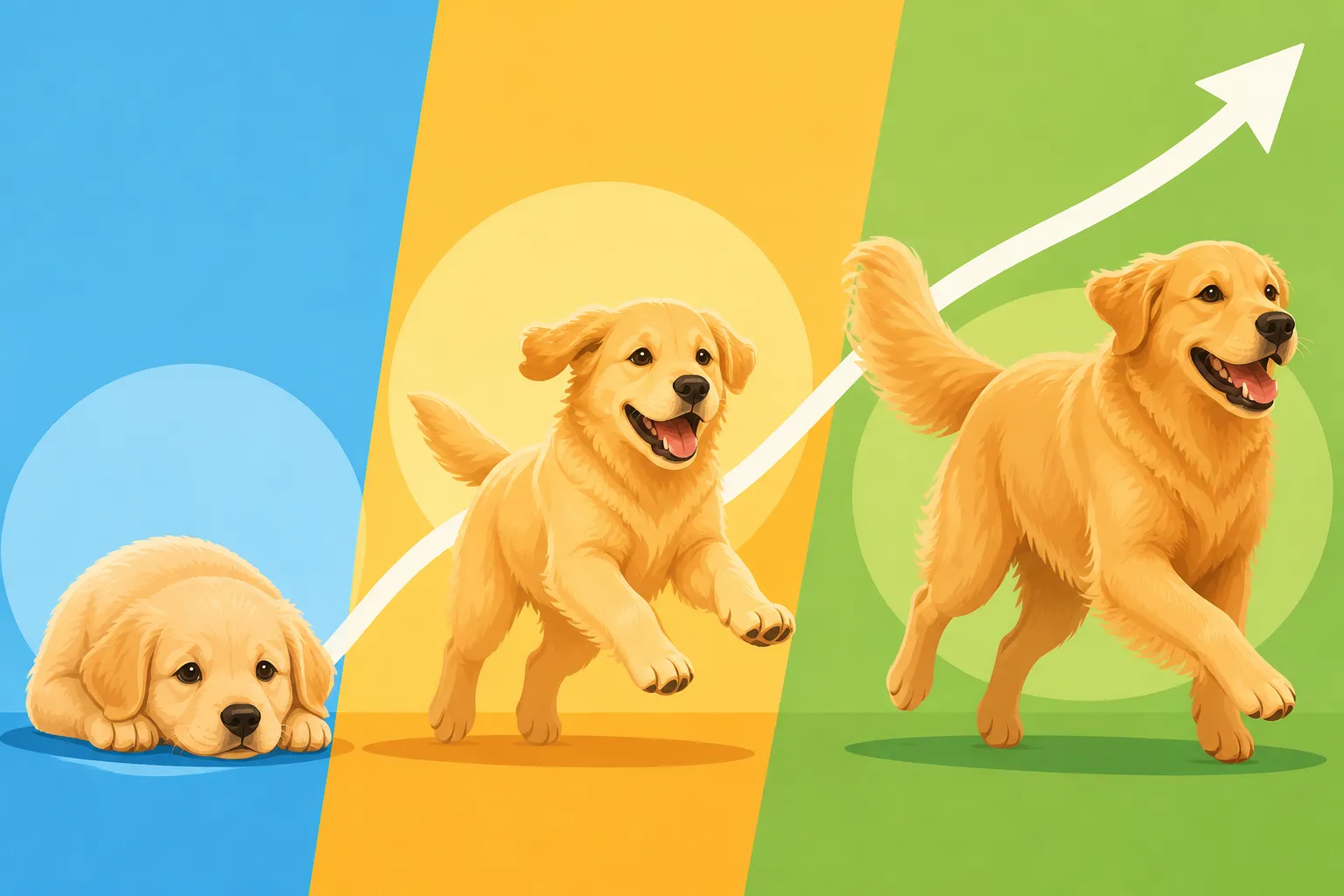
Golden Retriever Energy Level by Age
One of the biggest surprises, and sometimes challenges, for new Golden Retriever owners is understanding just how much their dog's energy levels will shift throughout their life. It's easy to picture a perpetually active, joyful dog, but the reality is a nuanced journey from whirlwind puppy to dignified senior. This guide will help you navigate the ever-changing energy landscape of your Golden Retriever, so you can meet their needs every step of the way and keep that tail wagging.
The Whirlwind Puppy Stage: 0-6 Months Old
Ah, the Golden Retriever puppy! Many first-time owners are completely unprepared for the sheer, unadulterated energy that comes bundled in that fluffy little package. It's a common misconception that because they're small, their energy output is also small. Nothing could be further from the truth. These tiny bundles of joy are packed with an almost unbelievable amount of zest for life, but it manifests in short, explosive bursts rather than sustained endurance.
Nipping, Zoomies, and Play Bursts
In this early stage, your Golden Retriever puppy is like a tiny, furry tornado. They'll wake up from a nap, immediately launch into a flurry of activity, mouth everything in sight, and then suddenly crash for another nap. These "zoomies" are intense, fast-paced bursts of running, spinning, and sometimes frantic nipping. It can feel relentless, and many owners describe it as having a land shark with boundless enthusiasm. It's important to remember this isn't aggression; it's just how they explore their world and burn off steam.
Their play is characterized by these short, high-intensity intervals. They might pounce on toys, try to "herd" your ankles, or wrestle with littermates (or your hand, unfortunately). This is their natural way of learning boundaries and developing motor skills. Providing appropriate chew toys and redirecting their nipping to acceptable objects is crucial. Stopping a Golden Retriever Puppy From Biting is one of the most immediate challenges in this stage. These little guys have a primal need to chew and explore with their mouths, which means a constant supply of safe, stimulating toys is essential to preserve your furniture and your sanity.
Managing Rapid Growth and Fragile Joints
While puppies have incredible bursts of energy, their skeletal system is still developing rapidly. Their growth plates are open, making them vulnerable to injury from excessive or high-impact exercise. This is a critical point that many owners, eager to tire out their energetic puppy, often overlook. Instead of long jogs or strenuous hikes, short, frequent play sessions are far better. Think gentle retrieves in the yard, exploring new smells on a short walk, or supervised play with a calm, older dog.
Forced exercise, like taking them on a long run when they're not yet physically mature, can put undue stress on their developing joints, potentially leading to issues like hip or elbow dysplasia later in life. It's a tough balance: you need to burn off their energy, but you also need to protect their fragile bodies. Puzzle toys, short training sessions, and interactive games that engage their minds are excellent ways to provide mental stimulation without overtaxing their physical limits. Exercise Limits for a Golden Retriever Puppy delves into this more deeply. Remember, quality over quantity is the rule for puppy exercise.
The Adolescent "Teenager" Phase: 6-18 Months Old
Welcome to the teenage years! Just like human teenagers, adolescent Golden Retrievers often come with a frustrating mix of boundless energy, selective hearing, and a penchant for testing boundaries. This phase typically kicks in around six months and can last well into their second year. The short, napping bursts of puppyhood give way to more sustained, higher-intensity energy, coupled with a growing independence (or stubbornness, depending on your perspective!).
The Growth Spurt and Endless Stamina
During adolescence, your Golden Retriever is still growing, but their body is becoming more robust. They start to gain more stamina, and their energy levels can feel like an endless wellspring. Where a puppy might crash after 20 minutes, an adolescent can go for much longer, often demanding more and more activity. This is when you might notice them pulling harder on the leash, running faster, and generally requiring more structured exercise to stay happy and calm indoors.
This stage is when many owners feel truly overwhelmed by the sheer volume of energy their Golden possesses. They might try to chew on inappropriate items again, dig in the yard, or seem to "forget" all their basic training. This isn't usually malice; it's a combination of hormones, growing independence, and a brain that's still maturing. Providing outlets for that energy, both physical and mental, is paramount. Long walks, supervised runs, and plenty of fetch are often necessary. Finding durable toys on sites like Chewy that can withstand enthusiastic chewing is a lifesaver during this stage.
The Golden Retriever Teenage Regression
One of the most common frustrations during adolescence is what's often called the "teenage regression." Your perfectly trained puppy might suddenly seem to forget commands they once knew flawlessly. Recall might go out the window, and they might become more easily distracted by the world around them. This isn't because they're being spiteful; it's a normal part of brain development. Their world is expanding, and their hormones are raging.
This phase requires immense patience and a return to basics with training. Don't assume they've forgotten; assume they need reminding and reinforcement. Keep training sessions short, fun, and highly rewarding. This is a prime time to double down on mental enrichment, too. Puzzle feeders, scent work games, and teaching new tricks can help channel their energetic minds into productive outlets, rather than destructive ones. The Golden Retriever Teenage Regression is a very real phenomenon, and understanding it is key to not getting discouraged. Consistency is your best friend right now.
Young Adult Energy: 1.5-5 Years Old
Once your Golden Retriever rounds the corner from adolescence, usually somewhere between 18 months and two years, they enter their prime young adult phase. This is often when their full energy potential is on display. Their growth plates have typically closed, and their bodies are fully developed, allowing for more strenuous and sustained activity. This is the era of long runs, enthusiastic swims, and endless games of fetch.
Peak Stamina and Endurance
For most Golden Retrievers, their energy levels peak during these years. They are built for activity, bred to retrieve birds for hours, and they thrive on having a job to do, even if that job is just playing fetch in the park. You'll notice a significant increase in their endurance compared to their puppy and adolescent days. A good 60-90 minutes of vigorous exercise daily is often the minimum requirement to keep them content and prevent boredom-related behaviors. This isn't just a casual stroll around the block; it's brisk walks, runs, swimming, or active play.
This period is ideal for exploring dog sports like agility, obedience, or even flyball, if that interests you. Their intelligent, eager-to-please nature, combined with their athletic build and high energy, makes them fantastic candidates for these activities. Without adequate physical and mental stimulation, a young adult Golden can easily become bored, leading to destructive chewing, excessive barking, or even weight gain. They need a consistent routine that taps into their natural retrieving drive and desire to work alongside their human companions. Exercise a Golden Retriever Needs Each Day is a crucial read for this stage.
The Need for Mental Engagement
While their physical energy is substantial, it's vital not to overlook their mental energy needs. Golden Retrievers are highly intelligent dogs, and a tired body isn't always enough to create a truly content dog. They need their brains engaged, too. Regular training sessions, even just 10-15 minutes a day, teaching new tricks, or engaging in scent games can be just as tiring, if not more so, than a long walk. Think of it as intellectual heavy lifting for your dog.
Many behavioral issues in young adult Goldens stem from under-stimulation, not just physical but mental. A Golden who is constantly bringing you toys to play fetch, nudging your hand, or getting into mischief might simply be trying to tell you they're bored and need a job. Interactive toys, like those found on Chewy, that dispense treats or require problem-solving can be excellent tools for mental enrichment. They help channel that intelligent energy into constructive activities, reducing the likelihood of them inventing their own, less desirable, entertainment. Mental Enrichment for a Bored Golden Retriever offers many ideas.
The Mature Adult: 5-8 Years Old
As your Golden Retriever gracefully moves into their mid-life years, typically between five and eight, you might start to notice a subtle shift in their energy levels. They're still very much active and enjoy their daily adventures, but the intense, relentless drive of their younger years might begin to temper ever so slightly. This isn't a sudden drop, but rather a gradual mellowing.
A Gradual Easing of Intensity
You might find that your mature Golden is still up for a good run or a long hike, but they might not demand it with quite the same urgency as they did at age two. They might be content with a slightly shorter game of fetch, or they might be more inclined to settle down after their walk rather than pacing for more. This is often the sweet spot for many owners: a dog who is still athletic and playful, but also has an "off switch" and is more likely to relax calmly indoors.
Their stamina remains excellent, but their recovery time might subtly increase. Instead of bouncing back immediately, they might take a bit longer to catch their breath or choose to lie down for a longer period after a vigorous play session. It's important to adjust your expectations and activities accordingly, observing your dog for cues about their true energy levels and comfort. This is a great time to continue with familiar routines but pay close attention to any signs of stiffness or fatigue.
The Importance of Consistency and Observation
While their energy might be easing, consistency in exercise is still vital. Regular activity helps maintain their muscle tone, keep their joints mobile, and prevent weight gain, which becomes an increasing concern as metabolism naturally slows. Daily walks, swimming, and mental engagement should remain cornerstones of their routine. However, you'll need to become more observant. Are they slowing down on walks? Are they less enthusiastic about certain games? These could be early indicators of joint discomfort or other age-related changes.
This stage is also crucial for preventative care. Regular vet check-ups become even more important, and discussions about joint supplements or a diet formulated for mature dogs might start to come up. Golden Retriever Weight and Joint Damage is an important topic to consider now, as maintaining an ideal body condition can significantly impact their comfort and mobility as they age. Don't mistake a slight dip in energy for laziness; it could be their body subtly asking for a bit more care.
| Age Range | Typical Energy Level | Exercise Recommendation | Common Challenges |
|---|---|---|---|
| 0-6 Months (Puppy) | High bursts, then crash. Short, intense play. | Short (10-15 min), frequent play/walks. Focus on mental games. Avoid forced, high-impact exercise. | Nipping, zoomies, protecting growing joints, house training. |
| 6-18 Months (Adolescent) | High, sustained energy. Growing stamina. | 60+ minutes vigorous exercise daily. Long walks, runs, fetch. Introduce puzzle toys. | Teenage regression, testing boundaries, chewing, digging. |
| 1.5-5 Years (Young Adult) | Peak stamina, endurance, and drive. | 60-90+ minutes vigorous exercise daily. Running, swimming, dog sports, extensive fetch. High mental stimulation. | Boredom, destructive behaviors if under-exercised/stimulated. |
| 5-8 Years (Mature Adult) | Active, still playful, but a gradual easing of intensity. | 60 minutes consistent daily exercise. Brisk walks, fetch, swimming. Monitor for signs of stiffness or fatigue. | Weight management, subtle joint issues, slight decrease in demands. |
| 8+ Years (Senior) | Significant decrease in physical stamina. Still needs mental engagement. | Shorter, gentler walks. Focus on comfort, scent walks, puzzle toys. Adapt to individual physical limitations. | Arthritis, cognitive decline, decreased mobility, specialized care. |
The Golden Senior: 8+ Years Old
Watching your beloved Golden Retriever enter their senior years can be bittersweet. While their youthful exuberance may give way to a more sedate pace, their heart remains golden. Typically, around eight years old, you'll start to see more pronounced changes in their energy levels and physical capabilities. This is a time for understanding, adaptation, and providing comfort.
Slower Paces and Gentler Pursuits
The most noticeable change in senior Golden Retrievers is a marked decrease in physical stamina and intensity. The long runs and high-flying fetch sessions of their prime might be replaced by leisurely strolls and gentle games. They might still enjoy a short burst of excitement when you come home, but they'll settle back down much faster. Their ability to recover from physical exertion will also take longer.
It’s crucial to respect these changes. Pushing a senior Golden beyond their comfort level can lead to pain, injury, or simply make them miserable. Instead, focus on quality over quantity for their exercise. Shorter, more frequent walks at a comfortable pace, gentle swimming (which is excellent for joints!), and slow sniffing walks where they can explore scents at their leisure become preferred activities. Their joints, like our own, are likely experiencing wear and tear. Golden Retriever Arthritis and Joint Decline is a common reality for many seniors.
Prioritizing Comfort and Continued Engagement
While their bodies slow down, their minds still need engagement. A senior Golden Retriever can still thrive on mental stimulation, perhaps even more so now that physical activities are more limited. Puzzle toys, short training refreshers, and gentle scent games can keep their brains sharp and prevent boredom, which can sometimes manifest as anxiety or confusion in older dogs. Think about their comfort: orthopedic beds, easy access to water bowls, and ramps for cars or furniture can make a huge difference in their daily life.
Regular veterinary check-ups become paramount in these years, often twice a year, to catch any emerging health issues early. Conditions like arthritis, heart problems, and even cognitive decline are more common. Adjusting their diet to a senior formula, discussing pain management options with your vet, and ensuring they have a warm, comfortable place to rest are all part of caring for a senior Golden. Remember, they may move slower, but their capacity for love and companionship remains boundless. Caring for a Senior Golden Retriever is a journey that requires empathy and proactive care.
Disclaimer
This article is for general informational purposes only and does not constitute professional advice. Laws, prices and regulations vary by location and change over time. Consult a qualified professional for guidance on your specific situation.