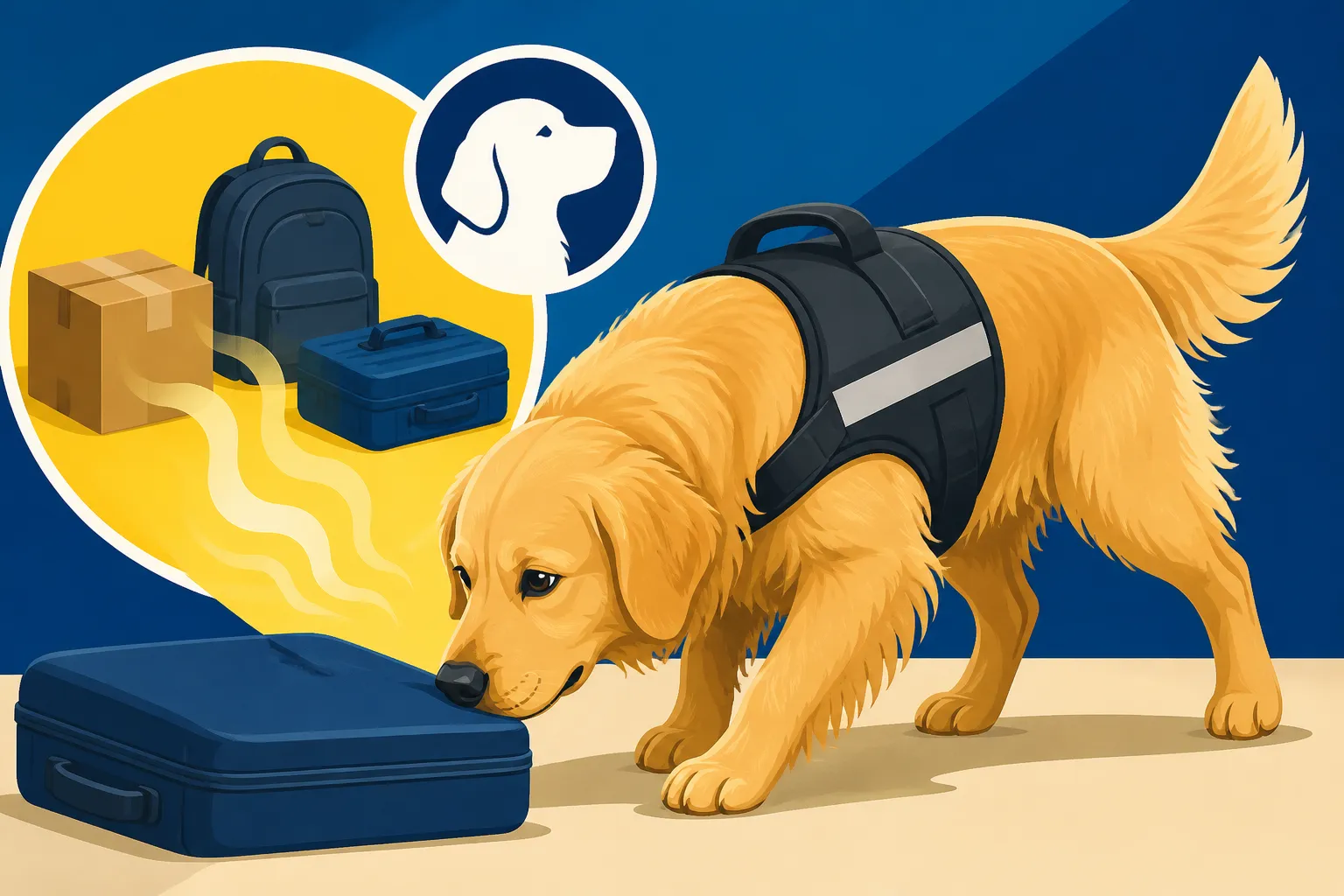
Golden Retrievers as Detection Dogs
When people picture a Golden Retriever, they often imagine a cheerful family dog romping in the park, cuddling on the couch, or perhaps dutifully carrying a tennis ball. And while those images are absolutely true to the breed's heart, they only scratch the surface of what these intelligent and versatile dogs are capable of. Many people are genuinely surprised to learn that Golden Retrievers aren't just beloved companions; they are also highly valued and incredibly effective detection dogs, sniffing out everything from explosives to lost people. This guide will take you through the incredible world of Golden Retriever detection work, revealing why their unique traits make them perfectly suited for these vital roles and what their training truly entails.
The Unique Aptitude of Golden Retrievers for Detection Work
It might seem counterintuitive to some that a breed known for its friendly, sometimes goofy, demeanor would be chosen for serious, high-stakes detection work. But a Golden Retriever's very essence—their deep-rooted instincts and remarkable temperament—makes them exceptional candidates. They possess a combination of traits that are incredibly difficult to find in one package, making them invaluable assets to many organizations.
Their Incredible Noses and Drive to Please
At the core of any detection dog's success is its sense of smell. Golden Retrievers boast an olfactory system that is hundreds of thousands of times more sensitive than a human's, allowing them to detect minute quantities of substances in complex environments. This incredible nose isn't just a biological advantage; it's paired with an intrinsic drive. Golden Retrievers were originally bred to retrieve game for hunters, bringing back birds gently without damaging them. This heritage means they have a natural inclination to use their noses to locate, and then to confidently indicate, whatever they've found. This deep-seated retrieving drive, combined with their intense desire to please their handler, creates a powerful working partnership. They aren't just sniffing; they are actively seeking and then proudly presenting their discovery, almost as if saying, "Look what I found for you!" This inherent motivation is priceless in training and real-world scenarios. The Golden Retriever's Retrieving Heritage speaks volumes about this ingrained instinct.
Temperament Traits That Make Them Ideal
Beyond their keen sense of smell and strong work ethic, the Golden Retriever's famous temperament plays a critical role in their success as detection dogs. Their generally calm and focused disposition means they can work methodically without becoming easily distracted or overwhelmed in busy or chaotic environments. Unlike some breeds that might appear intimidating, a Golden Retriever's friendly, approachable appearance often puts people at ease, which can be a significant advantage in public settings like airports, schools, or event venues. They can blend in more seamlessly, reducing public anxiety and facilitating their work. Furthermore, their renowned adaptability allows them to perform in vastly different climates and terrains, from bustling urban areas to quiet wilderness trails. This breed also generally has a high pain tolerance and incredible stamina, crucial for long shifts or challenging search conditions. Their stable nature and eagerness to cooperate with their human partners are precisely why they excel. To truly understand their nature, it's worth exploring Golden Retriever Temperament and What to Expect.
Different Types of Detection Roles Golden Retrievers Excel In
The versatility of the Golden Retriever means they can be found in a surprising array of detection roles, each demanding a unique blend of skills, focus, and physical endurance. From safeguarding public spaces to aiding law enforcement and even assisting in medical diagnostics, their contributions are diverse and impactful.
Explosives and Narcotics Detection
When it comes to sniffing out illicit substances or dangerous devices, precision and reliability are paramount. Golden Retrievers are often chosen for these high-stakes roles due to their ability to maintain focus amidst distractions and their methodical searching patterns. Their stable temperament allows them to work calmly in environments that might cause stress in other dogs, such as loud, crowded airports, busy train stations, or the aftermath of an incident. They learn to meticulously sweep an area, indicating even trace amounts of target scents without false alerts. The non-threatening presence of a Golden Retriever is particularly beneficial when working in public, as it tends to create a sense of safety rather than alarm. Their endurance means they can work for extended periods, carefully examining luggage, cargo, or vehicles, which is critical for thorough security checks. Many police departments and government agencies rely on Goldens for this delicate and dangerous work.
Search and Rescue and Human Remains Detection
Golden Retrievers also shine in the critical fields of search and rescue (SAR) and human remains detection (HRD). In SAR, their exceptional scenting abilities allow them to cover vast areas of wilderness, disaster sites, or collapsed structures to locate live individuals. They are trained to air-scent, following the plumes of human odor carried by the wind, and to navigate complex terrain with agility and determination. The emotional resilience required for such tasks, especially when facing difficult outcomes, is also a hallmark of the breed's stable temperament. Golden Retrievers in Search and Rescue Work further details their capabilities here.
In HRD, the work is even more specialized. These Goldens are trained to locate human remains, whether recently deceased or historical, on land or even underwater. This requires incredible scent discrimination and the ability to differentiate human remains from animal remains or other decaying matter. The job is physically demanding and emotionally taxing for handlers, but the Golden's unwavering focus and dedication make them invaluable tools in bringing closure to families and aiding forensic investigations. Their relentless drive to find the source of the scent is matched only by their strong desire to please their handler, making them incredibly persistent in challenging conditions.
Medical and Agricultural Detection
While perhaps less commonly known, Golden Retrievers are also being explored and utilized in cutting-edge detection roles that benefit health and agriculture. In the medical field, some Goldens are trained to detect specific volatile organic compounds (VOCs) associated with diseases like various types of cancer (e.g., lung, ovarian, prostate) or even diabetes through a person's breath, urine, or skin odor. This requires an almost unbelievable level of olfactory discrimination and consistency.
In agriculture, detection dogs can be trained to sniff out invasive pests in crops, specific plant diseases, or even illegal animal products smuggled across borders. Imagine a Golden Retriever carefully walking through a field, indicating a plant suffering from a specific blight before it spreads widely, potentially saving farmers significant losses. These roles highlight not just their powerful noses but their trainability and capacity to learn highly specialized tasks. The combination of their Golden Retriever Intelligence Rankings and their calm focus makes them exceptional students for these intricate detection challenges.
The Rigorous Training Journey for a Detection Golden
Becoming a proficient detection dog is far from an overnight process. It's a lengthy, intensive journey that begins in puppyhood and continues throughout the dog's working life, demanding immense dedication from both the dog and its human handler. This rigorous path ensures that only the most suitable and well-trained Goldens make it to the field.
Early Foundations and Socialization
The journey often starts with carefully selected puppies from lines known for their strong work ethic and stable temperaments. From a very young age, usually around 8 to 12 weeks, puppies are exposed to a wide variety of sights, sounds, textures, and environments in a positive and controlled manner. This crucial early socialization lays the groundwork for a confident, adaptable adult dog, able to perform in any setting without fear or undue stress. They learn to navigate slippery floors, loud noises, crowds, and confined spaces. Basic obedience commands are introduced early, not just for manners, but to establish a working relationship and build focus between puppy and handler. Simple retrieve games are encouraged, nurturing that innate drive to bring things back. Trainers might use high-value treats and toys, often sourced from places like Chewy, to make these initial learning experiences overwhelmingly positive and exciting. It's all about building a solid foundation of trust, confidence, and a love for "the game." Early exposure is key, as discussed in Golden Retriever Puppy Socialization Windows.
Scent Imprinting and Conditioning
Once a strong foundation is established, specific scent imprinting begins. This involves teaching the Golden Retriever to recognize and reliably alert to the target odors, whether it's the scent of specific explosives, narcotics, or human remains. This process uses positive reinforcement exclusively. The desired scent is introduced in a controlled environment, always paired with a high-value reward—a favorite toy, a delicious treat, or enthusiastic praise. The dog learns that finding that specific smell leads to a wonderful outcome. Initially, the scent might be very obvious, but over time, it's hidden in increasingly complex scenarios, requiring the dog to focus and work harder to find it. The goal is to build an unbreakable association: scent equals reward. This conditioning is meticulous, focusing on building drive, endurance, and accuracy. Handlers often use a variety of tools, including scent kits and specialized reward toys, many of which can be found at pet supply retailers like Chewy, to keep the dogs engaged and motivated during these intensive sessions.
Advanced Field Work and Certification
As the Golden Retriever progresses, training moves from controlled environments to more realistic and challenging field scenarios. This might involve searching large open areas, vehicles, buildings, or even water. Distractions are gradually introduced—other people, sounds, smells—to ensure the dog can maintain focus on its target scent regardless of the environment. Handlers learn to "read" their dog's subtle body language, recognizing the slight change in breathing, tail movement, or head position that signals a "change of behavior" indicating scent detection. Teamwork between dog and handler becomes paramount, as the handler learns to guide and trust their dog's nose. Finally, both dog and handler must pass rigorous certification tests by reputable organizations, often annually, to demonstrate their proficiency and readiness for active duty. These tests simulate real-world conditions and ensure that the detection team meets specific standards of accuracy and reliability. This ongoing training is critical for maintaining sharpness and adapting to new challenges.
Challenges and Considerations in Detection Dog Programs
While Golden Retrievers possess many ideal qualities for detection work, the path to becoming a certified working dog is not without its hurdles. It's a demanding field, and not every dog, even those from excellent lines, will ultimately make the cut. Understanding these challenges provides a more complete picture of what goes into these incredible partnerships.
The High Washout Rate
Despite careful selection and intensive training, the reality is that many Golden Retrievers, and dogs of all breeds, do not complete detection dog programs. This is known as a "washout rate," and it can be quite high. Reasons for a dog washing out are varied and rarely indicate a fault in the dog itself. Sometimes, a dog may lack the consistent drive or focus required for prolonged scent work, becoming easily distracted by environmental stimuli. Other times, a dog might develop a health issue—such as hip or elbow dysplasia, which Goldens can be prone to—that prevents them from performing the physical demands of the job. Health Clearances a Golden Retriever Breeder Must Show highlights the importance of trying to mitigate some of these health risks from the start.
Sensitivity to certain environments, noise phobias, or even an overly friendly demeanor (which can sometimes lead to excessive distraction rather than focused work) can also be reasons for a dog to be redirected to a different path. It's important to remember that a washout doesn't mean the dog is "bad" or untrainable; it simply means they aren't suited for the incredibly specific and demanding requirements of detection work. These dogs often go on to become fantastic family pets or even excel in other, less specialized roles, like therapy work.
Ethical Considerations and Welfare
The welfare of detection dogs is a paramount ethical concern for responsible programs. These dogs are not simply tools; they are sentient beings with complex needs. Training methods universally emphasize positive reinforcement, building a strong bond and a love for the work, rather than coercion or punishment. Handlers are trained not only in scent work but also in recognizing signs of stress, fatigue, or discomfort in their dogs. Ensuring adequate rest, proper nutrition (often high-quality, performance-oriented foods available at stores like Chewy), and regular veterinary care are non-negotiable.
Working detection dogs often form an incredibly deep bond with their handlers, relying on each other in high-pressure situations. When a detection dog retires, usually around 8 to 10 years of age, their well-being remains a priority. Many are adopted by their handlers, or placed with loving families who understand their needs for continued mental stimulation and physical activity. Planning for a dog's retirement, much like planning for Caring for a Senior Golden Retriever, is an integral part of responsible program management, ensuring these invaluable partners live out their golden years comfortably and happily, after a lifetime of service.
Comparison of Golden Retriever Detection Roles
| Role Category | Primary Scent Target | Key Golden Retriever Strengths | Typical Working Environment |
|---|---|---|---|
| Law Enforcement/Security | Explosives, Narcotics, Currency | Calmness under pressure, methodical search, non-threatening presence, high drive | Airports, borders, public events, crime scenes, vehicles |
| Search & Rescue (Live Find) | Live Human Scent (air-scenting) | Endurance, adaptability, strong independent drive, biddability, agility | Wilderness, disaster sites, collapsed structures, water |
| Human Remains Detection | Decomposed Human Remains | Scent discrimination, persistence, meticulousness, focus, stamina | Land, water (shoreline/boat), historical sites, mass casualty events |
| Medical Detection | Disease-specific VOCs | High precision, focus, patience, fine scent discrimination | Clinics, research labs, patient samples |
| Agricultural Detection | Invasive Pests, Plant Diseases | Controlled focus, precision in specific areas, adaptability to outdoor settings | Farms, greenhouses, ports of entry |
Golden Retrievers prove time and again that their "golden" qualities extend far beyond just being wonderful family pets. Their unparalleled sense of smell, coupled with their eager-to-please nature and unwavering focus, transforms them into highly effective detection dogs. From the critical work of keeping our communities safe to aiding in life-saving searches and even contributing to medical science, these dogs perform vital roles with skill and dedication. It’s a testament to the breed's versatility and the deep bond they form with their human partners that they can excel in such demanding fields, making them truly remarkable working canines. They are heroes in fur, quietly making a difference every single day.
Disclaimer
This article is for general informational purposes only and does not constitute professional advice. Laws, prices and regulations vary by location and change over time. Consult a qualified professional for guidance on your specific situation.