Panosteitis in Growing Golden Retrievers
It’s incredibly disheartening to watch your lively Golden Retriever puppy suddenly start limping or acting like they're in pain, especially when they're at an age where they should be bouncing off the walls. This sudden lameness, often shifting from one leg to another, can be alarming and lead many owners to immediately worry about serious joint issues like hip or elbow dysplasia. This guide is here to walk you through understanding panosteitis, a common but often misunderstood condition in growing Golden Retrievers, helping you recognize its signs, understand diagnosis, and manage your puppy’s comfort.
What Exactly Is Panosteitis?
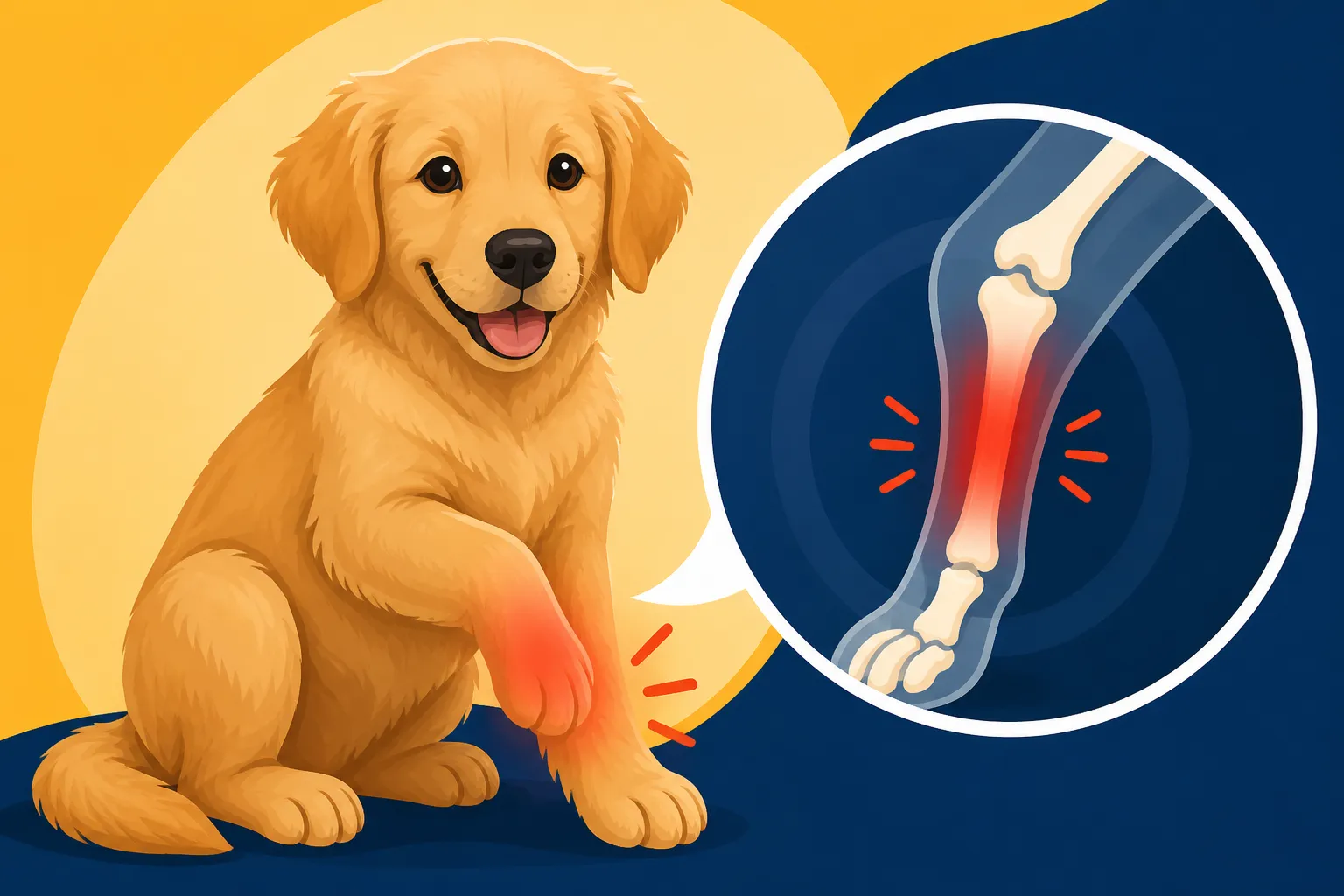
Panosteitis, often affectionately (or perhaps, misleadingly) referred to as "growing pains," is a condition that primarily affects the long bones of rapidly growing, large breed puppies, and Golden Retrievers are definitely on that list. It's an inflammatory process of the outer surface (periosteum) and marrow of the long bones, typically in the legs. While the exact cause isn't always clear, genetics, rapid growth, nutrition, and even stress on the bones can play a role. It's a condition that comes and goes, eventually resolving on its own as your puppy matures.
Understanding the "Growing Pains" Misconception
When someone says their puppy has "growing pains," it sounds rather benign, doesn't it? Like a little ache that will pass. While it's true that panosteitis is self-limiting and doesn't cause permanent damage, it's far from a minor ache. Imagine having a deep, aching pain in your bones that moves around your body, sometimes severe enough to make walking difficult. That's closer to what your Golden Retriever might be experiencing. It’s not just a benign discomfort; it can be genuinely painful and impact their quality of life during an important developmental stage. The term "growing pains" can sometimes lead owners to underestimate the severity of their puppy's discomfort, delaying appropriate veterinary care and pain management.
The Anatomy of a Golden Retriever's Long Bones
To really grasp panosteitis, it helps to understand a little about the bones it affects. Golden Retrievers, being a large breed, have long bones in their legs – think the humerus (upper front leg), radius and ulna (lower front leg), femur (upper back leg), and tibia and fibula (lower back leg). These bones are not solid all the way through; they have a tough outer layer called the periosteum, beneath which lies the compact bone, and then the marrow cavity in the center. Panosteitis involves inflammation in the periosteum and the bone marrow. This inflammation causes increased pressure and pain within the bone. As your Golden grows, these bones are actively remodeling and developing, and sometimes this rapid process can trigger the inflammatory response that defines panosteitis. It’s this intense activity during the puppy phase that makes them particularly susceptible. Remember, for proper development, it's crucial to consider Exercise Limits for a Golden Retriever Puppy to prevent undue stress on their developing joints.
Recognizing the Subtle Signs of Panosteitis in Your Golden Puppy
One of the most frustrating aspects of panosteitis for owners is its unpredictable nature. Your puppy might be perfectly fine one day, then wake up with a limp the next. This shifting lameness is a hallmark sign, but it's not the only one. Being attuned to your Golden's behavior and movement can help you catch it early.
Common Symptoms and How They Present
The most obvious sign of panosteitis is lameness, which can range from a slight limp to a complete refusal to bear weight on a leg. What often confuses owners, however, is that this lameness can suddenly appear in one leg, then disappear, only to resurface in a different leg a few days or weeks later. You might notice your puppy:
- Favoring a leg: They might hold one paw up or walk with a noticeable limp.
- Reluctance to play or exercise: A normally energetic Golden puppy might suddenly become lethargic or refuse to go for walks. This can be a quiet sign that a Golden Retriever is in Pain.
- Pain on palpation: If you gently press along the long bones of their legs, your puppy might yelp, pull away, or show signs of discomfort.
- Fever: While less common, some puppies may develop a mild fever.
- Loss of appetite and weight loss: Due to pain and general malaise, some puppies might not eat as much, potentially impacting their overall Golden Retriever Weight and Joint Damage later on if not addressed.
These symptoms can mimic other more serious conditions, which is why a proper veterinary diagnosis is so important.
The Shifting Lameness Phenomenon
The "shifting lameness" is probably the most distinctive, and at times, most confusing characteristic of panosteitis. One week, it's the front left leg. The next week, they're perfectly fine on that leg, but now they're limping on their back right. It can feel like you're chasing the problem, and just when you think they're better, it reappears somewhere else. This happens because the inflammation can flare up in different long bones at different times.
For concerned owners, this can be incredibly anxiety-inducing. You might worry that your dog has multiple problems or that their condition is worsening. It’s crucial to remember that this shifting pattern is normal for panosteitis. However, it’s equally important not to self-diagnose based solely on this. Other conditions, though less common, can also present with similar shifting lameness, so a vet visit is always warranted to confirm panosteitis and rule out anything else. This pattern typically resolves by the time your Golden Retriever reaches about 18 to 24 months old, which is around When a Golden Retriever's Growth Plates Close.
Diagnosing Panosteitis and Ruling Out Other Conditions
When your Golden Retriever puppy starts limping, your mind naturally goes to the worst-case scenarios – hip dysplasia, elbow dysplasia, or even something more sinister. This is why a thorough vet visit is absolutely non-negotiable. Don’t try to guess or wait it out, especially with a breed prone to specific joint issues.
The Vet Visit and Physical Examination
During your visit, your veterinarian will perform a comprehensive physical examination. They’ll likely watch your Golden walk and trot, gently feel along their legs, and manipulate their joints to pinpoint areas of pain and assess range of motion. They'll be looking for that characteristic pain response when pressure is applied directly to the shaft of the long bones, rather than just the joints.
It’s really important to provide your vet with as much detail as possible: when the lameness started, if it has shifted, what makes it better or worse, and any other symptoms you’ve observed. Don’t forget to mention their diet and exercise routine, as these can sometimes play a role in rapid growth and subsequent issues. Your vet will want to distinguish panosteitis from conditions like Golden Retriever Hip and Elbow Dysplasia Explained, osteochondritis dissecans (OCD), or even simple sprains.
The Role of X-rays in Confirmation
While the physical exam can strongly suggest panosteitis, X-rays are usually required to confirm the diagnosis and, more importantly, to rule out other bone and joint conditions. Panosteitis has specific, though sometimes subtle, radiographic changes that your vet will look for. These can include:
- Increased bone density: You might see hazy, cloud-like areas within the bone marrow, indicating inflammation and new bone formation.
- Thickening of the periosteum: The outer layer of the bone can appear thicker.
Sometimes, these changes are not immediately visible on early X-rays, especially if the condition has just started. Your vet might suggest repeat X-rays in a few weeks if symptoms persist and the initial films are inconclusive but panosteitis is still suspected. The good news is that these X-ray changes are reversible, and as your puppy recovers, the bones will return to normal appearance. It's a temporary structural change, unlike the permanent changes seen with conditions such as Golden Retriever Hip Dysplasia Symptoms by Age.
Managing Panosteitis Discomfort and Supporting Recovery
Once panosteitis is diagnosed, the focus shifts to managing your Golden Retriever's pain and supporting their natural healing process. While it's a condition that will eventually resolve on its own, ignoring the pain can significantly impact your puppy's well-being and development.
Pain Management Strategies
The primary goal during a panosteitis flare-up is to keep your puppy comfortable. Your veterinarian will likely prescribe non-steroidal anti-inflammatory drugs (NSAIDs) like carprofen (Rimadyl) or meloxicam. These medications help reduce both pain and inflammation. It's crucial to administer these exactly as prescribed and never to give human pain relievers, as they can be toxic to dogs.
In some cases, if the pain is severe, your vet might also prescribe other Pain Medication a Vet Prescribes for Goldens for a short period. It’s important to remember that even with medication, your puppy might still have some discomfort, but the goal is to make it manageable so they can rest and heal. Always discuss any concerns about medication side effects or efficacy with your vet. Regular check-ins might be necessary to adjust dosages or try different medications to find what works best for your individual Golden.
Supporting Your Golden Through Recovery at Home
Beyond medication, there's a lot you can do at home to help your Golden Retriever puppy through a panosteitis episode:
- Strict Rest: This is paramount. Limit strenuous activity, jumping, and long walks. Short, leashed potty breaks are usually okay, but discourage any running or rough play.
- Warmth and Comfort: A warm, soft bed can provide significant comfort. Some owners find that gentle heat packs (always wrapped in a towel to prevent burns) applied to the affected area for short periods can help.
- Monitoring: Keep a close eye on your puppy's lameness, appetite, and general demeanor. Note any changes to discuss with your vet.
- Handling: Be extra gentle when lifting or handling your puppy, especially around their legs.
- Mental Enrichment: Since physical activity needs to be curtailed, keep their minds active with puzzle toys, snuffle mats, or short, gentle training sessions. This prevents boredom and frustration, which can make their recovery harder.
This period can be tough, both for your puppy and for you. Witnessing your energetic Golden reduced to a limping, uncomfortable state is hard, but remember that your consistent, gentle care makes a huge difference.
Nutritional Considerations and Activity Modification
While specific diets aren't generally prescribed to treat panosteitis, ensuring your Golden Retriever is on a high-quality, large-breed puppy food is essential. Rapid growth spurts, sometimes fueled by overly rich diets or too much calcium, can exacerbate orthopedic issues. Your vet can advise on the best food and feeding schedule to support steady, healthy growth rather than rapid, problematic growth. You can learn more about this in Golden Retriever Puppy Feeding Amounts and Schedule.
Table: Panosteitis Management Quick Reference
| Aspect of Care | Recommendation | Important Notes |
|---|---|---|
| Pain Management | Prescribed NSAIDs, potentially other pain relievers. | Never use human medications. Administer exactly as directed. |
| Activity Level | Strict rest, limit strenuous play, jumping, long walks. Only short, leashed potty breaks. | Crucial to allow bones to heal and reduce inflammation. |
| Comfort at Home | Provide soft bedding, consider gentle heat packs (with caution). | Ensure heat packs are warm, not hot, and wrapped. Monitor for any adverse reactions. |
| Diet | Continue high-quality, large-breed puppy food. Avoid overfeeding. | Consult vet on specific dietary needs; aim for steady growth. |
| Monitoring | Observe lameness, appetite, demeanor. Document changes for vet. | Note which leg is affected and for how long. |
| Mental Enrichment | Puzzle toys, snuffle mats, gentle training sessions. | Essential to prevent boredom and maintain mental well-being during restricted activity. |
| Veterinary Follow-up | Regular check-ins as advised by your vet. | Don't hesitate to call your vet if symptoms worsen or new concerns arise. |
Activity modification is a big one. It's so hard to tell an enthusiastic Golden puppy they can't run and play. However, during flare-ups, gentle, short walks are the order of the day. Avoid slippery surfaces, jumping on and off furniture, or running up and down stairs. Consider using ramps for cars or couches to reduce impact. This period of restricted activity might feel long, but it's temporary and vital for your puppy's long-term comfort.
When to Seek Veterinary Attention and What to Expect Long-Term
While panosteitis is generally a self-limiting condition, knowing when to call your vet and understanding the long-term outlook can bring immense peace of mind.
Don't Wait if Symptoms Worsen
Even if your Golden has been diagnosed with panosteitis, you should always contact your veterinarian if:
- Pain seems uncontrolled: If your puppy is still severely limping or appears to be in significant pain despite medication.
- New symptoms appear: Any new swelling, fever, or changes in appetite that weren't there before.
- Lameness becomes constant: If the lameness becomes consistent in one leg and doesn't shift or resolve. This could indicate another underlying issue that needs investigation.
- Concerns about medication: If you notice any side effects from the prescribed pain medication.
It’s always better to be overly cautious than to let your puppy suffer unnecessarily or miss a developing, more serious condition. Your vet is your best resource, and they understand that Golden Retriever owners are often very attuned to their dogs' health. Having pet insurance, like a plan from Healthy Paws, can really alleviate the stress of deciding whether to call the vet for every little concern, as you know the costs of diagnostics and treatment are manageable.
The Good News About Panosteitis Prognosis
Here's the silver lining: panosteitis is almost always a temporary condition. Most Golden Retrievers will outgrow it completely by 18-24 months of age, with no lasting effects or predisposition to other orthopedic problems. Once they've passed this susceptible growth period, the episodes typically cease entirely.
While it can be a challenging period to navigate, especially for a young dog and their worried owner, knowing that there's a light at the end of the tunnel is incredibly reassuring. Your Golden Retriever will eventually be able to run, jump, and play without pain, just as nature intended. During this time, managing their comfort and providing supportive care are your most important jobs. Many owners find that having comprehensive pet insurance, such as through Healthy Paws, gives them tremendous peace of mind during these unpredictable puppy health phases, knowing they can say "yes" to necessary treatments without financial strain. It's a small investment for your Golden Retriever's long-term health and your own peace of mind, especially when considering the potential for unexpected vet bills beyond just panosteitis.
Remember, every puppy is different, and the severity and duration of panosteitis can vary. But with proper veterinary care, pain management, and a whole lot of love and patience, your Golden Retriever will navigate these "growing pains" and blossom into the magnificent, active adult they're meant to be. If you're exploring options for covering future health costs, researching providers like Healthy Paws can offer a safety net for conditions both common and rare in Golden Retrievers.
Disclaimer
The information provided in this article is for educational purposes only and is not a substitute for professional veterinary advice. Always consult with a qualified veterinarian for any health concerns or before making any decisions about your pet's medical care.