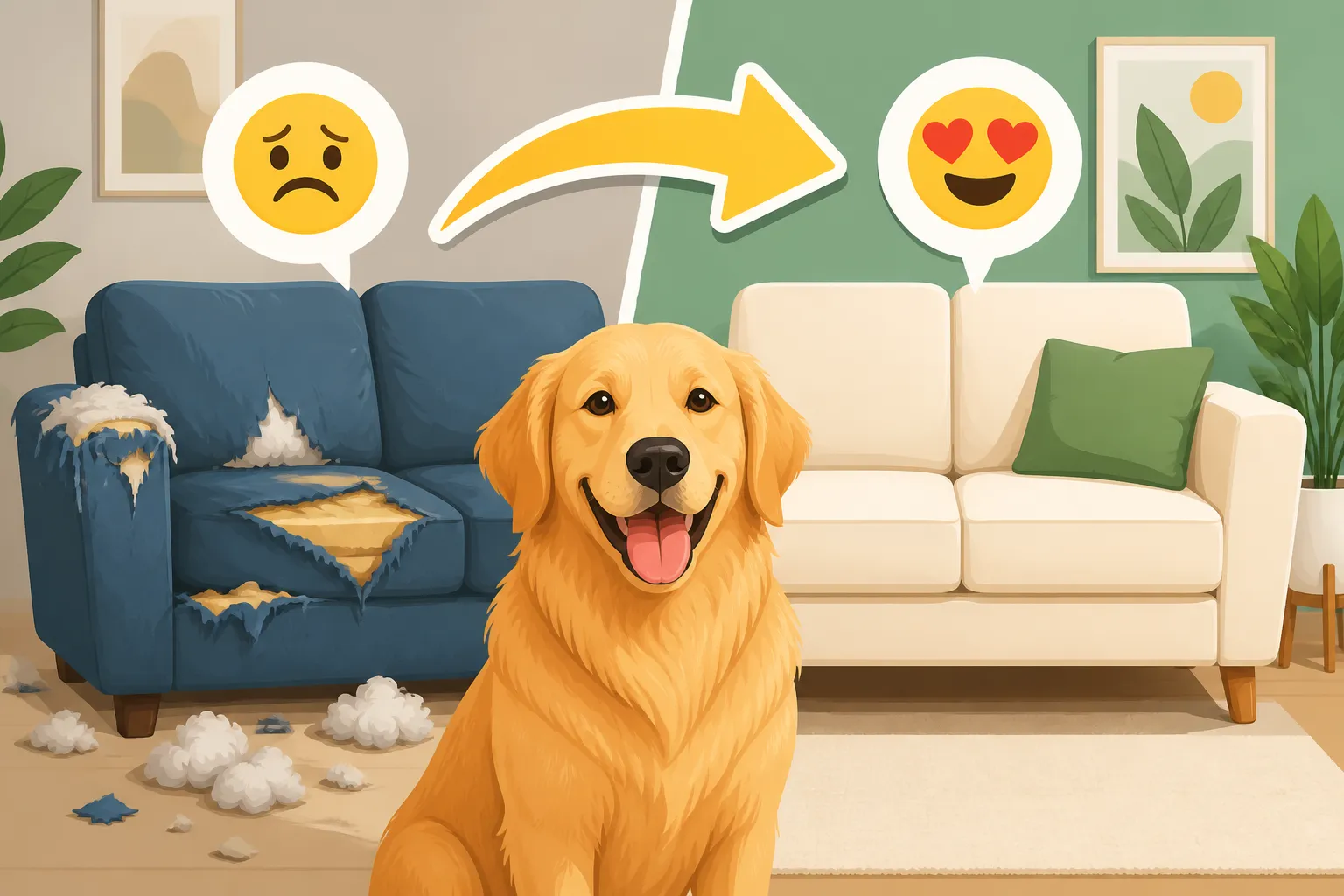
Replacing Furniture a Golden Retriever Ruined
There's nothing quite like the crushing feeling of walking into your living room only to find your beloved Golden Retriever has turned a cherished piece of furniture into a chew toy. It's frustrating, expensive, and can leave you wondering what on earth went wrong. This guide is here to walk you through why our Goldens sometimes resort to furniture chewing, how to put a stop to it, and what to consider when you're looking to replace those damaged items with something more resilient.
Why Our Beloved Goldens Target Our Furniture
It’s easy to feel personally offended when your beautiful Golden Retriever decides your antique chair leg is the perfect chew, but trust me, it’s rarely out of malice. There are usually very natural, dog-centric reasons behind this behavior, and understanding them is the first step toward prevention.
The Golden Retriever Teething Timeline and Puppy Chewing
Just like human babies, Golden Retriever puppies go through a significant teething phase. This typically starts around 3-4 weeks of age and continues until all their adult teeth are in, usually by 6-7 months. During this time, their gums can become quite sore and itchy as baby teeth fall out and new, permanent teeth push through. Chewing provides immense relief from this discomfort.
When a puppy finds a furniture leg, the corner of a coffee table, or even the trim around a doorway, it's often because it's at the perfect height, offers a satisfying texture, and provides counter-pressure against their aching gums. They're not thinking, "Oh, this is expensive wood!" they're thinking, "Ah, relief!" Without appropriate chew toys readily available and appealing, your furniture becomes a prime target. Even if you offer plenty of toys, the novelty of a forbidden item can be irresistible to a curious pup. Consistency in redirecting their attention is key during this sensitive period. For more on managing those sharky puppy teeth, you might find our article on Golden Retriever Puppy Nipping at Children helpful.
Adolescent Energy and Destructive Chewing
The puppy phase might be over, but for many Golden Retrievers, destructive chewing can unfortunately resurface or even intensify during their adolescence. This "teenage phase" can last anywhere from 6 months up to two years of age, or even longer for some individuals. During this time, Goldens are bursting with energy, both physical and mental, and if it's not channeled constructively, it often finds an outlet in ways we'd rather avoid.
Boredom is a huge culprit here. A Golden Retriever who isn't getting enough daily exercise – we're talking good, solid walks, playtime, and mental stimulation – will invent their own entertainment. This might look like tearing up couch cushions, systematically dismantling throw pillows, or even pulling apart rugs. It’s not uncommon for them to target items that smell like their people, like remote controls or shoes, simply because it’s a way to feel close when they’re feeling under-stimulated or anxious. Their powerful jaws, which were once cute as a puppy, are now fully capable of some serious destruction. Chewy, for example, offers a fantastic selection of durable toys from brands like Kong and Nylabone that are designed to stand up to adolescent Golden power chewers and provide hours of safe engagement.
Anxiety, Stress, or Medical Causes for Chewing
While most furniture chewing stems from normal puppy behavior or adolescent energy, sometimes it can be a red flag for deeper issues. Separation anxiety is a common one in Golden Retrievers, a breed that thrives on companionship. If your Golden only chews when left alone, especially around exit points like doors or windows, or if the chewing is accompanied by other signs like excessive drooling, pacing, barking, or house-soiling, it’s worth considering. They aren’t being "naughty" out of spite; they’re experiencing genuine panic and trying to cope with an overwhelming emotional state. Our guide on Golden Retriever Separation Anxiety Signs can offer more insights.
Other stressors, like a recent move, a change in family dynamics, or even loud construction outside, can also trigger destructive chewing as a coping mechanism. In very rare cases, excessive chewing can be linked to underlying medical conditions, such as gastrointestinal upset, dental pain, or even nutritional deficiencies. If the behavior is sudden, extreme, or accompanied by other worrying symptoms, a vet visit is always a good idea to rule out any health issues.
Preventing Future Furniture Casualties
Once you understand why your Golden might be targeting your furniture, you can implement effective strategies to protect your home and foster better habits. Prevention is always easier than repair or replacement!
Crates, Management, and Supervision
The power of good management cannot be overstated, especially with a young or anxious Golden Retriever. Crate training, when done correctly, is not a punishment but a safe, den-like space for your dog. It prevents them from practicing destructive behaviors when you can’t actively supervise them, like when you’re out running errands or asleep. A properly sized crate means they can stand, turn around, and lie down comfortably. Learn more about making the crate a positive experience in our article, Crate Training a Golden Retriever Puppy.
Beyond the crate, puppy-proofing your home is crucial. This means removing or securing anything valuable or dangerous that’s within reach. For furniture, this might involve temporarily blocking access to certain rooms with baby gates, using deterrent sprays (like bitter apple, though effectiveness varies), or physically covering vulnerable chair legs with protectors or blankets. Active supervision is your best friend when your Golden is out of their crate. If you see them eyeing a furniture leg, immediately redirect them to an appropriate chew toy with praise and a tasty treat. Consistency from everyone in the household is vital for success.
Providing Appropriate Chewing Outlets and Mental Stimulation
This is where you turn the tables on destructive chewing. If your Golden has a strong need to chew, you need to fulfill that need with approved, durable items. Investing in a variety of high-quality chew toys is paramount. Think about different textures and durability levels:
- Rubber chews: Brands like Kong offer classic toys that can be stuffed with peanut butter or treats, providing long-lasting mental and physical engagement.
- Nylon chews: Durable and often flavored, these can satisfy persistent chewers.
- Edible chews: Rawhides (if vet approved and monitored), bully sticks, or dental chews can be excellent, but always supervise to prevent choking hazards.
Rotate your dog’s toys to keep them novel and exciting. What they ignore today might be their favorite tomorrow if it's been "new" again after a few days in the toy bin. Beyond just chewing, mental stimulation is key. Puzzle feeders, especially for meals, make your Golden "work" for their food, tiring their brain. Companies like Chewy offer fantastic subscription services that can deliver these items regularly to your door, ensuring you always have fresh options. Teaching new tricks, playing scent games indoors, or short, engaging training sessions can also burn mental energy effectively. And, of course, don't underestimate the power of physical exercise. A tired Golden is a good Golden. Aim for a good daily walk, as detailed in Daily Walk Length for a Golden Retriever, and plenty of active play sessions.
Addressing Underlying Behavioral Issues
If, despite all your efforts with management and enrichment, your Golden Retriever continues to chew destructively, especially when left alone, it's time to consider that an underlying behavioral issue like separation anxiety might be at play. This isn't something you can just train out with commands; it requires a more nuanced approach.
Consulting a certified professional dog trainer (CPDT) or a veterinary behaviorist is highly recommended. These experts can accurately diagnose the root cause of the behavior and create a tailored plan. For separation anxiety, this might involve desensitization exercises where you gradually increase the time your dog is comfortable being alone, along with counter-conditioning techniques to associate your departure with positive things. They might suggest calming aids, pheromone diffusers, or in some severe cases, medication to help reduce anxiety to a manageable level so that behavioral modification can be effective. Never hesitate to seek professional help; it’s an investment in your Golden's well-being and your peace of mind. Our guide on Choosing a Positive Reinforcement Trainer for a Golden can help you find the right expert.
Assessing Damage and Choosing Replacements
So, the damage is done. Now what? You're faced with the decision to repair or replace, and how to choose items that stand a better chance against your furry friend's enthusiasm.
Repair or Replace: Making the Call
First, take a good, honest look at the damage. Is it superficial, like a few teeth marks on a table leg, or is the structural integrity of the furniture compromised?
- Minor cosmetic damage: A small patch of chewed wood can often be sanded, filled, stained, or painted to blend in. A slipcover might hide minor fabric damage, or a small area of upholstery could be patched by a professional.
- Moderate damage: If a chair leg is deeply gouged but still stable, a carpenter might be able to repair or replace just that component. If a cushion cover is torn, it might be possible to order a replacement cover or have one custom-made.
- Severe structural damage: If a piece of furniture is wobbly, broken beyond simple repair, or if multiple areas are significantly damaged, replacement is often the more practical and safer option. Attempting to continually repair a piece that's fundamentally compromised can be more expensive in the long run.
Consider the sentimental value of the item, too. If it's a family heirloom, professional restoration might be worth the cost. Otherwise, weigh the cost of repair against the cost of a new, more durable piece.
Golden Retriever-Proofing Your Next Furniture Purchase
When you're ready to replace, think defensively! You want furniture that can stand up to a Golden Retriever's lifestyle, which often involves shedding, drooling, occasional muddy paws, and yes, sometimes an urge to chew.
Here are some considerations for "dog-friendly" furniture:
Materials:
- Durable Fabrics: Look for tightly woven fabrics that are difficult for claws to snag and that resist pet hair. Microfiber, canvas, outdoor fabrics (like Sunbrella), and tightly woven synthetics are excellent choices. Avoid delicate silks, chenille, or loosely woven materials. Many modern furniture lines offer performance fabrics that are stain-resistant and easy to clean, which is a huge bonus with a Golden.
- Wood Finishes: For coffee tables, end tables, or chairs with exposed wood, choose hardwoods with durable finishes. Darker woods might hide minor imperfections better. Consider metal or composite materials for legs and bases, which are generally less appealing to chew than wood.
- Leg Design: Furniture with low or chunky legs that aren't easily accessible for chewing, or even those with solid bases that touch the floor, can be a smart move. Elevated, slender legs can be tempting targets.
Design Features:
- Slipcovers: Washable slipcovers are a lifesaver. You can easily remove and clean them, keeping your furniture fresh and extending its life. Plus, if a slipcover gets damaged, it’s much cheaper to replace than the entire piece of upholstery.
- Solid Construction: Opt for sturdy, well-made pieces. A sofa with a solid hardwood frame will withstand more bumps and jumps than one made with particle board.
- Color and Pattern: Lighter solid colors will show every smudge and dog hair. Consider medium tones, multi-tonal fabrics, or subtle patterns that can camouflage pet hair and minor stains more effectively.
You can often find great pet-friendly options at retailers like Chewy, which carries a range of beds, blankets, and sometimes even furniture pieces designed with pets in mind. While Healthy Paws focuses on pet health insurance, the idea is that investing in durable furniture is part of a holistic approach to pet ownership, reducing stress and unexpected costs where you can.
Budgeting for Furniture and Unexpected Costs
The financial hit of replacing furniture can be significant and often unexpected. This is where good financial planning for pet ownership comes into play. While pet insurance, like plans from Healthy Paws, is invaluable for covering vet bills related to accidents and illnesses, it typically does not cover damage to personal property. Understanding what your pet insurance covers – and what it doesn't – is crucial.
It’s always a wise move to have an emergency fund specifically for your pet. This fund is not just for vet emergencies; it can also help cover unexpected costs like furniture replacement if prevention strategies fail. When budgeting for new furniture, consider the long-term investment in durability. Sometimes spending a little more upfront on a pet-resistant material or design can save you money (and headaches) down the road compared to continually replacing cheaper, less durable items.
Here’s a quick comparison of common furniture materials and their dog-friendliness:
| Furniture Material | Durability Against Golden Retrievers | Cleaning & Maintenance | Notes |
|---|---|---|---|
| Microfiber | Excellent (snag-resistant, durable) | Easy to clean, water-resistant | Tightly woven, resists pet hair, good for high-traffic areas. Can sometimes attract static. |
| Canvas/Denim | Very Good (tough, rugged) | Easy to clean, often washable | Casual look, can be a bit stiff. Great for slipcovers. |
| Outdoor Fabrics | Excellent (stain, water, fade-resistant) | Very easy to clean, highly durable | Designed for elements, so great for pets. Can be less soft than indoor fabrics. |
| Leather | Good (can be durable, but vulnerable to scratches) | Easy to wipe clean, but scratches show | Can scratch from claws; full-grain is most durable but expensive. Faux leather can tear. |
| Velvet/Chenille | Poor (easily snags, shows dirt/hair) | Difficult to clean, attracts hair | Avoid for high-traffic pet areas due to delicate pile and hair-trapping nature. |
| Solid Hardwood | Good (resistant to casual chewing, but not determined chewers) | Wipes clean, can be refinished | Requires a strong finish. Deep gouges from chewing are hard to hide. |
| Metal/Iron | Excellent (chew-proof) | Wipes clean, very durable | Ideal for table bases, chair frames if you're concerned about chewing. |
Remember, your Golden Retriever's needs and tendencies are unique. A combination of thoughtful choices for your home and consistent training and enrichment will lead to the best outcomes. Don't forget to factor in the total cost of ownership, as covered in our article What a Golden Retriever Costs Every Year After.
Navigating the Emotional Rollercoaster
It's okay to feel frustrated and even a little heartbroken when your dog damages something you love. But it's important to keep perspective and remember that your Golden isn't acting out of spite.
Understanding Your Golden's Intent
Our Goldens are often driven by instinct, curiosity, and a desire to relieve discomfort or boredom. When a puppy chews on a table leg, they're not trying to ruin your furniture; they're trying to soothe their aching gums. When an adolescent Golden tears up a pillow, they're likely bored, under-exercised, or experiencing anxiety, trying to find an outlet for pent-up energy. Their actions are almost always about meeting an unmet need, not about being "bad."
It can be tough to see past the immediate damage, but try to step into their paws for a moment. This breed is known for its intelligence, loyalty, and boundless energy. If that energy isn't directed appropriately, it will find an outlet, and sometimes that outlet is our furniture. Understanding this can help shift your perspective from anger to a problem-solving mindset, focusing on how to better meet their needs.
Moving Forward with a Smarter Strategy
Learning how to live harmoniously with a Golden Retriever is a journey, not a destination. There will be chewed shoes, muddy paw prints, and, yes, sometimes damaged furniture. The key is to learn from each incident and adjust your strategy. If a piece of furniture was ruined, analyze why it happened. Was your Golden left unsupervised too long? Did they have enough appropriate chew toys? Were they sufficiently exercised and mentally stimulated?
Moving forward, reinforce your prevention strategies. Be consistent with crate training, ensure a steady supply of engaging toys (perhaps even considering high-quality food from services like Ollie, ensuring they're well-fed and healthy which contributes to overall well-being), and provide ample opportunities for physical activity and mental enrichment. The bond you share with your Golden Retriever is incredibly special, and while there will be challenges along the way, they are undoubtedly worth the effort. With patience, understanding, and a proactive approach, you can protect your home and nurture a happy, well-adjusted companion.
Disclaimer
Please note that this article provides general information and advice regarding Golden Retriever care and behavior. Every dog is an individual, and behavioral issues can have complex causes. Always consult with a qualified veterinarian or certified professional dog trainer for personalized advice regarding your Golden Retriever's specific health and behavioral needs.