Golden Retriever Separation Anxiety Signs
Oh, the heartbreak of seeing your sweet Golden Retriever utterly distressed when you leave the house. It's a gut-wrenching feeling, isn't it? You walk out the door, and the frantic barking starts, or you come home to chewed furniture and a mess on the floor, knowing full well your dog was just out. This isn't just "bad behavior;" for many Goldens, it's a genuine struggle with separation anxiety. This guide will walk you through the distinct signs, both obvious and subtle, so you can truly understand what your beloved companion is going through and begin to help them cope.
Understanding What Separation Anxiety Really Is
It's easy to dismiss a dog's destructive chewing or house-soiling as spite or a lack of training, especially when you're feeling frustrated. But with Golden Retrievers, particularly given their deeply sensitive and people-oriented nature, it's crucial to differentiate between naughty antics and true separation anxiety. The distinction isn't just academic; it changes how you approach helping your dog.
More Than Just a Little Boredom
Let's be clear: a bored Golden Retriever can absolutely be destructive. They might chew up a favorite shoe, dig a crater in the backyard, or even get into the trash if they're not getting enough physical or mental stimulation. A puppy, especially, will explore the world with their mouth, and accidents happen when they're still mastering bladder control or when you've been gone for longer than they can reasonably hold it. These are common dog issues, often solvable with more exercise, appropriate chew toys, crate training, or a more consistent potty schedule.
However, true separation anxiety is fundamentally different. It's not about being bored or trying to be mischievous. It's a panic attack, pure and simple. Imagine being truly terrified, feeling abandoned, and not knowing if your most important attachment figure will ever return. That's the emotional state of a dog suffering from separation anxiety. The behaviors they exhibit are attempts to cope with overwhelming distress or to try and reunite with you. It's an involuntary response driven by fear, not a deliberate act of disobedience. You'll often see these behaviors escalate rapidly after you leave, and they aren't alleviated by simply providing a new toy.
The Deep-Seated Fear of Being Left Alone
Golden Retrievers are renowned for their loving, devoted personalities and their strong desire to be with their people. They thrive on companionship and human interaction, often earning the nickname "Velcro dogs" for how closely they stick to their owners. While this trait makes them wonderful family pets, it can also make them predisposed to developing separation anxiety if that attachment becomes unhealthy or if they've had past experiences that lead to a fear of abandonment.
The root cause of separation anxiety isn't a lack of training or discipline; it's a deep-seated psychological distress that manifests when they perceive themselves to be alone. This fear can be triggered by a sudden change in routine, a traumatic event, or even just a period of being left alone for longer than they can comfortably handle, especially during critical developmental periods. They aren't thinking, "I'm mad, so I'll destroy the couch." Instead, their internal dialogue is more like, "My human is gone, and I don't know when they'll be back, and I feel utterly unsafe and alone." This profound sense of panic is what drives the behaviors we often find so frustrating.
Common Behavioral Signs of Separation Anxiety
When a Golden Retriever is grappling with separation anxiety, their actions often speak volumes, even if you're not there to witness them firsthand. These behaviors aren't random; they're usually intense, persistent, and directly linked to your absence. Learning to recognize these common signs is the first step toward effective intervention.
Destructive Chewing and Escaping Attempts
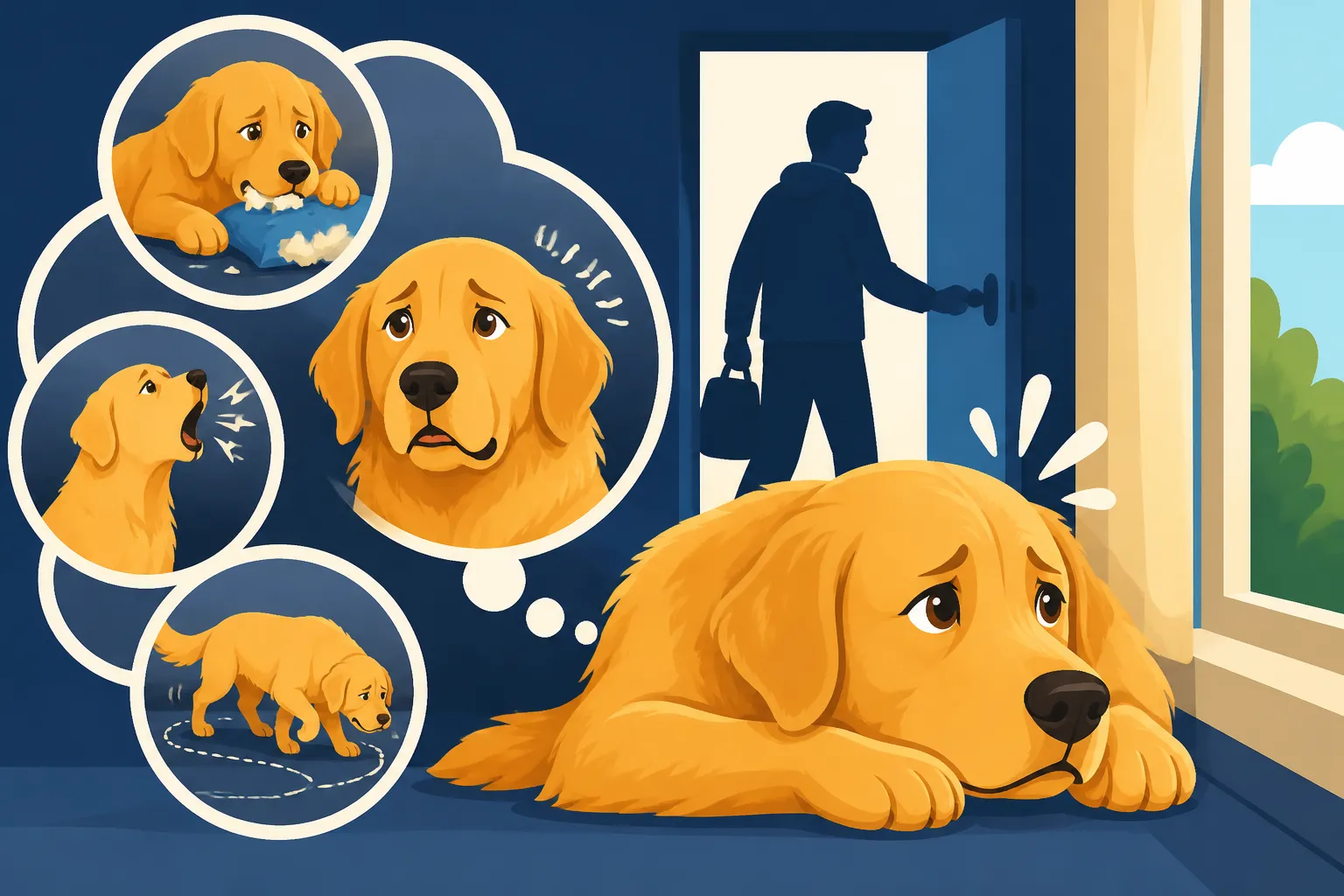
One of the most heart-wrenching and costly signs of separation anxiety is destructive chewing, often focused around exit points. We're not talking about a puppy nibbling on a baseboard; this is often frantic, desperate chewing that can damage door frames, window sills, and even the wall around the door. These dogs are often trying to chew their way out, to find you. The destruction isn't aimed at an object randomly; it's a focused effort to escape or relieve overwhelming stress.
Along with chewing, true escape attempts are a hallmark of separation anxiety. You might come home to a crate that's been bent or broken, a window screen pushed out, or claw marks on doors. These attempts are driven by an intense desire to reunite with their person. It’s incredibly dangerous for your Golden, as they can injure their paws, teeth, or even get tangled or stuck. I've heard stories of Goldens breaking out of secure crates and injuring themselves in the process, which only underscores the severe panic they experience. This isn't a dog who just wants to play outside; this is a dog in a state of terror.
Excessive Vocalization
Many Golden Retriever owners first become aware of separation anxiety because of complaints from neighbors. Your sweet, quiet companion transforms into a howling, barking, or whining machine the moment you leave. This isn't just an occasional "woof" at the mail carrier or a playful bark during zoomies. This is persistent, often frantic vocalization that lasts for extended periods while you are gone.
The key differentiator here is context. A dog with separation anxiety will typically only exhibit this excessive vocalization when alone. If your Golden barks at every squirrel, car, or person passing by even when you're home, that's more likely territorial or alert barking. But if the noise starts the moment you shut the door and continues until you return, it's a strong indicator of anxiety. Golden Retriever Barking and What Triggers It can sometimes overlap, but with separation anxiety, the trigger is specifically your absence, not an external stimulus. These dogs are essentially crying out for you, expressing their profound distress and loneliness.
Inappropriate Urination and Defecation
Discovering a puddle or pile inside, especially right after you let your Golden out, is incredibly frustrating. It can feel like defiance. However, if your Golden Retriever is otherwise fully house-trained and these "accidents" only occur when they are left alone, it's a classic sign of separation anxiety, not a training lapse or spite. These aren't just little piddles; they can be full bladder or bowel movements.
This house-soiling is an involuntary physiological response to extreme stress and panic, similar to how a human might feel sick to their stomach when terribly anxious. It's not a choice. A Golden experiencing separation anxiety can feel so overwhelmed that they lose control of their bodily functions. It's often accompanied by other signs of anxiety, like pacing or vocalization. If you find these messes, and your dog has been recently vetted and deemed healthy, it's highly probable that anxiety, rather than a medical issue or poor training, is the culprit. Understanding this can shift your perspective from anger to empathy, which is vital for helping your dog.
Subtle and Less Obvious Indicators
While destructive chewing and incessant barking are hard to miss, separation anxiety can also manifest in more subtle ways that might be overlooked or misdiagnosed. Paying close attention to these quieter cues can provide early insight into your Golden's emotional state.
Pacing, Trembling, and Drooling
Before you even step out the door, or immediately after you leave, an anxious Golden might exhibit a range of physical distress signals. Pacing is a common one—an agitated, restless movement back and forth, often along the same path. They might circle the room, walk along the perimeter, or simply wander aimlessly. This isn't just walking around; it's a frantic inability to settle.
Trembling, even in a warm environment, is another clear sign of fear or anxiety. Your Golden might shake uncontrollably, especially as you prepare to leave or as they realize you're actually going. And then there's excessive drooling. Some dogs will drool so profusely when left alone that their chest, paws, or even the floor beneath them become soaked. This isn't just a little slobber; it's a continuous flow, often frothy, resulting from acute stress. These are all involuntary stress responses, not intentional behaviors, and indicate a significant level of internal distress that they cannot control.
Hyper-Attachment and Shadowing
Often, the signs of separation anxiety begin before you even think about leaving. Many Goldens with this condition are "Velcro dogs" to an extreme. They follow you from room to room, even to the bathroom, and seem unable to settle unless they are in the same space as you. This hyper-attachment, or "shadowing," is a pre-indicator of their anxiety about potential separation. They are constantly monitoring your movements, trying to predict when you might leave.
When you start your departure routine – picking up your keys, putting on your shoes, grabbing your bag – you might notice their demeanor change. They might become agitated, whine softly, try to block your path, or show signs of intense clinginess. This isn't just a dog who loves to be near you; it's a dog who is terrified of the impending separation. They are on high alert, and their anxiety levels are already climbing. This intense bond, while endearing, can become problematic when it prevents them from being able to function independently for even short periods.
Changes in Eating or Drinking Habits
Another subtle, yet telling, sign of separation anxiety can be observed around meal times or when offering treats. Many dogs with severe anxiety will refuse to eat or drink when left alone, even if they are hungry or thirsty. You might leave a puzzle feeder filled with their favorite kibble, or a high-value chew, only to return hours later and find it untouched. The overwhelming stress suppresses their appetite and their drive to engage with anything enjoyable.
Conversely, some anxious Goldens might actually drink excessively out of stress. This can be harder to detect without observation, but if you notice their water bowl is emptied far faster than usual only when you're gone, it could be a stress response. These changes in routine habits underscore how deeply separation anxiety impacts a dog's well-being, affecting even basic physiological needs. It's a clear indication that their emotional state is overriding their natural instincts for sustenance and enjoyment.
How to Confirm Your Golden Has Separation Anxiety
It’s one thing to suspect your Golden Retriever has separation anxiety, but another to confirm it. Since many of the hallmark behaviors happen when you're not home, objective observation is key. This isn't about catching your dog "in the act" to punish them, but rather to gather evidence that helps you truly understand their struggle and devise an effective intervention plan.
The Power of a Pet Camera
Honestly, a pet camera is an absolute game-changer when it comes to diagnosing separation anxiety. It removes all doubt and allows you to see exactly what your Golden is doing, and for how long, when you're not there. Without a camera, you're relying on damaged items, messes, or neighbor reports, which don't tell the full story of their distress. Set up a camera that can record or stream to your phone. Place it where it has a good view of the area your dog usually stays, especially near doors or windows.
Start by recording your departure routine: putting on your shoes, grabbing your keys, saying goodbye. Then, record the first 15-30 minutes after you leave, as this is often when anxiety peaks. Also, check in periodically throughout your absence. You might be surprised at what you see. Is your Golden pacing frantically? Are they barking or howling non-stop? Are they attempting to chew their way out of a crate or clawing at the door? The visual evidence provided by a camera is invaluable for distinguishing true anxiety from simple boredom or a lack of training. Some modern pet cameras even offer two-way audio, which can sometimes provide comfort, or treat dispensers, which can be useful for positive reinforcement during absence training. A quick search on Amazon will show you many options, from basic models to those with advanced features.
Ruling Out Other Potential Causes
Before you definitively label your Golden Retriever's behavior as separation anxiety, it's crucial to rule out other possibilities. As mentioned earlier, a bored dog can be destructive, and an improperly house-trained puppy will have accidents. However, there are also medical conditions that can mimic some signs of anxiety. For instance, urinary tract infections, kidney issues, or even certain medications can cause inappropriate urination. Pain or discomfort from conditions like Golden Retriever Arthritis and Joint Decline could lead to restlessness or changes in behavior.
This is why a visit to your veterinarian is always the first step. They can perform a thorough examination, including blood work or urinalysis if needed, to rule out any underlying health issues. Once medical causes are eliminated, you can then focus on behavioral assessment. If your vet gives your Golden a clean bill of health, and the camera footage confirms distress only when alone, you're much closer to an accurate diagnosis of separation anxiety. You might also find our article on Separation Anxiety Versus Boredom in a Golden Retriever helpful in making this distinction, as it delves deeper into the nuances between the two behaviors.
The Impact of Separation Anxiety on Your Golden and Your Life
Living with a Golden Retriever who suffers from separation anxiety isn't just challenging for you; it takes a significant toll on your dog as well. It's a continuous cycle of stress and fear that diminishes their quality of life and can create substantial strain on your daily routines.
Physical and Emotional Toll on Your Dog
Imagine being in a constant state of panic every time your loved one leaves. That's what many Goldens experience with separation anxiety. This chronic stress isn't just an emotional burden; it has very real physical consequences. The elevated heart rate, increased cortisol levels, and heightened alertness can lead to a weakened immune system, making them more susceptible to illness. Persistent drooling can cause skin irritation or rashes. More severely, frantic escape attempts can result in self-injury – broken teeth, lacerated paws, or even broken nails from clawing at doors and crates.
Beyond the physical, the emotional toll is immense. These dogs are truly suffering. Their world revolves around their human, and when that human leaves, their world crumbles into a terrifying unknown. They aren't living a relaxed, happy life; they're constantly anticipating departure and then enduring intense fear. This impacts their overall demeanor, potentially leading to a generally more anxious or withdrawn dog even when you are home. Their inability to cope with being alone means they miss out on the peace and contentment a dog should feel in their own home.
The Strain on Human-Canine Relationships and Lifestyle
As an owner, dealing with a Golden Retriever with separation anxiety can be incredibly draining, both emotionally and financially. There's the guilt of leaving them, knowing they're distressed. There's the frustration of coming home to damage or messes, which can lead to anger, even though you know it's not their fault. The financial burden can add up quickly, from repairing chewed furniture and doors to vet bills for injuries sustained during escape attempts, and potentially hiring trainers or behaviorists.
Your entire lifestyle can become dictated by your dog's anxiety. Spontaneous outings become impossible. Social events, errands, or even just going to work become sources of dread. You might stop having friends over if your dog is disruptive, or you might find yourself rushing home constantly. This isolation and limitation can severely impact your own well-being and, in turn, strain the precious bond you share with your Golden. It's vital to remember that this isn't a problem you created deliberately, and with patience and the right strategies, improvement is absolutely possible. How Long a Golden Retriever Can Be Left Alone becomes a very real question when separation anxiety is a factor.
Initial Steps to Help Your Anxious Golden
Witnessing your Golden Retriever's distress can feel overwhelming, but the good news is that there are many steps you can take to begin addressing separation anxiety. It requires patience, consistency, and a shift in perspective, but it's a journey well worth taking for your dog's well-being.
Creating a Predictable Routine
One of the foundational elements in reducing anxiety for any dog, especially one prone to separation issues, is predictability. Dogs thrive on routine because it helps them understand what to expect from their day, which in turn reduces uncertainty and stress. This means establishing consistent times for everything: waking up, potty breaks, meals, exercise, training sessions, and bedtime.
A predictable routine helps your Golden feel more secure in their environment. When they know when their needs will be met, they can relax a bit more. For example, if they know they will get their morning walk and breakfast at the same time every day, that's two less things for them to worry about. This isn't a cure-all, but it provides a stable framework upon which more specific anxiety-reduction techniques can be built. Think of it as creating a sense of order in a world that can feel chaotic to an anxious dog.
Practicing Calm Departures and Arrivals
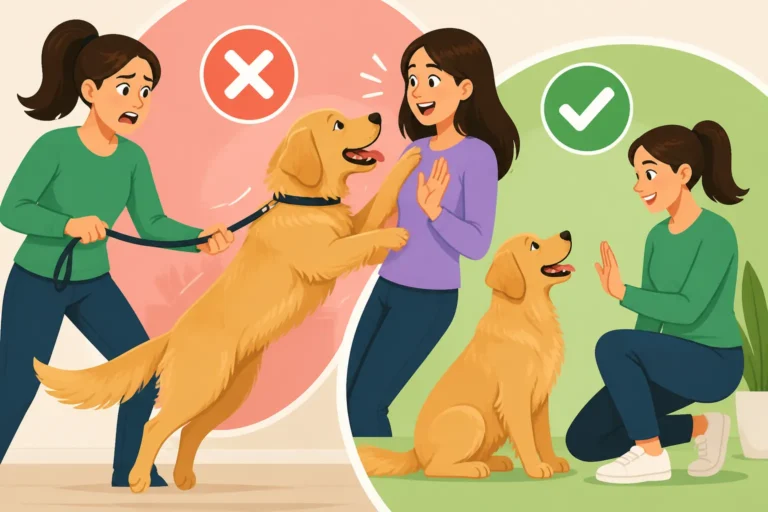
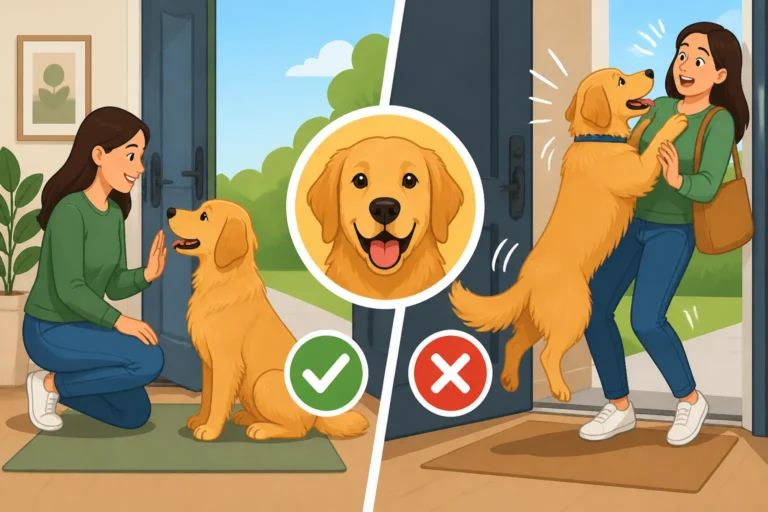
Many of us, out of love, make a big deal out of leaving and returning. We give our Goldens elaborate goodbyes, or shower them with attention the moment we walk through the door. While this comes from a place of affection, for an anxious dog, it can inadvertently heighten their distress around your absence. Those big goodbyes signal that something significant (and potentially scary) is about to happen, ramping up their anxiety even before you leave. Big greetings, on the other hand, can reinforce the idea that your return is a huge, dramatic event, making your absence seem even more unbearable.
Instead, strive for calm, understated departures and arrivals. When you're about to leave, avoid prolonged farewells. Just calmly walk out the door. When you return, ignore your Golden for the first few minutes, allowing them to settle down. Once they are calm, then you can offer a quiet greeting. This teaches them that your departures and arrivals are normal, low-key events, reducing the emotional roller coaster they might otherwise experience. It's a tough habit to break for us humans, but it makes a world of difference for an anxious Golden.
Enrichment and Exercise Before You Leave
A tired dog is often a calmer dog, and this holds true for Goldens with separation anxiety, up to a point. Ensuring your Golden gets adequate physical and mental stimulation before you leave can help to drain some of that excess energy and make them more likely to rest while you're gone. A long walk, a vigorous game of fetch, or even a session of training can be incredibly beneficial. Tiring a Golden Retriever on a Rainy Day can give you ideas for indoor activities when the weather isn't cooperating.
Beyond physical exercise, mental enrichment is crucial. Puzzle toys, KONGs stuffed with frozen treats, or snuffle mats can keep your Golden occupied and mentally stimulated for a period after you leave. The act of working for food can be very calming and distracting. You can find a wide variety of these on Amazon, and they're indispensable tools. Introduce these items when you are home, so your Golden associates them with positive experiences, and then offer them as you prepare to leave. Some online training programs, like BAXTER & Bella, also provide guidance on enrichment ideas and building alone-time tolerance, which can be a huge help in managing this challenging issue. Remember, this isn't about exhausting them into submission, but about meeting their innate needs so they're better equipped to handle alone time.
Differentiating Separation Anxiety from Other Issues
It's vital to distinguish true separation anxiety from other behavioral issues that might present similarly. While the symptoms can overlap, the underlying cause, and therefore the treatment approach, is distinctly different. Misdiagnosing can lead to ineffective or even detrimental strategies.
| Behavior | Likely Separation Anxiety (SA) | Likely Boredom/Lack of Enrichment | Likely Medical Issue |
|---|---|---|---|
| Destructive Chewing | Focused on exits (doors, windows, crates); frantic, intense. | General chewing (furniture, shoes); exploratory. | No direct link. |
| Excessive Vocalization | Constant barking/howling ONLY when alone; frantic tone. | Occasional barking at stimuli (passersby), seeking attention. | No direct link. |
| Inappropriate Elimination | Fully house-trained but soils ONLY when alone; large accidents. | Inconsistent house-training, long hold times, smaller accidents. | Frequent, small urinations; straining; blood in urine/stool. |
| Pacing/Trembling/Drooling | Occurs when anticipating departure or when left alone; intense. | Rarely present. | Can be present with pain/discomfort, but not tied to separation. |
| Hyper-Attachment | Follows constantly, panics at door; unable to settle. | Enjoys company but can settle independently. | No direct link. |
| Refusal to Eat/Drink | Leaves food/treats untouched ONLY when alone. | Eats normally when owner is home or away. | Lack of appetite generally, with owner present. |
As you can see, the "ONLY when alone" factor is a consistent thread through the separation anxiety column. This distinction is paramount for effective treatment. For example, simply providing more toys won't help a truly anxious Golden, and punishing house-soiling caused by panic will only exacerbate their fear.
Long-Term Strategies and Professional Help
Addressing separation anxiety is a marathon, not a sprint. It requires dedication, consistency, and often, professional guidance. While the initial steps outlined above are crucial, many Goldens will need a more structured approach to truly overcome their deep-seated fear.
Desensitization and Counter-Conditioning
The core of treating separation anxiety lies in desensitization and counter-conditioning. Desensitization means gradually exposing your Golden to short periods of alone time, starting with intervals so brief that they don't trigger anxiety. This might mean simply walking to the other side of a baby gate for a few seconds, then returning. Counter-conditioning involves changing your dog's emotional response to your departure cues and alone time, from fear to something positive. This is where those puzzle toys and high-value treats come in, given only as you depart.
This process is slow and meticulous. You start with durations of separation that your Golden can tolerate without showing any signs of distress, gradually increasing the time. It requires you to be very observant, often with the help of your pet camera, to ensure you're not pushing them too far too fast. You must avoid triggering a full-blown anxiety episode, as each one can set back progress. Programs like BAXTER & Bella often provide detailed modules on how to implement these techniques safely and effectively. It's about slowly rebuilding their confidence in your return.
Considering Medication and Veterinary Behaviorists
For Goldens with moderate to severe separation anxiety, behavioral modification alone might not be enough, at least initially. Just as humans can benefit from medication for anxiety disorders, dogs can too. Anti-anxiety medications, prescribed by a veterinarian, can help to lower your Golden's overall anxiety levels, making them more receptive to behavioral training. It's not a standalone solution, but rather a tool to facilitate the training process.
In such cases, consulting with a board-certified veterinary behaviorist is highly recommended. These specialists have advanced training in both veterinary medicine and animal behavior. They can accurately diagnose the severity of the anxiety, rule out any complex underlying issues, and create a comprehensive, individualized treatment plan that may include medication, specific desensitization protocols, and environmental management strategies. They can also help you understand Signs a Golden Retriever Is Fearful Not Stubborn, ensuring your approach is always rooted in empathy and understanding. Investing in professional help for severe cases can significantly improve your Golden's quality of life and your own.
Environmental Management and Enrichment Solutions
While you're working on the core behavioral modifications, it's also important to manage your Golden Retriever's environment to minimize triggers and provide outlets for appropriate behavior. This means creating a safe, comfortable space for them when you're gone, perhaps a den-like crate if they are crate-trained and don't have crate-related anxiety. Ensuring the home is free of tempting items they might chew is crucial, as is securing trash cans or other potential hazards.
Enrichment isn't just a pre-departure activity; it's an ongoing need for Goldens. Beyond puzzle toys, consider food-dispensing toys, snuffle mats, or even interactive games that require problem-solving. These can help alleviate boredom and provide mental stimulation. For some dogs, leaving on a radio or TV can provide "company" and mask external noises that might trigger alarm barking. In some situations, especially if you work long hours or have a dog who struggles even with short absences, arranging for a dog walker to break up their alone time can be immensely helpful. Hiring a Dog Walker for a Golden Retriever might be a valuable option to explore. The goal is to make their alone time as comfortable, safe, and engaging as possible.
Disclaimer
This article is for general informational purposes only and does not constitute professional advice. Laws, prices and regulations vary by location and change over time. Consult a qualified professional for guidance on your specific situation.