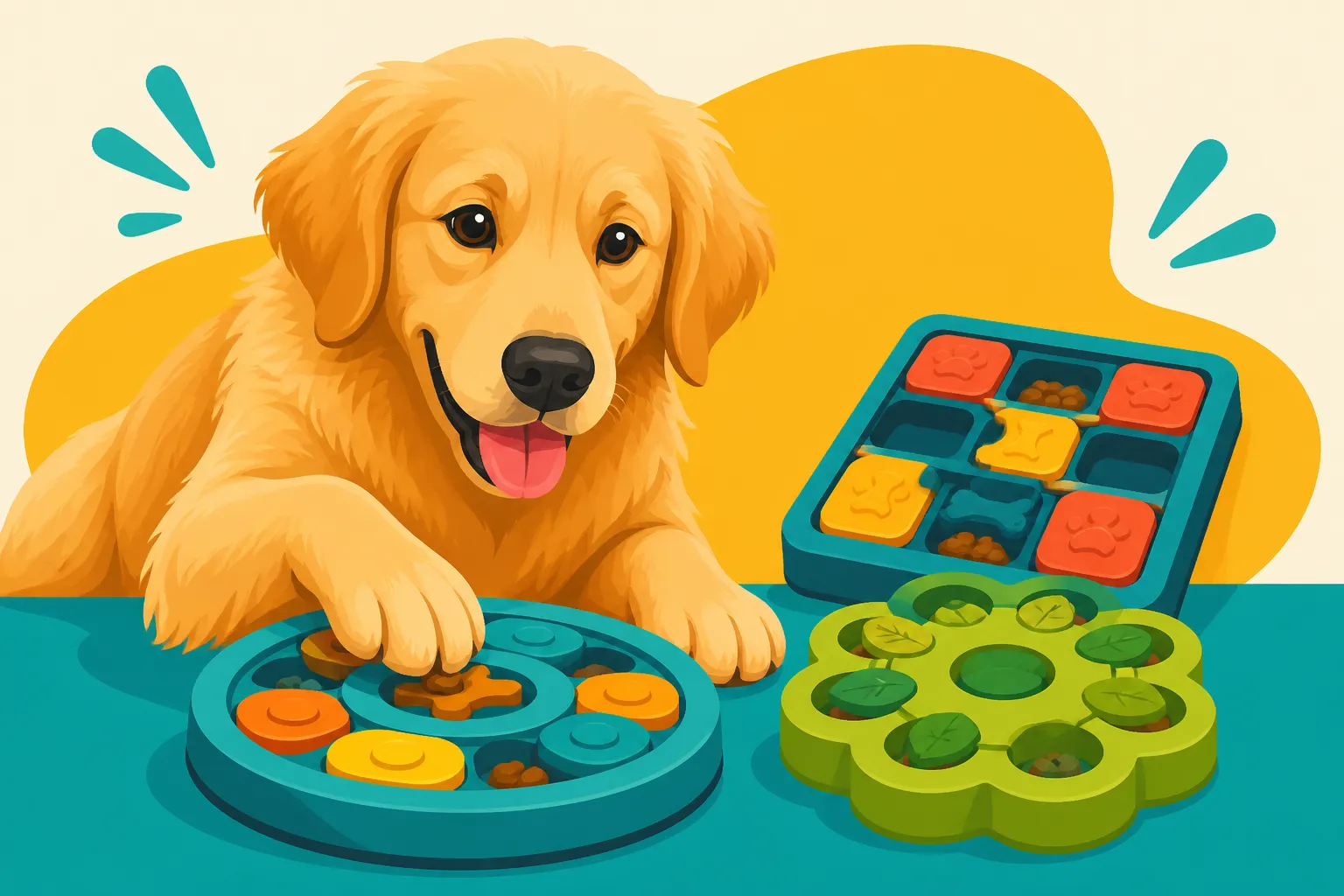
Puzzle Feeders That Occupy a Golden Retriever
There's nothing quite like the boundless energy and keen intelligence of a Golden Retriever. But let's be honest, sometimes that intelligence, coupled with their zest for life, can translate into behaviors we'd rather not deal with – like chewing furniture, incessant barking, or generally finding their own ways to entertain themselves, which usually involves something you value! A bored Golden is often a destructive Golden. This guide is all about harnessing that incredible Golden mind for good, specifically through the wonderful world of puzzle feeders, showing you how these tools can provide much-needed mental stimulation and turn mealtime into an engaging challenge that benefits both you and your furry family member.
The Golden Retriever's Innate Need for Mental Engagement
If you've ever lived with a Golden, you know they aren't content to just sit around all day. They are smart, eager to please, and thrive on having a "job" to do, even if that job is just figuring out how to get a tasty kibble from a tricky dispenser. Understanding this fundamental aspect of their nature is key to providing them with a truly fulfilling life.
More Than Just a Pretty Face: Golden Intelligence and Energy
Golden Retrievers are often ranked among the most intelligent dog breeds, and for good reason! They were originally bred as gun dogs, tasked with retrieving waterfowl and upland game for hunters, often requiring them to solve problems on the fly, remember locations, and work cooperatively with their human companions. This isn't just about physical exertion; it demands significant mental horsepower. Their Golden Retriever Intelligence Rankings often place them in the top tier, meaning they pick up on commands quickly and love to learn new things.
However, this high intelligence and inherent drive mean they need more than just a walk around the block or a quick game of fetch to be truly satisfied. Imagine a brilliant person given nothing challenging to do all day – they'd get bored, restless, and likely find less-than-ideal ways to occupy their mind. It's the same for our Goldens. They need opportunities to think, strategize, and use their problem-solving skills, which is where activities like puzzle feeders really shine. Without these outlets, all that mental energy doesn't just disappear; it often manifests in ways that are frustrating for us and not particularly productive for them.
The Downside of Boredom: When a Golden Entertains Themselves
When a Golden Retriever isn't getting enough mental stimulation, they will absolutely find ways to entertain themselves. And let's just say, their idea of entertainment often conflicts with yours. Have you ever come home to find a cushion shredded, your favorite shoe dismembered, or a fresh hole dug in the middle of your perfectly manicured lawn? These aren't acts of malice; they're symptoms of a bored dog trying to self-soothe or generate some excitement. Many owners mistake these behaviors as simple naughtiness, when in reality, they're often a desperate cry for more engagement.
Think about the intense chewing a young Golden might display during adolescence. While some of it is simply due to teething, a lot of it is also a way for them to cope with boredom or excess energy. Golden Retriever Chewing Through Adolescence can be a real challenge, and directing that natural inclination towards appropriate items, especially mentally stimulating ones like puzzle feeders, can save your furniture and your sanity. Similarly, excessive barking, destructive digging, or even relentless counter-surfing (because, hey, scavenging for food is a mental challenge!) can all stem from a lack of purposeful mental activity. Providing Mental Enrichment for a Bored Golden Retriever is just as important as physical exercise for their overall well-being and a calm household.
How Puzzle Feeders Transform Mealtime and More
Puzzle feeders aren't just a novelty; they're a powerful tool that can profoundly impact your Golden Retriever's health, behavior, and overall happiness. They elevate the simple act of eating into an engaging experience, offering benefits that extend far beyond just slowing down their meal.
Slowing Down the "Hoover" Dog: Digestion and Satiety
One of the most immediate and noticeable benefits of puzzle feeders for many Golden Retrievers is how they slow down eating. If you own a Golden, you probably know the term "hoover dog" well. Many Goldens, with their strong food drive, will inhale their meals in mere seconds, barely chewing. This rapid consumption isn't just a rude table manner; it can lead to several health issues. Eating too quickly can cause digestive upset, gas, and even increase the risk of a life-threatening condition called bloat, or Gastric Dilatation-Volvulus (GDV), which deep-chested breeds like Goldens are particularly susceptible to. Learning the Bloat in Golden Retrievers and the Signs Owners Miss is crucial, and mitigating risk factors like fast eating is part of that.
By forcing your Golden to work for each bite, puzzle feeders extend mealtime considerably. This slower pace allows their digestive system to process food more effectively, reduces the amount of air they swallow, and gives their brain time to register that they're full. This means less chance of an upset tummy and a greater feeling of satiety after their meal. Instead of a frantic gobble, they engage in a calm, focused activity that ends with a satisfied belly and a happy, slightly tired brain. Even if you Feeding an Adult Golden Retriever Twice a Day, replacing one or both meals with a puzzle feeder can make a huge difference.
A Daily Dose of Brain Games: Enrichment and Problem-Solving
Beyond simply regulating eating speed, puzzle feeders provide essential mental enrichment. They tap into a Golden's natural foraging instincts, turning mealtime into a stimulating "hunt." This engagement forces them to use their brains, paws, and noses to manipulate objects, solve mini-problems, and figure out how to release their food. This kind of problem-solving is incredibly satisfying for dogs and can lead to a more contented and less restless companion.
For example, a Golden presented with a treat-dispensing ball learns cause and effect – "if I roll this just so, a piece of kibble falls out!" More complex puzzles might teach them spatial reasoning as they slide panels or lift compartments. This mental workout is crucial, especially for breeds like the Golden, whose Golden Retriever Temperament and What to Expect includes a strong drive to engage with their environment. Regular mental challenges can help prevent behavioral issues like excessive barking or destructive chewing, as their energy is channeled into a positive, enriching activity. It's also an excellent way to provide mental stimulation on days when outdoor exercise might be limited due to bad weather or your own busy schedule.
Exploring the World of Puzzle Feeders for Your Golden
The variety of puzzle feeders available today is astounding, ranging from super simple to incredibly complex. The key is to know where to start and how to gauge the right level of challenge for your particular Golden. Remember, the goal is engagement, not frustration!
Beginner-Friendly Options: Simple & Rewarding
When you're first introducing your Golden to the concept of a puzzle feeder, it's vital to start with something easy and highly rewarding. You want them to succeed quickly to build their confidence and enthusiasm.
One excellent beginner option is a snuffle mat. These are mats made of fabric strips sewn onto a base, creating a "grass-like" texture where you can hide kibble or small treats. Your Golden uses their powerful nose to sniff out and forage for the food, which is a very natural and calming activity for them. They don't require much dexterity or complex problem-solving, just good old sniffing, which Goldens excel at. Another great starting point is a basic treat-dispensing ball or a KONG Wobbler. These usually require your dog to nudge, bat, or roll them to release kibble. The openings can often be adjusted to make it easier or harder. A simple roll and dispense mechanism ensures quick success. Even a good quality, well-designed slow feeder bowl can be considered an entry-level puzzle, breaking up their food with ridges or mazes to prevent gobbling. Many of these excellent starter options can be found with a quick search on Amazon, offering a wide selection of shapes, sizes, and materials to choose from. When selecting, just make sure the material is durable enough for a Golden's enthusiastic use!
Intermediate Challenges: Sliding & Flipping Fun
Once your Golden has mastered the basics and shows enthusiasm for the simpler puzzles, you can gradually introduce more complex challenges. These intermediate feeders often involve multiple steps or require a bit more dexterity and problem-solving.
Look for puzzles that incorporate sliding components, lifting pieces, or flipping lids. Brands like NINA OTTOSSON by Outward Hound offer a fantastic range of intermediate puzzles where your dog might need to slide panels with their nose or paw to reveal hidden compartments, or lift bone-shaped pieces to access the reward underneath. A classic KONG toy, stuffed with kibble mixed with a bit of peanut butter (xylitol-free, of course!), yogurt, or wet food and then frozen, also presents a wonderful intermediate challenge. It requires sustained licking and careful manipulation to get every last bit. These types of feeders encourage your Golden to think more strategically and use both their nose and paws in coordination. If you're looking for guidance on how to progress your dog through these stages, resources from reputable trainers, such as those sometimes highlighted by BAXTER & Bella, often provide excellent step-by-step approaches to building your dog's confidence and skill with such tools.
Advanced Puzzles: Multi-Step & Strategizing
For the truly "genius" Goldens who whiz through intermediate puzzles, there's a whole world of advanced options designed to test their cognitive limits. These often combine several different puzzle mechanisms and require a sequence of actions to unlock the reward.
Advanced puzzles might involve a series of levers, rotating disks, or even multiple layers that must be navigated. Your Golden might need to slide a panel, then lift a block, and then slide another piece to finally get to the food. These require significant focus, patience, and strategic thinking. While incredibly rewarding for a smart Golden, it's crucial that these puzzles are made from robust, durable materials. A determined Golden who is frustrated by a flimsy puzzle might quickly resort to chewing through it to get to the food, defeating the purpose. Always supervise closely when introducing new, more complex puzzles to ensure they're engaging their brain rather than their jaws in destructive ways.
Here's a quick comparison of popular puzzle feeder types:
| Puzzle Feeder Type | Difficulty Level | Primary Skill Required | Material (Common) | Cleaning Ease | Benefits |
|---|---|---|---|---|---|
| Snuffle Mat | Easy | Scenting, Foraging | Fabric | Moderate | Calming, natural behavior, no destruction |
| Treat-Dispensing Ball | Easy/Medium | Nudging, Rolling | Plastic, Rubber | Easy | Slows eating, simple engagement |
| Slow Feeder Bowl | Easy | Navigating obstacles | Plastic, Ceramic | Easy | Primary for fast eaters, minimal "puzzle" |
| Sliding/Flipping Tray | Medium/Hard | Paw/Nose manipulation | Plastic, Wood | Moderate | Develops dexterity, problem-solving |
| Stuffed KONG (Frozen) | Medium/Hard | Licking, Persistence | Rubber | Moderate | Long-lasting, great for alone time |
| Multi-Step Games | Hard | Sequencing, Strategy | Durable Plastic, Wood | Moderate | High mental workout, builds focus |
Choosing and Introducing the Perfect Puzzle Feeder
Selecting the right puzzle feeder isn't just about picking the prettiest one; it's about finding a tool that aligns with your Golden's personality, skill level, and your household needs. A thoughtful introduction is just as important as the selection itself to ensure a positive and rewarding experience.
Factors to Consider: Material, Size, and Cleaning
When you're browsing the aisles (physical or virtual on Amazon!) for a new puzzle feeder, keep these crucial factors in mind:
First, durability of material is paramount, especially with a breed known for its strong jaws and enthusiasm like the Golden Retriever. Opt for sturdy, food-grade plastics, hard rubber, or solid wood. Avoid flimsy materials that could break easily, creating choking hazards or simply failing to withstand your Golden's attempts to "solve" the puzzle by force. You want a puzzle that challenges their mind, not one that succumbs to their chewing power.
Second, size matters. A puzzle feeder that's too small could be a choking hazard, or simply too frustrating for a large Golden to manipulate effectively with their paws and nose. Conversely, one that's too large might be cumbersome. Ensure the feeder is appropriately sized for your Golden's muzzle and paw dexterity. The holes for dispensing food should also be large enough for the kibble you use but small enough to require effort.
Finally, ease of cleaning is often an overlooked but vital consideration. If you're going to use a puzzle feeder regularly, especially with wet food or sticky treats, it needs to be easy to wash. Look for designs that can be disassembled, have wide openings, or are made of non-porous materials that can be easily hand-washed or even tossed in the dishwasher. A dirty puzzle feeder can harbor bacteria and quickly become unappealing.
A Step-by-Step Introduction for Success
Introducing a puzzle feeder shouldn't be a test of intelligence; it should be a fun and rewarding experience. Here's how to set your Golden up for success:
- Start with Easy Mode: As mentioned before, begin with the simplest version of the feeder. If it has adjustable difficulty, set it to the easiest setting. For a treat-dispensing ball, make sure the holes are wide open so food falls out easily. For a sliding puzzle, leave some compartments partially open. The goal is for your Golden to quickly understand the concept: "manipulate this, get food."
- Use High-Value Rewards: Initially, fill the feeder with treats or kibble your Golden absolutely loves. This increases their motivation and makes the experience incredibly positive. As they get better, you can transition to their regular kibble.
- Supervise Closely: Always supervise your Golden during their first few interactions with a new puzzle feeder. This allows you to guide them if they get stuck, prevent them from getting frustrated, and ensure they're using it as intended rather than trying to chew it apart. If you see signs of frustration (excessive pawing, trying to chew the toy instead of solve it), intervene and make it easier.
- Positive Reinforcement: When your Golden successfully gets food out, offer calm verbal praise ("Good dog!") to reinforce the positive behavior. Avoid over-excitement, as you want them to remain focused on the task. Many training methodologies, including those often advocated by platforms like BAXTER & Bella, emphasize building confidence through successful repetition and positive associations, and this applies perfectly to puzzle feeders.
- Gradually Increase Difficulty: Once your Golden consistently masters the easy level, you can slowly increase the challenge. Close the dispenser holes slightly, add more sliding components, or stuff the KONG a bit tighter. Always observe their reaction and revert to an easier level if they show signs of frustration. The aim is engagement, not exasperation!
Integrating Puzzle Feeders into Your Golden's Routine
Puzzle feeders are most effective when they become a regular part of your Golden's routine. They aren't just for special occasions but can be a daily tool for enrichment and behavioral management.
Daily Use and Beyond Mealtime
Making puzzle feeders a daily staple can dramatically improve your Golden's quality of life. Consider replacing at least one of their regular meals with a puzzle feeder. Instead of scarfing down breakfast or dinner in two minutes flat, they'll spend 10-20 minutes (or even longer, depending on the puzzle and difficulty!) engaging their brain and body. This helps with Slow Feeder Bowls for a Fast-Eating Golden and ensures they get that mental workout every single day. For some Goldens, particularly those with higher energy or working lines, you might even consider using puzzle feeders for both meals.
But their utility extends beyond just meal replacement. Puzzle feeders are fantastic for:
- Quiet Time: When you need your Golden to settle down while you're working, making dinner, or having guests over, a puzzle feeder can provide a focused, calming activity.
- Alone Time: If your Golden struggles with being left alone, a puzzle feeder can be a valuable distraction. Give them a challenging, long-lasting puzzle (like a frozen KONG) just before you leave. This helps create a positive association with your departure and keeps them occupied. This strategy is an excellent component for Building Alone-Time Tolerance in a Golden Puppy.
- Rainy Day Fun: On days when outdoor exercise is limited due to bad weather, a puzzle feeder can help burn off mental energy that might otherwise lead to destructive behavior.
- Treat Dispensing: Instead of just handing out treats, put them in a puzzle toy. It makes the treat last longer and adds value to the reward.
Avoiding Common Pitfalls and Keeping It Fresh
Even with the best intentions, it's easy to fall into some common traps when using puzzle feeders. Being aware of these can help you maximize their benefits and keep your Golden engaged.
One major pitfall is monotony. If you only ever use the same puzzle feeder, your Golden will quickly master it and lose interest. Their intelligence means they'll learn the "trick" to a particular puzzle, and once solved, it's no longer a challenge. To combat this, rotate your puzzle feeders. Have a selection of 2-3 different types and switch them out regularly. You can also vary the food you put inside – sometimes kibble, sometimes a mix of kibble and high-value treats, sometimes even a dollop of pumpkin puree or a smear of dog-safe peanut butter. This keeps the experience fresh and exciting for your Golden.
Another mistake is leaving destructible puzzles unsupervised. Some Goldens, especially when still learning or if they get frustrated, might resort to chewing the puzzle itself. If you know your Golden is a power chewer, or you're introducing a new, less durable puzzle, always supervise. If you see them trying to chew the toy rather than solve it, redirect them or put the puzzle away for a bit and try again later with an easier version or a more durable type. The goal is problem-solving, not destruction.
Finally, remember to clean your puzzle feeders regularly. Leftover food can get stale, attract pests, or grow mold, making the puzzle unappealing and potentially unhealthy. Most puzzles are designed for easy cleaning, so make it a habit after each use, especially if you're using wet ingredients. By making puzzle feeders a consistent, varied, and positive part of your Golden's life, you'll be providing them with essential mental stimulation that contributes to a happier, healthier, and more well-behaved companion.
Disclaimer
This article is for general informational purposes only and does not constitute professional advice. Laws, prices and regulations vary by location and change over time. Consult a qualified professional for guidance on your specific situation.