End-of-Life Decisions for a Golden Retriever
End-of-life decisions for aging Golden Retrievers involve assessing quality of life using the HHHHHMM scale and tracking daily habits.
Know what to watch for.
Breed-specific conditions, screening and DNA tests, what surgery actually costs, and the daily habits that stretch a healthy lifespan.

End-of-life decisions for aging Golden Retrievers involve assessing quality of life using the HHHHHMM scale and tracking daily habits.

Golden Retriever pain signs include slower movement, a bunny hopping gait, reluctance on stairs, and subtle daily behavioral shifts.
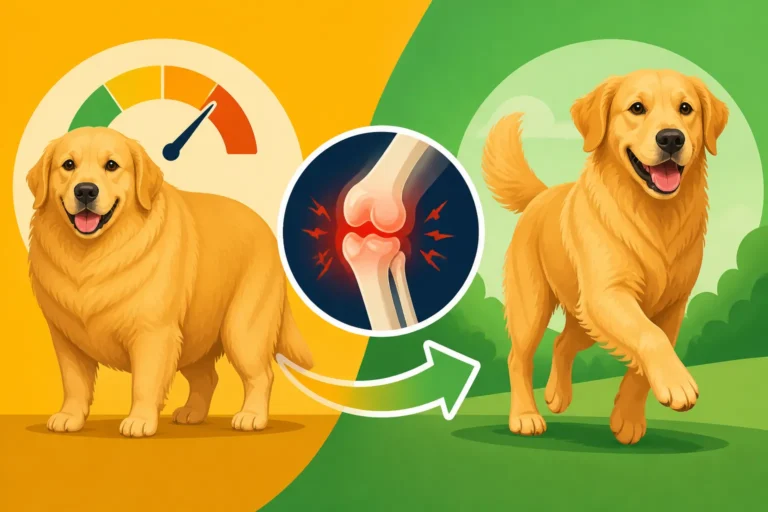
Excess weight in Golden Retrievers accelerates joint damage and worsens genetic conditions like hip and elbow dysplasia.

Proactive cancer screening methods for older Golden Retrievers help owners understand tests and work with veterinarians.

Golden Retriever genetic tests identify hereditary health conditions, helping owners understand DNA results and provide preventative care.

Golden Retriever spay and neuter timing research explains how sterilization affects joint health, cancer risks, and dog behavior.

Golden Retriever vaccination schedules detail core and non-core shots, including rabies given between twelve and sixteen weeks.

Golden Retriever twice-yearly veterinary visits explain early cancer detection and rapid progression of breed specific health conditions.

Golden Retriever arthritis causes painful joint cartilage degeneration, but early sign recognition helps keep dogs comfortable and active.

Gastric dilatation volvulus in deep-chested Golden Retrievers explains symptoms, warning signs, and rapid surgical intervention.