Early Signs of Retinal Atrophy in Goldens
It's incredibly disheartening to watch your beloved Golden Retriever navigate the world with less confidence, especially when their keen eyesight, once so vibrant and expressive, begins to dim. Catching the very first, often subtle, indicators of Progressive Retinal Atrophy (PRA) can feel like trying to find a needle in a haystack, yet understanding these early signs is crucial for managing the condition and providing your furry family member with the best possible support. This guide will walk you through what to look for, from behavioral shifts to physical changes in their eyes, so you can act quickly and compassionately.
Understanding Progressive Retinal Atrophy in Golden Retrievers
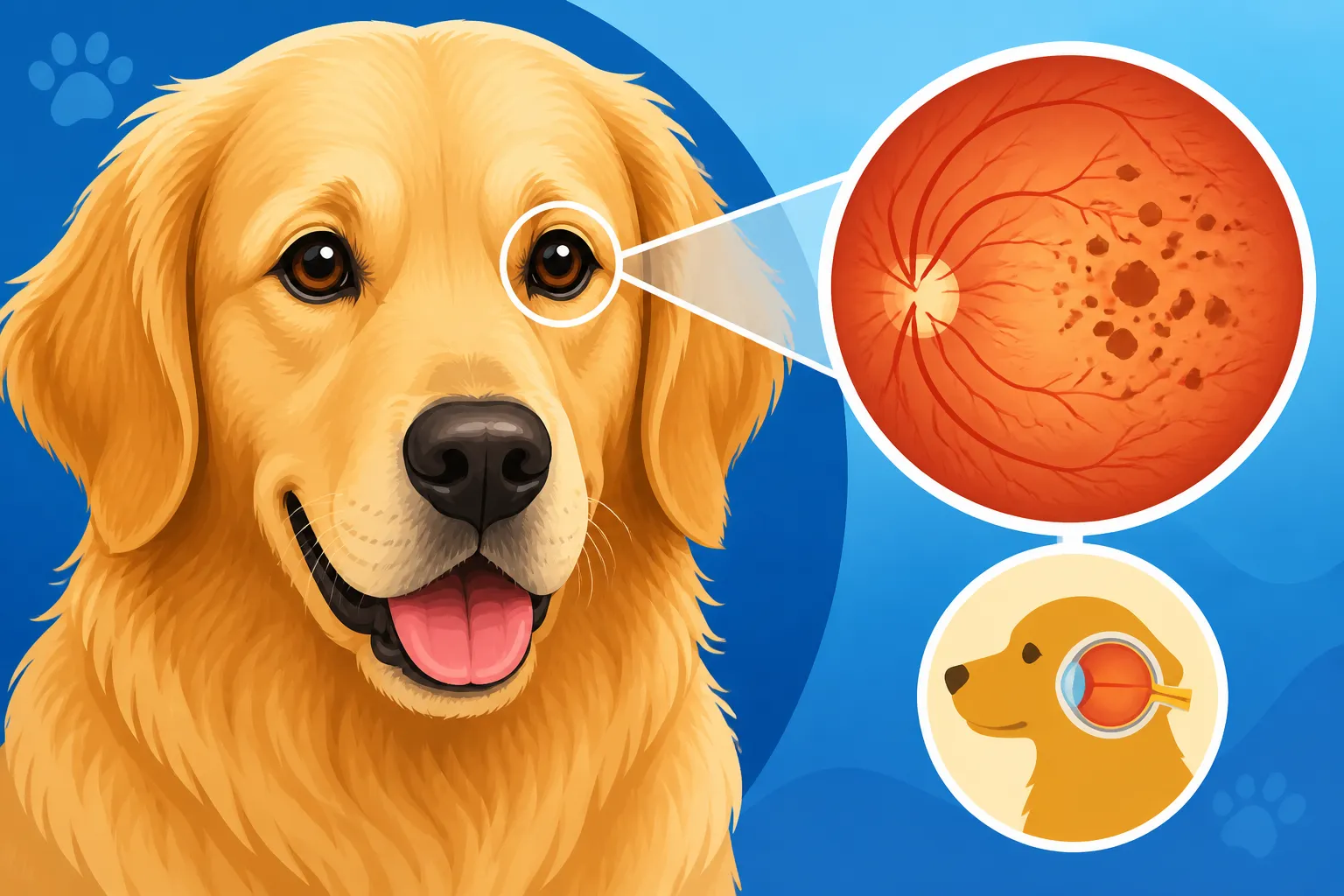
Progressive Retinal Atrophy, often simply called PRA, is a group of genetic diseases that affect the retina, the light-sensitive tissue at the back of your Golden's eye. Imagine the retina as the film in a camera; it captures images and sends them to the brain. In dogs with PRA, the cells in this "film" slowly degenerate over time, eventually leading to blindness. It's not an overnight change, which is why those early, almost imperceptible signs are so important to recognize.
What Exactly is PRA and How Does it Progress?
At its core, PRA means the photoreceptor cells – the rods and cones responsible for detecting light and color – begin to fail. Rods are critical for vision in low light (think night vision), while cones handle bright light and color perception. Most commonly, PRA in Golden Retrievers starts by affecting the rod cells first, meaning night blindness is often the very first symptom you might notice. This can be particularly frustrating for owners, as dogs are incredibly resilient and adapt remarkably well to gradual changes, especially in familiar surroundings. You might not realize there's an issue until their vision loss is quite advanced.
The progression isn't always linear, but generally, it moves from night blindness to difficulty seeing in brighter conditions, eventually resulting in complete blindness. The rate of progression can vary significantly, even within the same breed, depending on the specific genetic mutation at play. Some Goldens might show signs as young puppies (early-onset PRA), while others might not develop symptoms until their senior years (late-onset PRA). This variability makes it a challenging condition to predict without proper genetic testing.
The Genetic Link in Golden Retrievers
The Golden Retriever breed is sadly predisposed to certain forms of PRA due to specific genetic mutations. One of the most common forms affecting Goldens is called progressive rod-cone degeneration (PRCD-PRA). This form is inherited in an autosomal recessive pattern, meaning a dog must inherit two copies of the affected gene (one from each parent) to develop the disease. If a dog inherits only one copy, they are considered a carrier and won't develop PRA themselves, but they can pass the gene on to their offspring.
This genetic predisposition underscores the immense importance of responsible breeding practices. Reputable Golden Retriever breeders will conduct genetic testing on their breeding stock for PRCD-PRA and other known genetic conditions. If you're considering a puppy, always ask to see the health clearances for both parents, including their genetic test results for PRA. Without this vital information, you could unknowingly bring home a puppy destined for vision loss. Understanding Golden Retriever Genetic Tests Worth Running can give you peace of mind and help you choose a healthy pup.
Subtle Behavioral Changes to Watch For
Because PRA often begins with night blindness and progresses slowly, your Golden Retriever might become a master of compensation. They know your home like the back of their paw, mapping every piece of furniture, every doorway. It's when things change, or when light conditions are less than ideal, that you might start picking up on those faint whispers of vision trouble.
Night Blindness First: Navigating Low-Light Conditions
The earliest and most common sign of PRA is a gradual loss of night vision. Your Golden might start to hesitate in dimly lit rooms, or when going outside after dusk. Picture this: you let your dog out for their last potty break of the night. Where they once trotted confidently into the yard, they now move more slowly, perhaps bumping into a garden gnome they've walked past a thousand times, or seem unsure of their footing on uneven ground.
Inside the house, you might notice them being more hesitant to go into a room that isn't fully lit, or they might "sticky foot" around furniture, keeping a paw down to gauge where they are before taking the next step. They might start bumping into objects they usually navigate perfectly, especially if the lighting isn't bright. For instance, if you get up for a drink in the middle of the night, your Golden might follow you and stumble over a rug or the corner of a table they've always avoided. These small hesitations, bumps, or an overall reluctance to move in the dark are significant early warnings.
Changes in Familiar Spaces and Environments
Goldens are incredibly intelligent and use their other senses—smell, hearing, and memory—to compensate for declining vision. This means they can often navigate your home, your usual walk routes, and even your backyard with surprising agility, making it harder for you to notice the problem. However, pay close attention if you introduce anything new or slightly alter their environment.
Have you moved a piece of furniture, even a small chair, from its usual spot? A Golden with early PRA might walk directly into it, whereas before they would have gracefully dodged it. If you're on a walk and take a slightly different path, or encounter a new obstacle (like a construction cone), they might seem disoriented or overly cautious. They might also start relying more on you, sticking closer to your leg, especially in unfamiliar places. This isn't clinginess; it's a reliance on your presence to guide them through what has become a fuzzy, uncertain world. Consider how these subtle changes might impact their ability to socialize during their Golden Retriever Puppy Socialization Windows if PRA were to manifest early.
Reluctance and Decreased Confidence in Activities
Beyond simply bumping into things, vision loss can manifest as a general decline in your Golden's confidence and enthusiasm for activities they once loved. The retrieve instinct is strong in Goldens, it's literally in their name! But if their vision starts to go, they might become less interested in chasing a ball or a frisbee, particularly if it's thrown far or if the light isn't perfect. They might lose sight of it in mid-air or simply not track it as effectively.
Think about playtime: are they missing toys they used to catch with ease? Are they less eager to explore new trails on hikes, preferring the well-worn path they know? A Golden who suddenly shies away from jumping into a dark car or hesitates on stairs they've always bounded up could be experiencing visual uncertainty. This reduction in confidence can also translate into more hesitant interactions with other dogs or people, as they might not see them approaching clearly, leading to startled reactions. It's a heartbreaking transformation for such a typically joyful and self-assured breed.
Visible Clues in Your Golden's Eyes
While behavioral changes are often the first tell-tale signs, there are also physical indicators that can appear in your Golden's eyes as PRA progresses. These are typically more noticeable in later stages, but sometimes early changes can be spotted if you know what to look for.
Dilated Pupils and Increased Eye Shine
One of the more common visible signs you might notice, particularly as night vision deteriorates, is that your Golden's pupils appear larger or more dilated than usual, especially in normal room lighting or dim conditions. The eyes naturally try to let in more light to compensate for the degenerating retina, causing the pupil to expand. Because the pupils are so wide, you might also notice an exaggerated "eye shine" or tapetal reflection when light hits their eyes, especially in flash photographs or when caught in headlights.
This "eye shine" comes from a reflective layer behind the retina called the tapetum lucidum. In healthy eyes, it reflects some light, creating that characteristic glow. With PRA, as the retina thins and degenerates, more light passes through it and reflects off the tapetum, making the eyes appear unnaturally bright or iridescent. It can be a stunning, almost spooky, emerald or amber glow in photos that wasn't there before. This isn't just a trick of the light; it's a visible symptom of retinal changes.
A Cloudy or Bluish Haze: Secondary Cataracts
While PRA directly affects the retina, it often leads to secondary conditions in the eye, most notably cataracts. As the retina degenerates, it releases metabolic byproducts that can cause the lens of the eye to become cloudy, forming cataracts. These cataracts will appear as a milky, bluish, or whitish haze within the pupil, sometimes starting as small specks and gradually growing to cover the entire lens.
It's important to understand that cataracts themselves cause vision loss, but in the context of PRA, they are often a secondary complication to an already failing retina. So, even if the cataracts were surgically removed (which is sometimes an option for primary cataracts), the underlying retinal degeneration of PRA would still mean your Golden couldn't see. Observing any cloudiness in your Golden's eyes warrants an immediate veterinary check-up, as it could be a sign of PRA or other serious eye conditions. For more information on age-related vision changes, you might find our article on Cataracts in an Aging Golden Retriever helpful.
| Early PRA Sign | What to Look For | Normal Behavior |
|---|---|---|
| Night Vision | Hesitation, bumping into familiar objects, slower movement in dim light or darkness. | Confident navigation in low light, easily finding toys or paths at dusk. |
| Navigation | Stumbling over slightly moved furniture, excessive caution in new environments, sticking close to handler. | Adapts quickly to minor changes, explores new places with enthusiasm. |
| Confidence | Reluctance to play fetch, missing toys, decreased enthusiasm for adventurous walks, startled by sudden approaches. | Eagerly retrieves, confident in various settings, greets others openly. |
| Pupil Size | Pupils appear larger, more dilated, especially in normal or dim lighting. | Pupils adjust appropriately to light levels, appearing smaller in bright light. |
| Eye Shine | Increased, more intense, or unnaturally bright reflection (tapetal shine) in flash photos or low light. | Normal, subtle eye reflection in photos; not overly bright or iridescent. |
| Lens Clarity | Development of a milky, bluish, or whitish haze in the pupil (secondary cataracts). | Clear, transparent lens; no cloudiness or opacity visible through the pupil. |
When to See the Vet and What to Expect
If you've noticed any of these subtle behavioral changes or visible clues, it's time to make an appointment with your veterinarian without delay. Early diagnosis won't cure PRA, but it allows you to understand what's happening and begin adapting your Golden's environment and routine to ensure their continued safety and quality of life. The thought of your vibrant Golden losing their sight is terrifying, but knowledge is power, and your vet is your best ally.
Initial Veterinary Examination and Referral
When you bring your Golden Retriever in, your regular veterinarian will perform a thorough physical examination, including a basic ophthalmic exam. They'll likely use an ophthalmoscope to look into your dog's eyes and check the general health of the retina. They might also test your dog's menace response (the reflex to blink when an object rapidly approaches the eye) and pupillary light reflexes to gauge vision. While your general vet can spot obvious issues, a definitive diagnosis of PRA usually requires a specialist.
Don't be surprised if your vet recommends a referral to a board-certified veterinary ophthalmologist. These specialists have advanced training and equipment to perform more detailed examinations. They can distinguish PRA from other eye conditions like glaucoma or primary cataracts, which might present with similar symptoms but have different causes and prognoses. A specialist is crucial for an accurate diagnosis and for guiding you through the next steps. Regular eye check-ups are always a good idea for Goldens, so understanding How Often a Golden Retriever's Eyes Need Checking can be very beneficial.
Advanced Diagnostic Tests for PRA
At the ophthalmologist's office, several advanced tests might be performed:
- Indirect Ophthalmoscopy: This provides a magnified, wide-angle view of the retina, allowing the specialist to look for characteristic changes associated with PRA, such as retinal thinning or changes in blood vessels.
- Electroretinography (ERG): This is the definitive diagnostic test for PRA. It's similar to an EKG for the heart but measures the electrical activity of the retinal cells in response to flashes of light. Even before visible signs of PRA or behavioral changes appear, an ERG can detect the dysfunction of the rod and cone cells, making it crucial for early and accurate diagnosis, especially in breeding animals.
- Genetic Testing: If an ERG confirms PRA, the ophthalmologist might recommend genetic testing to identify the specific mutation responsible. Knowing the genetic cause can provide information about the expected progression and also be vital for informing breeders. As mentioned earlier, there are DNA tests available for common forms of PRA in Golden Retrievers, such as PRCD-PRA.
These diagnostic steps, especially the ERG and specialist consultations, can unfortunately come with a significant cost. Many Golden Retriever owners worry about unexpected medical expenses. This is where investing in pet insurance, like a plan from Healthy Paws, can provide immense relief. Knowing that a substantial portion of these diagnostic and ongoing care costs could be reimbursed allows you to focus solely on your Golden's well-being without added financial stress.
Living with and Managing Progressive Retinal Atrophy
Currently, there is no cure or effective treatment to reverse the effects of PRA. While research continues into gene therapy and other potential treatments, for now, managing PRA focuses entirely on adapting to your Golden's progressive vision loss and ensuring their quality of life.
This means being proactive in making your home a safe and easy-to-navigate environment. Try not to move furniture, keep pathways clear, and consider using gates to block off dangerous areas. Scent markers or textured mats can help your dog identify different rooms or areas. Verbal cues become even more important – use consistent commands for "step up," "watch out," or "this way." Continue engaging them in activities they love, adapting games to their reduced vision. For instance, instead of fetching a ball, play "find it" games using strong-smelling treats.
It's also important to remember that your Golden will still rely heavily on their other senses, and their bond with you will only deepen. Providing comfort, consistency, and patience will be paramount. Some owners find significant peace of mind knowing they are prepared for the financial aspects of long-term care, from specialized vet visits to adapting their home, especially if they have pet insurance from providers like Healthy Paws. This support can help cover the various expenses associated with a chronic condition, allowing you to focus on loving and caring for your Golden without added financial burden. The journey of Caring for a Senior Golden Retriever often involves similar adaptations as they face age-related sensory decline.
Disclaimer
The information provided in this article is for general informational purposes only and is not a substitute for professional veterinary advice, diagnosis, or treatment. Always seek the advice of your veterinarian or other qualified health provider with any questions you may have regarding a medical condition.