Weaning a Golden Retriever Off Food Rewards
It’s a common scenario: you bring home your adorable Golden Retriever puppy, full of enthusiasm to train them, and quickly discover that a tiny treat is the magic key to their attention. Suddenly, every "sit," every "stay," and every "come" seems to require a visible piece of kibble or a tasty morsel. You start feeling like a walking treat dispenser, constantly reaching into your pocket, and worry your Golden won't listen unless there's a reward in sight. This guide is here to walk you through the realistic steps of weaning your Golden Retriever off constant food rewards, helping them perform reliably because they want to, not just because they expect a snack.
Understanding Why We Use Food Rewards in the First Place
Let's be honest, food is a powerful motivator for almost every living creature, and Golden Retrievers are no exception. They are famously food-driven, which makes initial training a breeze – until it becomes a habit that's hard to break.
The Power of Positive Reinforcement
When you first start training your Golden Retriever, especially as a puppy, food acts as an incredibly strong positive reinforcer. Think about it: your puppy performs a desired behavior, like sitting, and immediately receives something delicious. This creates a clear, undeniable link in their mind: "If I do X, I get Y (which is awesome!)." This immediate gratification is crucial for teaching new commands and shaping behavior. It's why we often recommend having a stash of Best Treats for Training a Golden Retriever ready when you're first introducing a new skill.
This positive association builds trust and makes learning enjoyable for your Golden. They aren't being forced or intimidated; they are actively choosing to engage with you because it leads to a pleasant outcome. It's the foundation of effective, humane training, and it harnesses your Golden's natural desire to please and, well, eat! Without this initial strong reinforcement, many puppies would struggle to grasp what we're asking of them, or they'd lose interest quickly.
When Food Rewards Become a Crutch
The challenge arises when this wonderful training tool inadvertently becomes a dependency. You might notice your Golden staring intently at your hand before responding to a command, or worse, completely ignoring you if they don't see a treat. This isn't stubbornness; it's often a learned association. Your Golden has simply learned that "sit" always means a treat follows, and if there's no treat, why bother?
This can be incredibly frustrating for owners. You want your dog to listen in all situations, not just when you're armed with a pouch full of goodies. It can feel like your Golden isn't really "trained" if they're only performing for payment. You might also worry about their weight if you're constantly doling out treats, even small ones. This dependency can also hinder reliability in real-world scenarios, like if you need an immediate "come" command at the park and don't have a treat readily available. The goal is for your Golden to understand the command and perform it because they've learned it, and because they value your praise and the inherent satisfaction of doing a good job.
The Phased Approach to Fading Food Rewards
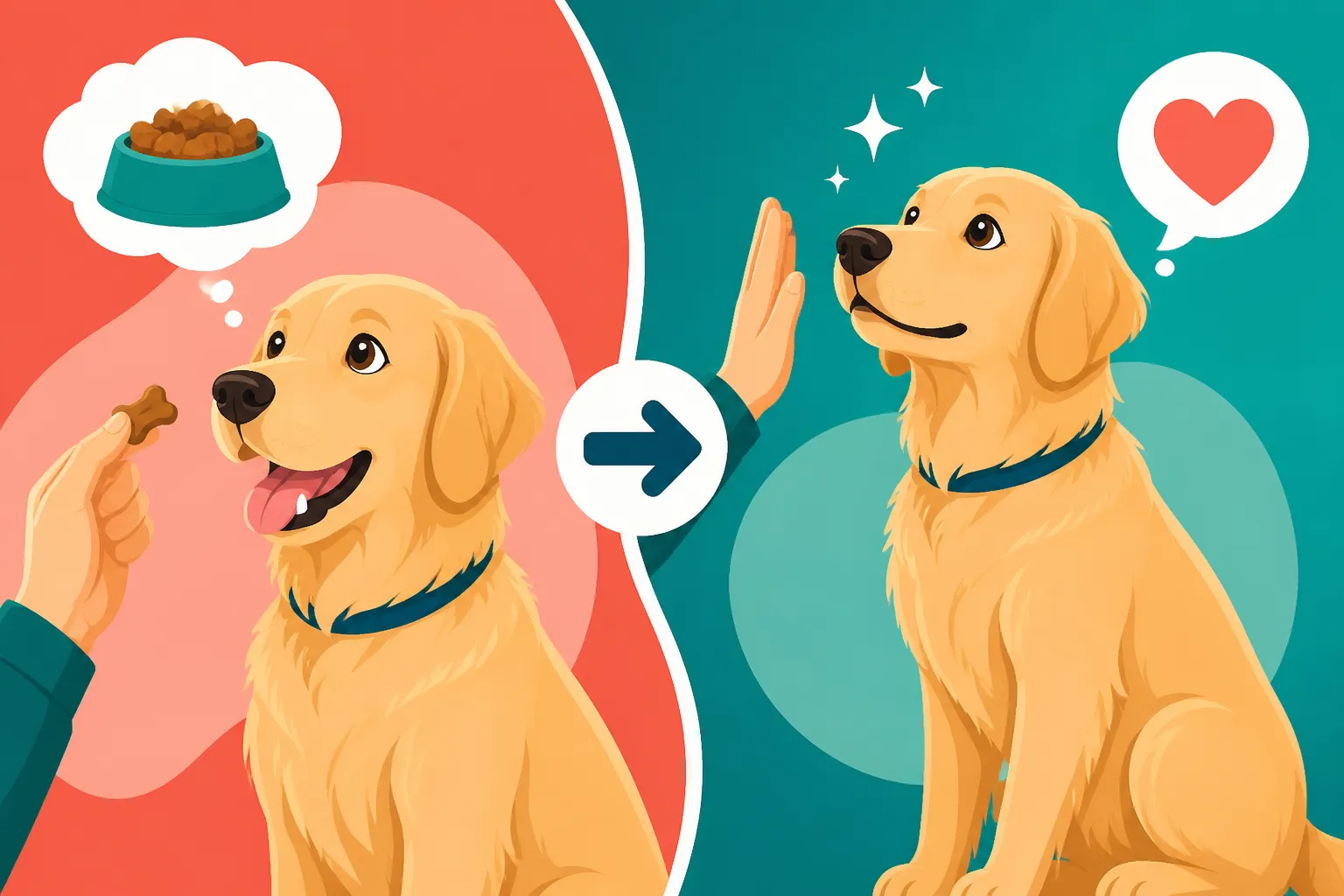
Moving beyond constant food rewards isn't about eliminating them entirely overnight. It's a gradual, thoughtful process designed to maintain your Golden's motivation while shifting their expectation from a guaranteed treat to a potential treat, or even a different type of reward.
Transitioning to Intermittent Reinforcement
The key to weaning is understanding and implementing intermittent reinforcement. Instead of rewarding every single time your Golden performs a command correctly, you'll start rewarding them randomly. This creates a psychological effect where the dog actually works harder and stays more engaged because they never know when the treat is coming, only that it might come. Think of it like a slot machine: if it paid out every time, it wouldn't be as exciting. The unpredictability keeps things interesting!
Here's how to do it:
- Start with a High Success Rate: Make sure your Golden is consistently performing the behavior (say, 90-100% of the time) in a low-distraction environment before you start fading. If they're still struggling, keep using treats every time for a bit longer.
- Reward Every Other Time (Initially): Once they're consistent, start rewarding every second successful attempt. Then, every third. Gradually increase the number of successful performances before a treat is given.
- Vary the Schedule: Don't get stuck on a rigid "every third time" schedule. Sometimes reward the first time, sometimes the fifth, sometimes the second. The unpredictability is crucial. Your Golden will learn that even if they don't get a treat this time, it's worth trying again because they might get one next time.
- Reward for Excellence: When you do give a treat, make it count. Reserve treats for the fastest, most enthusiastic, or most accurate responses. This teaches your Golden that extra effort gets extra reward.
This process helps your Golden generalize the behavior, meaning they perform it regardless of whether a treat is physically present. It shifts their focus from your hand to your verbal cue and their own understanding of the command. For complex commands like Building Reliable Recall in a Golden Retriever, this intermittent reinforcement is vital for real-world reliability.
Introducing Other Reinforcers
Food is fantastic, but it's not the only thing your Golden Retriever loves! As you begin to fade food rewards, it's essential to introduce and "charge" other forms of positive reinforcement. These can be even more rewarding for your particular Golden than a piece of kibble.
Consider these non-food rewards:
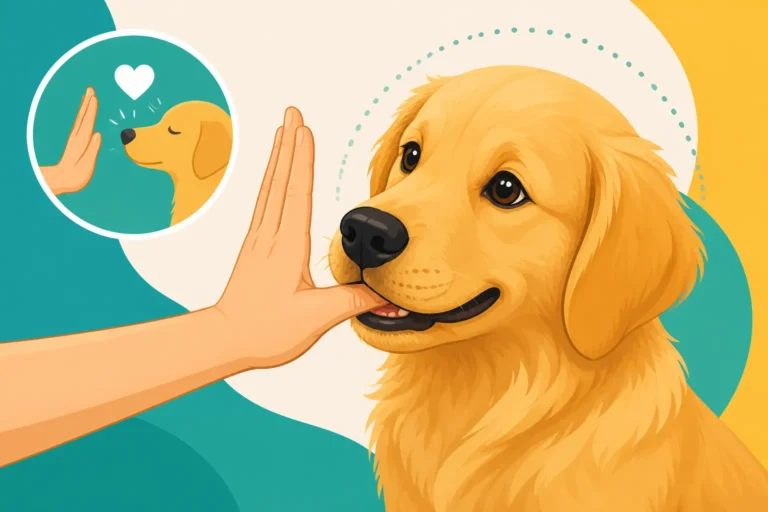
- Verbal Praise: A cheerful "Good dog!" or "Yes!" delivered with enthusiasm. Your tone of voice is incredibly important here.
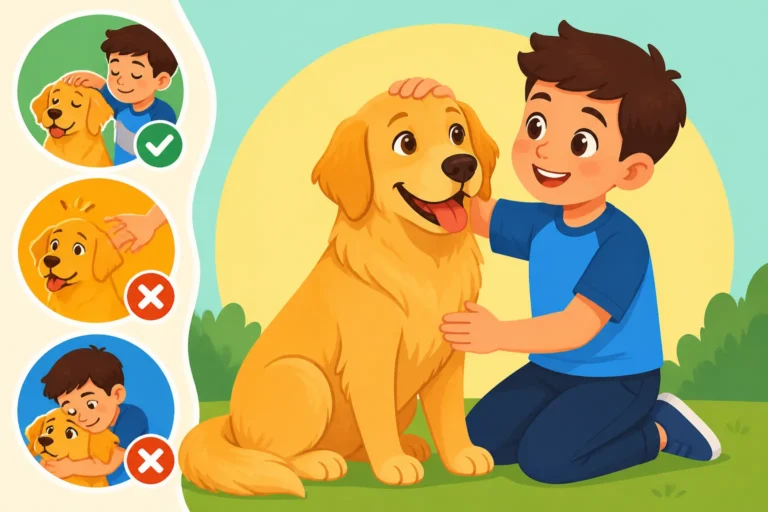
- Physical Affection: A quick scratch behind the ears, a belly rub, or a gentle pat. Make sure your Golden genuinely enjoys this type of touch as a reward.
- Play: A quick game of tug, a toss of their favorite ball, or a chase in the yard. Goldens are born to retrieve, so Fetch Games That Tire a Golden Retriever can be a huge motivator. For many Goldens, a toy is even higher value than a treat! You can find a wide variety of durable toys on Amazon to see what your Golden loves most.
- Life Rewards: This is a big one! Allowing your Golden access to something they want naturally. For example, sitting politely by the door means they get to go outside, or waiting patiently means they get their dinner bowl. We'll delve into this more later.
The trick is to pair these new rewards with food initially. So, when your Golden sits, say "Good!" (verbal marker), give them a treat, and then follow up with a quick pet or a toy toss. Over time, you can start to drop the food reward while keeping the verbal praise, physical affection, or play. Your Golden will associate the "Good!" and the praise with the chance of food, and will learn that these other things are also highly desirable outcomes. This is also important for helping your Golden tolerate Golden Retriever Puppy Training Sessions That Are Too Long by breaking them up with play.
Building a Stronger Verbal Marker
A verbal marker is a short, distinct word (like "Yes!" or "Good!") that tells your Golden Retriever the exact moment they performed the correct behavior. It's essentially an auditory "click" without the clicker. Many owners are familiar with Marker Training a Golden Retriever With a Clicker, and the verbal marker works on the same principle.
To build a stronger verbal marker:
- Charge the Marker: For a period, every time you say your marker word, immediately follow it with a treat. Do this numerous times, even when you're not actively training. The goal is for your Golden to hear "Yes!" and instinctively think, "Treat is coming!"
- Use it Precisely: When your Golden performs the desired behavior, say your marker word the instant they do it correctly. For example, the moment their rear touches the ground for a "sit."
- Follow with a Reward (Initially): After the marker, always follow with some form of reward – whether it's a treat, a piece of kibble, or a quick game.
- Gradually Fade the Food: Once your marker is strongly "charged," you can start using it as your primary immediate reward cue. Now, when your Golden sits, you say "Yes!" and sometimes follow with a treat, sometimes with praise, sometimes with a quick game. The marker word itself becomes a powerful predictor of good things, making the absence of a treat less impactful.
This strategy ensures that your Golden still gets immediate feedback that they did well, even if a food reward isn't consistently dispensed. The marker becomes its own reinforcer, telling them they're on the right track.
Strategies for Real-World Success and Common Pitfalls
Weaning off food rewards isn't a linear process. You'll have good days and days where your Golden acts like they've never heard the word "sit" before. The key is patience, consistency, and a realistic understanding of what your dog needs.
Practicing in Different Environments
One of the biggest mistakes owners make is assuming that if their Golden performs perfectly in the quiet living room, they'll do the same at a busy park. The reality is that dog training is highly context-dependent. A behavior is not truly learned until it can be performed reliably in various environments and with increasing levels of distraction.
Here's how to tackle environmental challenges:
- Start Simple, Then Add Layers: Begin fading treats in the least distracting environment possible, like your quiet home. Once your Golden is performing well with intermittent treats there, move to a slightly more distracting area, like your backyard.
- Gradual Exposure: Slowly introduce more challenging environments: a quiet street, a friend's house, a pet store, and finally, a busy park.
- Lower Your Expectations (and Reintroduce Treats): When you move to a new, distracting environment, temporarily increase your rate of reinforcement. This might mean going back to rewarding every correct response with a treat, or using higher-value treats than usual. This is not a step backward; it's smart training. You're helping your Golden generalize the behavior under new, tougher conditions. As they become more proficient in that environment, you can start fading the treats again.
- Short, Successful Sessions: Keep training sessions short and positive, especially in new places. Aim for success, not perfection.
If your Golden is struggling in a new environment, they're not being stubborn; they're genuinely having a harder time focusing. A little extra treat motivation can help them succeed, which builds confidence and reinforces the behavior in that new context.
Keeping Motivation High Without Constant Treats
The goal is not to make your Golden Retriever work for free. It's to broaden what they consider a "reward." While food is a primary reinforcer, your enthusiasm, praise, and the chance to engage in fun activities are incredibly powerful for a breed like the Golden Retriever. They truly do have an innate desire to please their people.
- Be Enthusiastic: Your tone of voice, body language, and facial expressions communicate a lot. A flat "good" is far less motivating than a high-pitched, excited "YES! GOOD DOG!" coupled with a happy smile. Goldens are very attuned to human emotion.
- Use Play as a Reward: Goldens live for play. A quick game of tug, a fetch of their favorite squeaky toy, or a short run can be a phenomenal reward. It's often more engaging and calorie-free! When you use play, make it short, intense, and immediately after the desired behavior.
- Vary Your Rewards: Keep your Golden guessing! Sometimes it's a treat, sometimes a tug, sometimes a belly rub, sometimes a run outside. This unpredictability keeps their engagement levels high and prevents boredom.
- Build Anticipation: Before you give a reward, build a little excitement. "What a good boy! Are you ready? You earned it!" This makes the reward feel even more special.
- Incorporate Mental Enrichment for a Bored Golden Retriever: A mentally stimulated Golden is often a more cooperative Golden. Puzzle toys, scent games, and learning new tricks can tap into their natural intelligence and provide self-rewarding activities, reducing their singular focus on food from your hand.
Troubleshooting: When Your Golden Seems to "Forget"
It's going to happen. You've been diligently fading treats, and suddenly your Golden Retriever looks at you blankly when you ask for a "down" without a treat in hand. Don't despair! This is a normal part of the process.
- You've Faded Too Quickly: The most common reason for a "forgetful" Golden is that you moved too fast. Go back a step. If you were rewarding every third time, go back to every other, or even every time, for a short period. Rebuild their confidence and the association, then try fading again more slowly.
- Increase Value: If you're in a highly distracting environment, the value of your usual treats might not be enough. Temporarily switch to a higher-value treat (e.g., cooked chicken or cheese instead of kibble). This "jackpotting" – giving a particularly fantastic reward for an exceptionally good or challenging performance – can re-energize their motivation.
- Re-evaluate the Environment: Is there too much going on? Can you move to a quieter spot to practice, then slowly reintroduce distractions?
- Check for Physical Issues: Sometimes a sudden regression isn't behavioral but physical. Is your Golden uncomfortable? Are they experiencing Arthritis Signs in an Eight-Year-Old Golden? A vet check might be warranted if the regression is sudden and widespread across behaviors they previously knew.
- Seek Professional Help: If you feel completely stuck, or if your Golden is showing signs of genuine confusion or anxiety, don't hesitate to reach out to a certified professional dog trainer or behaviorist. Organizations like BAXTER & Bella offer online courses and support that can provide tailored guidance and help you troubleshoot specific issues, offering a structured approach to common training challenges.
| Aspect | Treat-Dependent Training | Weaned Training |
|---|---|---|
| Motivation Source | External (visible food) | Internal (satisfaction, praise, play) & Intermittent food |
| Reliability | High when food present; Low when food absent | High across various situations and with mixed rewards |
| Predictability | Predictable: "Treat is always next" | Unpredictable: "Treat might be next, or praise, or play!" |
| Engagement Level | Can become robotic or disengaged without food | Stays engaged due to varied reinforcement schedule |
| Long-term Goal | Establish initial understanding of commands | Build reliable, enthusiastic performance in all contexts |
| Owner Feeling | "Walking treat dispenser," frustration | Partner in communication, confident in dog's responsiveness |
Long-Term Maintenance and Advanced Training
Even after successfully weaning your Golden Retriever off constant food rewards, it's not a "set it and forget it" situation. Training is a lifelong journey, and smart reinforcement strategies will ensure your Golden remains a well-behaved and happy companion.
Maintaining Learned Behaviors
Think of fading food rewards not as stopping rewards altogether, but as shifting to a variable reward schedule. To prevent your Golden Retriever from "forgetting" behaviors or having them slowly extinguish over time, occasional, random reinforcement is crucial. This is particularly true for behaviors that aren't inherently self-rewarding.
Here's how to maintain those well-learned behaviors:
- Random "Surprise" Treats: Every now and then, for a perfectly executed "sit" or "stay" that you would normally only praise, pull out a small, high-value treat. Your Golden will be thrilled! These unexpected "jackpots" keep the idea alive that treats are still a possibility, reinforcing their motivation.
- Vary the Reward Type: Don't just stick to food surprises. Sometimes the surprise reward can be a quick game of tug, a special chew, or even access to a favorite sniffing spot on a walk.
- Practice in Different Contexts: Even for deeply ingrained behaviors, periodically practice them in new or slightly distracting environments, rewarding for success. This keeps the behavior fresh and adaptable.
- Don't Let Behaviors Get "Rusty": If there's a command you rarely use, make a point to practice it occasionally and reward it. Behaviors that are never reinforced tend to fade over time.
This approach ensures that your Golden never truly gives up on trying, because the payoff, while not guaranteed, is always a possibility. It keeps them engaged and attentive to your cues.
Using Life Rewards to Your Advantage
Life rewards are one of the most powerful and natural forms of reinforcement, and they are incredibly effective for maintaining behaviors without relying on food. A life reward is simply allowing your Golden Retriever access to something they naturally want or enjoy, after they perform a desired behavior.
Examples of life rewards for your Golden:
- "Sit" to get the leash on: Before every walk, ask your Golden to sit calmly. Only then does the leash go on.
- "Wait" at the door: Before opening the door to go outside, ask for a "wait." The reward is getting to go out.
- "Stay" before greeting guests: Your Golden has to hold a stay until you release them to greet someone. The reward is the exciting greeting!
- "Down" before getting dinner: Ask for a down before placing their food bowl on the floor. The reward is their meal. This can also help manage How Much Food a Golden Retriever Eats in a Year by ensuring treats aren't the primary reward.
- "Come" before getting a toy: Ask your Golden to come to you before you toss their favorite toy. The reward is the game.
- "Heel" for off-leash play: If your Golden walks politely by your side (heels) for a short distance, the reward is getting to go off-leash in a safe, designated area.
The beauty of life rewards is that they are constantly available, free, and directly tied to your Golden's daily desires. They teach your dog that good manners and listening to your cues lead to all the good things in life. This reinforces good behavior through natural, logical consequences.
When Treats Are Still Appropriate
While the goal is to reduce reliance on food rewards, it's important to understand that they still have a valuable place in your Golden Retriever's life and training. It's not about never using them again; it's about using them strategically.
- For Brand New Behaviors: When teaching a complex new trick or command, food is still the fastest and clearest way to communicate what you want. Once the behavior is learned, then you can begin the fading process.
- In Highly Distracting or Stressful Situations: If you're working on commands at a busy dog park, or trying to create a positive association with a vet visit, high-value treats are incredibly useful. They help your Golden focus and maintain a positive mindset in challenging circumstances.
- Re-motivating a Stalled Dog: If your Golden seems to be regressing or losing motivation for a particular command, a temporary return to more frequent or higher-value treats can often re-ignite their enthusiasm.
- Proofing Behaviors: When you're "proofing" a behavior (practicing it under increasingly difficult conditions to ensure reliability), treats can provide that extra incentive to perform correctly despite distractions.
- Building Positive Associations: If your Golden has a fear or anxiety about something (e.g., thunderstorms, new people), pairing that scary thing with delicious treats can help them form a positive association, making the experience less frightening.
Ultimately, weaning your Golden Retriever off food rewards isn't about deprivation. It's about evolving your training relationship. It's about moving from a transactional exchange to a partnership built on clear communication, mutual respect, and a variety of meaningful motivators. Your Golden will learn that listening to you brings good things, whether it's a tasty treat, a joyful game, or simply your happy praise.
Disclaimer
This article is for general informational purposes only and does not constitute professional advice. Laws, prices and regulations vary by location and change over time. Consult a qualified professional for guidance on your specific situation.