Teaching Kids How to Handle a Golden Retriever
Bringing a Golden Retriever into a home with children is often a dream come true, but the reality can sometimes be a bit chaotic – full of exuberant puppy nips, over-enthusiastic greetings, and well-meaning but sometimes clumsy kid interactions. It's a common struggle for families to ensure both their beloved Golden and their children coexist safely and happily without anyone feeling overwhelmed or hurt. This guide is here to walk you through how to teach your kids the best ways to interact with your Golden Retriever, fostering respect, understanding, and a truly harmonious household.
Understanding the Golden Retriever's Nature with Children
Golden Retrievers are renowned for their gentle, patient, and loving disposition, traits that make them incredibly popular family dogs. However, even the most good-natured Golden needs to be understood and respected, especially when interacting with children. It's not just about what the dog should do, but also about what the dog needs to feel safe and comfortable.
The Golden's Natural Affection and Playfulness
There's a reason Golden Retrievers are often called "America's Sweethearts." They genuinely adore people, and that often extends wholeheartedly to children. Their natural instinct is often to be gentle, to solicit affection, and to engage in play. They thrive on being part of the family, and for many Goldens, kids are just smaller, more exciting humans to play with. This deep affection is a wonderful foundation, but it also comes with a caveat: their enthusiasm can be overwhelming. A wagging tail can knock a small child over, a friendly nudge can feel like a push, and a playful mouthiness, especially in puppies, can result in nips that feel less than gentle to tiny hands. Even an adult Golden, caught up in the excitement of a game of fetch, might accidentally bump a child. It's crucial to appreciate their loving spirit while also acknowledging their size and energy. Families often marvel at how quickly a Golden can form a bond with a child, becoming a furry shadow and a constant companion, but this closeness requires careful management to prevent unintentional mishaps. You can learn more about their general demeanor in Golden Retriever Temperament and What to Expect.
Recognizing Their Limits and Signals
While Goldens are incredibly tolerant, they aren't robots. Like any living creature, they have limits to their patience and comfort levels. It’s absolutely vital for both parents and children to learn to read a Golden Retriever's body language. A dog who is starting to feel uncomfortable might give subtle signals: a slight stiffening of the body, yawning when not tired, lip licking, averting their gaze, or turning their head away. If these signals are missed, the dog might escalate to a low growl, a snarl, or even a snap – not out of malice, but out of desperation to communicate their discomfort.
Imagine a child constantly poking a sleeping Golden, or pulling on its tail during playtime. Even the most tolerant Golden will eventually reach a breaking point. Teaching children to respect these signals is paramount. It involves explaining that a yawn isn't always sleepiness, but sometimes a sign of stress. Or that turning away means "I need a break." This isn't just about preventing bites; it's about fostering a relationship of mutual respect. Goldens are generally forgiving, but repeated violations of their space or comfort can erode their trust and patience, leading to a dog who is anxious around children rather than a joyful companion. Understanding these subtle cues will help your family avoid situations that make your Golden feel cornered or threatened, ensuring everyone feels safe.
Essential Rules for Kids Interacting with Goldens
Establishing clear, consistent rules for how children interact with your Golden Retriever is non-negotiable. These aren't just suggestions; they are fundamental safety protocols that protect both your dog and your kids. It’s a lot like teaching kids how to be safe around a busy street – it requires clear boundaries and consistent reinforcement.
Gentle Hands and Quiet Voices
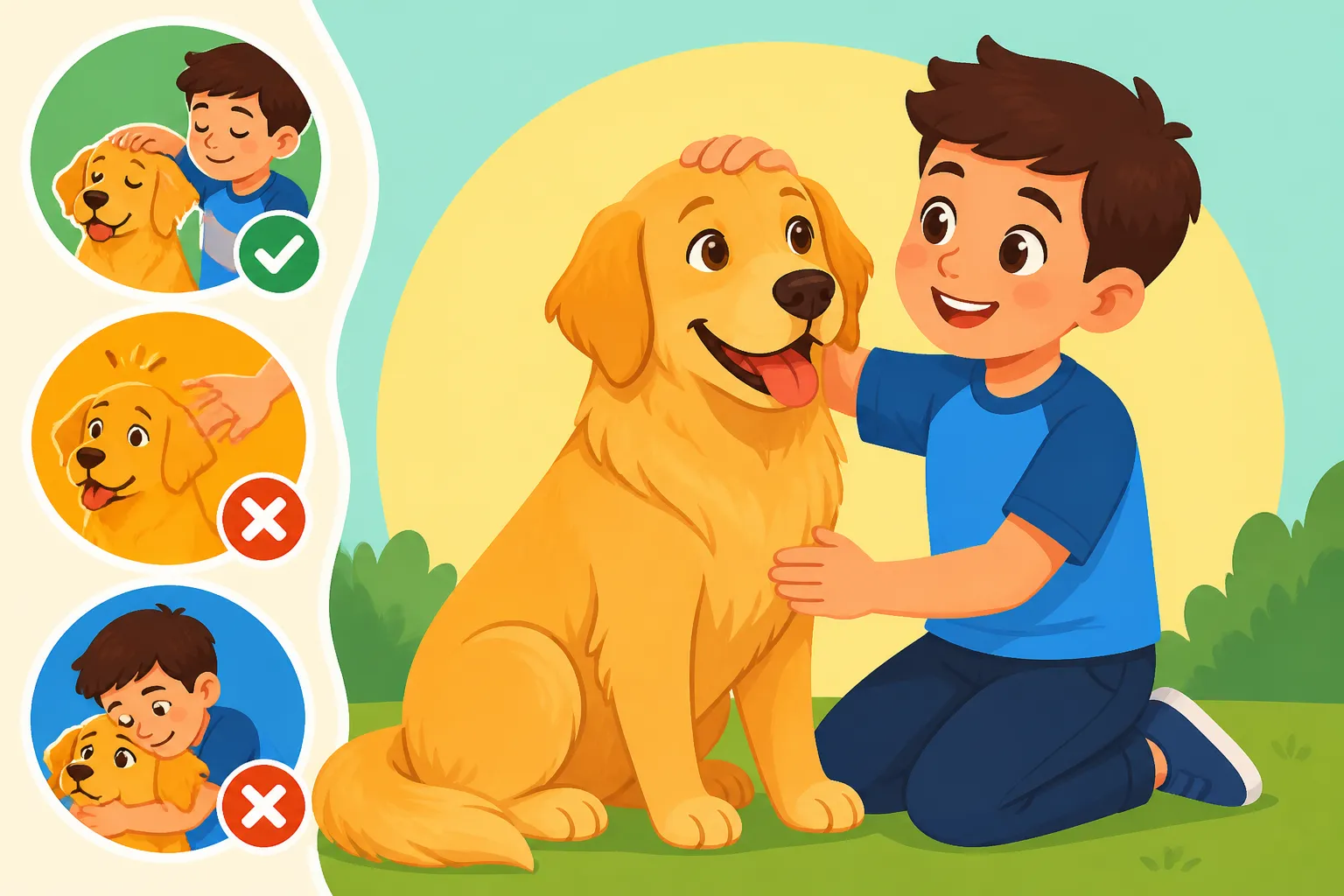
The first, and perhaps most important, rule is "gentle hands." Children, especially toddlers and preschoolers, often lack fine motor control and can be clumsy. They might grab a handful of fur, pull an ear, or poke an eye with surprising force, completely unintentionally. Teaching them to stroke gently along the dog's back or chest, rather than grabbing, is crucial. Model the behavior yourself, showing them how you would pet the dog. "Soft strokes, like you're petting a cloud," can be a good analogy.
Similarly, loud noises and sudden movements can startle any dog, even a usually calm Golden. Kids naturally get excited and can shriek or run wildly, which might trigger a Golden's chase instinct or cause them alarm. Teach children to use calm, quiet voices when approaching or playing with the dog. Explain that dogs have very sensitive hearing and loud noises can hurt their ears. When the dog is resting, especially in its designated "safe space," emphasize absolute quiet and no touching. This fosters a sense of security for your Golden, knowing that they can truly relax without being disturbed. A dog who feels safe and respected is far less likely to react negatively.
Respecting the Dog's Space and Belongings
Every Golden Retriever needs a personal sanctuary where they can retreat and be left completely undisturbed. This might be their crate, a special bed in a quiet corner, or even a designated room. This "safe zone" must be off-limits to children, especially when the dog is in it. This is not just about avoiding confrontation but teaching profound respect for another being's boundaries. Explain to children that when the dog is in their bed, it's like a child being in their own bed, and they wouldn't want to be bothered.
Equally important is respecting the dog's belongings, particularly food bowls, treats, and toys. Resource guarding, where a dog becomes possessive over an item, can be a serious issue. While Goldens are generally not prone to severe guarding, any dog can develop it if their resources are constantly threatened. Children should never be allowed to:
- Approach the dog while it's eating.
- Take food or toys directly from the dog's mouth or near its body.
- Tease the dog with treats or toys, only to pull them away.
Instead, teach children to "trade" with the dog using a more desirable item, or simply to leave the dog alone with its things. For instance, if a Golden has a favorite chew toy, teach kids to call an adult if they need to retrieve it, rather than reaching for it themselves. This prevents potential conflict and builds trust. Creating clear boundaries around meal times and treasured items is key to a safe home. If you want to dive deeper into protecting your Golden's space, check out Golden Retriever Resource Guarding.
Supervising Every Interaction
I cannot stress this enough: all interactions between young children and dogs must be supervised by a responsible adult. This isn't just a recommendation; it's a golden rule for dog and child safety, especially with larger breeds like Golden Retrievers. Even if your Golden is the most laid-back dog on the planet, accidents can happen in a split second. A child might accidentally step on a paw, a dog might get startled by a sudden movement, or a game could quickly escalate beyond appropriate boundaries.
Supervision means more than just being in the same room. It means actively watching, ready to intervene, redirect, or separate if necessary. An adult should be close enough to physically step in between the child and the dog at any moment. This allows you to:
- Guide children on how to pet correctly.
- Help children recognize and respect the dog's body language.
- Prevent rough play from either side.
- Ensure the dog has an escape route if it feels overwhelmed.
- Teach kids to wait for an adult before interacting with the dog.
As children grow older and demonstrate consistent responsible behavior, supervision might evolve from constant vigilance to more casual monitoring. However, for young children, especially those under the age of seven or eight, hands-on supervision is vital. This active role helps to reinforce positive interactions and build good habits early on for both your Golden and your children.
Practical Training for Both Kids and Your Golden
A harmonious household isn't just about setting rules; it's about proactive training for everyone. Think of it as a team effort where both the two-legged and four-legged family members learn how to understand and respect each other.
Teaching Kids Basic Dog Commands
One of the most empowering things you can do for your children is teach them how to give your Golden Retriever basic commands. This gives children a sense of control and responsibility in a safe, structured way, turning potential chaotic interactions into positive training opportunities. Start with simple commands like "sit," "stay" (for short durations), and "down."
Here's how to approach it:
- Positive Reinforcement is Key: Use small, soft treats and enthusiastic praise. Show your child how you clicker train (if you use one) or simply say "yes!" and give a treat the moment your Golden performs the desired action. This teaches both your child and your dog that good things happen when they listen.
- Keep it Short and Fun: Children have short attention spans. Keep training sessions brief, maybe 5-10 minutes, and make it feel like a game. If your child is struggling, step in and demonstrate, then let them try again.
- Focus on Success: Set your child and dog up for success. Start in a quiet environment with minimal distractions. If your Golden is easily distracted, have the child give commands when the dog is already calm.
- Consistency: Ensure the commands your child uses are the same as yours. "Sit," not "sit down" or "sitty."
- "Go to your bed/place": This command is invaluable. Teach your Golden to go to its designated safe spot on command. Your child can practice this from a distance, reinforcing the dog's boundaries and giving them a safe retreat when needed.
Being able to ask their Golden to "sit" before getting a pet, or "lie down" quietly, helps children understand the dog isn't a toy but a responsive, intelligent companion. This shared activity also deepens the bond between them. Services like BAXTER & Bella offer online puppy training programs that can be a great resource for families looking for structured guidance on how to involve everyone in training. They can provide a systematic approach to teaching commands and managing puppy behavior, making it easier for kids to participate meaningfully. For more in-depth training resources, consider our article on Training a Golden Retriever From Puppy to Adult.
Training Your Golden to Be Gentle with Kids
Just as kids need to learn how to handle the dog, your Golden needs to learn how to handle the kids. This is especially true for puppies and adolescent Goldens who are full of boundless energy and "mouthiness."
- Reinforce Calmness: When your Golden approaches a child calmly, sitting or lying down, reward them. If they jump up, gently redirect them and ask for a "sit" before allowing interaction. Teaching your dog Teaching a Golden Retriever Four on the Floor is crucial for preventing jumping.
- "Off" Command: This command is for when your Golden jumps on furniture, people, or counters. Practice it consistently with treats.
- Bite Inhibition: This is paramount for puppies. Golden Retriever puppies explore the world with their mouths, and their sharp puppy teeth can hurt. If a puppy nips too hard, immediately yelp (like another puppy would) and withdraw attention for 10-20 seconds. This teaches them that hard bites end playtime. Once they calm down, re-engage gently. You can find more detail in Golden Retriever Puppy Nipping at Children.
- "Leave It" Command: This is vital for preventing your Golden from grabbing things from children (or off the floor). Start with a low-value item, tell your dog "leave it," and when they ignore it, reward them with a high-value treat. Gradually increase the distraction level.
- Controlled Greetings: Goldens are famously enthusiastic greeters. If your Golden tends to jump on guests, they'll likely do the same with children. Work on greeting manners, ensuring your dog can calmly approach and sit for attention. Stopping a Golden Retriever From Jumping on Guests offers great tips for this.
The goal is to teach your Golden that being gentle and calm around children leads to positive attention and rewards, while over-excitement or roughness makes the fun stop.
The Importance of Structured Playtime
Playtime is an essential part of any Golden Retriever's life, and it's a fantastic way for children and dogs to bond. However, unstructured, wild play can quickly escalate into over-stimulation and potential accidents. Structured playtime ensures everyone stays safe and happy.
Here's how to make it work:
- Appropriate Games: Focus on games like fetch (with soft toys that won't hurt if they accidentally hit a child), hide-and-seek with toys, or gentle tug-of-war (with clear rules that the game stops if the dog's teeth touch skin, or if they pull too hard). Avoid games that encourage chasing or nipping children.
- Rules for Tug-of-War: If you allow tug, ensure your Golden understands "drop it" on command. The human always initiates and ends the game. The toy is put away when playtime is over.
- Supervised Fetch: Have an adult facilitate fetch, especially with younger children. The child can throw, but the adult might handle the retrieval or ensure the dog brings the toy back calmly without jumping.
- Time Limits: Keep play sessions relatively short, especially for puppies and very young children, to prevent over-excitement and exhaustion. Know the signs your Golden is getting over-stimulated or tired – heavy panting, frantic movements, or ignoring commands.
- Cool-Down Period: Always end playtime on a calm note. After a lively game, encourage your Golden to lie down and relax, perhaps with a chew toy. This teaches them to transition from high energy to calm.
Structured playtime teaches boundaries, reinforces commands, and builds a strong, positive relationship. Toys found on platforms like Amazon are great for a range of engaging and durable play items designed for strong chewers and enthusiastic retrievers. Remember, the goal is always fun, but safe fun.
| Interaction Type | Good Practice for Kids | What to Avoid |
|---|---|---|
| Petting | Gentle strokes on back/chest. Let dog approach first. | Grabbing fur, ears, tail. Poking eyes. Approaching from behind. |
| Playing | Supervised fetch, hide-and-seek with toys, gentle tug. | Running wildly, screaming, chasing the dog. Wrestling. |
| Giving Treats | Open palm, gently. Use commands first (e.g., "sit"). | Holding treat over dog's head, pulling it away. Feeding table scraps. |
| Dog's Space | Respect crate/bed as dog's quiet zone. | Entering crate, disturbing sleeping dog, taking dog's toys/food. |
| Voice/Tone | Calm, happy voice. | Yelling, screaming, high-pitched squeals when dog is nearby. |
| Approach | Calmly, let dog sniff hand first, then gentle petting. | Rushing, surprising, cornering. |
Setting Up a Safe and Harmonious Home Environment
A successful relationship between children and your Golden Retriever is often less about reacting to problems and more about proactively shaping the environment to prevent them. This means thinking about how your home is set up and how routines are structured.
Creating a "Safe Zone" for Your Golden
As mentioned earlier, a safe zone is crucial. This isn't a punishment space, but a retreat where your Golden knows they will be left alone. This could be a crate in a quiet room, a dog bed tucked into a low-traffic corner, or even a designated area gated off in the house.
Here's how to optimize it:
- Location: Choose a spot that's away from the main thoroughfare of family activity, but still within earshot so your Golden doesn't feel completely isolated. A spare bedroom, a utility room, or a corner of the living room (if it's not too busy) can work well.
- Comfort: Make it inviting with a comfortable dog bed or blankets. Add a favorite chew toy or a puzzle feeder to make it a positive experience.
- Enforcement: This is where the whole family comes in. Teach everyone, especially children, that when the Golden is in their safe zone, they are not to be disturbed. No petting, no talking to, no looking directly at, and certainly no climbing in. This zone allows your Golden to decompress, especially after an exciting play session or if the house gets particularly noisy. It helps to prevent feelings of anxiety or being overwhelmed, making for a happier, more balanced dog. Consistency is key here; children need to understand that this rule is absolute, just like not running into the street. If your Golden is a puppy, establishing Building Alone-Time Tolerance in a Golden Puppy is also very helpful.
Managing High-Energy Situations
Golden Retrievers, especially young ones, have a lot of energy. This energy, while endearing, can easily become chaotic in a house with children. It's important to have strategies to manage this.
- Pre-emptive Exercise: A tired Golden is a good Golden. Ensure your dog gets adequate physical exercise before kids are home from school or before high-energy family activities begin. A long walk, a vigorous game of fetch, or a run in the park can take the edge off their energy. This reduces the likelihood of them seeking out kids as their primary outlet for pent-up energy. Our article on Exercise a Golden Retriever Needs Each Day provides excellent guidance here.
- Structured Greetings: The moment kids burst through the door can be particularly exciting for a Golden. Teach your dog to calmly greet. This might involve putting your dog on a leash briefly during arrivals, having them "sit" or "down" before greeting, or using their "place" command until the initial excitement passes. Reward calm behavior.
- Rotate Toys: Keep a rotation of engaging, durable toys available for your Golden to redirect their energy. Puzzle feeders are fantastic for mental stimulation and can keep a Golden occupied for a while, providing a calm activity when the kids are busy. Using items from a trusted brand like Amazon, you can find a variety of interactive toys that are perfect for keeping your Golden mentally engaged without relying on constant human interaction.
- Planned Quiet Times: Incorporate quiet times into the daily routine where the dog is in its safe zone with a chew, and the children are engaged in calm activities. This allows both species to recharge.
- Gates and Playpens: For young children or exuberant puppies, baby gates or indoor playpens can be your best friends. They allow the dog and children to be in the same general area, observing each other, without direct, unsupervised interaction. This is especially helpful during meal times, when toddlers are playing with small toys, or during times of high activity in the house.
By actively managing the environment and your Golden's energy levels, you create a home that is safer, calmer, and more enjoyable for everyone involved. It's about setting everyone up for success, allowing the natural, loving bond between your Golden and your children to flourish without unnecessary stress or incidents.
Disclaimer
This article is for general informational purposes only and does not constitute professional advice. Laws, prices and regulations vary by location and change over time. Consult a qualified professional for guidance on your specific situation.