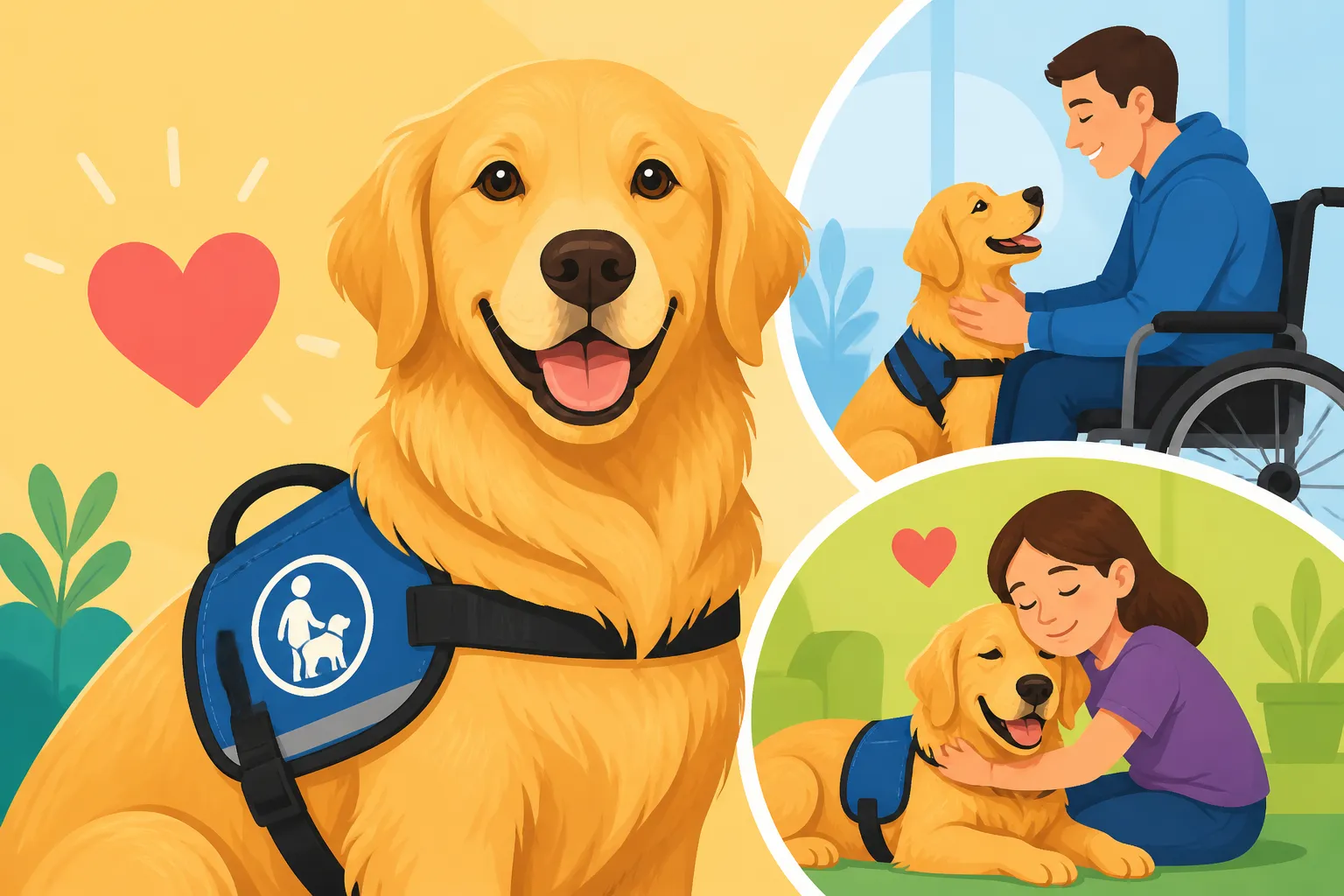
Golden Retrievers as Service and Therapy Dogs
It's a dream many Golden Retriever owners share: seeing their loving, gentle companion bring comfort or assistance to someone in need. There's a deep satisfaction in knowing your dog's incredible nature could be harnessed for such a noble purpose. However, the path to becoming a service or therapy dog is often misunderstood, filled with unique challenges, rigorous training, and significant commitments that go far beyond a dog simply being "good" with people. This comprehensive guide will unravel the distinct roles of service and therapy dogs, explore why Golden Retrievers are so uniquely suited for these jobs, detail the extensive training involved, and help you navigate the realistic expectations and resources available.
Understanding the Roles: Service Dog vs. Therapy Dog
Before we dive into why Golden Retrievers shine in these roles, it’s absolutely crucial to understand that "service dog" and "therapy dog" are not interchangeable terms. They serve vastly different functions, have different legal protections, and require different training protocols. Mixing them up can lead to confusion, frustration, and even legal issues for handlers.
The Critical Distinction: Legal Rights and Training
The most significant difference lies in their legal standing and the work they perform. A service dog is specifically trained to perform tasks for an individual with a disability. Think of tasks like guiding a blind person, alerting a deaf person to sounds, pulling a wheelchair, retrieving dropped items, or detecting medical alerts like seizures or changes in blood sugar. These dogs are considered medical equipment, and under the Americans with Disabilities Act (ADA), they have public access rights. This means they can accompany their handler almost anywhere the public is allowed, including restaurants, stores, hospitals, and on public transportation, regardless of "no pets" policies. The training for a service dog is incredibly intense and often spans 18-24 months, sometimes longer, culminating in the dog being able to perform specific, life-assisting tasks reliably in any environment. The handler of a service dog has a disability, and the dog is directly alleviating a symptom or assisting with a limitation caused by that disability.
On the other hand, a therapy dog provides comfort and affection to many people in various settings, such as hospitals, nursing homes, schools, and disaster areas. They don't have the same public access rights as service dogs. While they are often welcomed into facilities, this is at the discretion of the establishment, not a legal mandate. Their role is to engage with and provide emotional support to multiple individuals, not to perform tasks for a single handler with a disability. The training for a therapy dog focuses heavily on excellent manners, a calm temperament, and an ability to interact safely and gently with diverse groups of people, often in stressful or unfamiliar environments. It’s about being a source of warmth and connection for many. This distinction is vital, as attempting to pass a therapy dog off as a service dog to gain public access is illegal and undermines the legitimate rights of individuals with disabilities and their service animals.
How Golden Retrievers Excel in Both Capacities
Golden Retrievers consistently rank high for both service and therapy work, and it's not by accident. Their inherent qualities make them naturally predisposed to these demanding, yet incredibly rewarding, roles. We’ve all met that Golden who makes friends with everyone, and that's just the tip of the iceberg. Their temperament, intelligence, and eagerness to please are attributes that perfectly align with the rigorous requirements of assistance work.
For service work, their size, strength, and "soft mouth" retrieving ability are invaluable. They are large enough to perform bracing or light pulling tasks, but not so large as to be cumbersome in public spaces. Their natural inclination to carry things gently, without crushing them, makes them superb at retrieving dropped keys, phones, or medications. For therapy work, their friendly, approachable demeanor is their superpower. They possess an almost magical ability to sense when someone needs comfort, offering a gentle nudge or leaning into a loving touch. Their calm presence can lower stress, reduce anxiety, and bring moments of joy to people facing difficult circumstances. This breed's reputation for being affectionate and reliable is well-earned and forms the bedrock of their success in these vital roles.
Why Golden Retrievers Make Excellent Service and Therapy Dogs
When you think of a dog wearing a vest, a Golden Retriever often comes to mind, and there's a good reason for that. Their genetic makeup and centuries of careful breeding have sculpted a canine companion perfectly suited to serving humanity. It's more than just being "friendly"; it's a specific blend of traits that makes them stand out.
Temperament Traits That Shine
The hallmark of the Golden Retriever is undoubtedly its temperament. They are renowned for their gentle, patient, and tolerant nature. This is crucial for service dogs, who must remain calm and focused even in chaotic or unpredictable public environments. Imagine a service dog guiding its handler through a bustling airport – absolute steadiness is paramount. For therapy dogs, this calm disposition allows them to interact safely with vulnerable populations, from small children to frail seniors, without becoming overstimulated or reactive. They rarely show aggression and are typically eager to please, making them highly receptive to training.
Their inherent friendliness also plays a huge role. Golden Retrievers are generally enthusiastic about meeting new people, which is fantastic for therapy work where they interact with many strangers in a short period. This openness, coupled with their stable emotional state, means they can provide comfort without becoming anxious themselves. They possess a remarkable empathy, often seeming to understand human emotions and responding with a comforting presence. This ability to connect with people on an emotional level is what truly makes them therapy superheroes. For many, their soft eyes and wagging tails are a beacon of unconditional love and acceptance. You can learn more about their core characteristics in Golden Retriever Temperament and Personality.
Intelligence and Trainability
Golden Retrievers consistently rank among the most intelligent dog breeds, specifically in terms of "working intelligence" – their ability to understand and obey human commands. This high intelligence, combined with their strong desire to please their handlers, makes them incredibly trainable. They pick up new commands and tasks quickly, and they retain what they learn, which is essential for the complex and extensive training required for service and therapy roles. Service dogs, in particular, need to learn a vast repertoire of specific tasks and generalize those skills to various environments, which demands a highly intelligent and adaptable learner.
Their trainability isn't just about learning tricks; it's about learning to problem-solve and make good choices under pressure. They can be taught complex multi-step commands and understand subtle cues. This is vital for a service dog, who might need to decide the safest route or how to retrieve a specific item from a cluttered area. For therapy dogs, their quick learning means they can master the specific manners required for facility visits, such as "leave it" around medical equipment or ignoring distractions. This innate willingness to work alongside humans and their impressive cognitive abilities mean that the intensive training investments yield truly remarkable results.
Physical Attributes and Practicality
Beyond their mental and emotional traits, the physical characteristics of Golden Retrievers also make them highly practical for assistance roles. They are typically a medium to large-sized breed, which provides a good balance for various tasks. They are sturdy enough to offer support for handlers with mobility issues, such as bracing for balance or helping someone stand up from a seated position. Yet, they are not so massive that they become difficult to manage in public spaces or small rooms.
Their beautiful double coat, while requiring regular grooming, offers protection in various climates. Their strong, athletic build allows them to work for extended periods without fatigue, which is necessary for a working service dog or a therapy dog on a busy visiting schedule. Their moderate energy levels, while requiring daily exercise, also mean they can settle calmly for long periods when necessary, such as during an appointment or a quiet therapy session. All these physical aspects combine to create a dog that is not only capable but also comfortable and reliable in performing the demanding physical aspects of their jobs. You can read about the specific care their coat needs in Grooming a Golden Retriever's Double Coat.
The Journey to Becoming a Service Dog
The path to becoming a fully certified service dog is long, demanding, and incredibly specific. It's not for every Golden Retriever, nor for every aspiring handler. This journey requires dedication, significant resources, and a deep understanding of what the role truly entails.
Selecting the Right Golden Retriever Puppy or Adult
The journey often begins before the dog is even born. Reputable service dog organizations are meticulous in their breeding programs, selecting parents with exceptional health clearances, stable temperaments, and strong working lines. They look for specific traits that predispose a puppy to success: calmness, confidence, focus, an eagerness to please, and resilience to novelty and stress. Not just any Golden Retriever puppy will do, even from the best breeder. Litters are often temperament tested extensively to identify the puppies most likely to succeed in service work. Some organizations might prefer to adopt adult Golden Retrievers from rescue groups or individuals if they show the right foundational traits. This can be a faster route for dogs that already have a good temperament and some basic training.
For an individual looking to owner-train a service dog, selecting the right puppy is paramount. This means finding a reputable breeder who prioritizes health and temperament and is willing to work with you to choose a puppy with the potential for service work. It's about looking beyond the cute puppy fluff to the underlying disposition that will allow them to handle intense training and the pressures of public access. Health clearances are non-negotiable, given the significant investment in training and the desire for a long working life. Issues like hip and elbow dysplasia, heart conditions, and eye diseases can derail a service dog's career before it even begins. This is why Health Clearances a Golden Retriever Breeder Must Show are so vital.
Intensive Training Phases and Specializations
Once a suitable Golden Retriever is selected, the intensive training begins, typically starting from puppyhood. This isn't just basic obedience; it's a multi-stage process involving foundational skills, advanced obedience, and task-specific training.
Phase 1: Puppy Raisers and Foundation Skills: Puppies often begin with volunteer puppy raisers who provide crucial early socialization and basic obedience. This period focuses on exposure to a wide variety of sights, sounds, people, and environments, building confidence and resilience. Commands like "sit," "stay," "come," and polite leash manners are instilled. House training and crate training are also critical during this phase. Crate Training a Golden Retriever Puppy is a common strategy.
Phase 2: Advanced Obedience and Public Access: As the dog matures, training progresses to advanced obedience, ensuring rock-solid reliability in distractions. This is where public access training truly begins, teaching the dog to behave impeccably in public spaces, ignoring tempting dropped food, other dogs, and loud noises. They learn to settle quietly under tables, walk calmly through crowds, and remain focused on their handler.
Phase 3: Task-Specific Training: This is where the service dog specializes. The dog learns specific tasks directly related to the handler's disability. This could involve anything from retrieving specific medications, opening doors, turning lights on and off, alerting to smoke alarms, or providing deep pressure therapy to mitigate anxiety attacks. Each task is broken down into small steps and taught meticulously. For example, retrieving a phone might involve teaching the dog to pick it up gently, carry it, and then deliver it to the handler's hand. This customization is what truly defines a service dog.
Certification and Public Access Rights
Unlike therapy dogs, service dogs generally do not have official "certification" in the way many people imagine. The ADA does not require service dogs to be professionally trained or to be certified by any specific organization. The key is that the dog must be individually trained to do work or perform tasks for the benefit of an individual with a disability. This means owner-trained service dogs have the same legal rights as those trained by professional organizations, provided they meet the definition and behavioral standards.
However, many programs provide their own "team certification" once a handler and dog have successfully completed their program. This often involves a public access test to ensure the dog behaves appropriately and reliably in various settings. While not legally required, passing such a test can provide confidence for the handler and sometimes ease interactions with the public who may be unfamiliar with service animal laws. The "certification" is more a measure of the dog's training and the team's readiness than a government-mandated credential. Understanding the nuanced legal definitions is crucial for any service dog handler navigating the world with their working companion.
Training Your Golden Retriever for Therapy Work
While not as legally regulated as service dogs, the training for therapy dogs is equally important and demands a specific skillset. It's about preparing your Golden to be a calm, comforting presence for many different people in a variety of sometimes challenging environments.
Foundation Skills and Socialization
The bedrock of a successful therapy dog is an impeccable foundation in basic obedience and extensive socialization. Your Golden Retriever needs to be absolutely rock-solid on commands like "sit," "stay," "down," "come," and "leave it." These aren't just for show; they ensure safety and control in diverse settings. Imagine visiting a hospital where medical equipment might be on the floor, or a nursing home where residents might drop food. A reliable "leave it" command is invaluable. Likewise, a steady "stay" allows your dog to remain calm while you chat with a patient or help a child pet them.
Beyond commands, socialization is paramount. A therapy dog must be comfortable with all sorts of people – children, seniors, people in wheelchairs, people with walkers, people wearing hats, glasses, or uniforms. They need to be unfazed by strange smells, loud noises, and unexpected movements. Early and ongoing positive exposure to these things from puppyhood is essential. Golden Retriever Puppy Socialization Windows highlights the critical period for this development. A therapy dog also needs to tolerate gentle (and sometimes clumsy) petting from many different hands. This involves slowly building their comfort level with touch, including ears, paws, and tails. Remember, the goal isn't just tolerance, but genuine enjoyment in these interactions.
Preparing for Visits and Handling Scenarios
Once the foundation skills are solid, you start preparing for the specific scenarios you'll encounter during therapy visits. This often means practicing in simulated environments. If you plan to visit nursing homes, try visiting friends or family members who use walkers or wheelchairs to get your dog accustomed to these aids. Practice in quiet, busy, and slightly noisy environments. Get your dog comfortable with car rides, as you'll be traveling to different facilities.
A key part of preparation is teaching your Golden to offer comfort appropriately. This might include teaching them to gently rest their head on a lap, stand calmly next to a bed, or allow petting from multiple individuals at once. It also involves teaching them how to disengage politely when a person is done interacting. You might encounter people who are withdrawn, overly excited, or even fearful. A good therapy dog handler learns to read their dog's body language and the cues from the people they are visiting to ensure positive interactions for everyone. This preparation reduces stress on your dog and ensures they remain a positive, comforting presence, rather than becoming overwhelmed.
Therapy Dog Organization Requirements and Testing
Unlike service dogs, therapy dogs typically do go through a testing and registration process with a reputable therapy animal organization. These organizations set standards for temperament and behavior to ensure the safety and effectiveness of therapy teams. Common organizations include Therapy Dogs International (TDI), Pet Partners, and Alliance of Therapy Dogs. Each organization will have its specific requirements, but they generally involve:
- Basic Obedience Test: Demonstrating proficiency in fundamental commands.
- Temperament Evaluation: Assessing the dog's reaction to distractions, loud noises, medical equipment, different types of people, and startling situations. The dog must remain calm, friendly, and non-reactive.
- Handler Skills Test: Evaluating the handler's ability to read their dog's cues, maintain control, and ensure positive interactions.
- Health Screening: Ensuring the dog is up-to-date on vaccinations and in good health, often requiring veterinary clearance.
- Observation Visits: Sometimes a supervised visit to a facility is required to see how the team performs in a real-world setting.
Upon successful completion of testing and paperwork, your Golden Retriever will be registered as a therapy dog. This registration often comes with insurance coverage for visits, identification tags, and access to a network of facilities and volunteer opportunities. It provides a formal recognition that your Golden is a safe and effective therapy partner. For those looking to improve their dog's manners before testing, online programs like BAXTER & Bella offer comprehensive training resources that can guide you through everything from puppyhood basics to advanced obedience, which can be invaluable preparation. You can also find countless books and tools on Amazon to support your training journey, from clickers to training treats.
Common Challenges and Considerations
While the idea of a Golden Retriever service or therapy dog is heartwarming, it's vital to address the significant challenges and considerations that come with these roles. They are not simple endeavors and require a profound commitment.
The Time and Financial Commitment
Training a service or therapy dog is a marathon, not a sprint. The time commitment is enormous. For service dogs, this can mean years of daily, structured training sessions, public access practice, and ongoing reinforcement. Even for therapy dogs, regular training, refresher courses, and consistent visits take up a significant portion of your week. It's a full-time hobby, if not a lifestyle. Many people underestimate the sheer volume of hours that go into creating a truly reliable working dog.
Financially, the costs can be substantial. For professionally trained service dogs from reputable organizations, the price tag can be significant, often in the tens of thousands of dollars. While some non-profits subsidize these costs, there's typically a fundraising expectation. If you're owner-training, you're still looking at expenses for:
- High-quality food and treats
- Veterinary care (especially important for working dogs to stay in peak health)
- Training classes, workshops, and potentially a professional trainer
- Specialized gear (vests, harnesses, mobility aids, long lines)
- Travel to various training environments and facilities
- Pet insurance for routine care and unexpected emergencies. Pet Insurance for a Golden Retriever is a wise investment for any dog, but especially a working one.
These financial realities can be a major hurdle for many families, and it's essential to budget realistically for the lifetime care and training of a working Golden Retriever.
Emotional Demands on Dog and Handler
Both service and therapy work place unique emotional demands on the dog and the handler. For the dog, it's a job that requires immense focus, self-control, and resilience. They are constantly "on duty" when working, which can be tiring. They must ignore distractions, remain calm in stressful situations, and consistently perform tasks. While Golden Retrievers are generally stable, some can find the constant scrutiny or varied environments overwhelming over time. It's crucial for handlers to recognize signs of stress in their dog and provide adequate downtime, rest, and opportunities for just being a dog. Signs a Golden Retriever Is in Pain or stressed are important for handlers to recognize.
For the handler, the emotional toll can be even greater. Service dog handlers often face constant questions, scrutiny, and even discrimination from the public. People may try to pet their working dog, distract it, or challenge their right to have the dog in certain places. This advocacy and constant education can be exhausting. Therapy dog handlers, while not facing the same legal challenges, often bear witness to difficult situations in hospitals or nursing homes, and they need to be emotionally robust enough to handle these interactions while supporting their dog. Both roles require a strong partnership built on trust, understanding, and mutual respect.
When a Golden Isn't Suited for the Role
It's a tough truth to swallow for any Golden Retriever owner, but not every Golden, no matter how beloved, is cut out for service or therapy work. Even with the best breeding and early socialization, some dogs simply lack the specific temperament or drive required. A dog might be too easily distracted, too shy, too energetic, or too sensitive to succeed in these demanding roles.
Common reasons a Golden Retriever might "wash out" of a program or prove unsuitable include:
- Lack of focus: Easily distracted by food, other animals, or environmental stimuli.
- Anxiety or fear: Showing fear in novel situations, loud noises, or around certain people. Fearful Behavior in a Golden Retriever can be a deal-breaker.
- Over-excitement: An inability to settle down and remain calm for extended periods, making them too boisterous for sensitive environments.
- Health issues: Developing conditions like severe allergies, joint problems, or chronic illnesses that compromise their ability to work comfortably and consistently.
- Lack of "work ethic": Some dogs simply prefer being pets and don't thrive under the pressure of constant work.
Recognizing when your Golden Retriever isn't enjoying the work or isn't suited for it is a sign of responsible ownership. Forcing a dog into a role they are not comfortable with can lead to stress, behavioral problems, and a diminished quality of life for the animal. There's no shame in admitting a dog is better suited to being a cherished family pet, and sometimes that's the best outcome for everyone.
| Feature | Service Dog | Therapy Dog |
|---|---|---|
| Purpose | Performs tasks for a person with a disability | Provides comfort/affection to multiple people |
| Legal Rights | Public access rights (ADA) | No public access rights (facility discretion) |
| Training Focus | Task performance, public access behavior, handler-specific | Socialization, calm demeanor, general obedience, multi-person interaction |
| Who It Helps | Single handler with a disability | Multiple individuals in various settings |
| Certification | No federal "certification" required; program-specific for many | Typically registered and tested by therapy orgs |
| Primary Goal | Mitigate aspects of a disability | Improve mood, reduce anxiety, offer companionship |
Finding Support and Resources
Embarking on the journey of a service or therapy dog can feel overwhelming, but you don't have to do it alone. There are numerous organizations, online communities, and resources dedicated to supporting handlers and their Golden Retrievers every step of the way.
Reputable Service Dog Organizations
For those seeking a professionally trained service dog, or extensive guidance for owner-training, partnering with a reputable service dog organization is often the best route. These organizations typically have years of experience, rigorous training protocols, and dedicated staff. They handle everything from breeding and puppy raising to advanced training and team matching. Many also provide ongoing support for the life of the service dog team.
When researching organizations, look for those accredited by Assistance Dogs International (ADI). ADI sets global standards for service dog programs, ensuring high quality and ethical practices. While their waitlists can be long and their application processes thorough, it's for good reason – they are matching highly trained dogs with individuals who rely on them for daily life. Organizations often specialize in different types of service, such as guide dogs, hearing dogs, or mobility assistance dogs. Even if you plan to owner-train, some organizations offer consultations or workshops that can be invaluable. Don't be afraid to ask Questions to Ask a Golden Retriever Breeder about potential service dog prospects.
Therapy Dog Groups and Local Programs
If your goal is to have your Golden Retriever provide comfort as a therapy dog, joining a local therapy dog group or connecting with a national organization is the way to go. Organizations like Pet Partners, Therapy Dogs International (TDI), and Alliance of Therapy Dogs are well-established and provide the framework for safe and effective therapy visits. They offer testing, registration, insurance, and often help connect volunteers with facilities in their area.
Local chapters of these organizations often host training classes, practice sessions, and social events, providing a fantastic support network. You'll meet other therapy dog handlers, share experiences, and learn from seasoned veterans. Many communities also have smaller, independent therapy animal groups that focus on specific local needs, such as visiting children's hospitals or participating in reading programs at schools. These groups can be found through local animal shelters, humane societies, or veterinary clinics, which often have connections to local therapy animal initiatives. Joining such a group not only streamlines the process of getting involved but also provides a vital community for you and your Golden.
Online Training Resources and Communities
In today's digital age, a wealth of online resources can support both aspiring service and therapy dog handlers. From comprehensive online training programs to vibrant social media communities, help is often just a click away. Online platforms can be particularly beneficial for owner-trainers or those looking to hone specific skills.
Consider online training courses, such as those offered by BAXTER & Bella. They provide structured curricula, video tutorials, and live support that can guide you through everything from puppy basics to more advanced obedience, which forms the bedrock of any working dog's training. These programs allow you to learn at your own pace and revisit lessons as needed. Additionally, platforms like Amazon are excellent for finding specialized books on service dog training, therapy dog preparation, and dog behavior in general. You can also source essential gear, like vests, harnesses, and puzzle toys for mental enrichment, all of which contribute to a well-adjusted and capable working dog. Mental Enrichment for a Bored Golden Retriever is crucial for these intelligent dogs. Beyond structured courses, online forums, Facebook groups, and Reddit communities dedicated to service dogs, therapy dogs, or even specific Golden Retriever topics, offer a platform to ask questions, share challenges, and celebrate successes with a supportive community worldwide. Just remember to always cross-reference advice with qualified professionals, as online information can vary in accuracy.
Disclaimer
This article is for general informational purposes only and does not constitute professional advice. Laws, prices and regulations vary by location and change over time. Consult a qualified professional for guidance on your specific situation.