Why a Golden Retriever Ignores You Outdoors
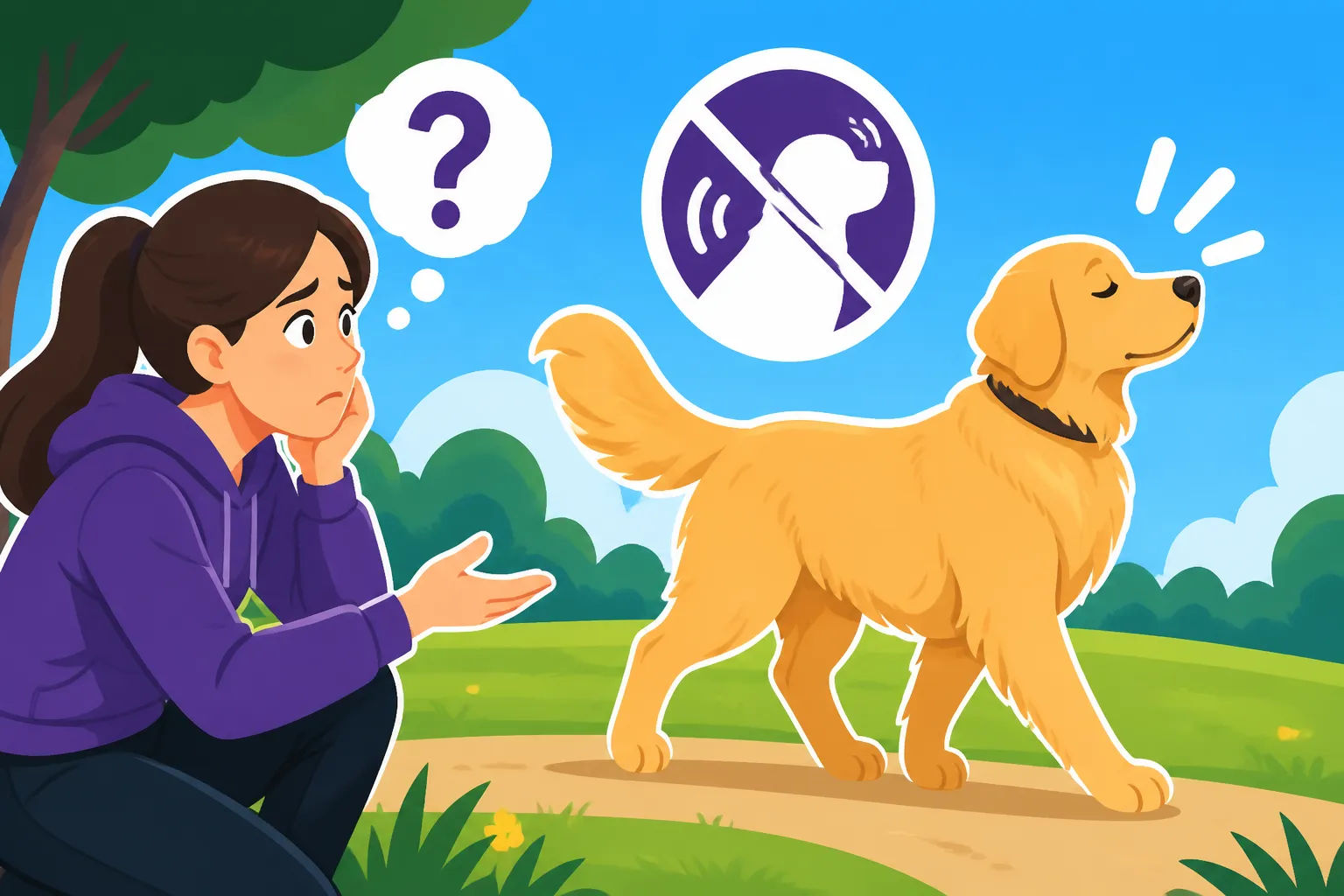
It's incredibly frustrating, isn't it? You spend so much time and effort training your beautiful Golden Retriever indoors, and they're a superstar – perfect sits, stays, and lightning-fast recalls in the living room. But the moment you step outside, it's like their ears suddenly stop working, and you're just a talking tree. This guide is for every Golden owner who's felt invisible at the dog park, lost in their own backyard, or simply baffled by their dog's outdoor amnesia. We're going to dive deep into why your Golden seems to tune you out when the great outdoors calls, and more importantly, how you can reclaim their attention and build a stronger, more reliable connection, no matter the environment.
The Golden Retriever's Brain Outdoors: A Sensory Overload
Think about your own experience when you walk into a vibrant, bustling festival. There are sights, sounds, smells, people, music, and food stalls pulling your attention in a dozen different directions. It's exhilarating, but also incredibly distracting. Now, imagine that experience, but amplified by a thousand for your Golden Retriever. Their world is dominated by scent and sound, and the outdoors is a constant barrage of fascinating information that their magnificent brains are designed to process.
Distraction Overload
Indoors, your home is a predictable, relatively calm environment. Your Golden knows every nook and cranny, every routine, and the level of stimulation is generally low and consistent. Your voice and commands stand out clearly against this quiet backdrop. The moment you step outside, however, that backdrop explodes into a symphony of irresistible temptations.
Suddenly, there's the tantalizing smell of a squirrel that scurried across the path five minutes ago, an unseen dog barking two blocks away, the rustling of leaves in the wind, and the flash of a child on a scooter. These aren't just background noises or fleeting images for your Golden; they are urgent, compelling narratives that demand their full attention. Their primal instincts kick in, honed over generations to investigate, chase, and explore. It’s not that they don't hear you; it’s that their brain is so utterly consumed by the high-definition sensory input of the outside world that your voice becomes just another, less interesting, part of the static. It can feel like they've forgotten every ounce of their training, leaving you feeling helpless and unheard.
The "What's In It For Me?" Factor
Let's be brutally honest: the outdoors offers its own incredibly powerful rewards. For a Golden Retriever, sniffing every blade of grass is like reading the daily newspaper, full of fascinating stories about who's been where. Chasing a leaf blown by the wind is a thrilling mini-hunt. Rolling in a patch of fresh grass feels amazing. These are self-rewarding behaviors that are intrinsically satisfying to your dog.
When you issue a command like "come" or "sit" amidst all this external excitement, your Golden is subconsciously weighing the options. "Should I ignore the fascinating trail of scents left by a rabbit and come sit calmly by my human for a piece of kibble I get all the time? Or should I indulge my deepest canine desires and investigate this incredible scent-adventure?" Often, what you're offering simply can't compete with the raw, immediate gratification of the outdoor world. This isn't stubbornness or defiance; it's a prioritization of what their instincts tell them is most valuable in that moment. To them, the outdoor environment is a playground of endless possibilities, and you need to become the most exciting game on that playground.
Common Training Gaps That Show Up Outside
It's easy to blame the dog when they seem to "forget" everything outside, but often, the issue lies in how we've inadvertently structured their learning. Dogs don't generalize information the way humans do. Just because they know "sit" in the kitchen doesn't mean they understand "sit" when a flock of pigeons takes flight nearby.
Lack of Proofing and Generalization
One of the biggest hurdles is the assumption that a command mastered in a quiet living room will automatically transfer to a busy park. This is what trainers call a lack of "proofing" or "generalization." Imagine learning to play the piano in a soundproof room, then suddenly being asked to perform a complex concerto in the middle of a rock concert. It's an unfair expectation.
Dogs are very contextual learners. They associate a command with the environment, the distractions present, and even your tone of voice at the time of learning. If "come" was always practiced in the backyard when nothing much was happening, then trying to use it at a bustling outdoor market with a dozen other dogs, kids screaming, and street performers is setting your Golden up for failure. They simply haven't learned that "come" means the same thing under such vastly different circumstances. The command needs to be systematically re-taught and practiced in increasingly distracting environments for them to truly understand its universal meaning. This takes patience and a thoughtful approach to gradually introduce new challenges without overwhelming your dog. How Long a Golden Retriever Puppy Can Focus is important to remember here; short, successful sessions are better than long, frustrating ones.
Insufficient High-Value Reinforcement
We talked about the "what's in it for me?" factor, and this section ties directly into it. If your Golden is perfectly happy to sit for a piece of dry kibble inside, that same kibble might as well be invisible when a captivating new smell floats by. Your rewards simply aren't strong enough to override the natural allure of the environment.
Many owners use the same treats for all training scenarios. While a simple training treat might be fine for a basic "sit" command in a low-distraction setting, it often lacks the "oomph" needed to compete with the sheer excitement of the outdoors. Think about it: a juicy piece of chicken or cheese is a far more powerful motivator than a standard crunchy biscuit, especially when your dog is weighing it against the thrill of chasing a squirrel. If you're using low-value treats or just verbal praise when your Golden is surrounded by high-value distractions, you're essentially asking them to ignore a five-course meal for a single cracker. To truly capture their attention and make you the most rewarding part of their outdoor experience, you need to bring out the big guns in terms of reinforcement. You might even consider having a "good" treat and a "jackpot" treat for truly outstanding compliance in distracting areas.
Strategies to Reclaim Your Golden's Attention Outside
Okay, so we understand why it happens. Now, let's talk about what you can actually do to become the most interesting thing in your Golden's outdoor world. It’s all about building up trust, making yourself more appealing, and setting your dog up for success.
Building a Rock-Solid Foundation Indoors First
Before you even think about tackling the great outdoors, you need to ensure your Golden's obedience cues are absolute rock-solid within the confines of your home. This means they respond instantly, enthusiastically, and without hesitation to your commands, even if you’re cooking dinner or someone else is walking through the room.
Start by refining those basic commands like "sit," "stay," "come," and "watch me" in a completely distraction-free environment, like a quiet room in your house. Use clear, consistent cues and extremely high-value rewards. Every single time your Golden performs the desired action, mark it immediately with a "yes!" or a clicker, followed by a fantastic treat. This precise timing helps them understand exactly what they did right. Practice these commands frequently in short, fun sessions, aiming for 100% success. When you feel confident that they respond perfectly indoors, then you can begin to slowly introduce minor distractions within the home, such as a family member walking by, or the TV being on low. This initial phase is crucial because it builds the muscle memory and the positive association that will serve as the bedrock for outdoor success. First Commands to Teach a Golden Retriever are the building blocks you’ll need.
Gradual Introduction of Distractions (The "Proofing" Process)
Once your Golden is a superstar indoors, the next step is to systematically introduce distractions, slowly increasing the difficulty. This is where the magic of generalization happens. Think of it like levels in a video game: you wouldn't send a beginner straight to the final boss.
- Level 1: The Quiet Backyard. Start by practicing commands in your fenced backyard, where there are minimal external distractions. If they perform well, great! If not, reduce the distractions.
- Level 2: Slightly More Distracting. Move to a quiet public park during an off-peak hour, or a friend's yard. Perhaps have a calm friend stand a little distance away. Practice commands at a distance. If your Golden is struggling, move further away from the distraction or reduce its intensity.
- Level 3: Moderate Distractions. Now, try a slightly busier park, or a walking trail where you might encounter an occasional person or another dog at a distance. Focus on getting their attention before they notice the distraction.
- Level 4: High Distractions. Finally, tackle the bustling dog park or a busy downtown area. By this point, your Golden should have a strong understanding that commands apply everywhere, and that you are still the source of amazing rewards, even when fascinating things are happening.
Remember to always carry truly irresistible treats – bits of cooked chicken, cheese, or hot dogs are often far more compelling than standard kibble when competing with outdoor stimuli. Many online training resources, such as BAXTER & Bella, offer structured programs that guide you through this proofing process step-by-step, ensuring you don't jump ahead too quickly. This structured approach is key to helping your Golden understand that your commands hold value no matter what exciting things are happening around them. A long line can be a huge asset here for safety and control, allowing you to practice recall without the risk of your dog bolting. Long Line Training for a Golden Retriever is a must-read for this stage.
Elevating Your Value: High-Value Rewards and Engagement
Your goal is to become more interesting and rewarding than anything else in the outdoor environment. This takes effort, but it's incredibly effective. It’s not just about what you offer, but how you offer it.
First, supercharge your rewards. As mentioned, ditch the plain kibble for outdoor sessions. Think small, soft, smelly, and easy-to-swallow treats like dried liver, cheese, or cooked meat. These are usually much more motivating. Don't be afraid to give a "jackpot" (a handful of treats) for exceptional behavior, especially when they choose you over a major distraction.
Second, become a fun, unpredictable human. Instead of just calmly asking for a "sit," make it exciting! Use an upbeat, happy voice, praise enthusiastically, and play a quick game of tug or fetch after a successful command. Incorporate short bursts of playful movement – run a few steps away and call them, then reward when they catch up. This makes you engaging and unpredictable, something they'll want to pay attention to. You can find excellent quality, high-value training treats and engaging toys on Amazon that can instantly boost your appeal. The more exciting and varied your interactions are, the more your Golden will choose to engage with you, even when there's a world of tempting smells and sights around them.
Tools and Techniques for Outdoor Success
Beyond the mental strategies, there are practical tools and techniques that can bridge the gap between indoor perfection and outdoor reliability. These aren't shortcuts, but rather aids to help you and your Golden succeed.
The Power of the Long Line
A long line is essentially a very long leash (typically 15 to 50 feet) that allows your Golden to experience a greater sense of freedom while still giving you control. It’s an indispensable tool for building a reliable recall in distracting environments, especially before you trust them off-leash entirely.
Imagine you're at a quiet park, and your Golden is sniffing happily at the end of a 30-foot line. You call their name, they glance up, but then their nose hits another interesting scent. Instead of shouting or getting frustrated, you gently reel in the line while still calling them. When they reach you, reward them immediately and enthusiastically. This teaches them that "come" means "come to me" regardless of what they were doing, and that coming to you is always rewarding, even if they needed a little physical reminder. It allows them to make mistakes without consequence (like running off) and for you to correct and reinforce without losing control. It’s a fantastic way to practice Building Reliable Recall in a Golden Retriever in a controlled, safe manner, giving your dog the confidence to explore while learning to listen. Just be sure to use a harness, not a collar, with a long line to prevent neck injuries if they hit the end of the line quickly.
Engagement Games and Attention Builders
Beyond formal commands, integrate playful, attention-grabbing games into your outdoor time. These activities build a stronger bond and teach your Golden that interacting with you is enjoyable, even amidst distractions.
One great game is "Look at Me." Hold a high-value treat near your nose. The moment your Golden makes eye contact, say "yes!" and give them the treat. Practice this everywhere, starting indoors and moving to increasingly distracting environments. This teaches them to voluntarily offer eye contact, which is the gateway to all other communication. Another fun game is "find it." Toss a treat into the grass a few feet away and tell them "find it!" This taps into their natural sniffing abilities and keeps their focus on you as the dispenser of fun. Short bursts of tug-of-war with a special outdoor toy can also be a fantastic reward and attention builder. The goal is to make these interactions frequent, unpredictable, and highly rewarding, so your Golden constantly checks in with you, wondering what exciting thing you might do next. These games strengthen your bond and make you an irresistible partner in adventure, rather than just a stern voice. Mental Enrichment for a Bored Golden Retriever can be achieved through these fun interactions.
Consistency, Patience, and Realistic Expectations
Finally, it’s vital to approach this journey with a heavy dose of consistency, infinite patience, and realistic expectations. Training an outdoor-proof Golden Retriever isn't a one-and-done event; it's an ongoing process that evolves throughout their lives.
Your Golden is a highly intelligent, but also highly instinct-driven, animal. There will be days when they respond beautifully, and days when a particularly fascinating squirrel makes them deaf to your existence. Don't get discouraged. Every training session, every successful recall, every moment they choose you over a distraction is a tiny victory. Be consistent with your commands, your rewards, and your expectations. Don't ask for a perfect "stay" in a high-distraction area if you haven't proofed it adequately. Set them up for success by starting in quieter locations and gradually building up. Celebrate the small wins, laugh at the goofy moments, and remember that building a truly reliable off-leash or highly attentive outdoor companion takes time, dedication, and a deep understanding of what motivates your particular Golden. It's a journey of connection, not just commands.
| Environment | Typical Distraction Level | Recommended Reward Value | Training Focus | Key Tool |
|---|---|---|---|---|
| Quiet Indoor (Home) | Very Low | Low to Medium | Establishing foundational commands & consistency | Clicker/Marker Word |
| Quiet Backyard | Low | Medium | Beginning generalization in a familiar outdoor space | Standard Leash |
| Quiet Park/Field | Medium | Medium to High | Introducing mild external stimuli, recall practice | Long Line |
| Busy Park/Trail | High | High (Jackpot!) | Proofing commands with varied, active distractions | Long Line, Treat Pouch |
| Urban/Crowded Area | Very High | Super High (Jackpot!) | Maintaining focus in peak distraction scenarios | Long Line, Focus Games |
Disclaimer
This article is for general informational purposes only and does not constitute professional advice. Laws, prices and regulations vary by location and change over time. Consult a qualified professional for guidance on your specific situation.