Removing a Mat From a Golden Retriever Safely
Few things are quite as frustrating, or as heartbreaking, as finding a painful mat tangled deep in your beloved Golden Retriever's beautiful coat. These tight knots aren't just an eyesore; they can pull at the skin, cause irritation, and even lead to serious skin infections if left untended. It feels awful knowing your furry family member is uncomfortable, and sometimes, the sheer size and tightness of a mat can make you feel completely overwhelmed. This guide is here to walk you through how to safely and gently remove mats, and more importantly, how to prevent them from even forming in the first place, ensuring your Golden stays happy and healthy from nose to tail.
Understanding Why Golden Retrievers Get Mats
That gorgeous, flowing double coat that makes Golden Retrievers so iconic is also, unfortunately, a prime candidate for matting. It's not a flaw in the breed, just a characteristic that requires specific care. If you've ever battled a particularly stubborn tangle, you know exactly what I'm talking about.
The Double Coat Dilemma
Golden Retrievers are equipped with a fantastic double coat designed to protect them from the elements, whether they're retrieving ducks from icy water or romping through thorny bushes. This coat consists of two distinct layers, each with its own role, but also its own propensity for trouble if not managed.
The outer layer is made up of longer, water-repellent guard hairs. These are somewhat coarser and provide the first line of defense against moisture and debris. Beneath this lies the dense, fluffy undercoat. This soft, downy layer is what provides insulation, keeping your Golden warm in winter and helping to regulate their temperature in summer. The problem arises when this undercoat starts to shed heavily, especially during seasonal "coat blows" in spring and fall. If those loose undercoat hairs don't get brushed out, they become trapped within the longer guard hairs. As your Golden moves, lies down, or gets wet, these trapped hairs start to twist and felt together, forming mats. It’s like trying to untangle a ball of yarn that’s been stepped on a hundred times – it just gets tighter and tighter. You might notice your vacuum cleaner is constantly full of fur, which is a good sign that your Golden is shedding that undercoat, and it needs to be brushed out to prevent matting. For more on this, you might find Golden Retriever Coat Blowing in Spring and Fall helpful.
Common Matting Hotspots
While mats can appear anywhere on your Golden Retriever, certain areas are far more susceptible due to a combination of friction, fine hair, and movement. These are the spots you'll want to pay extra attention to during your regular grooming sessions.
Think about the areas that rub against other parts of your dog's body, their collar, or the ground when they lie down. The hair behind the ears is often finer and softer, making it prone to tangling and matting, especially when a collar or harness rubs against it. The armpits and groin areas are also high-friction zones, frequently moving and trapping debris, which quickly leads to tight mats. The "feathering" on their legs, chest, and tail, those longer, silken hairs, are particularly beautiful but also particularly delicate and prone to catching burrs, dirt, and developing tangles. Even a happy wagging tail can become matted if the feathering isn't routinely combed. You might find a mat right at the base of the tail where the longer hair meets the body, or underneath the tail if not kept clean. The underside of their neck, where a collar sits, is another common trouble spot. If left unchecked, these small tangles can quickly become large, painful mats that pull at the skin, making your dog miserable. Regular checks of these specific areas are a non-negotiable part of responsible Golden Retriever ownership.
Essential Tools for Safe Mat Removal
Trying to remove mats without the right equipment is like trying to bake a cake without an oven – frustrating and ultimately ineffective. Having the correct tools on hand makes the process safer, less stressful for your Golden, and far more successful for you. Don't underestimate the power of a good grooming toolkit; it's an investment in your dog's comfort and coat health.
Must-Have Brushes and Combs
You'll need an arsenal of brushes and combs, each serving a specific purpose in the fight against mats. Don't try to use just one; a multi-pronged approach is key.
First, a slicker brush is your workhorse for general brushing and for gently working on smaller tangles. Look for one with fine, bent wire bristles set closely together. When using it, always brush away from the skin, not directly into it, to avoid irritation. For light mats, you can use the edge of the slicker brush to "rake" through the mat gently. Next, a wide-tooth metal comb is invaluable for initial detangling and for isolating mats. Follow up with a fine-tooth comb to check for any remaining smaller tangles or to get closer to the skin once a mat is mostly broken up. Then comes the specialist: the dematting comb. These combs often have blades or teeth designed to cut through mats with minimal effort, but they must be used with extreme caution. They can pull hair if not used correctly, and some are very sharp. Always read the instructions carefully. Many of these tools can be found easily on platforms like Chewy or Amazon, offering a wide range of options to suit your budget and your Golden's coat.
Other Helpful Gear
Beyond brushes and combs, a few other items will prove indispensable in your mat-removal kit.
A good detangling spray or conditioner is a lifesaver. These products help to lubricate the hair, making it easier for mats to slide apart and reducing static that can make tangles worse. Always choose one specifically formulated for dogs. For more stubborn or tight mats, blunt-nosed scissors are essential. The blunt tips are a critical safety feature, preventing accidental pokes or cuts to your dog's skin, which is often pulled up into the mat itself. You should never use sharp, pointed household scissors for this task. For very severe mats, especially those tight against the skin, electric pet clippers with a sharp, clean blade and a comb attachment (e.g., a #10 blade with a guard) can be the safest option, though this often requires a steady hand and some experience. If you're unsure about using clippers, it’s always best to consult a professional groomer. Finally, a sturdy grooming table with a non-slip surface and a grooming arm can make the entire process much easier and safer, allowing you to work at a comfortable height and keep your Golden securely in place. You'll also want some high-value treats on hand to reward patience and make the experience more positive for your dog.
Step-by-Step Guide to Removing a Mat
Approaching a matted area can feel daunting, both for you and your Golden. The key is to be patient, gentle, and methodical. Remember, a painful experience can make your dog wary of future grooming, so making it as comfortable as possible is paramount.
Preparation and Assessment
Before you even touch a comb to the mat, take a moment to prepare yourself and your dog. Choose a quiet time when both of you are calm. Speak to your Golden in a soothing voice, offer some gentle praise, and perhaps a small, high-value treat. If they're particularly stressed, it might be better to tackle the mat in shorter sessions over a day or two rather than one long, overwhelming ordeal.
Lay your Golden down comfortably or have them stand on a non-slip surface. Gently part the hair around the mat to assess its size, location, and how tight it is to the skin. This is where you decide your strategy. Is it a small, loose tangle? Or a massive, dense felted patch? Feel around the mat – can you get your fingers underneath it? Is the skin red or inflamed? Your assessment will determine whether you can detangle it or if it needs to be carefully cut or clipped out. Always check for underlying skin issues that might be hidden by the mat, as these will need veterinary attention. If you encounter a mat that feels rock-hard and seems to be pulling the skin tightly, or if the skin underneath is raw, inflamed, or bleeding, it's often best to stop and seek professional help.
Gentle Detangling Techniques
For smaller, looser mats or larger ones that you can break into manageable sections, gentle detangling is your first line of defense. This process requires patience and a light touch.
Start by applying a generous amount of detangling spray or a leave-in conditioner directly onto the mat. Let it sit for a minute or two to penetrate and loosen the hair. Now, here’s a crucial technique: line brushing. Instead of brushing the top of the coat, gently hold the hair at the base of the mat (closest to the skin) to prevent pulling on the skin. Use your slicker brush or wide-tooth comb to work only on the very ends of the mat, teasing out a few hairs at a time. Work your way from the outside edge of the mat inwards, and from the tip of the hair towards the skin. It’s a slow, painstaking process, but it’s the least painful for your Golden. You're trying to break the mat apart, not yank it out.
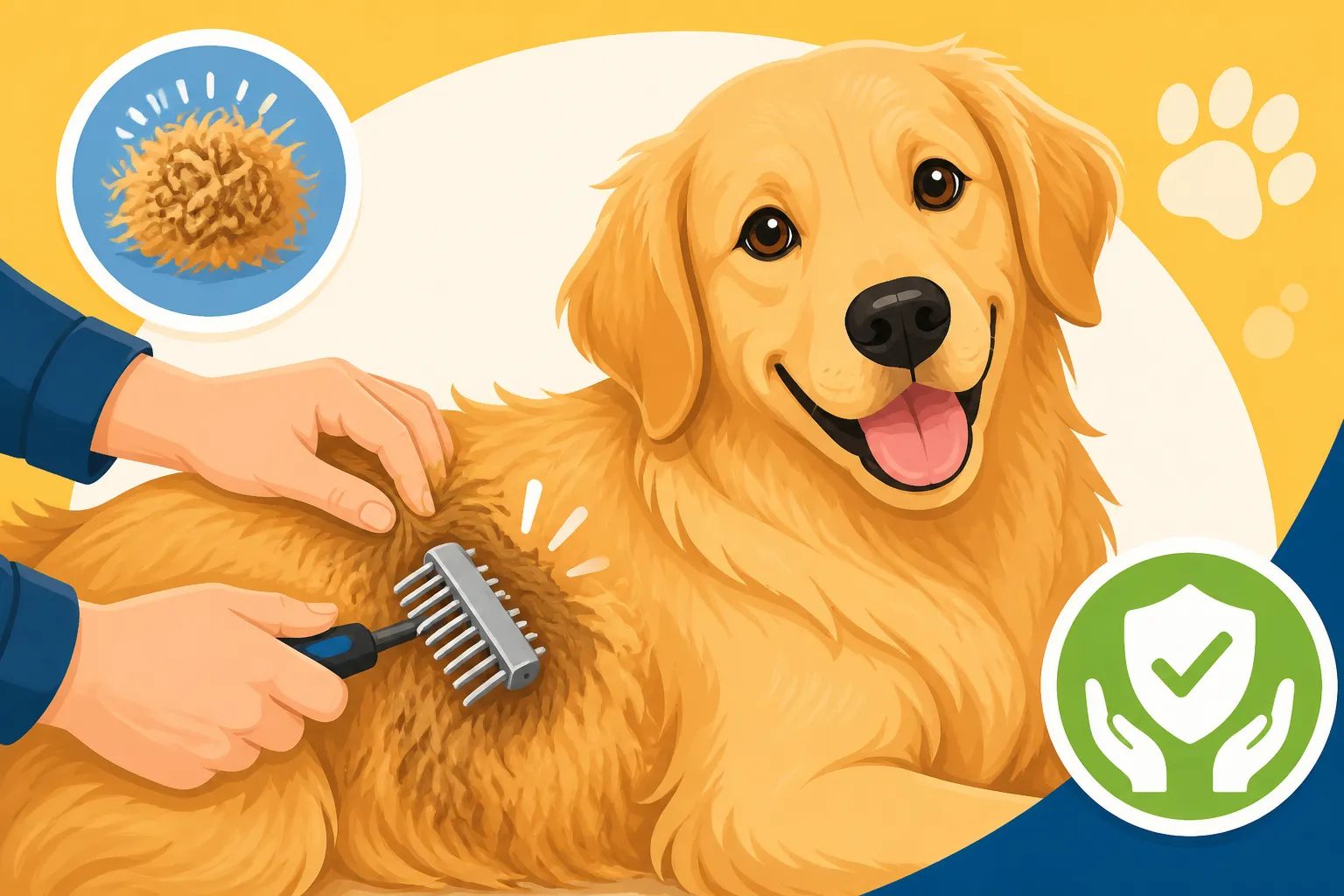
If the mat is large, try to gently separate it into smaller chunks with your fingers, working carefully from the outer edges. Once you have smaller sections, you can use your dematting comb. These combs are designed to cut through the mat with minimal pulling. Slide the dematting comb under the mat, with the blades facing away from the skin, and use short, quick strokes to slice through the tangled hair. Always keep a finger between the comb and your dog's skin to act as a barrier and prevent accidental cuts. Remember, you’re trying to loosen the hairs, not rip them out. Always praise your Golden and offer treats throughout the process, even if it's just for tolerating a few minutes of brushing. Consistent, positive reinforcement is vital.
When to Use Scissors or Clippers
Sometimes, no matter how much detangling spray you use or how gently you try to comb, a mat is just too tight, too big, or too close to the skin to be brushed out safely. This is when you might need to resort to cutting or clipping. This should always be a last resort and performed with extreme caution.
If you opt for blunt-nosed scissors, the most critical rule is this: never point the tips of the scissors towards your Golden's skin. Mats often pull the skin up into the knot, making it incredibly easy to accidentally snip your dog. Instead, carefully lift the mat away from the skin, if possible. Slide the blunt end of the scissors parallel to the skin and try to cut into the mat in several places. Imagine you're making small slices, rather than trying to cut the entire mat off in one go. This can help break the mat into smaller sections that might then be more amenable to combing. Always try to get a finger or a comb between the mat and the skin before cutting.
For very severe, skin-tight mats, electric clippers are often the safest and most humane option. Use a clean, sharp clipper blade, preferably a #10 or #15, and attach a comb guard if possible to further protect the skin. Hold the skin taut around the mat and carefully slide the clippers under the mat, moving in the direction of hair growth. Again, the goal is to get under the mat, between the mat and the skin. Go slowly and lift the mat as you clip to prevent cutting the skin. If you're not confident using clippers, or if the mat is extensive and close to sensitive areas, please do not hesitate to call a professional groomer. They have the experience and specialized tools to remove even the toughest mats safely, minimizing discomfort for your Golden. For more about professional care, you might want to read What to Ask a Groomer About a Golden Retriever.
Preventing Future Mats in Your Golden Retriever
The best mat is one that never forms! Prevention is truly easier and less painful than removal. By implementing a consistent grooming routine and understanding your Golden's coat needs, you can keep those troublesome tangles at bay.
Regular Grooming Routine
Consistency is absolutely vital when it comes to a Golden Retriever's coat. Their beautiful flowing hair needs daily or at least every-other-day attention to prevent mats from taking hold. Think of it as a small daily investment that pays off in a happier, healthier dog and fewer headaches for you.
Start with a routine of daily brushing, even if it's just a quick five-minute session. Use a slicker brush to get through the topcoat and reach down into the undercoat. Pay special attention to those notorious matting hotspots: behind the ears, in the armpits, and on the feathering of the legs and tail. After a thorough slicker brushing, follow up with a wide-tooth comb to ensure you've removed all loose hair and tangles that the slicker might have missed. If the comb glides through smoothly, you're doing a great job! If it snags, go back with your slicker brush or dematting comb to gently work out any remaining knots. During heavy shedding seasons, like spring and fall, you'll need to step up your brushing game even more. This is when their undercoat "blows," meaning a significant amount of dead fur needs to be removed. Brushing a Golden Retriever During Coat Blow offers more in-depth advice on this particular challenge. Regular brushing not only prevents mats but also helps distribute natural skin oils, keeping their coat healthy and shiny, and it's a wonderful bonding experience for you and your Golden.
Bathing and Drying Best Practices
Bathing a Golden Retriever is a joyful (and often messy!) experience, but improper drying afterwards is a leading cause of matting. It’s not just about getting them clean; it’s about ensuring their dense undercoat is completely dry and tangle-free.
Before bathing your Golden, make sure to give them a thorough brush-out. Any existing tangles or small mats will tighten and become much harder to remove once wet, making the situation much worse. Use a good quality dog shampoo and conditioner. The conditioner helps to smooth the hair cuticles, making them less prone to tangling. When rinsing, ensure all shampoo and conditioner are completely washed out, as residue can irritate the skin and also contribute to matting.
The drying process is where many owners unintentionally create mats. A Golden Retriever's double coat holds a lot of water, and if the undercoat isn't dried thoroughly, it can felt together as it air-dries, forming tight, painful mats deep against the skin. Towel dry as much as possible, then use a high-velocity dog dryer (or even a regular hairdryer on a cool setting, held at a safe distance) to dry the coat completely. As you dry, continuously brush the hair with a slicker brush, working in sections. This helps to separate the hairs and ensures all layers, especially the undercoat, are dry and fluffy. Never let your Golden air-dry completely, especially after a swim or a rainy walk, without first brushing them thoroughly to prevent water-induced matting. You'll find a lot of helpful guidance in Drying a Golden Retriever's Thick Coat to ensure you're doing it right.
Professional Grooming and Shaving Considerations
While a good home grooming routine is essential, sometimes you just need to call in the professionals. And, as tempting as it might be, resist the urge to shave your Golden Retriever.
Professional groomers are skilled at safely handling stubborn mats and can often remove them without causing undue stress or discomfort to your dog. They have specialized tools and techniques that can make quick work of what might seem like an impossible task to you. Establishing a relationship with a good groomer can be invaluable, especially if your Golden is prone to mats or you simply need help maintaining their coat. They can also offer advice on specific products or techniques for your dog's individual coat type.
Now, about shaving: it's a common misconception that shaving a Golden Retriever will prevent mats or keep them cooler in summer. In almost all cases, you should never shave a Golden Retriever. Their double coat is designed to insulate them from both heat and cold. Shaving can disrupt their natural temperature regulation, making them more susceptible to overheating and sunburn. Furthermore, when the coat grows back, it often comes in thicker, coarser, and more prone to matting than before, sometimes even damaging the coat permanently. This phenomenon, often called "coat blow" or "clipper alopecia," means you might end up with more grooming problems than you started with. Instead of shaving, focus on consistent brushing and de-shedding to remove the dead undercoat, which is what truly helps them stay cool. For a deeper dive into why this practice is so detrimental, read Why You Never Shave a Golden Retriever and What Happens to a Shaved Golden Retriever's Coat.
| Grooming Tool | Primary Purpose | Best For | Usage Tips |
|---|---|---|---|
| Slicker Brush | General brushing, removing loose undercoat | Small tangles, overall coat maintenance, light mats | Use gently, brushing away from skin; great for line brushing. |
| Wide-Tooth Metal Comb | Initial detangling, separating hair | Checking for tangles, breaking up loose mats | Always start with this after brushing to find hidden knots. |
| Fine-Tooth Comb | Checking for small tangles, finishing | Very small knots, fine detailing, checking skin closeness | Use after wide-tooth comb to ensure all tangles are gone, especially in sensitive areas. |
| Dematting Comb | Slicing through tough mats | Medium to large, stubborn mats | Use carefully, blades away from skin, make small cuts. Don't pull. |
| Blunt-Nosed Scissors | Carefully cutting tight mats | Mats too tight to comb, close to skin | Extreme caution. Lift mat away from skin, cut parallel to body. Never point tips at skin. |
| Electric Clippers | Removing very severe, skin-tight mats | Extensive, painful mats, professional use | Use appropriate blade (#10/#15), always with a comb guard if possible. Consult a professional if unsure. |
| Detangling Spray | Lubricating hair, easing mat removal | All types of tangles and mats, prevention | Apply generously to mat, let sit for a minute, then comb gently. |
Disclaimer
This article is for general informational purposes only and does not constitute professional advice. Laws, prices and regulations vary by location and change over time. Consult a qualified professional for guidance on your specific situation.