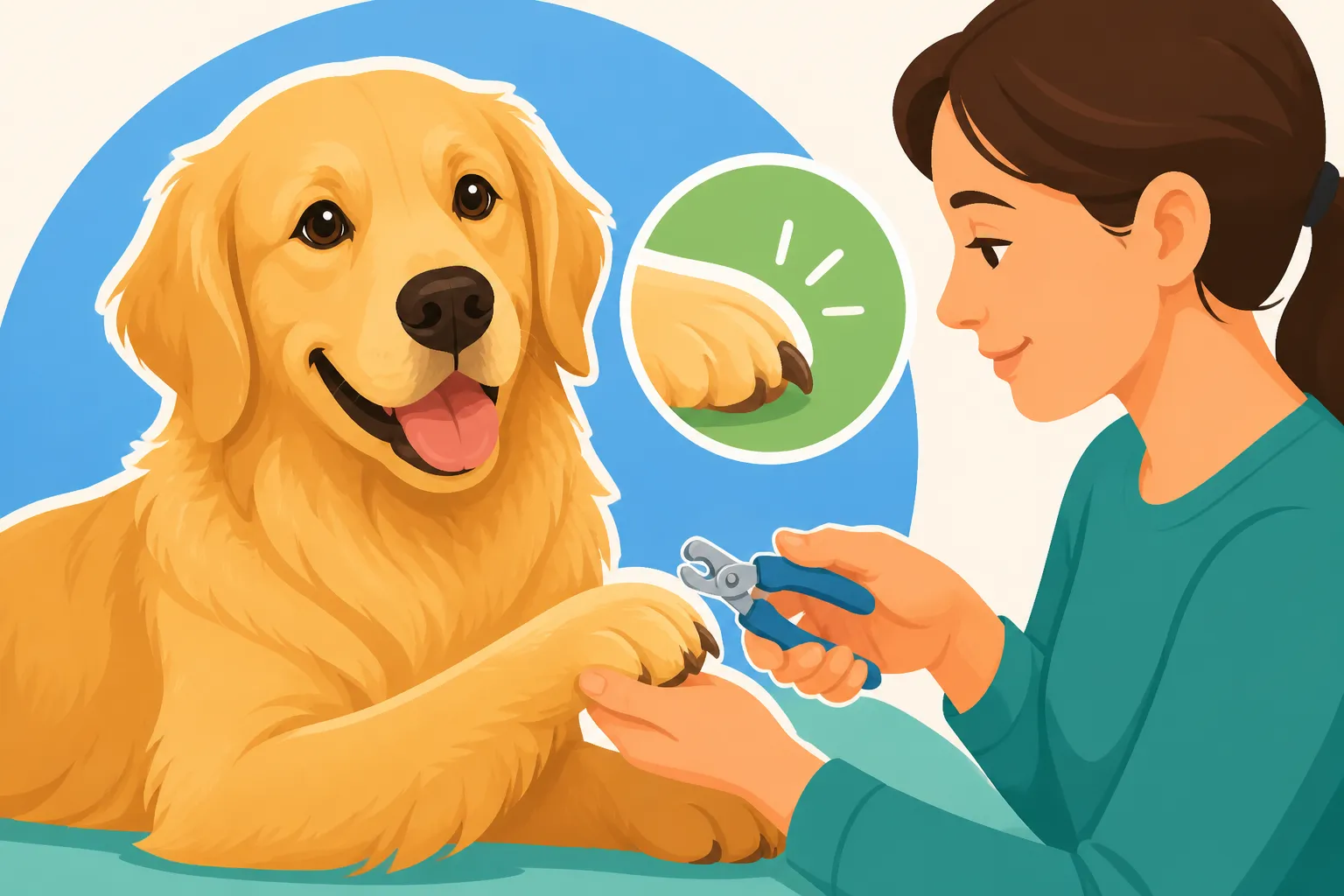
Desensitizing a Golden Retriever to Nail Trims
The struggle of trimming a Golden Retriever's nails is a battle many of us dog parents know all too well. It often starts with a wiggle and a mild protest, and can quickly escalate into a full-blown wrestling match, leaving both you and your sweet Golden stressed and defeated. This guide is here to walk you through a gentle, patient, and effective desensitization process, turning nail care from a dreaded chore into a manageable, even positive, experience for your furry friend.
Understanding Why Nail Trims Are a Battle for Goldens
It’s easy to feel frustrated when your normally compliant Golden Retriever transforms into a defiant force field at the sight of nail clippers. But beneath that resistance often lies a combination of sensitive paws, past negative experiences, and a natural instinct to protect themselves. Understanding these root causes is the first step toward empathy and finding a solution that truly works.
The Golden Retriever's Sensitive Paws
Golden Retrievers, with their deep bond to humans and generally eager-to-please nature, aren't usually known for being difficult. However, their paws are incredibly sensitive. Think about it: they walk on them all day, every day, and those paws are packed with nerve endings. The sensation of pressure, the unfamiliar feeling of an object around their toes, and especially the vibration or sudden snap of a clipper can be genuinely unsettling. For a Golden, a nail trim isn't just an annoyance; it can feel like a violation of a very vulnerable part of their body. It's not about being stubborn; it's about genuine discomfort or even fear of pain. This is why even a well-socialized puppy might initially react strongly to nail trims. We need to remember that what seems like a simple task to us can be a truly invasive experience for them.
Past Negative Experiences and Fear Memory
Unfortunately, many Goldens develop an aversion to nail trims because of one or more bad experiences. Maybe a nail was accidentally cut too short, hitting the quick and causing pain and bleeding. Perhaps a previous owner or groomer forced the issue, holding them down when they were scared. Dogs, especially intelligent breeds like Golden Retrievers, have excellent memory, particularly when it comes to unpleasant or painful events. If a nail trim has ever been associated with pain, fear, or a sense of helplessness, your Golden will remember that. That memory isn't just about the physical pain; it’s also about the emotional distress. So, the moment they see the clippers or grinder, or you even just reach for their paw, their brain might immediately trigger that "danger" response. It's a protective mechanism, but one that makes routine care incredibly difficult. The key here is not to punish the fear, but to systematically overwrite those negative associations with overwhelmingly positive ones.
Quicking: The Failsafe That Causes Fear
One of the biggest culprits in creating nail trim aversion is "quicking" – cutting into the quick, which is the pink, fleshy part of the nail that contains blood vessels and nerves. It hurts, it bleeds, and it's a deeply unpleasant experience for the dog. For Goldens with dark nails, the quick is practically invisible, making it incredibly easy to nick, even for experienced owners. Once a Golden has been quicked, they become highly suspicious of future trims. They learn that the clippers can cause pain, and their natural instinct is to pull away, hide, or even snap to prevent it from happening again. Every time you attempt a trim, they might be anticipating that sharp pain, making them incredibly resistant. It’s a vicious cycle: the more they resist, the harder it is to trim, increasing the chances of quicking, which then increases their resistance even further. Breaking this cycle requires a deep commitment to positive reinforcement and taking things incredibly slowly. Trimming Black Nails on a Golden Retriever is a great resource if you're struggling with visibility.
The Foundation: Positive Association and Gentle Handling
Before you even think about bringing out the clippers or grinder, you need to lay a strong foundation of trust and positive association. This isn't just about treats; it's about changing your Golden's entire emotional response to paw handling and the grooming tools themselves.
Building Trust Beyond Trims
The real work starts long before the clippers appear. You need to routinely handle your Golden's paws in a non-threatening, positive way, completely unrelated to nail trims. This means gentle touches, massages, and inspections during quiet, relaxed moments – perhaps when they're dozing on the couch next to you or enjoying a good belly rub. Start by touching their shoulder, then work your way down their leg to their paw. Gently hold each toe, lightly squeeze the paw pad, and even pretend to inspect between their toes, always followed by praise and a high-value treat. Do this multiple times a day, for just a few seconds at a time. The goal is to make paw handling a normal, pleasant part of their day, associated with good things like yummy treats or a favorite toy.
Consider incorporating this into a broader handling routine. When you're brushing them or giving them a cuddle, gently manipulate their ears, mouth, and paws. This helps your Golden build tolerance for being touched all over, which is beneficial for vet visits and general grooming. If your Golden is a puppy, start this immediately; for an adult, it might take weeks or even months to build this trust. Patience is absolutely crucial here. Never force it. If your Golden pulls away, stop, wait a moment, and try again more gently. You want them to choose to allow the handling, not just endure it.
Introducing Tools as "Good Things"
Once your Golden is comfortable with their paws being handled, it's time to introduce the nail trimming tools – but again, with no actual trimming. The goal is to make the sight, smell, and sound of the clippers or grinder predict something wonderful.
Start by simply showing your Golden the clippers or grinder from a distance. As soon as they look at it, give them a super high-value treat. Hide the tool. Repeat this a few times a day. You want them to think, "Oh, that weird shiny thing means delicious chicken is coming!" Next, place the tool on the floor a few feet away. When they are calm, drop treats near it. Gradually, over days or even weeks, move the tool closer. You might even put it on your lap while you're petting them, offering treats constantly.
If you're using a grinder, turn it on in another room initially, so the sound is faint. As they remain calm, treat them. Over time, bring the grinder closer, turning it on briefly and treating them generously. The sound can be particularly startling, so this step needs extra care. You want them to associate that buzzing sound with delicious rewards, not fear. Many Goldens react better to a Dremel-style grinder, as it's less sudden than clippers. You can find quiet, battery-operated grinders on Amazon or Chewy, which can make this step a bit easier. Remember, every step is about creating a positive conditioned emotional response. Never proceed to the next step until your Golden is completely relaxed and happy with the current one. Best Treats for Training a Golden Retriever can make all the difference during these sessions.
Step-by-Step Desensitization Protocol
This is where you systematically break down the nail trimming process into tiny, manageable steps, pairing each step with abundant positive reinforcement. Remember, the pace is dictated entirely by your Golden Retriever. Some might fly through these steps in days, others might need weeks or even months for each phase.
Phase 1: Sight and Sound Desensitization
Now that your Golden is generally comfortable with you handling their paws and has seen the tools, it's time to combine these two elements without actually trimming.
- Tool Presence & Paw Handling: Sit with your Golden in a relaxed setting. Have the clippers or grinder visible nearby. Start your usual positive paw handling routine – gently touching each paw, holding individual toes. Every time you touch a paw, give a treat. Keep the sessions very short, perhaps just one or two paws at a time, for only a minute or two.
- Bringing the Tool Closer: Once they are totally relaxed with paw handling while the tool is visible, gradually move the tool closer. Hold the clippers in one hand while you gently handle a paw with the other, then treat. Place the grinder on the floor next to you, handling paws, then treat. The goal is to create an association: "Paws being handled + tool nearby = delicious treats and praise."
- Introducing the Sound (Grinder Specific): If using a grinder, this is critical. With the grinder still off, touch it to each nail, then immediately treat. Do not turn it on yet. Once they are okay with that, turn the grinder on briefly, away from their paw, then immediately turn it off and give a treat. The sound should predict the treat. Gradually, over many sessions, turn it on closer to their paw, always off the nail itself, for just a second or two, followed by a treat. The goal is to desensitize them to the noise and vibration.
- Real-life scenario: Sarah's Golden, Charlie, used to bolt at the sound of the nail grinder. Sarah started by putting Charlie on his favorite dog bed with a high-value chew from Ollie (cut into small bits) while she turned the grinder on in the kitchen for 5 seconds. Every time he didn't react negatively, she'd drop a piece of the treat near him. Over a week, she moved the grinder closer and kept the sessions short, about 2-3 minutes total, several times a day.
Phase 2: Touch and Pressure Introduction
This phase focuses on getting your Golden comfortable with the actual sensation of the clippers or grinder touching their nails, without any cutting action.
- Clippers – Gentle Pressure: Hold the clippers in your hand. Gently touch the clippers to one of your Golden's nails, not in a way that would cut, but just to make contact. Immediately remove the clippers and give a treat. Repeat this on different nails. You want them to feel the tool's presence on their nail and associate it with a positive outcome.
- Grinder – Gentle Vibration: With the grinder off, touch the unspinning head to each nail, then treat. Once comfortable, turn the grinder on and very briefly touch the spinning head to just the very tip of one nail (the part that needs to be removed), for a fraction of a second. Immediately pull it away and give a treat. The key here is brief contact and immediate reward. If your Golden pulls away or seems uncomfortable, go back a step.
- Real-life scenario: Mark's Golden, Daisy, was a rescue who had clearly been quicked before. Mark started by just tapping the clippers on Daisy's nails while she lay down. He'd tap, then immediately offer a small piece of cheese. He did this for 3-4 nails per session, ending on a positive note, even if it was just tapping. It took him two weeks before Daisy showed no reaction to the taps.
- Holding the Paw and Presenting the Nail: Practice holding a paw and extending a nail as if you were about to trim it, but don't trim. Just hold, release, and treat. This simulates the actual position without the added stress of the trim itself. This is also a good time to practice with all four paws, as some Goldens might be more sensitive on certain paws than others.
Phase 3: The First Snips or Grinds
This is the moment of truth, but it's still about tiny steps, not a full trim.
- The Single Snip/Grind: Pick one nail – usually a dewclaw if your Golden has them, as they're often easier to access and less sensitive, or a nail you know is very long and easy to get just the tip. Perform one tiny snip or a quick, momentary grind on the very tip of one nail. Immediately follow with a lavish jackpot of treats and praise. Then, stop the session. The goal is to make that single trim a hugely positive experience.
- Gradual Increase: Over subsequent sessions (which might be later that day or the next), try two snips or two very brief grinds. Always aim for success – take off only the barest tip. If your Golden reacts negatively, stop, reset, and go back to a previous comfortable step for a few sessions. Remember, you're building trust and positive associations, one tiny trim at a time. Never rush.
- Progressive Expansion: As your Golden becomes more tolerant, you can slowly work your way around all their nails, still doing only a few at a time per session. You might do one nail on each paw in one session, then gradually increase. The most important thing is to always end on a positive note. If you can only get one nail done happily, then one nail it is. That's a win! Nail Trimming a Golden Retriever Who Hates It offers more in-depth tips for difficult cases.
Here's a quick comparison of common tools for Goldens:
| Tool Type | Pros | Cons | Best For |
|---|---|---|---|
| Scissor-Style Clippers | Precise, quick cut; widely available, inexpensive | Can easily quick if not careful; can split nails; snapping sound | Owners confident in identifying the quick; quick trims needed |
| Guillotine-Style Clippers | Very sharp; can be faster for some dogs | Less precise view of the nail; some find harder to maneuver | Larger, thick nails; experienced users |
| Dremel/Grinder | Smoothes nails; reduces quicking risk (if careful); less startling sound (for some) | Can be noisy/vibrating; takes longer; heat friction; dust; battery-life | Anxious dogs; dark-nailed dogs; smoother finish preferred |
| Manual File | Safest, no quicking risk; quiet | Very time-consuming; only suitable for maintaining short nails | Highly anxious dogs; maintenance between trims |
Using a Dremel on a Golden Retriever's Nails can provide detailed guidance if you choose that route.
Maintaining Progress and Troubleshooting Common Issues
Desensitization isn't a one-and-done process. It requires ongoing commitment and the flexibility to adjust your approach when faced with setbacks. Your Golden Retriever might have good days and bad days, and that's perfectly normal.
Consistency is Key
Once you've made progress, consistency is paramount. Regular, short, positive nail trimming sessions are much more effective than infrequent, stressful marathon sessions. Aim for at least once a week, even if it's just for one or two nails, or simply touching the clippers to their paws followed by a treat. This keeps the positive association strong and prevents nails from getting too long, which makes future trims harder and increases the risk of quicking.
Consider integrating nail care into your Golden's broader routine. Perhaps after a walk, or during their evening cuddle session. The more predictable and routine it becomes, the less intimidating it will be. Keep those high-value treats coming! Even when your Golden is a pro, a reward after a successful trim reinforces that this is a good experience. Think of it as a small, consistent investment in their comfort and your peace of mind. Without consistency, those old fears can easily creep back in. Golden Retriever Training Sessions That Are Too Long highlights why short, frequent sessions are better for learning.
Handling Resistance and Setbacks
Even with the best intentions, you might hit a roadblock. Your Golden might suddenly refuse to cooperate, pull away, or even growl. This isn't a failure on your part or theirs; it's a signal that you need to adjust your approach.
- Don't Push It: If your Golden shows signs of stress (lip licking, yawning, turning away, pulling back, growling), stop immediately. Pushing through will only reinforce their fear and undo all your hard work. End the session on a neutral or positive note if possible (e.g., just a paw massage, then a treat).
- Identify the Trigger: What caused the setback? Was it a new tool? A different environment? Were you rushing? Did you accidentally quick them? Try to pinpoint the exact moment or action that led to their discomfort.
- Go Back a Step: Revert to a step in the desensitization process where your Golden was completely comfortable. Spend a few sessions there, rebuilding their confidence with lots of treats and praise. For example, if they're suddenly resistant to the clippers touching their nail, go back to just handling their paws with the clippers nearby, then to touching the clippers to their paw (not nail), and then slowly work your way up again.
- Consider Professional Help: If you're consistently struggling, don't hesitate to seek help from a professional dog trainer or a veterinary behaviorist who specializes in positive reinforcement. They can offer personalized guidance and techniques. Some vets or groomers might also offer "happy visits" where your Golden can come in for a treat and positive interaction, building a better association with the clinic or salon environment for future trims.
- Distraction as a Temporary Aid: While desensitization is the long-term solution, sometimes a good distraction can help get a trim done in a pinch. A Lickimat smeared with peanut butter, a Kong filled with frozen goodies, or a steady stream of their favorite treats (like something from Ollie or even small bits of chicken) can sometimes keep them occupied. But remember, this is a distraction, not a replacement for true desensitization. It won't solve the underlying fear, but it can make an urgent trim possible. You can find many enrichment toys for distraction on Chewy.
Ultimately, desensitizing your Golden Retriever to nail trims is a journey of patience, empathy, and consistent positive reinforcement. Celebrate every small victory, be understanding during setbacks, and always prioritize your Golden's comfort and trust. With dedication, you can turn nail care into a calm, even pleasant, routine for both of you.
Disclaimer
This article is for general informational purposes only and does not constitute professional advice. Laws, prices and regulations vary by location and change over time. Consult a qualified professional for guidance on your specific situation.