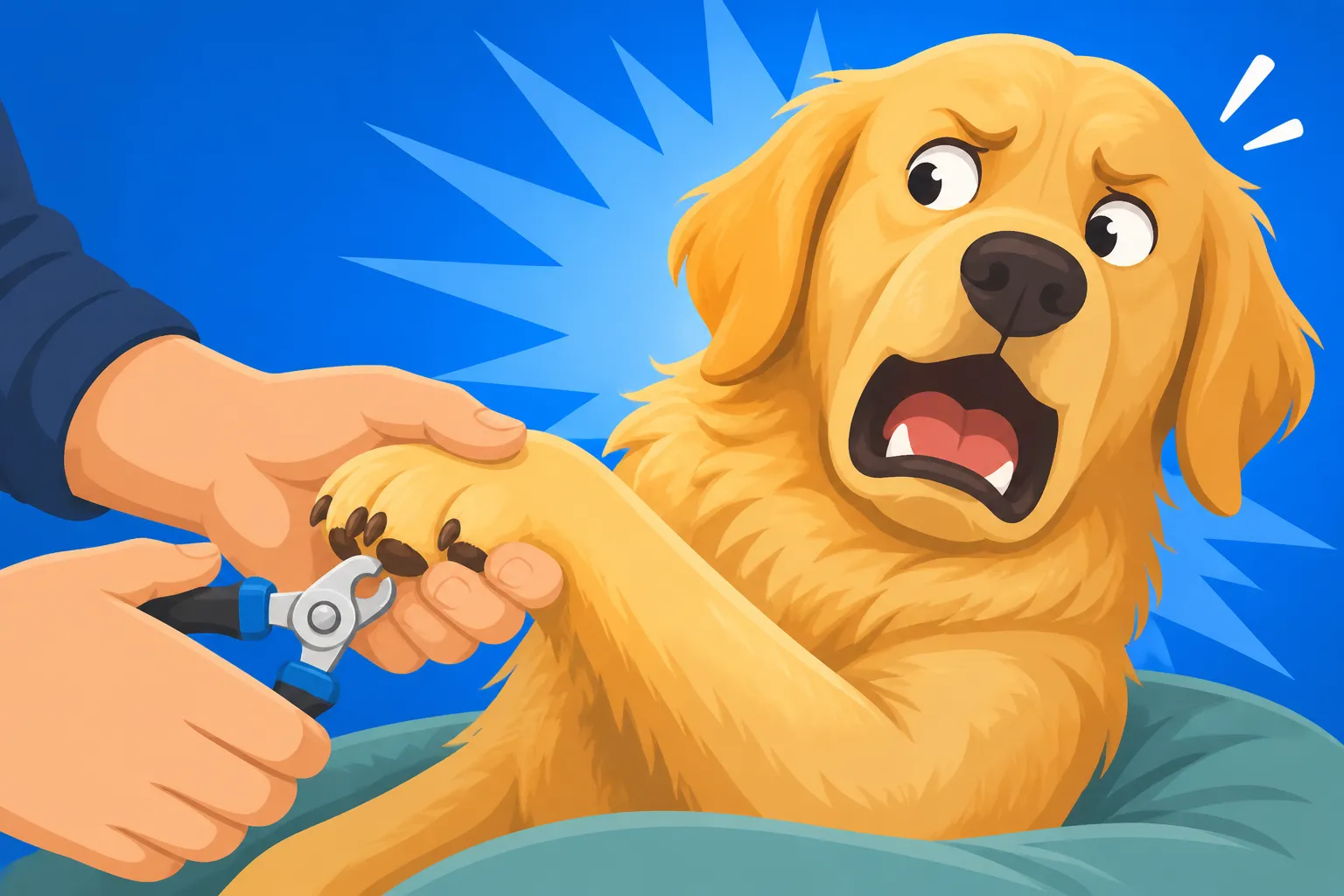
Nail Trimming a Golden Retriever Who Hates It
Oh, the sheer terror in a Golden Retriever's eyes when the nail clippers come out! If you're a Golden owner, you probably know this scene all too well: the sudden stiffness, the attempt to pull their paw away, or even the dramatic flop to the floor. It's truly heartbreaking to see your usually happy-go-lucky companion transform into a trembling mess just because of a routine grooming task. This guide is here to walk you through compassionate, effective strategies to turn those dreaded nail trimming sessions into something far less traumatic, for both you and your beloved Golden.
Understanding Why Nail Trims Are So Dreaded
Before we can tackle the "how," it's vital to understand the "why." Why do some Golden Retrievers absolutely despise getting their nails trimmed, even more than other breeds? It often boils down to a combination of physical sensitivity, past negative experiences, and sometimes, a missed opportunity for early positive reinforcement.
The Quick: A Sensitive Nerve Center
Deep inside each of your Golden's nails is something called the "quick." This isn't just a fancy name; it's a living tissue that contains blood vessels and nerves. Imagine accidentally cutting into your own nail bed – it's incredibly painful and bleeds a lot. For a dog, especially one with sensitive paws, even a minor nick of the quick can be a profoundly traumatizing experience. The pain is sharp, immediate, and lasts, and the bleeding, though usually not dangerous, can look alarming to both dog and owner.
The challenge is amplified in Golden Retrievers who often have darker nails, making the quick notoriously difficult to spot. What appears to be a safe trim can quickly become a painful incident, and once a Golden experiences that sharp, stinging sensation even once, they'll remember it. Their association instantly becomes: "Clippers = Pain." It's a primal fear response that's hard to overcome, leading to future struggles every single time you even think about bringing out the clippers. This fear isn't their fault; it's a natural reaction to a painful stimulus.
Past Traumas and Negative Associations
Even if you, as their current owner, have been incredibly careful, your Golden might have a history you're unaware of. Perhaps they had an unfortunate incident at a previous home, a groomer, or even just a clumsy moment as a young pup. Dogs are brilliant at making associations. If every time the clippers appeared, something unpleasant happened – a quicking, an uncomfortable hold, or even just a tense owner – they'll quickly form a strong negative association.
This doesn't necessarily mean intentional harm. It could be an overly zealous groomer, a puppy nipping at the clippers and getting a scare, or even simply being held down too firmly. The dog's brain links the clippers, the sound, the smell, and the feeling of their paws being held with that fear. Over time, this builds into a deep-seated anxiety, where even the sight of the tools can trigger a full-blown panic. It’s not stubbornness; it’s a learned response to protect themselves from a perceived threat.
Lack of Early Socialization and Desensitization
One of the biggest factors for Goldens developing nail trim aversion is a missed opportunity during their critical puppy socialization window. Golden Retriever puppies are typically very accepting of new experiences, but only if introduced gently and positively. If nail trims weren't started early and consistently, with plenty of praise and treats, the experience can quickly become overwhelming.
A lack of early, positive exposure means the puppy never learns that nail trims are a normal, harmless part of life. Instead, when they're older and stronger, trying to hold them still for the first time can feel like a battle. For a breed known for its sensitive nature, this can quickly create a negative imprint. The ideal time to introduce paw handling and mock nail trims is when they're tiny, before any fear has a chance to take root. This also goes for general handling. If a puppy isn't routinely touched on their paws, ears, and mouth from a young age, these areas can become particularly sensitive, making any grooming task a challenge. You can learn more about this in Golden Retriever Puppy Socialization Windows.
Essential Tools for a Less Stressful Trim
Having the right equipment can make a world of difference when you're trying to trim the nails of an anxious Golden Retriever. It’s not just about getting the job done, but about minimizing discomfort and fear. Investing in quality tools designed for ease of use and safety can seriously reduce the tension for both of you.
Choosing the Right Nail Clippers or Grinder
When it comes to the actual cutting, you generally have two main options: traditional clippers or a nail grinder. Each has its pros and cons, and what works best often depends on your Golden's specific fears and your own comfort level.
Scissor-style clippers, often resembling heavy-duty scissors, are a popular choice for their leverage and control. They allow you to snip the nail quickly. Guillotine-style clippers, where you insert the nail into a hole and squeeze, can also be effective, but some owners find them harder to maneuver, especially on larger, thicker Golden Retriever nails. If your Golden is very sensitive to sound, the sudden "snip" of clippers might be startling, even if it doesn't hurt. For these dogs, a nail grinder, like a Dremel tool designed for pets, can be a game-changer. Grinders slowly file the nail down, which can feel less invasive and allow for greater precision in avoiding the quick. Some Goldens are initially afraid of the vibration and sound, but many adapt better to it than the sudden pressure of clippers. Look for quiet models specifically advertised for pets. You can find a wide range of options on platforms like Chewy or Amazon, making it easy to compare and read reviews. For more on this, check out Using a Dremel on a Golden Retriever's Nails.
The Lifesaver: Styptic Powder
No matter how careful you are, accidentally cutting the quick is a possibility, especially with a wiggly, fearful Golden and dark nails. This is where styptic powder becomes your absolute best friend. It's a granular powder that, when applied to a bleeding quick, quickly stops the flow by constricting blood vessels. Having it on hand is not just a safety measure; it's a massive confidence booster for you. Knowing you can immediately stop any bleeding can reduce your own anxiety, which in turn helps your dog feel calmer.
Imagine this scenario: you're trimming a nail, and suddenly, a tiny bead of blood appears. Panic might set in. But if you have styptic powder ready, you can calmly dip the bleeding nail into the powder, apply a little pressure, and the bleeding will typically stop within seconds. This allows you to regain composure and reassure your Golden, rather than letting the incident escalate into further trauma for both of you. It's a small investment that provides huge peace of mind.
High-Value Treats and Distraction Aids
Positive reinforcement is paramount when dealing with a Golden Retriever who hates nail trims. This means bringing out the big guns in terms of treats and distractions. We're not talking about ordinary kibble here; we're talking about things your Golden absolutely adores. Think freeze-dried liver, small pieces of cooked chicken, cheese, or even high-quality soft treats.
A lick mat smeared with peanut butter, squeeze cheese, or a frozen puree (like pumpkin or plain yogurt) can be an incredible distraction. While your Golden is engrossed in licking, their focus is diverted from their paws and the scary tools. This also releases endorphins, which can help create a more positive emotional state. Some excellent options for high-value, species-appropriate treats can be found on Chewy or even through fresh food services like Ollie, which often have palatable options Goldens go crazy for. The goal is to make the experience so profoundly positive that your Golden starts to associate the arrival of the clippers with a delicious reward, gradually overriding the negative associations. These tools are crucial for the counter-conditioning work we'll discuss next. For more treat ideas, see Best Treats for Training a Golden Retriever.
Strategies for Desensitization and Counter-Conditioning
The key to helping a Golden Retriever overcome their fear of nail trims isn't brute force or quick fixes; it's a patient, systematic process of desensitization and counter-conditioning. This means gradually exposing them to the triggers of their fear while simultaneously changing their emotional response from negative to positive.
The Baby Steps Approach
When your Golden has a strong aversion, you can't just dive in and expect them to tolerate a full nail trim. You need to break the entire process down into the tiniest, most non-threatening steps imaginable. Think micro-sessions that last mere seconds, focusing on one small part of the overall task.
Start simply by sitting near your Golden with the clippers or grinder visible, but not touching them. Offer praise and a high-value treat. Repeat this several times a day for a few days until they seem relaxed. Next, briefly touch the clippers to their paw, without even touching a nail. Treat. Then, touch a single nail. Treat. Gradually, you'll work your way up to gently holding a paw, then a single toe, then touching the clipper to a nail, and eventually, making a tiny clip. The crucial part is to go at their pace. If they show any signs of stress – pulling away, tensing up, yawning excessively – you've gone too far. Back off to a step where they were comfortable and try again later, or even the next day. The goal is to keep every single interaction positive, short, and successful. This slow, deliberate approach slowly chips away at their fear, replacing it with neutrality, then even anticipation.
Counter-Conditioning with Positive Reinforcement
Counter-conditioning is about changing your Golden's emotional response. Instead of seeing the clippers as a threat, we want them to associate them with something wonderful. This is where those high-value treats become indispensable.
Every time you introduce a step in the desensitization process, pair it immediately with a fantastic reward. For example, if you just gently touch their paw, they get a piece of chicken. If you show them the clippers, they get a lick of peanut butter from a spoon. The reward must come during or immediately after the desired behavior (or tolerance of the scary thing). Over time, their brain starts to re-wire: "Clippers appear? Oh, good! That means delicious treats are coming!" It's not about bribing them; it's about altering their underlying emotional state. Consistency is key here. Every single interaction with the clippers or grinder, no matter how brief, must end on a positive note, even if it just means you showed them the tool and walked away, rewarding them for not reacting negatively. This process is further explained in Desensitizing a Golden Retriever to Nail Trims.
Creating a Calm Environment
Your Golden Retriever is highly attuned to your emotions and the surrounding environment. A tense owner, a chaotic room, or sudden loud noises can amplify their fear during nail trims. Therefore, setting the stage for a calm experience is critical.
Choose a quiet time when your Golden is already relaxed – perhaps after a good walk or a play session, when they're a bit tired. Find a calm, uncluttered space where you won't be interrupted. Your own demeanor matters immensely; speak in a soothing voice, move slowly, and try to project confidence and calm, even if you don't feel it. If you're stressed, your dog will pick up on it. Consider using calming aids like dog-specific pheromone sprays or diffusers in the room beforehand, or playing soft, calming music. If your Golden is particularly reactive, enlisting a second person can be helpful – one to offer treats and distractions (like holding a lick mat), and one to gently handle the paws and trim. This allows you to focus on the task while your dog gets positive reinforcement from another trusted person. Just remember, a peaceful atmosphere sets the foundation for a positive experience.
Practical Trimming Techniques for Anxious Goldens
Once you've started the desensitization and counter-conditioning, you'll need practical techniques to actually trim the nails without undoing all your hard work. These methods focus on minimizing stress and maximizing efficiency, even if it means taking a different approach than a typical trim.
The "One Nail at a Time" Method
For a Golden who truly dreads nail trims, trying to do all four paws in one sitting is a recipe for disaster. Instead, adopt the "one nail at a time" philosophy. This means you might only trim a single nail, or perhaps two, in an entire session. The moment your Golden shows the slightest sign of stress or discomfort – a yawn, lip lick, or pull-back – you stop. You offer a final, high-value treat, lots of praise, and then you're done for that session.
This approach ensures that every session ends on a positive note. It teaches your Golden that they have a "voice" and that you respect their limits. While it might mean you're trimming nails every day or every other day, rather than once a week or every two weeks, the accumulated positive experiences will eventually outweigh the negative ones. Think of it as chipping away at a mountain of fear, one tiny, successful trim at a time. The frequency of trims for Goldens is covered in How Often a Golden Retriever Needs Nails Trimmed. Don't feel pressured to get all their nails perfect; focus on the ones that are longest or causing the most discomfort first, then rotate.
The "Puppy Pedicure" Position
How you hold and position your Golden during a nail trim can significantly impact their comfort and cooperation. For an anxious Golden, forced restraint can escalate fear, so finding a comfortable, non-threatening position is crucial.
For many Goldens, especially younger ones or those who are not too large, having them lie on their side, often with their head in your lap or tucked beside you, can be effective. This can feel less confrontational than standing, and it allows you to gently extend one paw at a time. For larger or more anxious adults, sometimes simply standing and having them lean against you for support, with one paw lifted slightly, works better. If you have a partner, one person can gently hug or lean against the dog, offering comfort and treats, while the other handles the paw. The key is to avoid pinning them down, which can trigger a fight-or-flight response. Your touch should be confident but gentle, not a vice-grip. Always ensure their body is relaxed, not stiff. If they are fighting, stop, take a break, and try again with more positive reinforcement.
Mastering the Quick with Black Nails
Black nails are the bane of many Golden Retriever owners trying to avoid the quick. It's like navigating a dark tunnel without a flashlight. However, there are techniques that can help you gauge where it is and minimize the risk of a painful cut.
One common strategy is to only take off tiny, thin slivers of the nail at a time. As you clip, look at the cut surface. When you're nearing the quick, the center of the nail, which was initially white or gray, will start to show a small, darker circle – this is the beginning of the quick. Stop immediately. For Goldens with truly dark nails, another trick is to examine the underside of the nail. The quick often recedes as the nail grows, and you can sometimes see a small indentation or change in texture where the quick ends. If you're using a grinder, this is often easier, as you're gradually wearing down the nail. You'll see the dark center emerge, and then a tiny shiny dot – that's your cue to stop. Remember, it's always better to take off too little than too much. You can always trim more, but you can't undo a quicking. For more detailed advice, read Trimming Black Nails on a Golden Retriever.
Here’s a comparison of clippers vs. grinders, especially helpful for an anxious Golden:
| Feature | Nail Clippers (Scissor/Guillotine) | Nail Grinder (Dremel-style) |
|---|---|---|
| Speed | Faster per nail, quick snip. | Slower, gradual filing. |
| Sound | Sudden "snip" sound can be startling. | Continuous hum/vibration, can be intimidating initially. |
| Feel | Quick pressure/squeeze on the nail. | Gentle vibration, grinding sensation. |
| Precision | Can be harder to gauge quick, especially with dark nails. | Easier to see the quick approaching, finer control. |
| Smoothness | Leaves a sharp edge; may require filing afterward. | Smooths the nail as it grinds, no sharp edges. |
| Risk of Quicking | Higher risk if not precise, especially with dark nails. | Lower risk due to gradual removal, but can still happen. |
| Ease of Use | Simple mechanics, but requires confidence. | Can require more desensitization to sound/vibration. |
| Nail Shape | Maintains more natural shape. | Can round the tip of the nail. |
Seeking Professional Help and Alternative Approaches
Sometimes, despite your best efforts, your Golden Retriever's fear of nail trims is simply too intense for you to handle alone. This is not a failure on your part, but a sign that you might need to enlist the expertise of professionals or explore alternative methods to keep their paws healthy.
When to Enlist a Professional Groomer or Vet
If every attempt at a nail trim results in a wrestling match, extreme fear, or even aggression from your Golden, it’s definitely time to call in the cavalry. A professional groomer who specializes in fearful or anxious dogs can be a godsend. Look for groomers who use "force-free" or "fear-free" methods, meaning they prioritize positive reinforcement and patience over restraint. They often have specialized equipment, like grooming slings or specific handling techniques, that can make the process less stressful. They might also be more adept at quickly and safely trimming nails, reducing the time your dog has to endure the procedure.
Your veterinarian or a vet tech can also be a valuable resource. They are skilled at handling dogs who are difficult for nail trims and can sometimes provide a quick, efficient trim. In severe cases of anxiety, your vet might even suggest mild sedation or anti-anxiety medication to make the experience tolerable for your Golden, especially if overgrown nails are causing pain or affecting their gait. This isn't a long-term solution but can provide a reset, allowing you to then continue with positive desensitization at home on already shortened nails.
"Scratch Board" Training
For Goldens who are particularly averse to having their paws handled or anything touching their nails, "scratch board" training can be a fantastic, low-stress alternative for their front paws. A scratch board is essentially a piece of wood with sandpaper or a rough abrasive surface attached. The idea is to teach your Golden to "scratch" at the board, using their front paws, which naturally files down their nails.
To train your Golden, hold the board at a slight angle and lure their paw across it with a treat. When they scrape their nails on the board, immediately reward them. Start with very short sessions and gradually increase the number of scratches. Many Goldens take to this quickly because it's a game that they control, and it's heavily rewarded. It also taps into their natural digging instincts! While it's most effective for front paws, some clever Goldens can even be taught to use it for their back paws if the board is positioned correctly. This method transforms a dreaded chore into a fun, interactive activity.
Long-Term Maintenance and Consistency
No matter which methods you employ, the absolute cornerstone of success in managing a Golden Retriever's nail trim anxiety is consistency. This isn't a one-and-done solution; it's an ongoing commitment to positive experiences. Regular, even daily, short sessions of paw handling and positive reinforcement will maintain your Golden's comfort level.
Even after you've made significant progress, don't stop the training. Continue to touch their paws, show them the clippers or grinder, and offer treats, even when you're not actually trimming. This reinforces the positive association and prevents regression. Remember that Goldens thrive on routine and clear expectations. The more predictable and positive you make these interactions, the more your Golden will relax and accept this necessary part of their care. Over time, these dedicated efforts will not only keep their nails at a healthy length, preventing discomfort and potential joint issues like those mentioned in Golden Retriever Arthritis and Joint Decline, but also strengthen the bond of trust between you and your cherished companion.
Disclaimer
This article is for general informational purposes only and does not constitute professional advice. Laws, prices and regulations vary by location and change over time. Consult a qualified professional for guidance on your specific situation.