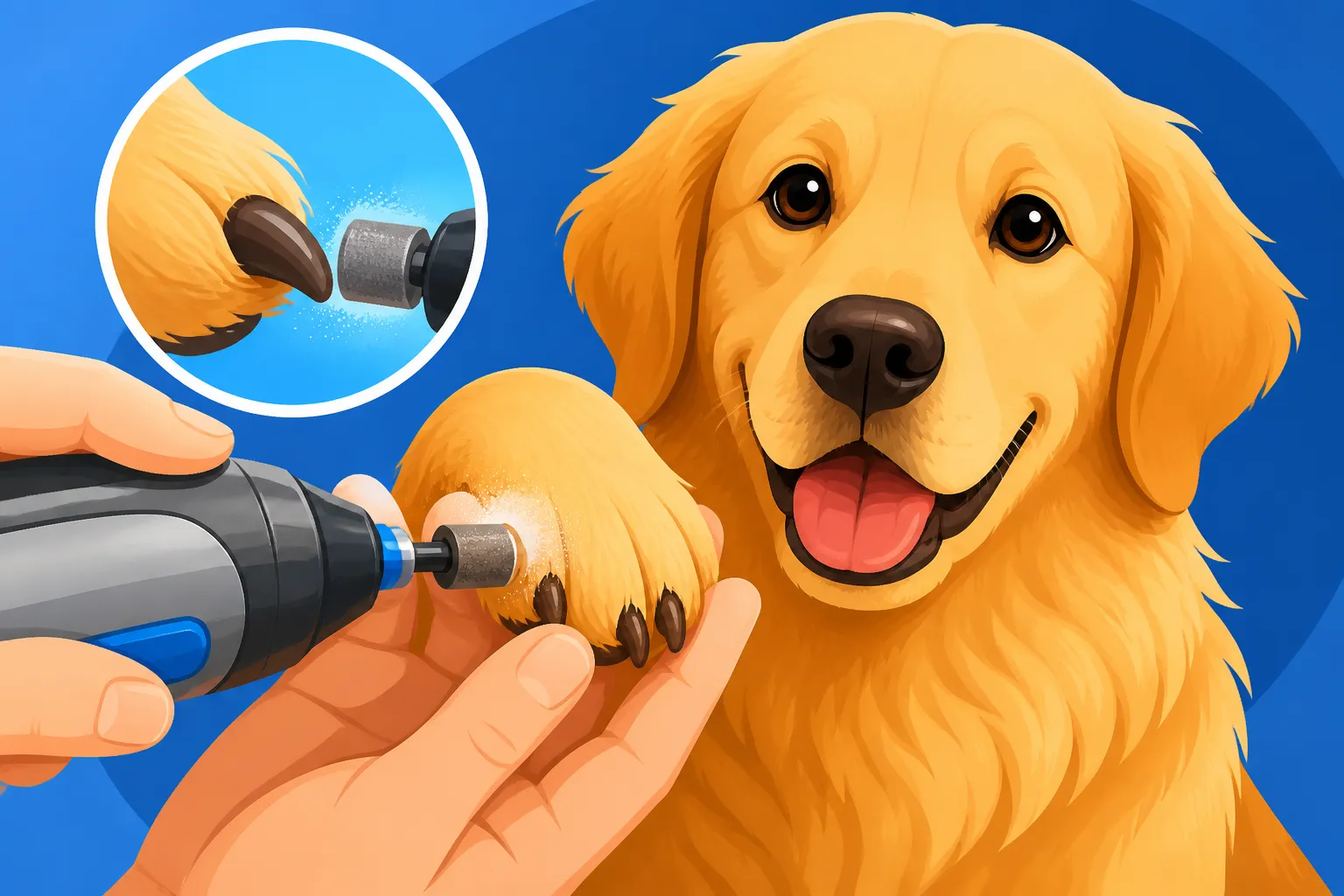
Using a Dremel on a Golden Retriever’s Nails
The thought of trimming your Golden Retriever's nails can honestly feel like a wrestling match. Many of us have been there, armed with traditional clippers, trying to get a good angle while our beloved Golden pulls their paw away, or worse, cries out because we've accidentally cut too far back. It’s a common frustration, especially with those dark nails where the quick seems to hide in plain sight. This guide is here to walk you through a gentler, often more effective alternative: using a Dremel, or a similar rotary tool, to keep your Golden's paws healthy and happy, turning a dreaded chore into a manageable routine.
Why Traditional Nail Clippers Can Be a Challenge for Golden Retrievers
Let's face it, nail trims are rarely a dog's favorite activity, and for Golden Retrievers, there are a few specific reasons why clippers can be particularly difficult. Their sweet nature often comes with a dose of sensitivity, and their dark nails can make the process even more nerve-wracking for us owners.
The Anatomy of a Golden's Nail and the Quick
Every dog's nail, including your Golden's, contains something called the "quick." This isn't just a fancy word; it's a living tissue that has blood vessels and nerves. If you cut into the quick, it's painful for your dog and can bleed quite a bit, which is distressing for everyone involved. The biggest challenge with many Golden Retrievers is that they often have dark nails. With light-colored nails, you can usually see the pink quick through the translucent nail, giving you a clear guideline of where it's safe to cut. But with dark nails, it's like trying to find a needle in a haystack. You're essentially guessing, hoping you don't go too far.
This uncertainty leads to many owners only taking off tiny slivers, if anything at all, to avoid pain. The problem with this approach is that the quick grows longer with the nail. If nails are consistently left too long, the quick will extend further down the nail, making it even harder to cut them short without causing discomfort. It becomes a vicious cycle that contributes to Golden Retriever Weight and Joint Damage because long nails can change a dog's gait.
Fear and Aversion to Clipping
Dogs are incredibly good at associating experiences. One bad nail trim where the quick was accidentally cut can create a lasting negative impression. Your Golden, with their intelligent and sensitive disposition, will remember that sharp pinch and the subsequent pain. This can quickly escalate into a full-blown phobia. They might start to squirm, pull their paws away, or even try to bite or snap – behaviors completely out of character for such a gentle breed.
This aversion isn't just about the pain; it's also about the sensation and sound. Clippers often make a distinct "snip" sound and apply pressure to the nail before cutting, which can be alarming. Imagine someone squeezing your finger before cutting your nail – it's an odd and potentially uncomfortable sensation. For a dog that's already wary, this can heighten their anxiety, making future trims even more stressful. We want nail care to be a routine part of their life, not a dreaded battle, and a Dremel can often help change that narrative.
Understanding the Benefits of a Rotary Tool for Golden Retriever Nails
If you've been struggling with traditional clippers, you might feel like you're out of options. But that's not true! A rotary tool, commonly known as a Dremel (which is actually a brand name, but has become synonymous with the tool), offers a much different experience for both you and your Golden. It's not a magic bullet, but it addresses many of the core issues that make clippers so challenging.
The Gentle Grinding Motion
Instead of a sudden "snip," a rotary tool uses a high-speed sanding drum or grinding stone to gradually wear down the nail. Think of it like a tiny, gentle sander for their claws. This means you're removing small layers of nail at a time, giving you much more control and significantly reducing the risk of accidentally cutting into the quick. You can visually inspect the nail as you go, looking for the characteristic small black dot that indicates you're nearing the quick.
This gradual process is far less jarring for your Golden. There's no sudden pressure or sharp sound of cutting. While the Dremel does make a whirring noise and creates vibrations, these can often be desensitized more easily than the unpredictable snip of clippers. It allows for a more precise and less invasive approach, which is a huge relief, especially for those with dark-nailed Goldens where the quick is a mystery. Many owners find their dogs tolerate the grinding much better once they get used to the sensation.
Desensitization and Positive Association
One of the biggest advantages of using a Dremel is the opportunity it provides for thorough desensitization and building positive associations. With clippers, a quick mistake can set you back significantly. With a grinder, you can introduce the tool in tiny, non-threatening steps. You can start by simply letting your Golden see and sniff the tool while it's off, rewarding them generously. Then, move to turning it on in another room, gradually bringing the sound closer.
This slow, methodical approach, combined with high-value treats and calm praise, allows your Golden to learn that the Dremel isn't scary. It teaches them that the whirring noise and vibration predict good things – like their favorite bits of chicken or cheese. This is a crucial step in Desensitizing a Golden Retriever to Nail Trims, transforming a source of anxiety into a routine that your dog can not only tolerate but perhaps even look forward to, because it means treats and positive attention from you.
Achieving Shorter Nails Over Time
The beauty of consistent Dremel use is its ability to help the quick recede over time. When nails are kept consistently short through regular grinding, the quick will naturally pull back, shortening itself to avoid exposure. This means that with dedicated effort, you can gradually achieve much shorter, healthier nails than you might ever get with traditional clippers, especially if you're hesitant to cut too much.
When the quick recedes, you gain more room to grind the nail down without fear, leading to a much tidier paw and better foot health. Shorter nails prevent discomfort, reduce the risk of splayed toes, and improve your Golden's traction on smooth surfaces. This is particularly important for active Goldens and senior dogs, as long nails can exacerbate joint issues like Arthritis Signs in an Eight-Year-Old Golden. Consistent grinding, perhaps every week or two, will keep the quick retreating and nails at an optimal length, which ties into How Often a Golden Retriever Needs Nails Trimmed.
Step-by-Step Guide to Dremeling Your Golden Retriever's Nails
Alright, let’s get down to the nitty-gritty. Successfully Dremeling your Golden’s nails isn’t about brute force; it’s about patience, positive reinforcement, and technique. Think of it as a dance you're learning together, where small, consistent steps lead to a harmonious result.
Gathering Your Supplies
Before you even think about touching your Golden's paw with the Dremel, make sure you have everything you need laid out and ready. This minimizes fumbling and keeps the session calm and efficient.
First and foremost, you'll need a rotary tool. While the brand name "Dremel" is popular, many companies like Casfuy, Conair, or even generic brands available on Amazon or Chewy offer dog-specific grinders that are often quieter and designed with pets in mind. Look for one that's cordless for ease of movement, and make sure it has multiple speed settings. You’ll typically want a fine-grit sanding drum or grinding stone attachment, which usually comes with the kit.
Next, safety is paramount. You might want to wear safety glasses to protect your eyes from any flying nail dust. Have styptic powder (like Kwik Stop) or cornstarch readily available. This is your emergency stop-gap if you accidentally nick the quick, which, while less likely with a Dremel, can still happen. Finally, and perhaps most importantly for your Golden, have a generous supply of high-value treats. These are the treats your dog goes absolutely wild for – cheese, cooked chicken, peanut butter (xylitol-free!), or even a lick mat smeared with something delicious. These treats are your secret weapon for building positive associations.
Introducing the Dremel Gradually Desensitization
This is the most critical step, especially if your Golden is already wary of nail trims. Do not rush this process. It might take days, or even weeks, but laying this groundwork will save you immense stress in the long run. The goal is to make the Dremel a non-threatening, even pleasant, object.
- Simply Present: Start by just bringing out the Dremel. Let your Golden see it, sniff it. Give them a treat. Don't turn it on. Do this a few times over a day or two.
- Sound Association (Off): With the Dremel still off, gently tap it against your Golden's paw, then immediately give a treat. Repeat for all paws. The goal is to associate the presence of the tool with good things.
- The Sound (On, Away): Now, turn the Dremel on, but do it in another room or far away. The sound should be barely audible. As soon as you turn it on, give your Golden a jackpot of treats. Turn it off, no treats. Repeat this, gradually moving closer with each session, until you can turn it on right next to them without a reaction, always pairing the sound with treats. This directly supports Desensitizing a Golden Retriever to Nail Trims.
- Vibration (Off): Once they're okay with the sound, turn the Dremel off. Gently touch the back of the Dremel (the part that doesn't spin) to their paw, then treat. They need to get used to the vibration without the grinding.
- Vibration (On, Away from Nail): Turn the Dremel on. Gently touch the back of the Dremel to their paw pad or leg. Just for a second. Treat. This is about them feeling the vibration without actually grinding.
Remember to keep sessions short – just a few minutes – and always end on a positive note, even if you only achieved one small step.
The Actual Grinding Process
Once your Golden is comfortable with the sound and vibration, you can finally start grinding.
- Positioning: Find a comfortable position for both of you. Many people sit on the floor with their Golden next to them or cradled in their lap. Ensure good lighting so you can see the nail clearly.
- Secure the Paw: Gently but firmly hold your Golden's paw. Push the paw pad up slightly to extend the nail. If your Golden has long paw hair, carefully push it back and out of the way to prevent it from getting caught in the grinder. This can be painful and startling.
- The Touch-and-Lift Technique: Turn the Dremel on to a low or medium speed. Touch the grinder to the tip of the nail for only 1-2 seconds, then lift it away. Immediately offer a high-value treat. Repeat this short touch-and-lift motion, moving around the tip of the nail. You're aiming to take off small amounts at a time.
- Angle Matters: Grind the bottom of the nail first, then the sides, creating a slight upward curve, mimicking the natural shape of a well-trimmed nail. Avoid grinding straight across the top, as this can make the nail thin and weak.
- Checking for the Quick: As you grind, you'll start to see a lighter ring appear on the inside of the nail, followed by a small black or grey dot in the very center. This dot is your indicator that you are very close to the quick. Stop grinding that nail immediately when you see it. You do not want to go past this point.
- Rotate Nails: Don't try to do all four paws, or even all nails on one paw, in a single session, especially when starting out. Do one or two nails, reward, take a break, or end the session if that's all your dog can handle. The goal is to build endurance.
Post-Grinding Care and Rewards
As soon as you finish a nail, or even just one paw, shower your Golden with praise and treats. Make it a big, happy celebration! This reinforces the positive association and helps cement the idea that Dremel time means good things.
Inspect their paws after the session. Are there any rough edges? You can smooth them gently with a finer grit attachment if needed. Give their paws a little massage – it’s a nice way to end the experience. Remember to keep the Dremel clean; many rotary tools like those from Ollie or other pet brands have removable sanding drums that can be easily cleaned or replaced. Your consistency and positive attitude during these sessions will be key to long-term success, fostering better overall Golden Retriever Dental Care at Home as well through routine care.
| Feature | Traditional Clippers | Rotary Tool (Dremel) |
|---|---|---|
| Method | Cuts off a section of nail | Grinds down layers of nail |
| Quick Risk | Higher, especially with dark nails; easy to over-cut | Lower; gradual removal allows for better quick visibility |
| Sound | Sudden "snip" or "crunch" | Continuous whirring/vibration |
| Sensation | Pressure, then quick cut; can be jarring | Gentle sanding/vibration |
| Nail Shape | Can leave sharp edges; flat cut | Smooths edges; can create rounded, natural shape |
| Quick Recession | Difficult to achieve if not consistently cut short | Easier to achieve with frequent, consistent use |
| Desensitization | Harder to overcome fear once negative association set | Easier to introduce gradually and build positive association |
| Required Skill | Requires precision and quick judgment | Requires patience and controlled movements |
| Common Frustration | Fear, struggling, bleeding, uncertainty about quick | Noise, vibration, initial resistance, dust |
Troubleshooting Common Dremeling Challenges
Even with the best intentions and a gentle approach, you might encounter some bumps in the road when using a Dremel. Don't get discouraged! Many of these challenges are common, and there are ways to work through them with patience and understanding, particularly for a sensitive breed like a Golden Retriever.
Dealing With Noise Aversion
The whirring sound of a Dremel can be startling for some dogs, especially Goldens who often have excellent hearing. If your dog is sound-sensitive, the noise might be their biggest hurdle.
- Start with the Quietest Setting: Many Dremels have variable speeds. Always start on the lowest setting. The quieter the tool, the less intimidating it will be.
- Ear Protection: Consider using dog-specific ear muffs or even cotton balls gently placed in your Golden's ears (never pushed in too deep!) to dampen the sound. Products like Mutt Muffs can be a game-changer for very noise-averse dogs.
- Distance Training: Revisit the desensitization steps. Turn the Dremel on in another room, reward your Golden, then gradually bring it closer over several sessions. The key is to associate the sound with delicious treats and zero pressure. You want them to think, "Oh, that whirring noise means chicken!"
- Background Noise: Sometimes having some other background noise, like a TV or radio, can help to mask the Dremel sound and make it less jarring.
- Short Bursts: Only run the Dremel for 1-2 seconds at a time initially, then turn it off and reward. This gives them a break from the continuous noise.
Overcoming Resistance and Fear
If your Golden is still pulling their paw away, trying to escape, or showing other signs of fear, it means you've likely moved too fast, or they've had a bad experience in the past. It's crucial not to force the issue, as this will only deepen their fear.
- Break It Down Further: Can they tolerate you just holding their paw? Reward that. Can they tolerate the Dremel off touching their paw? Reward that. Break down each step into even smaller micro-steps.
- Change the Location: Sometimes a change of scenery can help. Try doing it in a different room, or even outside if that's where your Golden feels most relaxed.
- Recruit Help: A second person can be invaluable. One person can focus entirely on feeding high-value treats and keeping your Golden calm and distracted, while the other handles the Dremel.
- Consult a Professional: If you're truly stuck and making no progress, consider working with a professional dog trainer or a veterinary behaviorist who specializes in positive reinforcement. They can provide tailored guidance and hands-on help. Remember, a professional can also guide you on Training an Adopted Adult Golden Retriever if they came with past trauma.
- Patience is Key: Goldens are smart and sensitive. If they're showing fear, they're communicating. Listen to them and slow down. It’s better to take weeks to get comfortable than to rush and create a lifelong phobia.
What to Do If You Nick the Quick
Despite your best efforts, sometimes you might still nick the quick. It happens! The most important thing is to stay calm. Your Golden will react to your stress, so take a deep breath.
- Don't Panic: A quicked nail will bleed, and your dog will likely yelp and pull away. Your calm demeanor will help them recover faster.
- Apply Styptic Powder: Immediately grab your styptic powder. Take a pinch of the powder and firmly press it against the bleeding nail for 10-15 seconds. The pressure, combined with the powder's clotting agents, will typically stop the bleeding quickly. If you don't have styptic powder, cornstarch or even flour can work in a pinch, though less effectively.
- Reassure Your Golden: Once the bleeding is stopped, comfort your Golden. Offer a special treat and lots of gentle praise. Don't make a big fuss over the injury itself, but rather praise their calm behavior afterward.
- End the Session (or Take a Break): For that session, it's probably best to stop nail trimming or at least take a significant break. You don't want to create more negative associations. Come back another day after the memory has faded a bit.
- Clean Up: Once the bleeding has completely stopped, clean up any blood with a damp cloth. You should always have Building a First Aid Kit for a Golden Retriever that includes styptic powder.
Maintaining Your Golden Retriever's Nail Health
Getting comfortable with the Dremel is a huge step, but it's just the beginning. Consistent, proactive nail care is essential for your Golden Retriever's overall health and comfort, impacting everything from their mobility to their joint well-being.
Frequency and Consistency
The key to keeping your Golden's nails at an ideal length and encouraging the quick to recede is frequency and consistency. Unlike traditional clippers where you might aim for a trim every 3-4 weeks, Dremeling often works best with more frequent, shorter sessions.
Many owners find that Dremeling every 1-2 weeks works wonderfully. This might sound like a lot, but remember, you're only taking off a small amount each time, often just a minute or two per paw. Regular grinding prevents the quick from growing out with the nail and allows it to gradually recede further back into the nail bed. This means over time, you can achieve much shorter nails than you might have thought possible, without the risk of quicking. Setting a regular schedule, like every Sunday evening, makes it a predictable and less stressful event for both you and your Golden. This consistent attention is exactly what's needed for How Often a Golden Retriever Needs Nails Trimmed.
Recognizing Signs of Overgrown Nails
Even with the best intentions, life gets busy, and sometimes nail trims get missed. It's important to know the signs of overgrown nails so you can address them promptly.
The most obvious sign is hearing a "clicking" sound on hard floors as your Golden walks. This means their nails are too long and are making contact with the ground, pushing their toes upwards and causing discomfort. Other signs include:
- Splayed Toes: Long nails can push the toes apart, leading to a splayed-foot appearance.
- Difficulty Walking or Standing: If your Golden seems hesitant to walk on hard surfaces or stands with an awkward posture, it could be due to long nails causing pain. This can be especially true for older Goldens who might also be experiencing Arthritis Signs in an Eight-Year-Old Golden.
- Curling Nails: In severe cases, nails can curl under and grow into the paw pad, leading to painful infections.
- Reluctance to Have Paws Touched: If your Golden becomes increasingly sensitive about their paws, it might be because the nails are causing pain or discomfort.
Regularly checking your Golden’s paws and nails as part of their Golden Retriever Ear, Paw and Nail Care routine will help you catch these issues early.
Professional Help Versus DIY
While Dremeling at home can be incredibly empowering and cost-effective, it's perfectly fine to seek professional help. There are times when it’s simply the best option, or even necessary.
- For the Apprehensive Owner: If you find yourself consistently anxious or unable to get your Golden comfortable with the Dremel despite your best efforts, don't feel guilty. A calm professional groomer or veterinary technician can often get the job done efficiently and safely. They have experience with many different temperaments and specialized equipment. You can discuss the Professional Grooming Frequency for a Golden with them.
- For the Resistant Dog: Some Goldens are so fearful that they become aggressive during nail trims, even with gentle Dremel introductions. In these cases, it might be safer for both of you to have a veterinary team handle it, possibly with mild sedation if necessary for their comfort and safety. Signs a Golden Retriever Is in Pain from past trauma might indicate professional intervention is best.
- For Maintenance: Even if you do most of the nail care at home, a periodic professional trim every few months can be a great way to ensure everything is on track and to get an expert's opinion on your Golden's paw health. This is also a good opportunity to learn new tips and tricks from experienced groomers.
- Saving Money: While it might seem counterintuitive to pay for professional services, learning to Dremel yourself can significantly contribute to Grooming a Golden Retriever at Home to Save Money over the long run. If you start this habit early, you avoid costly emergency vet visits for ingrown nails or infections.
Ultimately, the goal is to keep your Golden's nails healthy and short in a way that is least stressful for everyone involved. Whether that's exclusively DIY with a Dremel, a mix of home and professional care, or entirely professional, the choice that works best for you and your beloved Golden Retriever is the right one.
Disclaimer
This article is for general informational purposes only and does not constitute professional advice. Laws, prices and regulations vary by location and change over time. Consult a qualified professional for guidance on your specific situation.